
-
Jun, Fri, 2026

Why Should Your Grinding Workshop Seriously Consider Ceramic Grinding Discs?
You might currently be standing in front of the shelves at a hardware store, hesitating, or perhaps feeling overwhelmed by the dazzling array of sanding products available on procurement platforms. Even though they are all grinding wheels designed for use with angle grinders, their prices and performance can vary wildly. Today, we won’t delve into mere speculation; instead, we will focus on a consumable product that is gaining increasing recognition among professional manufacturing facilities—the ceramic grinding disc—and discuss the essential, technical insights behind it that are truly worth knowing.
This is not a product pitch, but rather an educational overview of the industry—designed to help you understand the underlying logic behind a more efficient grinding solution.
It’s No Ordinary “Grinding Wheel”: Reintroducing the Ceramic Grinding Disc
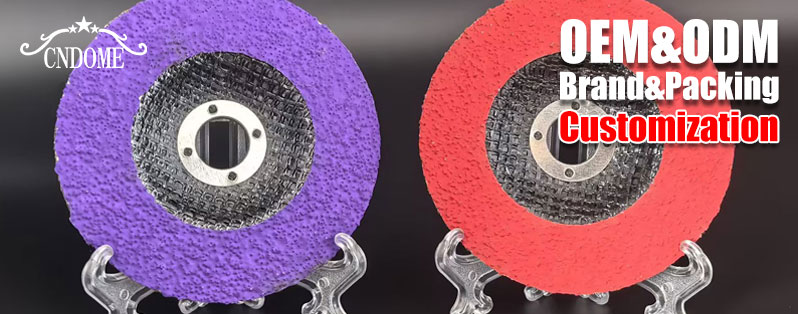
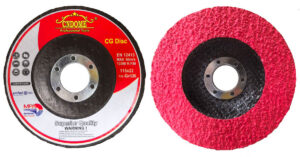
When people hear the term “ceramic grinding disc,” many assume it refers to a circular disc made entirely of ceramic material. In reality, this is not the case. The full and more accurate technical name for what we call a “ceramic grinding disc” is a *ceramic corundum coated abrasive*. The term “ceramic” here refers specifically to the abrasive grain itself, rather than the backing material. Through a specialized sol-gel process, we sinter aluminum oxide particles into ceramic corundum abrasive grains featuring a microcrystalline structure. When these abrasive grains are bonded to a fiber backing or vulcanized fiber paper, they become the sharp, durable grinding disc you hold in your hands.
To help you clarify your thinking, let’s first look at two types of grinding wheels you are likely more familiar with:
- Resin Grinding Wheels: These are integrally molded from abrasives and a bonding agent, resembling a solid grinding stone. During grinding, the entire disc wears down uniformly from the outer edge inward. Their advantage lies in their hardness; however, their disadvantages include their heavy weight and poor vibration dampening. Consequently, if the operation is unstable, the risk of the disc shattering is relatively high.
- Flap Discs: These consist of individual fan-shaped abrasive cloth flaps bonded onto a backing plate, arranged in overlapping layers much like the blades of a fan. They utilize the abrasive particles on the surface of the cloth, offering excellent self-sharpening properties that result in a smoother, more effortless grinding experience with reduced noise levels. However, the gaps between the flaps mean that under heavy loads—or when grinding sharp edges and corners—the individual flaps are prone to breaking or tearing away.
Ceramic grinding discs can be understood as an upgraded combination that incorporates the advantages of both. Unlike a standard grinding wheel—which resembles a solid, rigid disc—it functions more like a flap disc, relying on surface abrasives to perform its work; however, in this case, the abrasive material is coated onto a flat or slightly convex backing plate. This design endows it with both the powerful cutting force of a traditional grinding wheel and the superior handling and vibration-dampening qualities of a flap disc.
Why choose ceramic grinding discs? The key lies in their self-sharpening properties
You have undoubtedly used traditional corundum or zirconia corundum grinding wheels. Their mode of operation is rather simple and brute-force: the abrasive grains clash head-on with the workpiece, and once they become dull, they passively wait to break away. If this shedding process is delayed, the surface of the grinding wheel becomes smooth and begins to “slip,” generating excessive heat; the result you experience is hand-fatigue from vibration, increased physical exertion, and a precipitous drop in efficiency.
With ceramic corundum abrasives, however, the rules of the game are entirely different. Each individual abrasive grain is, in itself, a “micro-team” composed of countless even finer crystals. Under grinding pressure, the grain does not simply dull and detach as a whole; instead, it undergoes controlled, micron-scale micro-fracturing along its crystal interfaces, continuously exposing new—and equally sharp—cutting edges. This constitutes its core competitive advantage: self-sharpening capability. The result can be summarized in three words: Fast, Cool, and Durable.
- Fast Grinding: Fresh cutting edges are constantly engaged in the cutting process, rather than relying on brute force to squeeze and generate friction.
- Cool Workpiece: The heat generated during cutting is significantly lower than that produced by friction—a factor of critical importance, particularly for heat-sensitive materials such as stainless steel and titanium alloys—thereby effectively preventing workpiece burning and discoloration.
- Extended Lifespan: The entire volume of each abrasive grain participates in the cutting process, resulting in an exponential increase in utilization efficiency. The lifespan of a high-quality ceramic grinding disc is typically twice—or even more—that of a standard corundum disc of the same specifications.
Dissecting a Quality Grinding Wheel: The Finer Points—From Abrasive Cloth to Backing Plate
The technical sophistication of the finished product you receive does not lie solely in the abrasive material itself. A ceramic grinding disc with stable performance is, in fact, a composite of precision systems.
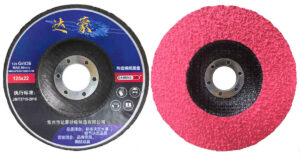
- Cloth / Vulcanized Fiber: For heavy-duty grinding and high-pressure angle grinding applications, we utilize a high-strength polyester fiber blend cloth backing. This backing is engineered to withstand the deformation demands associated with high rotational speeds and centrifugal forces, while simultaneously ensuring exceptional tear resistance. For fine grinding tasks requiring a degree of flexibility, a vulcanized fiber backing is employed.
- Abrasives and Grain Orientation: Utilizing an electrostatic coating process, every grain of ceramic corundum abrasive is precisely oriented with its sharp cutting edge facing outward, creating a sharp and uniform cutting surface. This ensures consistent grinding performance from the very beginning until the abrasive is fully expended.
- Cover Plate and Assembly: You may have frequently encountered situations where the center hole of a grinding wheel becomes damaged before the disc has even been mounted on the machine. This issue stems from the bonding strength between the cover plate and the disc’s base material. We utilize a thickened, glass-fiber-reinforced nylon cover plate, which is precisely bonded to the base using high-strength epoxy resin to ensure both coaxiality and torsional strength. At linear speeds of 80m/s—or even up to 100m/s—deformation and vibration are maintained within the micron range.
- Safety: Efficiency without safety is meaningless. Before leaving the factory, every ceramic grinding disc must undergo a rigorous random burst test. Using specialized equipment, we subject the discs to a no-load spin at a speed exceeding their rated maximum operating speed by more than 50%. Only those products that remain completely intact under these exacting conditions are cleared for release.
Invisible Hard Power: From Production Capacity to Packaging
A factory with stable production capacity serves, in itself, as a benchmark for reliability. If a manufacturer is constantly out of stock, you will be unable to replenish your supply—even if the products you purchased perform exceptionally well. A mature production line for ceramic flap discs—encompassing every stage from substrate treatment, abrasive cloth cutting, and flap arrangement to pressing, curing, final inspection, and packaging—possesses the capability to rapidly fulfill large-volume orders; this constitutes a critical dimension by which industrial end-users and brand owners evaluate potential partnerships.
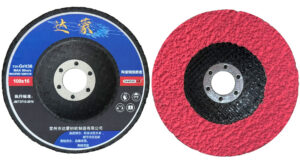
Attention to packaging details can reveal a manufacturer’s attitude. Industrial-grade products typically utilize high-strength cartons, featuring internal compartmentalization and protective dividers to ensure independent stacking. A subtle yet significant detail is that virtually all conscientious manufacturers apply rust-preventive treatments to the metal rings of each grinding disc, subsequently shrink-wrapping them or enclosing them in low-dust plastic bags to guard against moisture and impact during transit. Regarding labeling, critical information—such as grit size, bore diameter, maximum rotational speed or linear velocity, and safety certification marks—must be clearly legible and fully compliant with regulations. For export orders, the suitability of the outer carton markings and palletizing methods for the rigors of long-distance sea freight is also a key factor subject to scrutiny.
Here are a few final safety tips worth keeping in mind
No matter which grinding wheel you choose, safety always comes first.
First, verify the specifications. Ensure that the free speed of your angle grinder does not exceed the maximum operating speed marked on the grinding wheel.
Second, conduct a thorough inspection. Before use, visually inspect and physically examine the disc; strictly avoid using any disc that shows signs of cracks, chipped edges, or deformation caused by moisture.
Third, ensure proper installation. It is imperative that the metal ring of the grinding wheel sits flush against the flange face of the angle grinder; use the designated wrench to securely tighten the lock nut.
Fourth, always wear protective gear. Wear safety goggles to guard against flying debris, a dust mask to prevent dust inhalation, and earplugs to block out noise; additionally, ensure you are wearing appropriate work gloves and protective clothing.
In summary, a ceramic grinding disc is not the sole solution to every grinding challenge; rather, it is an industrial tool that excels in high-efficiency grinding, longevity, and cool-cutting performance. Whether or not it warrants the investment depends on your workpiece materials, specific grinding requirements, and cost-benefit analysis. By understanding its underlying principles, materials, manufacturing processes, and safety parameters, you will naturally be able to determine whether it is the right consumable for your production line.
FAQ
1. When grinding stainless steel, why are ceramic grinding discs less likely to cause the workpiece to turn blue compared to standard grinding discs?
The essence of workpiece bluing is high-temperature oxidation, stemming from the fact that conventional abrasives merely “rub” rather than “cut.” When standard grinding discs become dulled, a significant amount of kinetic energy is converted into thermal energy that accumulates on the workpiece surface; given the poor thermal conductivity of stainless steel, this can instantly result in the appearance of blue heat spots. Ceramic grinding discs, conversely, rely on a “cold cutting” mechanism: their self-sharpening properties ensure that the abrasive grains remain consistently sharp—slicing into the metal much like a knife, rather than relying on brute-force friction. Furthermore, the inherent crystalline structure of the ceramic corundum itself helps dissipate a portion of the heat as the grains fracture, thereby ensuring that the workpiece temperature remains consistently below the critical safety threshold. For food-grade and medical-grade stainless steel components, this specific characteristic is the decisive factor in determining whether the finished workpiece is fit for use.
2. My angle grinder vibrates severely when using a ceramic grinding disc. What could be the problem?
Assuming the aging of the angle grinder’s own bearings can be ruled out, the vibration most likely originates from one of three sources:
Mismatched Bore Sizes Cause Eccentricity: If your angle grinder’s flange measures 22.23 mm while the grinding disc has a 16 mm bore, forcing them together will result in wobbling. Under no circumstances should you attempt to manually enlarge the bore; doing so poses a grave and potentially fatal safety risk.
Cover Plate Defects: Substandard cover plates—due to poor concentricity or voids within the resin layer—can lead to overall dynamic imbalance at high rotational speeds.
Incorrect Backing Selection: Using a thick paper backing on angle grinders—where resistance to bending is critical—creates an inherent source of vibration should the material absorb moisture and deform. Our solution addresses this by recommending a combination of a glass-fiber-reinforced nylon cover plate and a high-strength fiber cloth backing specifically for angle grinder applications; furthermore, every unit undergoes a comprehensive inspection for dynamic imbalance prior to leaving the factory.
3. Are ceramic grinding discs and ceramic grinding cups (grinding heads) the same product? What are the differences in their application scenarios?
While they are not the same type of tool, they utilize the same class of abrasive material. Ceramic grinding discs are quick-change attachments designed for use with angle grinders; their primary function is the sanding of large flat surfaces and the leveling of weld seams, with a focus on maximizing the metal removal rate per unit of time. Conversely, ceramic grinding cups (or mounted points) are designed for use with straight grinders or rotary tools, serving to refinish internal bores, narrow grooves, tight edges, and hard-to-reach corners. If the task involves leveling welds across a large flat surface, you should use a grinding disc; however, if you need to clean out the internal walls of a mold cavity or the inner edges of a pipe fitting, you should switch to a grinding cup. Experienced teams typically keep both types of tools on hand.
4. What is an anti-clogging coating? Can our factory use ceramic grinding discs for sanding aluminum and copper parts?
An anti-clogging coating consists of a special layer—typically a stearate-based compound—applied over the abrasive surface. Its underlying principle is that during the sanding of soft, ductile metals such as aluminum, copper, or zinc, the coating undergoes slight melting due to the heat generated by friction. This process effectively carries away metal debris before it becomes permanently embedded within the crevices between the abrasive grains, thereby preventing the sanding disc from becoming “loaded” or clogged. Ceramic sanding discs are perfectly capable of sanding aluminum components; however, it is essential to select a model equipped with an anti-clogging coating and to choose a grit size that is one grade coarser than what you would typically use for sanding steel. Furthermore, regarding sanding technique, maintain rapid movement and avoid lingering on a single spot for extended periods; otherwise, even the most effective coating will be unable to withstand the strain.
5. Can a ceramic grinding disc serve as a substitute for a cutting disc? Under extreme conditions, what is the maximum cutting depth it can achieve?
Under no circumstances should this be used as a cutting disc. The ceramic grinding disc is designed specifically for “grinding,” not “cutting.” Its backing and structural composition are engineered to distribute force across the entire surface; if you attempt to use its edge to cut deep grooves or perform stock removal, the concentrated lateral force at a single point could cause the disc to shatter instantly. Any assertion that a grinding disc can serve as a cutting disc constitutes a violation of fundamental safety standards. Even when grinding welds, we require you to carefully control the tilt angle to prevent the disc from flexing beyond its structural limits. Tools designed for cutting and tools designed for grinding must never be used interchangeably.
6. I work in steel construction, and our team operates on a piece-rate basis. Can using your system really help us earn more money?
The answer to this question is straightforward; let’s look at the hard numbers: Suppose a welder spends four hours a day actively grinding welds. With standard grinding discs, the period of effective cutting sharpness might last only 30% of that time; the remaining time is wasted on inefficient friction, disc changes, and waiting for discs to cool down. Ceramic grinding discs, however, can extend that period of effective sharpness to over 80%. This means that within the same four-hour timeframe, the volume of metal removed effectively doubles—implying that a job which previously took three days to complete can now be finished in just two. When you further factor in the elimination of interruptions caused by disc changes and the avoidance of efficiency declines resulting from physical fatigue, the resulting boost in your daily productivity and income becomes a quantifiable reality. Indeed, once steel structure subcontracting teams scale up their operations, equipping their welders with ceramic grinding discs becomes a standard practice.
7. What are the strict requirements regarding certification and packaging for grinding discs exported to Europe and the US?
Exports must clear at least three hurdles:
Safety Standards: In Europe, compliance with EN 12413 is mandatory; in the United States, requirements set forth by ANSI B7.1 or OSHA must be met. Your product must clearly display the maximum operating peripheral speed and the expiration date.
Restricted and Prohibited Substances: The EU requires REACH and RoHS compliance declarations; our abrasive and resin systems must not contain restricted plasticizers or heavy metals.
Packaging Specifications: The outer cartons must be accompanied by a compression test report, and the shipping marks must comply with the identification requirements of the destination port’s customs authorities. Our standard export packaging consists of moisture-proof aluminum foil bags enclosed within five-layer kraft paper cartons, palletized for full-container shipments. Furthermore, for markings such as CE and UKCA, simply printing the symbols on the packaging is insufficient; you are required to provide the corresponding Type Examination Certificates. This is crucial for customs clearance and for facilitating your client’s subsequent resale of the products.
8. Can ceramic grinding discs be manufactured as self-adhesive (PSA) units, or must they all be secured with screws?
We currently support two mainstream assembly methods:
Cover-Plate Screw-Fixed Type: This represents the mainstream standard for heavy-duty industrial grinding applications. It utilizes an angle grinder flange for locking, enabling high torque transmission and offering the highest safety factor.
Flocked Self-Adhesive (PSA): This variant is designed for use with pneumatic or electric polishing machines and is primarily suited for applications involving lighter loads—such as contouring, paint removal, and sanding putty. If you have clients requiring the PSA style, we are able to produce custom orders. However, to be entirely candid, ceramic abrasives are inherently engineered to deliver a high grinding ratio; using them for tasks that are too light will not allow their performance advantages to be fully realized. Ultimately, the choice of which type to select depends critically on the specific machinery you are using and the intensity of the work being performed.
9. There is a type of “ceramic-coated grinding disc” on the market; is it the same as the ceramic grinding discs you mentioned?
They are not the same; these are two completely different concepts. Don’t let marketing rhetoric confuse you.
Ceramic Abrasive Disc: Refers to an abrasive disc in which the abrasive material itself consists of ceramic corundum; the individual abrasive grains possess a microcrystalline ceramic structure extending from the interior to the exterior—representing a genuine revolution in materials science.
Ceramic-Coated Disc: Typically, this involves applying an extremely thin, hard ceramic coating to the surface of standard corundum abrasives, or simply applying a wear-resistant coating directly onto the cloth backing. Its core remains traditional abrasive material; once that surface coating wears away, the disc’s performance immediately reverts to its original, baseline level.
The method for distinguishing between the two is to check the abrasive type designation on the technical specifications sheet: does it read “Ceramic Alumina” or “Ceramic Coated”? A single word makes a world of difference.
10. Can ceramic grinding discs be used for operations underwater or in high-humidity environments?
Underwater operation is not recommended. Although the waterproof resin binder we employ can withstand brief exposure to splashing water, the core of a ceramic grinding disc is an *attached* abrasive structure; prolonged immersion or continuous exposure to running water will cause the cloth backing to soften and delaminate, while also diminishing the bonding strength of the backing plate. If your application requires underwater work or prolonged wet grinding, you should opt for *bonded* abrasives featuring ceramic corundum (such as specialized grinding heads or segments) rather than attached abrasive discs. For environments with high atmospheric humidity (e.g., offshore platforms or dry docks), the product remains unaffected as long as it remains sealed within its original aluminum foil packaging; once opened, it is recommended that the disc be consumed within the same day. Any unused discs should be returned to a sealed bag accompanied by a desiccant packet.
