
26 Years Manufacturing
600,000 PCS Daily
OEM&ODM Customization
MPA/EN12413 Certified
Grinding Wheels & Grinding Discs Manufacturer
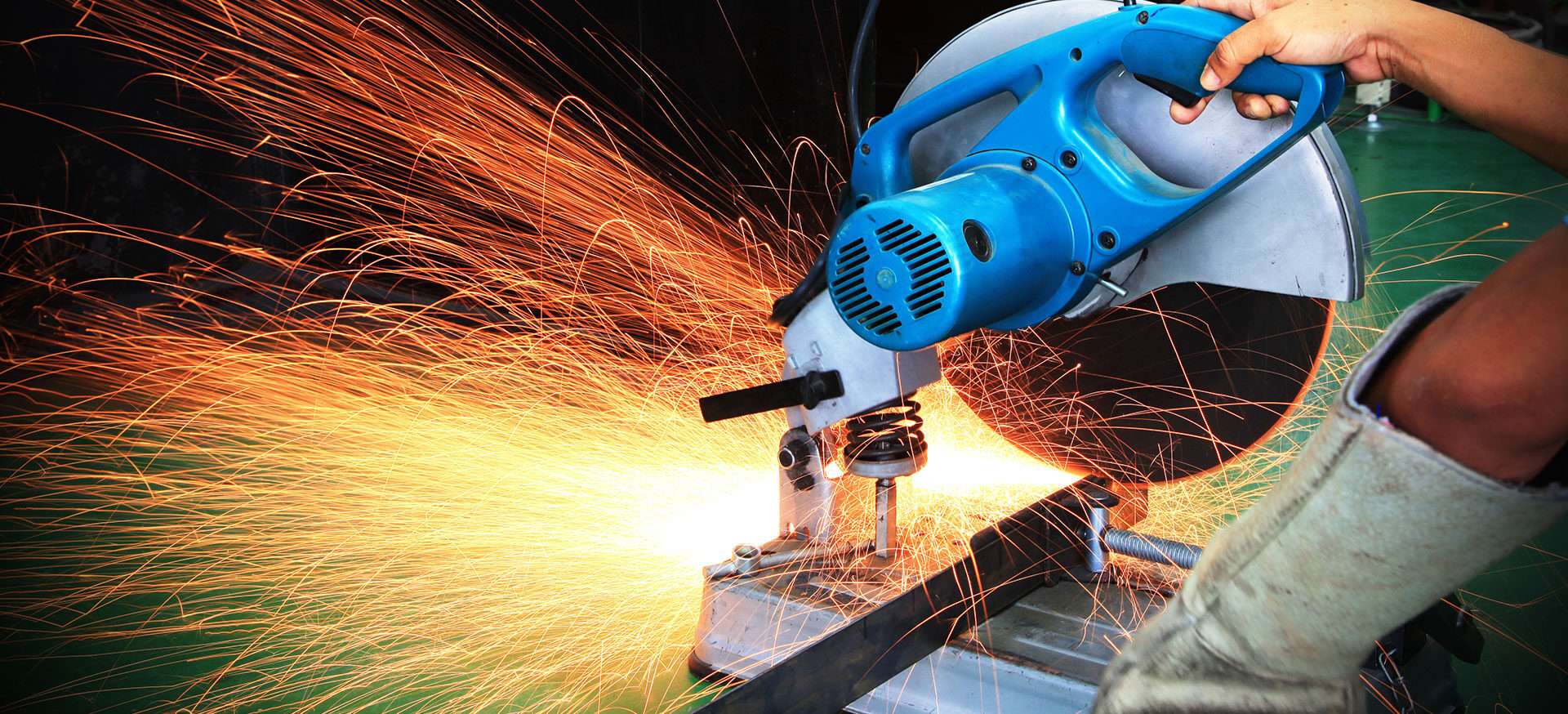
DOME manufactures resin bonded grinding wheels and grinding discs for metal grinding, weld removal, deburring, surface preparation and heavy-duty material removal. Our grinding wheels are engineered with high-performance abrasive grains – including aluminum oxide, zirconia alumina, and ceramic alumina – to deliver fast stock removal, consistent finish, and long service life on carbon steel, stainless steel, cast iron, and weld seams. Available in 50(2″) to 230mm(9″) diameters, with T27 depressed center design for angle grinders. Backed by EN12413 certification and 100% RPM testing. OEM and private label grinding wheels available for global distributors and tool brands.
Dome Abrasives Catalogue
What Is A Grinding Wheel?
A grinding wheel is a precision-engineered cutting tool composed of abrasive grains bonded together by a resin bond or other bonding agents, typically reinforced with fiberglass mesh for strength and safety. Unlike saw blades that cut with teeth, a resin bonded grinding wheel removes material through high-speed friction and abrasion. Thousands of microscopic abrasive grains on the wheel’s surface act as individual cutting edges, each shearing away tiny chips of metal with every rotation.
The Four Core Components of a Grinding Wheel
The Four Core Components of a Grinding Wheel
1. Abrasive Grain – The actual cutting particles that do the work. Common types include aluminum oxide for carbon steel and ferrous metals, zirconia alumina for stainless steel and tough alloys, ceramic alumina for high-performance grinding of hard materials, and silicon carbide for stone, concrete, and cast iron. The choice of abrasive grain determines cutting speed, wheel life, and the materials the wheel can handle effectively.
2. Resin Bond – The matrix that holds abrasive grains together. A resin bonded grinding wheel uses synthetic resin—typically phenolic resin—as the binding agent. The bond controls how firmly grains are retained: a harder bond extends life on soft materials, while a softer bond releases dull grains to expose fresh, sharp cutting edges—a process known as self-sharpening. Resin bonds offer flexibility, shock resistance, and cooler grinding compared to vitrified or metal bonds, making them ideal for high-speed angle grinder applications.
3. Fiberglass Reinforcement – Multiple layers of fiberglass mesh embedded within the wheel provide the tensile strength needed to withstand extreme centrifugal forces at high RPM. Without this reinforcement, a grinding wheel would shatter under the stress of high-speed operation. The fiberglass acts like rebar in concrete—adding structural integrity while allowing the wheel to remain thin enough for efficient cutting.
4. Porosity – The microscopic pores between abrasive grains serve two critical functions: they allow metal chips to escape from the cutting zone and help dissipate heat, preventing workpiece burn and extending wheel life.
Grinding Wheels, Grinding Discs & Abrasive Wheels
Grinding wheels are also commonly referred to as grinding discs or abrasive grinding wheels, particularly when used with angle grinders. The terminology varies by market and application, but all refer to abrasive products designed for material removal, weld grinding, deburring, edge preparation and surface grinding.
Grinding wheels typically refer to the broader category of bonded abrasives used on stationary or hand‑held machines. Grinding discs are the same product category, but the term is more common in markets like the UK and Australia. Abrasive grinding wheels and abrasive grinding discs are additional synonyms used across different regions and industries.
Grinding Wheels by Material
Grinding removes material at a different rate than cutting—it demands abrasives that withstand continuous friction, heat buildup, and side pressure. Selecting the right grinding wheel for your specific metal type ensures faster stock removal, longer wheel life, and a superior surface finish. Here’s how to match your abrasive to your material.

Metal Grinding Wheels
Our metal grinding wheels are designed for fast, aggressive material removal on carbon steel, mild steel, and structural sections. The metal grinding disc uses aluminum oxide grain in a tough resin bond to handle heavy feed rates without glazing. For general fabrication and maintenance, grinding wheels for metal deliver consistent performance across a wide range of applications. When you need a reliable grinding disc for metal for beveling, weld dressing, or surface preparation, our general-purpose range offers excellent value and durability.
Steel Grinding Wheels
For carbon steel, tool steel, and high-strength alloys, our steel grinding wheel provides the cutting action needed for efficient stock removal. The steel grinding disc features a reinforced bond that withstands the heat and pressure of heavy grinding on steel sections. A grinding wheel for steel is formulated to maintain its cutting edge through mill scale and surface impurities. For workshop tasks like edge grinding and surface finishing, our grinding discs for steel deliver consistent results with minimal dressing.
Stainless Steel Grinding Wheels
Grinding stainless steel requires careful heat management to prevent work-hardening, discoloration, and contamination. Our stainless steel grinding wheel uses specialized ceramic or zirconia grains that stay cool under pressure. The stainless steel grinding disc incorporates a low-iron bond to prevent iron embedment and preserve corrosion resistance.
Cast Iron Grinding Wheels
Cast iron’s high carbon content and hard surface structure require a grinding wheel that stays sharp under heavy load. Our cast iron grinding wheel uses silicon carbide grains—harder than aluminum oxide—to effectively cut through this brittle material. A cast iron grinding disc maintains its edge against the abrasive graphite flakes in cast iron, delivering consistent stock removal on engine blocks, pipes, and machine bases. The grinding wheel for cast iron is specifically formulated to resist loading and glazing on this challenging material.
Carbon Steel Grinding Wheels
For fabrication shops working primarily with carbon steel, our carbon steel grinding wheel delivers dependable performance at an economical price point. A carbon steel grinding disc uses aluminum oxide grain in a durable resin bond, offering the right combination of cut speed and wheel life. The grinding wheel for carbon steel handles everything from weld grinding to surface blending on mild steel, angle iron, and structural sections.
Quick Material Selection Guide
| Workpiece Material | Recommended Grain | Key Feature |
|---|---|---|
| Carbon Steel | Aluminum Oxide | Tough, self-sharpening, cost-effective |
| Stainless Steel | Zirconia or Ceramic | Cool cutting, low contamination |
| Cast Iron | Silicon Carbide | Hard, aggressive, loading-resistant |
Grinding Wheels by Abrasive Grain
The abrasive grain determines how a grinding wheel cuts, wears, and handles heat. Selecting the right mineral for your workpiece material ensures faster stock removal, cooler operation, and longer wheel life. Here’s how to match your abrasive to the job.
Aluminum Oxide Grinding Wheels
Our aluminum oxide grinding wheel is the industry standard for general-purpose metal grinding on carbon steel and structural sections. The aluminum oxide grinding disc fractures at a controlled rate, continuously exposing fresh, sharp edges for consistent stock removal. For everyday fabrication and maintenance, the aluminum oxide abrasive wheel delivers reliable performance at an economical cost-per-cut. Use an aluminum oxide wheel for metal whenever you need dependable, no-fuss grinding on mild steel and low-alloy workpieces.
Zirconia Grinding Wheels
The zirconia grinding wheel exhibits a unique self-sharpening mechanism that activates under elevated temperatures—preventing glazing and maintaining aggressive cut rates on stainless steel and high-strength alloys. A zirconia grinding disc micro-fractures as heat builds, continuously exposing fresh cutting edges without shedding large abrasive chunks. The zirconia abrasive wheel offers superior longevity compared to standard aluminum oxide, while the zirconia alumina grinding wheel delivers the toughness needed for heavy feed rates on tough materials like Inox and tool steels.
Ceramic Grinding Wheels
Dome manufactures ceramic grinding discs featuring 100% ceramic abrasive cloth on a reinforced fibreglass backing. The ceramic grinding disc runs significantly cooler than conventional abrasives—critical for heat-sensitive aerospace alloys, hardened tool steels, and nickel-based superalloys. A ceramic abrasive wheel minimizes the heat-affected zone and prevents post-grinding cracking. For demanding applications where surface integrity matters most, the ceramic grinding wheel for metal delivers precision and performance that standard abrasives cannot match.
Quick Abrasive Selection Guide
| Grain Type | Fracture Behavior | Best-Suited Materials |
|---|---|---|
| Aluminum Oxide | Controlled, blocky fracture | Carbon steel, mild steel, structural sections |
| Zirconia | Heat-activated micro-fracture | Stainless steel, Inox, high-strength alloys |
| Ceramic | Microscopic, continuous self-sharpening | Hardened steel, superalloys, titanium |
Grinding Wheel Types
The shape designation of a grinding wheel—whether flat or depressed center—determines how it mounts to your machine, the angle at which you can work, and the types of surfaces you can reach. Selecting the correct grinding wheel type for your grinder and application ensures both safety and grinding efficiency. Here‘s how to match the shape to your tool.
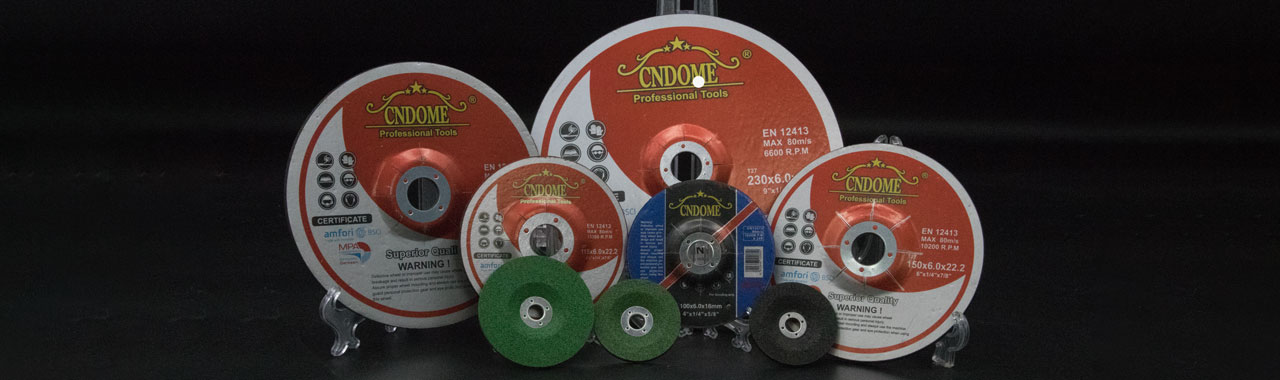
Type 27 Grinding Wheels
The Type 27 grinding wheel features a dish-shaped, recessed center that offsets the grinding face forward. This depressed center allows the spindle and locking nut to sit below the grinding surface, enabling the wheel to work on flat surfaces without interference from the mounting hardware.
A Type 27 grinding disc is specifically designed for right-angle grinders and operates optimally at a 30-degree angle for offhand stock removal, weld smoothing, and beveling. The depressed center grinding wheel is the standard choice for:
- Weld preparation and grinding
- Surface preparation and beveling
- Moderate to heavy stock removal
- Grinding on flat surfaces where guard clearance is limited
A Type 27 wheel for angle grinder is available in diameters from 4″ to 9″ and typically features multiple fiberglass reinforcements for maximum safety. When you need a Type 27 abrasive wheel for versatile grinding on steel, stainless, or cast iron, this is the shape that delivers the clearance and control you need.
Type 1 Grinding Wheels
The Type 1 grinding wheel features a completely flat profile with no raised center—classified as a straight wheel. A Type 1 grinding disc requires full support from the machine‘s flanges and is the standard shape for fixed-mount grinders.
The Type 1 abrasive wheel is commonly used on:
- Bench grinders – for tool sharpening and general-purpose grinding
- Pedestal grinders – for heavier, floor-mounted operations
- Tool and cutter grinders – where precision flat-wheel grinding is required
A flat grinding wheel (Type 1) offers the full width of the abrasive face for maximum contact area, making it ideal for surface grinding, sharpening, and finishing operations where a depressed center is not required. Choose the Type 1 grinding wheel whenever your workpiece is small enough to be held by hand and you need more precise grinding than an angle grinder can provide.
Bench Grinding Wheels
A bench grinding wheel is mounted directly onto a benchtop grinding machine, making it the go-to choice for smaller workshops and lighter workloads. A bench grinder wheel typically comes in diameters from 6″ to 8″ and is available in coarse grit for rough grinding and fine grit for finishing.
Grinding wheels for bench grinder applications include:
- Sharpening drill bits, chisels, and lathe tools
- Deburring and shaping small metal parts
- Light surface preparation and weld cleanup
- General-purpose grinding on carbon steel and mild steel
Bench grinder wheels are typically Type 1 (flat) and are available in aluminum oxide for general steel grinding or silicon carbide for non-ferrous metals and carbide tools. For workshop professionals who need reliable, everyday sharpening and shaping, a quality bench grinding wheel is an essential tool.
Pedestal Grinding Wheels
A pedestal grinding wheel is mounted on a floor-standing pedestal grinder, offering greater stability and power than benchtop models. Pedestal grinder wheels are typically larger and heavier-duty, designed for continuous operation in industrial environments.
Pedestal grinding wheel applications include:
- Heavy stock removal on large workpieces
- Off-hand grinding where accuracy is not critical
- Snagging and fettling in foundry and fabrication shops
- Continuous production grinding
Like bench grinder wheels, pedestal wheels are usually Type 1 (flat) and available in various grits and abrasive grains to suit different materials. For heavy-duty workshops, manufacturing facilities, and maintenance departments, a pedestal grinder wheel delivers the durability and stability needed for demanding grinding tasks.
Quick Wheel Type Selection Guide
| Wheel Type | Shape | Typical Mounting | Primary Application |
|---|---|---|---|
| Type 27 | Depressed center | Angle Grinder | Weld grinding, beveling, stock removal |
| Type 1 | Flat profile | Bench/Pedestal Grinder | Sharpening, surface grinding, finishing |
| Bench | Type 1 (flat) | Benchtop grinder | Small parts, tool sharpening, deburring |
| Pedestal | Type 1 (flat) | Floor-standing grinder | Heavy stock removal, continuous production |
Grinding Wheels by Machine
Every grinding machine delivers power differently—high RPM for hand-held agility, low-speed torque for stationary precision, or continuous load for production runs. Selecting the right grinding wheel for your specific machine ensures safe operation, optimal stock removal, and consistent results. Here’s how to match your abrasive to your equipment.
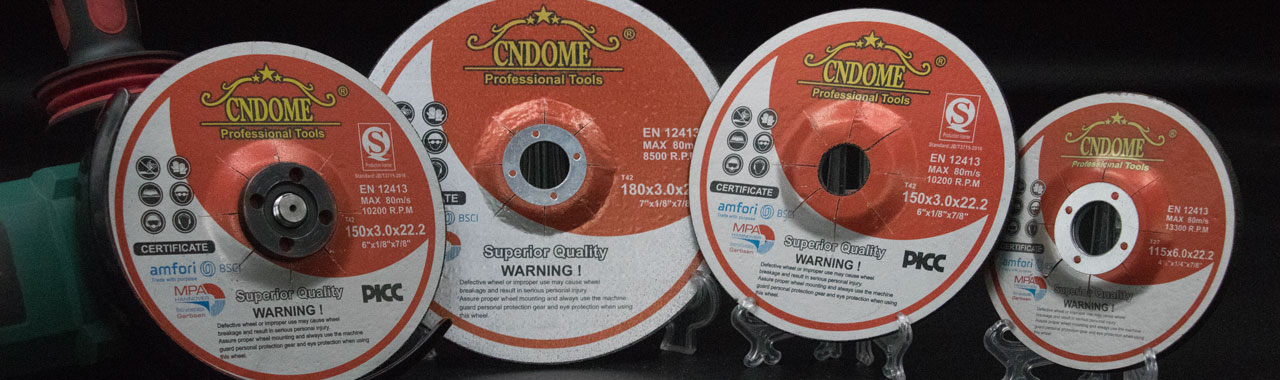
Angle Grinder Grinding Wheels
Our angle grinder grinding wheel is engineered for the extreme rotational speeds (11,000+ RPM) of hand-held tools. An angle grinder grinding disc features a depressed center (Type 27) design, allowing the wheel to work at a 30-degree angle for efficient stock removal on flat surfaces.
For daily fabrication and maintenance, a grinding disc for angle grinder delivers consistent performance on welds, bevels, and surface preparation. The grinding wheel for angle grinder is available in multiple grits and abrasive grains—from aluminum oxide for carbon steel to zirconia for stainless—ensuring you have the right wheel for every material.
Typical applications include:
- Weld grinding and smoothing
- Beveling and edge preparation
- Surface cleaning and rust removal
- Heavy stock removal on structural steel
Bench Grinder Wheels
A bench grinder grinding wheel is mounted directly onto a benchtop grinding machine, offering a stable platform for smaller workpieces and tool maintenance. The grinding wheel for bench grinder typically features a flat Type 1 profile and is available in coarse grit for rapid stock removal or fine grit for finishing.
Bench grinding wheel applications include:
- Sharpening drill bits, chisels, and lathe tools
- Deburring and shaping small metal parts
- Light surface preparation and cleanup
- General-purpose grinding on carbon steel
Bench grinder wheels are available in aluminum oxide for general steel grinding or silicon carbide for non-ferrous metals and carbide tooling. Choose the right grit and bond for your specific workshop needs.
Pedestal Grinder Wheels
A pedestal grinder grinding wheel is mounted on a floor-standing pedestal grinder, offering greater stability and power than benchtop models. The grinding wheel for pedestal grinder is typically larger and heavier-duty, designed for continuous operation and demanding industrial environments.
Pedestal grinding wheel applications include:
- Heavy stock removal on large workpieces
- Off-hand grinding where accuracy is less critical
- Snagging and fettling in foundry and fabrication shops
- Continuous production grinding
Like bench grinder wheels, pedestal wheels are available in various grits and abrasive grains—aluminum oxide for steel, silicon carbide for cast iron and non-ferrous metals.
Stationary Grinding Wheels
For automatic or semi-automatic industrial grinding systems, our stationary grinding wheel prioritizes dimensional stability and long service life. A stationary grinding disc uses coarser grit blends and durable bonds to maintain free-cutting action through hundreds of cycles.
Industrial grinding wheel applications include:
- High-volume production grinding
- Automated grinding lines
- Large surface area preparation
- Heavy-duty stock removal on billets and castings
Stationary wheels are available in large diameters and a full range of abrasive grains—aluminum oxide, zirconia, ceramic, and silicon carbide—to match your specific production requirements.
Quick Machine Selection Guide
| Machine Type | Typical Wheel Type | Key Demand | Common Sizes |
|---|---|---|---|
| Angle Grinder | Type 27 (Depressed Center) | High RPM, mobility, versatility | 4″–9″ (100–230mm) |
| Bench Grinder | Type 1 (Flat) | Precision, sharpening, small parts | 6″–8″ (150–200mm) |
| Pedestal Grinder | Type 1 (Flat) | Heavy stock removal, continuous use | 8″–14″ (200–355mm) |
| Stationary Machine | Type 1 or custom | Production runs, consistency | 14″–24″ (355–610mm) |
Grinding Wheels by Size
Grinding wheel diameter determines your reach, stock removal rate, and machine compatibility. Select the right size for your angle grinder and application to achieve efficient material removal and a smooth finish.

100mm Grinding Wheels
The 100mm grinding wheel (4-inch) is the go-to for pneumatic die grinders and compact electric tools. A 4 inch grinding wheel excels at surface preparation, rust and paint removal, and deburring small parts. For light fabrication and maintenance tasks where maneuverability is key, a 100mm grinding disc delivers the control you need. The 4 inch grinding disc is ideal for accessing confined spaces and working on small workpieces.

115mm Grinding Wheels
The 115mm grinding wheel (4.5-inch) is the most common size for angle grinders, offering a balance of control and coverage. A 4.5 inch grinding wheel handles a wide range of tasks—from weld grinding and deburring to surface preparation on steel and stainless. For daily fabrication and maintenance, the 115mm grinding disc delivers consistent performance. The 4.5 inch grinding disc fits most standard angle grinders, making it the workshop workhorse.

125mm Grinding Wheels
Stepping up to higher-powered angle grinders, the 125mm grinding wheel (5-inch) offers deeper reach and greater surface coverage than the 115mm size. A 5 inch grinding wheel is ideal for heavy weld removal, surface grinding on larger workpieces, and grinding on stainless and mild steel. For structural fabrication and heavier stock removal, a 125mm grinding disc maintains efficiency while covering more area. The 5 inch grinding disc is a popular choice for metalworking shops that need extra reach without stepping up to a 7-inch wheel.

180mm Grinding Wheels
The 180mm grinding wheel (7-inch) represents the upper limit of portable grinding power. A 7 inch grinding wheel is designed for heavy fabrication, beveling plates, and aggressive stock removal on heat-sensitive steel, cast iron, and rails. For industrial applications and 24/7 operations, a 180mm grinding disc offers the perfect balance of surface area coverage and manageability. The 7 inch grinding disc is the standard for heavy-duty angle grinders in fabrication shops and construction sites.

230mm Grinding Wheels
The 230mm grinding wheel (9-inch) is the largest size for hand-held angle grinders, delivering maximum surface coverage and deep cutting capacity. A 9 inch grinding wheel is purpose-built for heavy weld removal and other heavy-duty grinding applications on stainless steel, mild steel, and aerospace alloys. For industrial environments and 24/7 operations, a 230mm grinding disc provides the power and coverage needed for the most demanding tasks. The 9 inch grinding disc is the choice for heavy construction, shipbuilding, and large-scale fabrication.
Quick Size Selection Guide
| Diameter | Typical Tool | Best For | Key Advantage |
|---|---|---|---|
| 100mm / 4″ | Compact / Pneumatic grinder | Tight spaces, light prep, deburring | Maximum maneuverability |
| 115mm / 4.5″ | 700–900W angle grinder | General fabrication, welds, surface prep | Versatile workshop standard |
| 155mm / 5″ | 900–1,100W angle grinder | Heavy welds, larger surfaces, stainless | Extended reach and coverage |
| 180mm / 7″ | 1,400W+ angle grinder | Heavy fabrication, beveling, industrial use | Balance of power and control |
| 230mm / 9″ | 2,000W+ angle grinder | Maximum stock removal, heavy construction | Largest hand-held coverage |
Grinding Wheel Grit Guide
Grit size determines the surface finish and material removal rate of your grinding operation. Lower grit numbers indicate coarser abrasive grains for rapid stock removal, while higher grit numbers deliver finer grinding and smoother finishes. Selecting the correct grit ensures efficient grinding without overworking the material.
Coarse Grit Grinding Wheels
A coarse grinding wheel is your first choice for heavy material removal, weld smoothing, and shaping operations. The coarse grit grinding wheel uses large, aggressively cutting grains that remove material quickly, making it ideal for initial grinding passes on rough surfaces.
Our coarse grinding disc is available in 16 grit, 24 grit, and 30 grit—each progressively finer but still within the coarse range. A 16 grit grinding wheel offers the most aggressive cut, perfect for rapid descaling and heavy weld removal. The 24 grit grinding wheel balances speed with a slightly smoother finish, while the 30 grit grinding wheel provides a transition to medium grits for subsequent finishing.
Best for: Heavy weld smoothing, rust removal, shaping, and preparation of rough surfaces.
Medium Grit Grinding Wheels
A medium grit grinding wheel offers the most versatility, bridging the gap between aggressive stock removal and moderate surface finishing. The 36 grit grinding wheel delivers efficient material removal with a noticeably smoother finish than coarser options, making it suitable for general fabrication.
The 46 grit grinding wheel is the workshop standard—balancing cut rate and finish quality across most carbon steel and stainless applications. For a finer medium grit, the 60 grit grinding wheel provides a smooth surface that requires minimal additional finishing.
Best for: General-purpose grinding, surface preparation, weld blending, and finishing before fine grit passes.
Fine Grit Grinding Wheels
A fine grit grinding wheel is designed for the final stages of grinding, delivering smooth surfaces and precise finishes. The fine grit grinding disc uses smaller, closely packed grains that remove minimal material while producing a refined surface.
Our 80 grit grinding wheel offers a smooth finish suitable for most general finishing tasks. For applications requiring a near-polished surface—such as tool sharpening or final surface preparation before coating—the 100 grit grinding wheel and 120 grit grinding wheel deliver progressively finer results. A 120 grit grinding wheel produces a finish that often eliminates the need for subsequent polishing.
Best for: Final finishing, tool sharpening, surface refinement, and preparing surfaces for coating or welding inspection.
Quick Grit Selection Guide
| Grit Range | Grit Numbers | Best For | Surface Finish |
|---|---|---|---|
| Coarse | 16, 24, 30 | Heavy stock removal, weld smoothing | Rough, with visible scratches |
| Medium | 36, 46, 60 | General-purpose grinding, weld blending | Smooth, moderate finish |
| Fine | 80, 100, 120 | Finishing, sharpening, surface refinement | Fine, near-polished surface |
Grinding Wheel Thickness
Grinding wheel thickness directly impacts material removal rate, wheel life, and grinding control. Unlike cutting discs—which prioritize thin profiles for narrow kerfs—grinding wheels require greater thickness to withstand side pressure, continuous friction, and heavy feed rates. Selecting the right gauge ensures efficient grinding without premature wear or wheel failure.
Thin Grinding Wheels
A thin grinding wheel (typically 3mm) offers greater maneuverability for light stock removal and access to confined areas. The 3mm grinding wheel is the thinnest profile suitable for grinding applications, delivering a balance between material removal and control. Choose a thin grinding wheel when you need to:
- Grind in narrow gaps and tight corners
- Perform light weld blending and surface preparation
- Reduce operator fatigue on extended grinding tasks
- Minimize material waste on thin workpieces
The thin grinding wheel is ideal for maintenance, repair, and light fabrication where precision matters more than aggressive stock removal.
Standard Grinding Wheels
For daily grinding on structural steel, stainless, and cast iron, the 4mm grinding wheel is the industry standard—offering sufficient thickness for efficient stock removal without sacrificing control. A 4mm wheel provides:
- Good balance of material removal and wheel life
- Stable grinding without excessive vibration
- Versatility across multiple materials and applications
- Cost-effective performance for general fabrication
Thick Grinding Wheels
A thick grinding wheel (6mm–8mm) is designed for continuous, heavy-duty grinding where maximum stock removal and longest wheel life are priorities. The 6mm grinding wheel delivers significantly longer service life than thinner profiles, making it cost-effective for high-volume operations. For the most demanding grinding tasks, the 8mm grinding wheel offers:
- Maximum abrasive volume for extended continuous use
- Excellent resistance to side-loading and impact
- Consistent performance on hard materials and heavy sections
Heavy Duty Grinding Wheel
A heavy duty grinding wheel (typically 8mm+) is engineered for foundry snagging, large-scale fabrication, and continuous production grinding. These extra-thick wheels withstand the highest feed pressures and longest duty cycles without premature wear or structural failure. Use a heavy duty grinding wheel when:
- Operating on large castings, billets, and heavy structural sections
- Running automated or semi-automated grinding systems
- Grinding hard-to-machine materials like high-alloy steels
- Maximizing uptime with fewer wheel changes
Quick Thickness Selection Guide
| Thickness | Gauge | Best For | Key Feature |
|---|---|---|---|
| 3mm | Thin | Tight spaces, light blending, maintenance | Agility and control |
| 4mm | Standard | General fabrication, weld grinding | Versatile, cost-effective |
| 6mm | Thick | Heavy stock removal, production grinding | Extended wheel life |
| 8mm+ | Heavy Duty | Foundry, large sections, continuous use | Maximum durability |
Grinding Wheel Applications
Different grinding applications place unique demands on wheel selection—from aggressive stock removal on heavy welds to precision deburring on finished parts. Choosing the right grinding wheel for your specific application ensures efficient material removal, consistent finish quality, and maximum wheel life.
Weld Grinding
A weld grinding wheel is designed to remove weld beads, smooth joints, and prepare surfaces for finishing or coating. The grinding wheel for welds typically uses a depressed center (Type 27) profile for angle grinder work, with coarse grit for rapid material removal.
Applications include:
- Bead removal on structural steel and pipe
- Weld preparation for non-destructive testing
- Blending welded joints to smooth transitions
- Removing spatter and excess filler material
A weld removal grinding wheel requires aggressive grain action and sufficient thickness to withstand side pressure during beveling. The weld grinding disc is available in various grits—coarse for initial removal, medium for blending, and fine for final finishing before coating or inspection.
Deburring
A deburring grinding wheel is used to remove sharp edges, burrs, and machining marks from cut or machined parts. The grinding wheel for deburring typically uses finer grits to achieve a smooth, safe edge without removing excessive base material.
Applications include:
- Deburring laser-cut and plasma-cut parts
- Removing sharp edges from machined components
- Smoothing cut edges on sheet metal and plate
- Preparing parts for coating or assembly
A metal deburring wheel is essential for safety and quality in fabrication, stamping, and machining operations where finished parts must be safe to handle and ready for further processing.
Surface Grinding
A surface grinding wheel is used to achieve flat, smooth, and parallel surfaces on metal workpieces. The grinding wheel for surface grinding typically features a straight (Type 1) profile for stationary surface grinders, with medium to fine grits for precision finishing.
Applications include:
- Preparing steel plates for welding or coating
- Achieving flatness and parallelism on machined parts
- Removing surface imperfections and scale
- Final surface finishing before inspection
A surface grinding disc is available in various abrasives—aluminum oxide for carbon steel, silicon carbide for cast iron, and ceramic for hardened alloys.
Edge Grinding
An edge grinding wheel is used for beveling, chamfering, and edge preparation on plates, pipes, and structural sections. The grinding wheel for edge preparation requires a wheel that maintains its profile during angled grinding operations.
Applications include:
- Beveling plate edges for welding
- Chamfering pipe ends for joint preparation
- Removing sharp edges on structural sections
- Preparing edges for coating or inspection
Edge grinding requires a wheel with excellent side-loading resistance and consistent wear characteristics to maintain the desired bevel angle throughout the operation.
Heavy-Duty Grinding
A heavy duty grinding wheel is designed for foundry snagging, large-scale fabrication, and continuous production grinding. The heavy duty grinding disc uses extra-thick profiles (6mm–8mm) and coarse grits for maximum material removal under extreme conditions.
Applications include:
- Snagging castings and forgings
- Grinding heavy structural sections
- Continuous production grinding
- Removing mill scale and surface defects
An industrial grinding wheel is engineered for the highest feed pressures and longest duty cycles without premature wear or structural failure—essential for 24/7 manufacturing environments.
Stock Removal
A stock removal grinding wheel is purpose-built for rapid material removal on large workpieces and heavy sections. The grinding wheel for material removal uses coarse grits (16–30) and generous thickness to maximize cut rate.
Applications include:
- Rapid descaling and surface preparation
- Heavy weld removal on structural steel
- Shaping and sizing castings and forgings
- Removing material before finishing passes
An aggressive grinding wheel is the first step in any multi-stage grinding process—removing material quickly and efficiently before moving to medium or fine grits for finishing.
Quick Application Selection Guide
| Application | Recommended Grit | Recommended Thickness | Key Feature |
|---|---|---|---|
| Weld Grinding | Coarse–Medium (24–46) | 4–6mm | Aggressive cut, side-load resistance |
| Deburring | Medium–Fine (60–100) | 3–4mm | Smooth edge, minimal material removal |
| Surface Grinding | Medium–Fine (46–120) | 3–4mm | Precision finishing, flat surfaces |
| Edge Grinding | Medium (36–60) | 4–6mm | Profile retention, side-load resistance |
| Heavy-Duty Grinding | Coarse (16–36) | 6–8mm+ | Maximum durability, continuous use |
| Stock Removal | Coarse (16–36) | 6–8mm | Fastest material removal |
Grinding Wheels for Different Industries
Every industry faces unique grinding challenges—from heavy stock removal in foundries to precision finishing in automotive repair. Selecting the right grinding wheel for your specific sector ensures maximum productivity, consistent quality, and operator safety.

Metal Fabrication
In metal fabrication, cutting and welding generate surface defects that demand aggressive stock removal followed by fine finishing. Our grinding wheels for metal fabrication are engineered to handle weld smoothing, beveling, and surface preparation on carbon steel and stainless sections. A metal fabrication grinding disc offers the versatility to transition from coarse to fine grits as projects move from rough shaping to final finishing.

Construction
Construction environments demand grinding wheels that withstand dust, debris, and continuous use. Our construction grinding wheels are reinforced for impact resistance and side-loading—essential for surface preparation, concrete grinding, and steel beam finishing. Grinding discs for construction are available in coarse grits for rapid material removal on rebar, structural steel, and concrete surfaces.

Automotive
Automotive grinding requires precision and heat management to avoid damaging heat-sensitive components. Our automotive grinding wheels are designed for bodywork, weld smoothing, and surface preparation on thin-gauge steel and stainless. An automotive grinding disc removes paint, rust, and weld spatter without warping panels or generating excessive heat—critical for collision repair and restoration work.

Shipbuilding
Shipbuilding demands grinding wheels that perform in high-humidity environments and on corrosion-resistant alloys. Our shipbuilding grinding wheels handle heavy stock removal on hull plates, weld preparation, and surface finishing on stainless and marine-grade steel. Marine grinding discs are formulated with contamination-free bonds to preserve the corrosion resistance of critical marine components.

Foundry
Foundry environments are among the harshest for grinding operations—high dust, continuous use, and heavy stock removal on castings. Our foundry grinding wheels are designed for snagging, gate removal, and surface cleaning on cast iron and steel castings. A foundry grinding disc features extra-thick profiles (6mm–8mm) and coarse grits for maximum material removal under extreme conditions.

Railway
Rail grinding demands the highest level of reinforcement and durability to handle high-manganese steel and continuous use. Our railway grinding wheels are engineered for rail profiling, weld smoothing, and defect removal on track sections. Rail grinding wheels maintain aggressive cut rates on hard-to-machine rail steel, making them essential for track maintenance and repair crews.
Quick Industry Selection Guide
| Industry | Primary Application | Recommended Product |
|---|---|---|
| Metal Fabrication | Weld grinding, surface prep, finishing | Versatile grinding wheels, 4–6mm thickness |
| Construction | Surface prep, concrete grinding, steel finishing | Reinforced grinding wheels, coarse grits |
| Automotive | Bodywork, weld smoothing, rust removal | Precision grinding wheels, medium–fine grits |
| Shipbuilding | Hull grinding, weld prep, corrosion protection | Marine-grade grinding discs, low-contamination bonds |
| Foundry | Snagging, gate removal, casting cleaning | Heavy-duty grinding wheels, 6–8mm thickness |
| Railway | Rail profiling, weld smoothing, defect removal | High-durability rail grinding wheels |
Grinding Wheel vs Cutting Wheel
Grinding wheels and cutting wheels are both abrasive discs used with angle grinders, but they serve fundamentally different purposes. Using the wrong type—such as using a cutting disc for grinding—is not only inefficient but also dangerous. Here is a detailed comparison to help you choose the right tool for your job.
| Criteria | Grinding Wheel | Cutting Wheel |
|---|---|---|
| Purpose | Material removal, surface grinding, weld dressing | Parting off, slotting, straight cutting |
| Thickness | 3–8mm (thick, rigid body) | 1.0–3.0mm (thin, narrow kerf) |
| Operation | Side grinding – designed to withstand lateral pressure | Edge‑only cutting – cannot handle side loads |
| Material Removal | High – aggressive stock removal | Low – minimal material turned into swarf |
| Surface Finish | Moderate to fine – depends on grit size | Clean, narrow cut – minimal burrs |
| Typical Applications | Weld dressing, rust removal, beveling, surface preparation | Cutting rebar, pipe, sheet metal, profiles |
| Safety | Safe for side loading; reinforced for lateral forces | Never apply side pressure – risk of disc shattering |
How to Choose a Grinding Wheel
Choosing the right grinding wheel doesn’t have to be complicated. Just follow these four steps: Material → Purpose → Size → Abrasive. Go through them in order, and you’ll find the right wheel for your application.
Step 1: Choose Your Material
Material determines the abrasive type. Choose the wrong abrasive, and you get low efficiency, short wheel life, and damaged workpieces.
- Carbon steel, structural steel → Aluminum Oxide – cost‑effective and durable, the industry standard for carbon steel grinding.
- Stainless steel (304/316), alloy steel → Zirconia – self‑sharpening, continuously exposing fresh cutting edges, ideal for high‑pressure grinding.
- Stainless steel, titanium alloys, tool steels → Ceramic – the most aggressive abrasive, designed for high‑power machines and difficult‑to‑grind materials.
- Stone, concrete, cast iron → Silicon Carbide – extremely hard and sharp, perfect for hard brittle materials.
Choosing the wrong abrasive is the number one cause of poor grinding efficiency. Never use aluminium oxide on stainless steel, and don’t use ceramic on carbon steel—it’s overkill and wastes cost.
Step 2: Define Your Grinding Purpose
The task determines the grinding wheel type (shape).
| Grinding Task | Recommended Type | Why |
|---|---|---|
| Weld dressing | Depressed Center Wheel (Type 27) | Tilt at 15°–30° for side grinding, recessed design avoids interference |
| Surface grinding | Depressed Center Wheel (Type 27) | Large‑area flat work, flexible angle grinder operation |
| Tool sharpening | Flat Wheel (Type 1) | For bench grinders, delivers the highest precision |
| Casting cleaning | Cup Wheel (Type 11) / Heavy Duty Wheel | Cup design offers largest contact area for aggressive rough grinding |
| Tight‑space work | Thin Grinding Wheel (3–4mm) | Thinner than standard wheels, more manoeuvrable |
Step 3: Choose the Right Wheel Size
Your tool determines the size. The wheel diameter must match your angle grinder.
| Grinder Size | Wheel Diameter | Recommended Thickness | Best For |
|---|---|---|---|
| 4–4.5 inch | 100–115mm | 6mm | Precision work, general grinding, weld dressing |
| 5 inch | 125mm | 6mm | North American standard, higher efficiency than 4.5″ |
| 7 inch | 180mm | 6–8mm | Heavy grinding, thick‑plate surface work |
| 9 inch | 230mm | 6–8mm | Industrial heavy‑duty, large structures, shipbuilding |
Core rule: match the diameter to your tool. Never mount a 7‑inch wheel on a 4.5‑inch grinder—the guard won’t fit, and it’s a serious safety hazard.
Step 4: Select the Abrasive Type
The abrasive determines grinding efficiency, wheel life, and final surface finish.
| Abrasive | Code | Suitable Materials | Key Advantage | Life vs Aluminium Oxide |
|---|---|---|---|---|
| Aluminium Oxide | BFA | Carbon steel, structural steel, cast iron | Cost‑effective, versatile | 1× |
| Zirconia | Zirconia | Stainless steel, alloy steel | Self‑sharpening, 2–10× longer life | 2–3× |
| Ceramic | Ceramic | Stainless steel, titanium, tool steels | Highest removal rate, longest life | 3–10× |
| Silicon Carbide | SiC | Stone, concrete, cast iron | Extremely hard, sharp cutting | Material‑dependent |
Zirconia delivers 50% faster grinding than aluminium oxide and lasts 2–3× longer. Ceramic offers 3–10× the life of aluminium oxide under heavy‑duty conditions.
Recommended Wheel – Your Final Choice
Based on the four steps above, DOME recommends the right grinding wheel for your specific needs:
| Your Combination | Recommended Product | Example Spec |
|---|---|---|
| Carbon steel + weld grinding + 4.5″ grinder | Aluminium Oxide Depressed Center Wheel | 115×6×22.23mm, Type 27 |
| Stainless steel + surface grinding + 4.5″ grinder | Zirconia Depressed Center Wheel | 115×6×22.23mm, Type 27 |
| Stainless steel + heavy roughing + 7″ grinder | Ceramic Depressed Center Wheel | 180×6×22.23mm, Type 27 |
| Casting cleaning + 9″ high‑power grinder | Heavy Duty Cup Wheel | 230×8×22.23mm, Type 11 |
| Tool sharpening + bench grinder | Aluminium Oxide Flat Wheel | 150×25×32mm, Type 1 |
OEM & Private Label Grinding Wheel Manufacturer
Grinding wheel OEM customisation goes far beyond simply changing a label. Dome Abrasive precisely matches abrasive type, bond hardness, and packaging solutions based on your sales channels, target markets, and end‑user requirements – ensuring you receive the safest, most stable, and highest‑performance grinding wheels on the market, helping you build competitive differentiation in a crowded marketplace.
Deep Customization
Cooperate with the entire process from abrasive ratio to process plan, so that the grinding wheel can accurately match your equipment and working conditions.


Flexible Delivery
Supports rapid prototyping and verification, step-by-step mass production according to your sales situation, and reduces your inventory risk.
Full Quality Control
From raw material traceability to finished product inspection, we ensure that the performance of each batch of grinding wheels is highly stable, consistent, safe and reliable.


Market Recognition
The grinding wheels meet international standards and are exported to overseas markets, gaining recognition and trust from many foreign customers.
Grinding Wheel Manufacturing & Quality Control
Step 1: Customer Requirement
You provide your target market, materials to be ground, machines in use, annual volume, and any certification requirements. We assess feasibility and recommend an initial solution – abrasive type, bond hardness, specifications, and certification direction.
Step 2: Formula Design
Based on your grinding applications (carbon steel / stainless steel / cast iron / other) and performance targets (grinding efficiency / service life / heat control), we adjust abrasive grain type, bond hardness, and additive ratios. Formula freedom is the dividing line between “label‑changing” and “true customisation.”
Step 3: Sample Production
After the formula is confirmed, we produce samples for your testing. Samples come with preliminary test data – dimensional accuracy, hardness, dynamic balance – enabling verification on your own equipment.
Step 4: Performance Testing
You conduct actual grinding tests on your own equipment – verifying material removal rate, service life, surface quality, and safety. Production proceeds only after your approval. Our technical support team is available throughout testing for any adjustments needed.
Step 5: Mass Production
After sample approval, we move to full‑scale production. Fully automated lines in a climate‑controlled workshop ensure batch quality matches the approved samples. Every batch undergoes dimensional inspection, hardness testing, dynamic balance testing, and sample burst testing.
Step 6: Packaging & Delivery
Labels and cartons are designed to your brand VI – logo, specifications, and safety markings all aligned. Finished goods are shipped with a COA (Certificate of Analysis), fully traceable from raw material to finished product. Standard lead time is approximately 35 days.
Grinding wheel Customization Options
| Customization Item | Supported | Description |
|---|---|---|
| Diameter | ✔ | 100mm – 355mm, fits all angle grinders and stationary equipment |
| Thickness | ✔ | 3mm – 8mm, covering fine grinding to heavy roughing |
| Hardness | ✔ | Soft / Medium / Hard, adjusted to workpiece material and grinding pressure |
| Abrasive | ✔ | Aluminium Oxide / Zirconia / Ceramic / Silicon Carbide – matched to your material |
| Grit Size | ✔ | 16# – 120#, from rough grinding to finishing |
| Color | ✔ | Wheel body colour matched to your brand VI |
| Logo | ✔ | Brand marking on labels and wheel sides for visual consistency |
| Package | ✔ | Shrink‑wrap / Colour box / Display carton / Outer carton – full‑chain branding |
Certifications – Quality & Safety Compliance
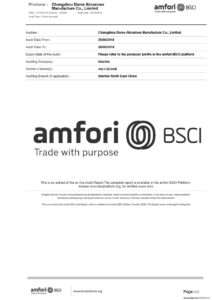
Dome grinding wheels are backed by the following international certifications—each independently verifying product safety, quality, and responsible manufacturing.





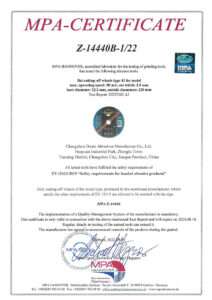
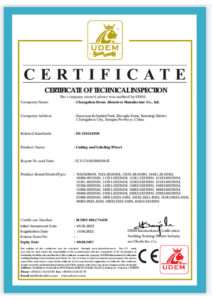

- EN12413 – European safety standard for bonded abrasive products. Covers burst strength, side load capacity, and maximum RPM – mandatory for market access in Europe.
- MPA – Independent abrasive wheel safety testing by Germany’s Hannover MPA laboratory. Confirms products meet rigorous third‑party safety standards for European market entry.
- CE – Mandatory EU conformity mark. Certifies compliance with health, safety, and environmental requirements – legal sale across all 27 EU member states.
- ISO9001 – International quality management system standard. Verifies full‑chain quality control from raw material to finished goods – ensuring batch‑to‑batch consistency and full traceability.
- BSCI – European supply chain social responsibility audit. Confirms compliance with labour rights, occupational health, and environmental standards – meeting major retailer and brand procurement requirements.
- PICC – Product liability insurance underwritten by People’s Insurance Company of China. Provides third‑party coverage for property damage or personal injury during use – reducing buyer risk and liability exposure.
Export Market – Regional Market Insights
Dome grinding wheels are exported to over 60 countries and regions worldwide. Behind each market’s popular specifications lies a distinct set of industrial structures, working habits, and application conditions. Below is a breakdown of popular sizes and the reasons behind them.

Europe
Popular Specification: 125×6.0×22.23mm (5‑inch grinding wheel)
European manufacturing is built on precision engineering and high‑value‑added products. The 125mm size offers approximately 18% more surface coverage than 115mm—making it more efficient for long weld seams and large‑area surface finishing. German and Nordic automotive supply chains, stainless steel fabrication, and general manufacturing rely heavily on this size. Batch‑to‑batch consistency is non‑negotiable. EN12413 and MPA certification are market entry requirements—buyers prioritise products with complete certification documentation.

Middle East
Popular Specification: 230×6.0×22.23mm (9‑inch grinding wheel)
The Middle East market is driven by construction and infrastructure mega‑projects. Large‑scale projects involve large‑diameter pipe welding, steel structure installation, and heavy equipment maintenance. 230mm is the largest size that fits a hand‑held angle grinder—paired with 6mm thickness, it delivers the maximum grinding coverage and material removal rates. Heavy plate welds, large‑bore pipe beveling, and structural surface preparation demand high‑intensity material removal within tight work windows. Fast delivery and thick‑wheel durability are critical purchasing factors.

Latin America
Popular Specification: 115×6.0×22.23mm (4.5‑inch grinding wheel)
The Latin American market is driven by automotive manufacturing and general metal fabrication. The 4.5‑inch size offers the best balance of portability, control, and grinding efficiency—machines are lightweight, one‑handed operation is possible, and they fit into most workspaces. In automotive parts manufacturing and general metalworking, 115mm is the standard angle grinder configuration, with machines typically in the 700–1000W range. Price sensitivity is high, and OEM brands dominate hardware retail channels.

Southeast Asia
Popular Specifications: 100×6.0x16mm (4‑inch grinding wheel) / 355mm large‑diameter cutting disc
The Southeast Asian market shows a “two‑ends‑large, middle‑small” demand pattern. The 4‑inch (100mm) grinding wheel is used for precision grinding, DIY, and light metalworking—compact machines with flexible control, ideal for family workshops and small repair shops. At the other end, the 355mm large‑diameter disc is used for construction and structural steel batch cutting on stationary saws. Power tool brand matching is strong—grinding wheels are often bundled as accessories with angle grinders.

Africa
Popular Specification: 230×6.0×22.23mm (9‑inch grinding wheel)
The African market is driven by mining, infrastructure development, and heavy equipment maintenance. South Africa serves as a regional trade hub, with mining and construction consuming large volumes of grinding wheels. The 230mm diameter paired with 6mm thickness is specifically designed for heavy‑duty grinding—suitable for mining equipment weld dressing, steel structure surface preparation, and foundry casting cleaning. Price sensitivity is the highest among all regions—cost‑performance is the primary purchasing factor. Buyers typically require flexible delivery options and competitive pricing.

North America
Popular Specification: 125×6.0×22.23mm (5‑inch grinding wheel)
North America is the world’s largest grinding wheel consumer market, accounting for approximately 35.4% of global market share. 125mm is the absolute mainstream size in North America—larger coverage area than 115mm, higher material removal per pass, making it ideal for long weld seams and large flat surface grinding. 5‑inch angle grinders feature more powerful motors (900–1200W), delivering better speed stability under heavy grinding loads. E‑commerce distribution is growing rapidly, with high demands on product consistency and packaging integrity—negative reviews often stem from batch‑to‑batch performance variation.
Grinding Wheel FAQ
1. What is a grinding wheel made of?
A grinding wheel is composed of three main components: abrasive grains (such as aluminium oxide, zirconia, or ceramic), a resin bond that holds the grains together, and fibreglass reinforcement for strength and safety. The abrasive grains do the actual cutting, the bond controls grain retention and release, and the fibreglass prevents the wheel from shattering at high speed.
2. What does “T27” or “Type 27” mean on a grinding wheel?
T27 (Type 27) is the standard designation for a depressed center grinding wheel. The recessed center allows the clamping nut to sit flush with the wheel surface, enabling the wheel to be used at a 15°–30° angle for side grinding. This is the most common grinding wheel type used on angle grinders.
3. What does “grit size” mean on a grinding wheel?
Grit size indicates the coarseness of the abrasive particles. Lower numbers mean coarser grit – 16# to 24# for rapid material removal and heavy grinding; 30# to 46# is the most versatile range for general fabrication; 60# to 80# is fine grit for finishing and smooth surface preparation. Choose grit size based on your material removal needs and desired surface finish.
4. What abrasive should I use for carbon steel grinding?
For carbon steel and structural steel, aluminium oxide (brown fused alumina) is the most cost‑effective choice. It offers good durability and fast cutting at an affordable price. For heavy‑duty carbon steel grinding, zirconia alumina provides longer life and higher material removal rates.
5. What abrasive is best for stainless steel grinding?
Zirconia alumina is the preferred abrasive for stainless steel – its self‑sharpening properties maintain cutting efficiency on tough, heat‑resistant materials. For high‑performance stainless grinding, ceramic alumina offers the highest material removal rates and longest life. Use iron‑free grinding wheels (Fe <1%) to prevent contamination and future rust.
6. Can I use the same grinding wheel for different metals?
Not recommended. Grinding wheels are formulated for specific materials – using a wheel designed for carbon steel on stainless steel will cause contamination and rapid grain dulling. Similarly, a wheel optimised for stainless steel is over‑specified and costly for carbon steel. Keep separate wheels for different metals to maintain performance and prevent cross‑contamination.
7. What is a silicon carbide grinding wheel used for?
Silicon carbide is extremely hard and sharp – it is used for grinding cast iron, non‑ferrous metals (aluminium, copper, brass), stone, concrete, and other hard brittle materials. It is not suitable for steel grinding – silicon carbide reacts with steel and breaks down quickly.
8. Why do grinding wheels clog when grinding aluminium?
Aluminium is a soft, gummy metal that tends to adhere to abrasive grains – a condition called “loading” or clogging. This reduces cutting efficiency and generates excess heat. Use a grinding wheel specifically designed for aluminium with anti‑loading additives and a more open structure. Never use a wheel that has been used on aluminium for steel – cross‑contamination affects performance.
9. What size grinding wheel fits my angle grinder?
The grinding wheel diameter must match your angle grinder’s guard size – 100mm for 4‑inch grinders, 115mm for 4.5‑inch, 125mm for 5‑inch, 180mm for 7‑inch, and 230mm for 9‑inch. Always check the bore size (arbor) matches your grinder’s spindle – common sizes are 16mm and 22.23mm (7/8″).
10. Can I use a 230mm grinding wheel on a 125mm angle grinder?
Absolutely not. The wheel diameter must match the grinder’s guard size – a 230mm wheel is too large for a 125mm grinder and will not fit the guard. Using an oversized wheel is extremely dangerous – the wheel is not rated for the grinder’s speed, the guard provides no protection, and the wheel will shatter at high RPM.
11. What RPM should I run my grinding wheel at?
Never exceed the maximum RPM printed on the grinding wheel label. Common maximum RPM ratings: 115mm wheels – 13,300 RPM; 125mm – 12,200 RPM; 180mm – 8,500 RPM; 230mm – 6,600 RPM. Always check that your angle grinder’s no‑load speed is lower than the wheel’s rated maximum RPM.
12. What is the difference between a grinding wheel for an angle grinder and a bench grinder?
Angle grinder wheels are thinner (4–7mm) with depressed center (T27) design for side grinding on portable machines. Bench grinder wheels are thicker, flat (Type 1), and designed for stationary machines – they are not reinforced with fibreglass and cannot withstand the lateral forces of portable grinding. Never interchange them.
13. What grinding wheel specifications can be customised for OEM?
Full customisation across multiple dimensions: diameter (100–355mm), thickness (3–8mm), hardness grade (soft/medium/hard), abrasive type (aluminium oxide/zirconia/ceramic/silicon carbide), grit size (16#–120#), wheel colour (brand VI matching), label design (logo, specifications, safety markings), and packaging (shrink‑wrap, colour box, display carton, outer carton).
14. Why do grinding wheels break during operation?
Common causes: overspeed (exceeding the rated RPM – the most frequent cause), using expired or moisture‑damaged wheels, improper mounting (loose flanges or incorrect bore), using a wheel that has been dropped or damaged, or applying excessive side pressure beyond the wheel’s design limits. Always inspect wheels before mounting and never exceed the rated speed.
15. What personal protective equipment should I wear when grinding?
Always wear safety glasses or a full face shield, hearing protection (earplugs or earmuffs), heavy‑duty work gloves, and protective clothing. A respirator or dust mask is recommended when grinding produces significant dust. Steel‑toe boots are advisable in workshop environments. Never wear loose clothing or jewellery that could become entangled in the grinder.
16. Is it safe to grind without a guard on my angle grinder?
No – the guard is a critical safety device designed to protect the operator from wheel fragments in the event of a breakage. Never operate an angle grinder without the guard properly installed and positioned between the operator and the wheel. Removing the guard significantly increases the risk of serious injury.
17. How are grinding wheels packed for international shipping?
Each wheel is individually shrink‑wrapped to protect against moisture during transit and storage. Wheels are then packed in sturdy export cartons with proper cushioning. Cartons are palletised and stretch‑wrapped for container shipping. For OEM orders, we can match your specific packaging requirements – including custom labels and branded cartons.
18. How should I store grinding wheels to maintain their quality?
Store wheels flat (not on edge) in a cool, dry place away from direct sunlight. Maintain storage area at 40–50% relative humidity and stable temperature. Keep wheels off concrete floors (moisture wicks up) and never stack heavy objects on them. Proper storage preserves the resin bond and prevents hidden cracks that can shatter during use.
Related Cutting & Grinding Products
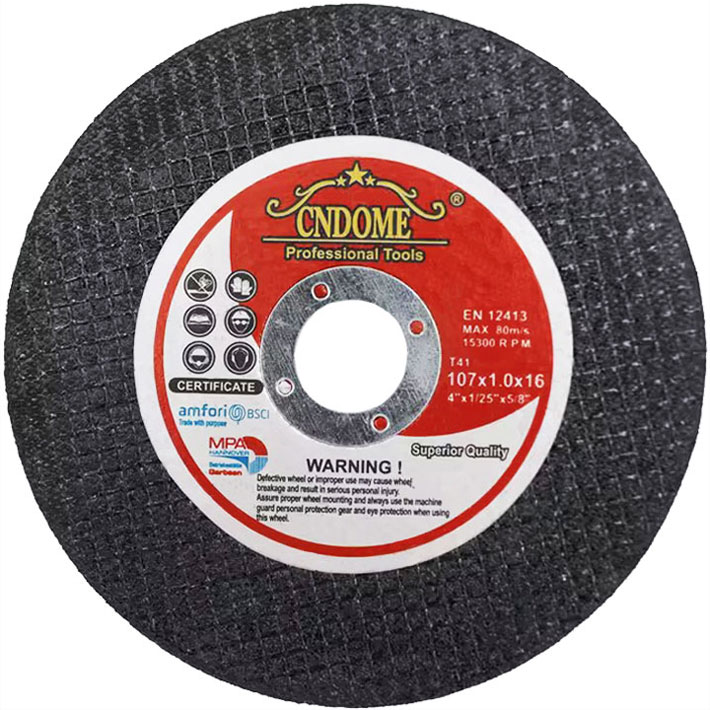
Metal Cutting Disc
General-purpose metal cutting disc for everyday cutting of carbon steel, structural steel, and ordinary steel.
Suitable Materials: Carbon steel / Structural steel / Iron
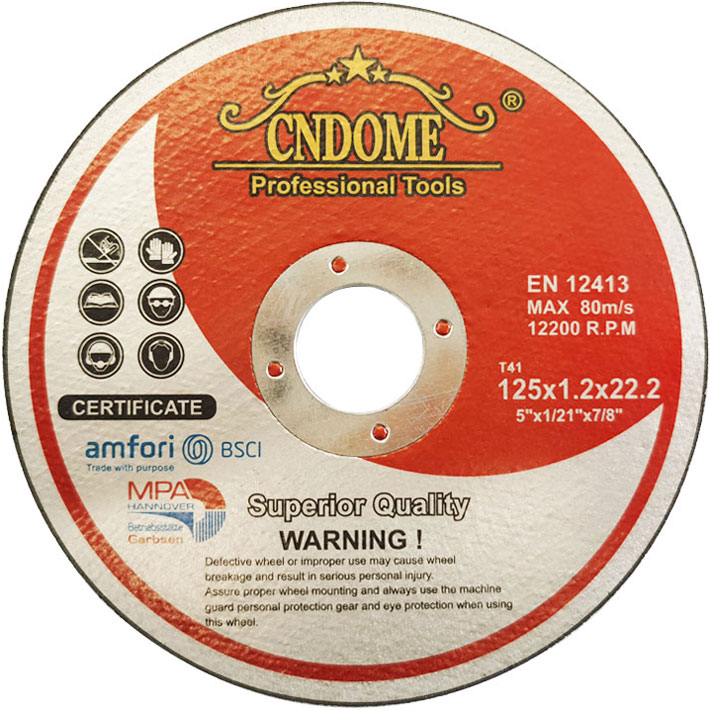
Stainless Steel Cutting Disc
Engineered for stainless steel cutting with Fe+S+Cl≤0.1% pure formula, delivering silver-bright, burn-free cuts.
Suitable Materials: 304 / 316 / 430 stainless steel
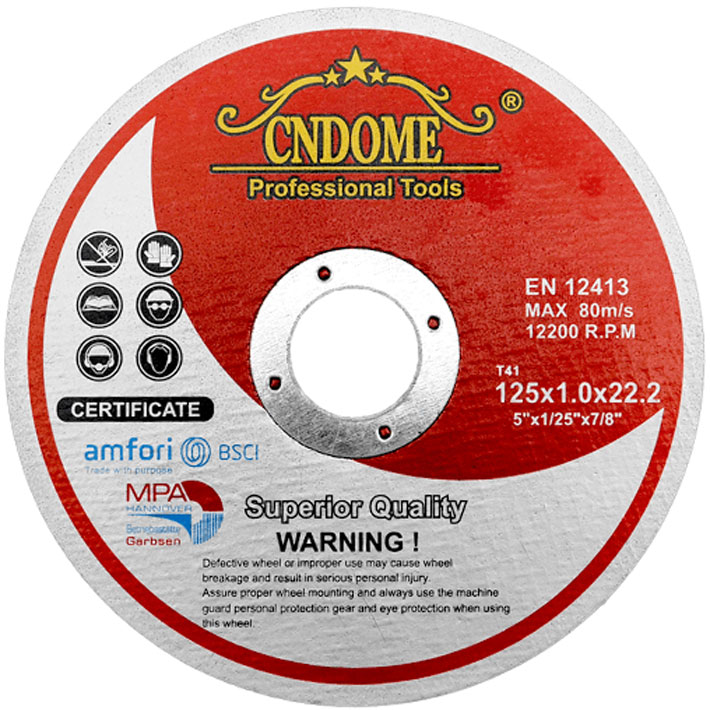
Ultra Thin Cutting Disc
Ultra-thin 1.0–1.6mm design for fast, low-heat, low-burr precision cutting of sheets and thin-wall tubes.
Suitable Materials: Stainless steel sheet / Carbon steel sheet / Thin-wall tube
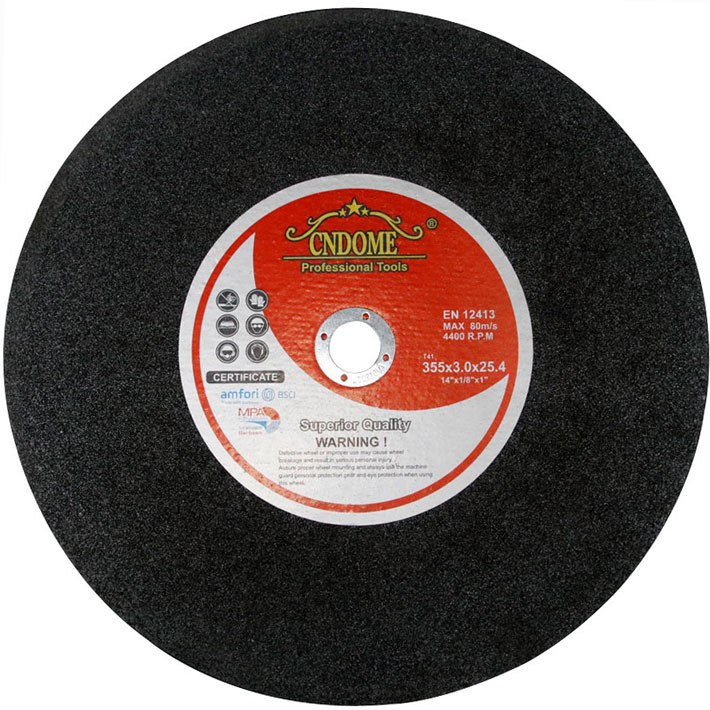
Large Diameter Cutting Disc
355mm large-diameter disc for stationary saws, cutting through large structural steel sections and heavy-wall pipes in one pass.
Suitable Materials: H-beams / I-beams / Large-diameter pipes / Rails
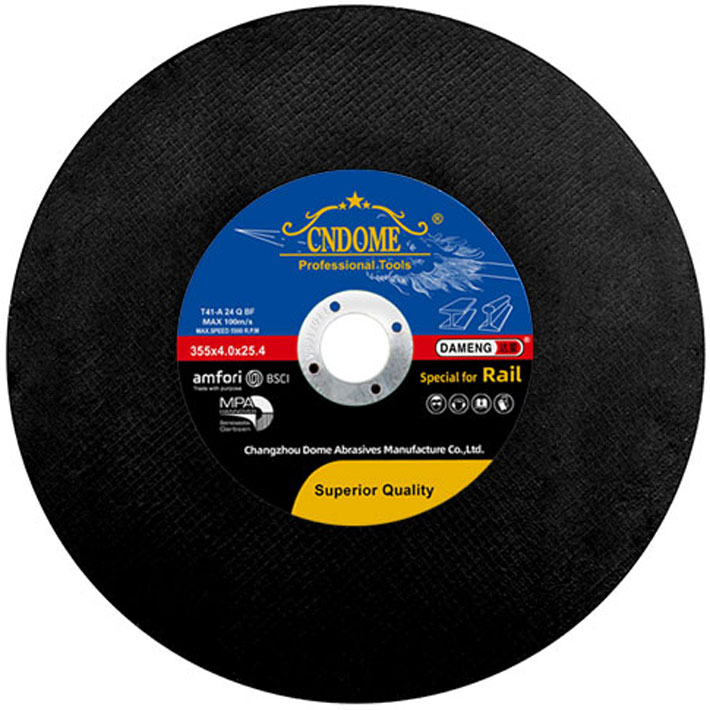
Rail Cutting Disc
Rail-specific disc with zirconia alumina and multi-layer fiberglass reinforcement, designed for heavy-duty high-hardness rail cutting.
Suitable Materials: U71Mn / U75V rails / Crane rails / High-manganese frogs
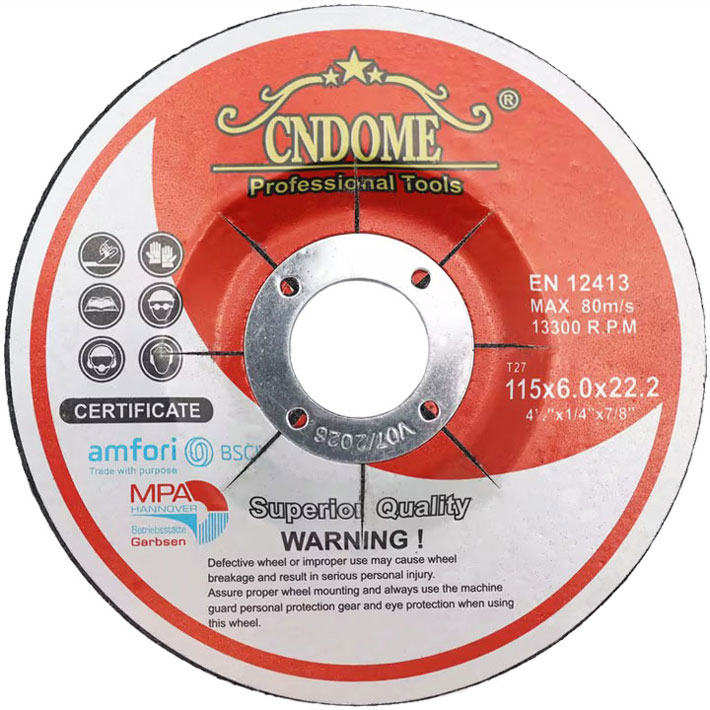
Grinding Wheel
Resin-bonded grinding wheel for surface grinding, weld dressing, and burr removal on all types of angle grinders.
Suitable Materials: Carbon steel / Stainless steel / Cast iron
Related Articles
- The Ultimate Guide to 150mm Grinding Wheel: Your Complete OEM Solution
- Aluminum Oxide Grinding Wheels: The Workhorse of the Workshop
- SG Grinding Wheels: Performance, Applications & Why Professionals Choose Them
- Should you be holding a grinding wheel, a sanding belt, or a scouring pad? — The Ultimate Comparison Guide to Three Types of Abrasives
Online Message
Dome Abrasive Manufacture provides 10 free samples for qualified projects for you to measure performance, experience quality, and verify specifications. If you’re ready to turn your vision into a reality, contact Dome today to discuss a project and pick up samples.
Get Quick
Response
Share your needs with us, We’ll contact you in very short time.
Zhenglu Garden Industrial Park, Tianning District, Changzhou City, Jiangsu Province
Please get in touch with any questions. Even if you don’t see what you want on our website we may be able to help.
Video
From a tiny grain of abrasive to a reliable tool in your hand, we invest not only in raw materials and processes, but also in our unwavering commitment to “craftsmanship.” Choosing us means choosing stability, efficiency, and peace of mind.