Premium Ceramic Abrasive Grains
Aggressive material removal with consistent grinding performance.
Engineered for Steel & Alloys
Designed for demanding metal grinding applications.
Wide Range of Grits & Sizes
Available in different grits, diameters and specifications.
OEM & Private Label Services
Custom formula, logo, label and packaging available.
Ceramic Grinding Disc & Flap Disc Manufacturer
Dome manufactures ceramic grinding discs and T29 ceramic flap discs for aggressive metal grinding, weld removal and surface preparation. Designed for stainless steel, carbon steel and alloy steel, our ceramic abrasive discs feature self-sharpening ceramic grains, high stock removal and controlled heat generation. Featuring 100% ceramic abrasive cloth on a reinforced fibreglass backing, the conical shape enables aggressive flat grinding and edge radiusing. Self-sharpening ceramic grains micro-fracture under pressure for faster stock removal and longer life than aluminium oxide or zirconia discs, while a cooling coating reduces heat to prevent discolouration on stainless steel. Ideal for weld blending, deburring, rust removal, and surface preparation. Available in diameters 100–180mm, grits 24#/36#, and bore sizes 16mm or 22.23mm, with custom sizes on request. EN12413 certified and 100% tested. Full OEM and private label services – custom grits, flap density, backing colour, and branded packaging – support distributors and industrial brands worldwide.
Dome Abrasives Catalogue
Ceramic Grinding Discs for High-Performance Metal Grinding
Ceramic grinding wheels represent a significant advancement in abrasive technology for demanding metalworking applications. Unlike conventional aluminium oxide or zirconia abrasives, a ceramic grinding disc uses engineered ceramic abrasive grains that deliver superior cutting performance, extended service life, and cooler operation on hard-to-machine metals.
Ceramic Flap Discs for Angle Grinders
What Is a Ceramic Flap Disc for Angle Grinder?
A ceramic flap disc for angle grinder is an abrasive tool consisting of overlapping cloth-backed flaps coated with ceramic alumina grain. Unlike traditional grinding wheels, flap discs combine grinding and finishing in one step—removing material while leaving a smoother finish. The ceramic abrasive disc for angle grinder features a self-sharpening grain structure that micro-fractures under pressure, continuously exposing fresh cutting edges. This makes it particularly effective on stainless steel, titanium, nickel alloys, and other hard-to-grind metals.
Why Choose Ceramic for Angle Grinder Applications?
Ceramic alumina is the most advanced abrasive grain available. A ceramic grinding disc for angle grinder delivers 50% to 200% longer life than standard flap discs on stainless steel. It runs cooler than zirconia or aluminum oxide, reducing the risk of heat discolouration on sensitive workpieces. The self-sharpening property maintains aggressive cut rates throughout the disc’s life, making the ceramic flap wheel for angle grinder ideal for heavy-duty applications where productivity and extended wheel life are critical.
T29 vs T27 Ceramic Flap Discs for Angle Grinders
Type 27 (Flat) – The T27 ceramic flap disc for angle grinder features flat flaps and is best suited for flat surface grinding, blending, and finishing. Recommended working angle: 0–15°.
Type 29 (Conical) – The T29 ceramic flap disc for angle grinder features angled flaps set at 15–25°, providing more aggressive stock removal on edges, contours, and weld seams. The conical shape allows the disc to cut deeper while maintaining control on irregular surfaces.
Both types are available in diameters from 100mm to 230mm, with grits ranging from coarse (24–40) for rapid stock removal to fine (60–120) for finishing. All are EN12413 certified and 100% RPM tested for angle grinder safety.
Types of Ceramic Grinding Discs
Ceramic alumina abrasives offer the highest stock removal rates and coolest cutting action for hard metals. The shape profile—flat (T27) or conical (T29)—determines the working angle and surface contact, affecting grinding efficiency and finish quality. Here’s how to match the type to your task.
T29 Ceramic Flap Disc
The T29 ceramic flap disc features flaps set at a 15–25° angle, creating a conical working face. This design allows deeper penetration on edges, weld seams, and contoured surfaces, making it ideal for aggressive stock removal. A ceramic T29 flap disc operates best at a 15–25° working angle, delivering higher material removal rates than flat discs on irregular workpieces. The T29 ceramic grinding disc is the go-to choice for beveling, chamfering, and heavy weld dressing. For maximum productivity on stainless and hard alloys, a conical ceramic flap disc maintains aggressive cut rates while extending wheel life.
Ceramic Abrasive Flap Disc
A ceramic abrasive flap disc combines grinding and finishing in one tool—removing material while leaving a smoother surface than conventional grinding wheels. The ceramic abrasive grinding disc uses overlapping cloth-backed flaps coated with ceramic grain, which micro-fractures under pressure to continuously expose fresh cutting edges. This self-sharpening action maintains consistent performance on stainless steel, titanium, and nickel alloys. Available in both T27 (flat) and T29 (conical) profiles, the ceramic abrasive disc delivers cool cutting and long life across fabrication, maintenance, and heavy industrial applications.
Ceramic Alumina Grinding Disc
A ceramic alumina grinding disc uses a sol-gel microcrystalline grain structure that fractures at a microscopic level, generating thousands of fine cutting points without losing overall shape. This ceramic alumina flap disc runs significantly cooler than zirconia or standard aluminum oxide, preventing burn marks and discolouration on heat-sensitive workpieces. For hard-to-grind materials like hardened tool steels, superalloys, and duplex stainless, the ceramic alumina abrasive disc delivers the highest material removal rates and longest service life. The ceramic alumina grinding wheel is available in diameters from 100mm to 230mm, with grits from coarse (24) to fine (120)—backed by EN12413 certification.
Quick Profile Selection Guide
| Profile | Flap Angle | Best For | Working Angle |
|---|---|---|---|
| T27 (Flat) | 0° | Flat surfaces, blending, finishing | 0–15° |
| T29 (Conical) | 15–25° | Edges, contours, weld seams, aggressive stock removal | 15–25° |
Ceramic Grinding Disc Applications
Ceramic alumina abrasives deliver the highest stock removal rates, coolest cutting action, and longest service life across a wide range of grinding applications. Their self-sharpening micro-fracture mechanism maintains aggressive cut rates while minimizing heat input—making them ideal for demanding tasks on hard metals and heat-sensitive alloys.
Ceramic Disc for Weld Grinding
A ceramic grinding disc for weld grinding removes weld beads quickly while keeping the workpiece cool—preventing burn marks and discolouration on stainless and alloy steels. The ceramic flap disc for weld grinding blends welds to a smooth finish in a single step, reducing the need for secondary operations. For heavy weld removal, the ceramic disc for weld removal delivers aggressive stock removal on structural sections and pipe. The ceramic flap disc for weld removal combines grinding and finishing, while the ceramic abrasive disc for weld grinding maintains consistent performance on long weld seams.
Ceramic Disc for Heavy Stock Removal
A ceramic grinding disc for heavy stock removal is engineered for foundry snagging, large-scale fabrication, and continuous production grinding. The ceramic flap disc for heavy grinding delivers aggressive cut rates on castings, billets, and heavy structural sections—removing material quickly without premature wear. The ceramic abrasive disc for aggressive grinding maintains cutting efficiency under high pressure, making it the first choice for rapid descaling and weld leveling.
Ceramic Disc for Deburring
A ceramic grinding disc for deburring removes sharp edges, burrs, and machining marks from cut or machined parts. The ceramic flap disc for deburring delivers smooth, safe edges without excessive material removal—ideal for laser-cut and plasma-cut stainless parts. The ceramic abrasive disc for edge grinding handles chamfering and edge preparation on plates, pipe ends, and structural sections with consistent, burr-free results.
Ceramic Disc for Surface Preparation
A ceramic grinding disc for surface preparation achieves flat, smooth surfaces on metal workpieces before coating, welding, or inspection. The ceramic flap disc for surface preparation removes surface imperfections, scale, and weld spatter while leaving a refined finish. The ceramic abrasive disc for surface preparation is available in medium to fine grits (46–80) for controlled material removal and consistent flatness on steel and stainless plates.
Ceramic Disc for Rust & Mill Scale Removal
A ceramic grinding disc for rust removal quickly strips surface oxidation from steel and stainless sections, preparing them for welding or coating. The ceramic flap disc for rust removal removes rust, paint, and corrosion products efficiently. For heavy industrial cleaning, the ceramic grinding disc for mill scale removal cuts through tough scale layers without loading—restoring the base material to a clean, workable surface.
Quick Application Selection Guide
| Application | Recommended Grit | Recommended Profile | Key Feature |
|---|---|---|---|
| Weld Grinding | Coarse–Medium (24–40) | T27 or T29 | Aggressive cut, smooth finish |
| Heavy Stock Removal | Coarse (16–36) | T29 | Maximum material removal |
| Deburring | Medium–Fine (46–80) | T27 | Smooth edges, minimal removal |
| Surface Preparation | Medium–Fine (46–80) | T27 | Flat surfaces, consistent finish |
| Rust & Mill Scale Removal | Coarse–Medium (24–40) | T29 | Aggressive cleaning, no loading |
Ceramic Grinding Discs for Different Metals
Ceramic alumina abrasives deliver the highest stock removal rates and coolest cutting action across a wide range of metals. The self-sharpening micro-fracture mechanism maintains aggressive cut rates while minimizing heat input—making ceramic discs ideal for heat-sensitive and hard-to-grind materials.
Ceramic Grinding Disc for Stainless Steel
A ceramic grinding disc for stainless steel delivers exceptional performance on austenitic grades like 304 and 316, where work-hardening is a concern. The ceramic flap disc for stainless steel runs significantly cooler than zirconia or aluminum oxide, preventing burn marks and discolouration. For weld grinding and surface preparation, the ceramic abrasive disc for stainless steel maintains consistent cut rates without glazing. The ceramic grinding wheel for stainless steel is available in grits from 24 to 120—with the ceramic grinding disc for 304 stainless steel optimized for general fabrication and the ceramic grinding disc for 316 stainless steel formulated for higher alloy content applications.
Ceramic Grinding Disc for Carbon Steel
A ceramic grinding disc for carbon steel delivers significantly longer life than standard aluminum oxide wheels on mild and structural steel. The ceramic flap disc for carbon steel excels at weld smoothing, surface preparation, and heavy stock removal—removing material quickly while maintaining a consistent finish. For daily fabrication, the ceramic abrasive disc for carbon steel reduces changeover downtime and delivers cost-effective performance on beams, plates, and structural sections.
Ceramic Grinding Disc for Alloy Steel
Alloy steels and hardened tool steels require an abrasive that maintains cutting efficiency under high pressure. A ceramic grinding disc for alloy steel uses micro-fracturing grains that continuously expose fresh cutting edges, preventing glazing on tough materials. The ceramic flap disc for alloy steel handles beveling, weld dressing, and surface preparation on high-strength components. The ceramic abrasive disc for alloy steel minimizes the heat-affected zone—critical for maintaining material properties on hardened and heat-treated alloys.
Ceramic Grinding Disc for Cast Iron
Cast iron’s abrasive graphite structure quickly dulls standard abrasives. A ceramic grinding disc for cast iron maintains its cutting edge against this challenging material, delivering consistent stock removal on engine blocks, machine bases, and pipe fittings. The ceramic flap disc for cast iron removes gates, risers, and surface defects efficiently. The ceramic abrasive disc for cast iron is available in coarse grits (24–36) for maximum material removal on hard, brittle castings.
Ceramic Grinding Disc for Titanium
Titanium is notoriously difficult to grind—high heat input can cause surface contamination, cracking, and metallurgical damage. A ceramic grinding disc for titanium is the preferred choice for aerospace and medical applications, where material integrity is critical. The ceramic flap disc for titanium generates minimal heat, preventing burn and discolouration on this sensitive alloy. The ceramic abrasive disc for titanium delivers the longest service life and most consistent performance on titanium and its alloys.
Quick Material Selection Guide
| Material | Recommended Abrasive | Key Benefit |
|---|---|---|
| Stainless Steel (304/316) | Ceramic | Cool cutting, prevents work-hardening |
| Carbon Steel | Ceramic | Longer life than aluminum oxide |
| Alloy Steel / Tool Steel | Ceramic | Maintains efficiency under high pressure |
| Cast Iron | Ceramic | Resists loading, aggressive cutting |
| Titanium | Ceramic | Minimal heat input, prevents contamination |
Ceramic Grinding Disc Grit Guide
Grit size determines material removal rate and surface finish. Coarse grits (24) deliver rapid stock removal for weld leveling and heavy grinding; medium grits (36) balance cut rate and finish for blending and surface preparation.

24 Grit Ceramic Grinding Disc
A 24 grit ceramic grinding disc delivers the fastest material removal for heavy weld removal, foundry snagging, and rapid descaling. The 24 grit ceramic flap disc removes large weld beads and surface defects efficiently, while the 24 grit ceramic abrasive disc maintains aggressive cut rates under high pressure. For stainless applications, the 24 grit ceramic flap disc for stainless steel removes welds without glazing. The 24 grit ceramic grinding disc for steel handles heavy stock removal on structural sections. For foundry and fabrication, the 24 grit ceramic disc for weld removal is the first choice for weld leveling and heavy grinding.
Key Applications: Heavy grinding / Weld removal / Stock removal

36 Grit Ceramic Grinding Disc
A 36 grit ceramic grinding disc offers the ideal balance of material removal and finish quality for weld blending and surface preparation. The 36 grit ceramic flap disc smooths weld beads and prepares surfaces for finishing, while the 36 grit ceramic abrasive disc delivers consistent results on stainless and carbon steel. For stainless applications, the 36 grit ceramic flap disc for stainless steel blends welds without discolouration. The 36 grit ceramic grinding disc for steel handles general fabrication tasks efficiently. For surface preparation, the 36 grit ceramic disc for surface preparation removes scale, rust, and imperfections before coating or welding.
Key Applications: Weld blending / Surface preparation / Deburring
Quick Grit Selection Guide
| Grit | Main Use | Best For |
|---|---|---|
| 24 Grit | Heavy stock removal, weld leveling, descaling | Removing large welds, castings, heavy sections |
| 36 Grit | Weld blending, surface prep, deburring | Smoothing welds, preparing surfaces, general grinding |
Ceramic Grinding Disc Sizes
Ceramic grinding discs are available in standard diameters to match your angle grinder size and application requirements. Selecting the right diameter ensures optimal surface coverage, stock removal rate, and machine compatibility.

4 Inch Ceramic Grinding Disc
A 4 inch ceramic grinding disc is ideal for pneumatic die grinders and compact electric tools, offering precision grinding in confined areas. The 4 inch ceramic flap disc delivers excellent maneuverability for light stock removal, deburring, and surface preparation on small workpieces. For metric users, the 100mm ceramic grinding disc and 100mm ceramic flap disc provide the same compact performance—perfect for tight-access fabrication and maintenance tasks.
4.5 Inch / 115mm Ceramic Grinding Disc
The 4.5 inch ceramic grinding disc (115mm) is the most common size for angle grinder work, offering the ideal balance of control and coverage for daily fabrication. A 115mm ceramic grinding disc handles weld grinding, surface preparation, and stock removal across stainless, carbon steel, and alloy applications. The 4.5 inch ceramic flap disc and 115mm ceramic flap disc fit most standard angle grinders, making them the workshop workhorse for grinding and finishing in one step. For heavy-duty performance, the 115mm ceramic flap disc for angle grinder delivers aggressive stock removal with cool cutting action on hard metals.

5 Inch / 125mm Ceramic Grinding Disc
Stepping up to higher-powered angle grinders, the 5 inch ceramic grinding disc (125mm) offers deeper reach and greater surface coverage. A 125mm ceramic grinding disc is ideal for heavy weld removal and surface grinding on larger stainless workpieces. The 5 inch ceramic flap disc and 125mm ceramic flap disc deliver extended reach for structural sections and pipe. For maximum productivity, the 125mm ceramic flap disc for angle grinder combines aggressive stock removal with a smooth finish on flat and contoured surfaces.
Quick Size Reference
| Size | Typical Tool | Best For | Key Advantage |
|---|---|---|---|
| 100mm ceramic flap disc for angle grinder | Compact / Pneumatic grinde | Tight spaces, light prep, deburring | Maximum maneuverability |
| 115mm ceramic flap disc for angle grinder | 700–900W angle grinder | General fabrication, welds, surface prep | Versatile workshop standard |
| 125mm ceramic flap disc for angle grinder | 900–1,100W angle grinder | Heavy welds, larger surfaces | Extended reach and coverage |
Ceramic Grinding Disc Specifications
The table below summarizes the complete specifications for our ceramic grinding disc and ceramic flap disc range—covering diameter, grit, bore, backing, and application details to help you select the right disc for your angle grinder and material.
| Specification | Details |
|---|---|
| Product Type | Ceramic Grinding Disc / Ceramic Flap Dis |
| Abrasive | 100% ceramic abrasive cloth |
| Backing | Fiberglass |
| Shape | T29 |
| Grit | 24 / 36 |
| Diameter | 100mm · 115mm · 125mm |
| Bore | 16 / 22.23mm |
| Machine | Angle Grinder |
| Material | Stainless Steel / Carbon Steel / Alloy Steel |
| Application | Weld Grinding / Stock Removal / Deburring |
| Certification | EN12413 |
| OEM | Available |
| Private Label | Available |
Ceramic vs Zirconia vs Aluminum Oxide Grinding Discs
Selecting the right abrasive grain determines your grinding efficiency, wheel life, and finish quality. Ceramic, zirconia, and aluminum oxide each offer distinct performance characteristics—matching the abrasive to your material and application ensures optimal results.
| Abrasive | Cutting Speed | Life | Best Application |
|---|---|---|---|
| Ceramic | Very High | Long | Heavy grinding, hard metals, stainless steel |
| Zirconia | High | Medium–Long | General heavy grinding, weld removal |
| Aluminum Oxide | Medium | Medium | General grinding, carbon steel, light fabrication |
Ceramic vs Zirconia Grinding Disc
The choice between a ceramic vs zirconia grinding disc comes down to your material and productivity requirements. Ceramic alumina is the most advanced abrasive grain—its micro-fracturing action continuously exposes fresh cutting edges, delivering the highest stock removal rates and longest life on stainless steel, titanium, and hardened alloys. A ceramic grinding disc vs zirconia comparison shows ceramic typically outlasts zirconia by 3 to 4 times on heat-sensitive materials, with significantly cooler cutting action that prevents burn and discolouration. Zirconia remains a cost-effective choice for general heavy grinding on carbon steel and structural sections where maximum life is not the primary concern.
Ceramic vs Aluminum Oxide Grinding Disc
When comparing ceramic vs aluminum oxide grinding disc performance, ceramic offers substantially faster cut rates and longer life on hard-to-grind materials. Aluminum oxide is the industry standard for general-purpose grinding on mild steel—cost-effective and reliable for light to medium stock removal. However, on stainless steel, alloy steels, and high-hardness materials, ceramic outlasts aluminum oxide by up to 5 times while running cooler and maintaining aggressive cut rates. The best abrasive for metal grinding depends on your material: aluminum oxide for carbon steel, zirconia for general heavy grinding, and ceramic for stainless, hardened alloys, and high-productivity applications.
Ceramic Abrasive vs Zirconia Abrasive
A ceramic abrasive vs zirconia abrasive comparison highlights fundamental differences in grain structure and fracture behavior. Ceramic features a sol-gel microcrystalline structure that fractures at a microscopic level, generating thousands of fine cutting points while maintaining overall grain shape. Zirconia exhibits a blocky fracture pattern that self-sharpens under heat and pressure but at a coarser level. This makes ceramic the superior choice for precision grinding on heat-sensitive materials, while zirconia excels in high-pressure, heavy-stock-removal applications where cost-effectiveness is prioritized.
Ceramic Flap Disc vs Zirconia Flap Disc
Choosing between a ceramic flap disc vs zirconia flap disc comes down to your material, productivity targets, and budget. Both are high-performance abrasives that outperform aluminum oxide, but they serve different roles in metal fabrication. Here’s how they compare.
| Feature | Ceramic Grinding Disc | Zirconia Flap Disc |
|---|---|---|
| Cutting Speed | Very High (53–66% faster on stainless) | High |
| Lifespan | 3–4× longer than zirconia | Good, but shorter than ceramic |
| Heat Generation | Runs cooler – prevents burn/discolouration | Runs hotter |
| Best For | Stainless steel, hard metals, heavy grinding | General heavy grinding, structural steel |
| Cost | Higher upfront, lower cost-per-cut | More economical upfront |
Ceramic Flap Disc
A ceramic abrasive vs zirconia comparison shows ceramic is the most advanced abrasive grain available. Its micro-crystalline structure fractures at a microscopic level, continuously exposing fresh cutting edges while running significantly cooler than zirconia.
On stainless steel, ceramic flap discs deliver a minimum 66% increase in cut rate over zirconia, with ceramic discs typically outlasting zirconia discs by 3 to 4 times. Premium ceramic flap discs can even give you 3× longer life than a premium zirconia disc. The best flap disc for stainless steel is ceramic when productivity and surface quality are priorities.
Best for: Stainless steel, titanium, Inconel, hardened alloys, and any application where heat discolouration or work-hardening is a concern.
Zirconia Flap Disc
A zirconia flap disc is a tougher, more economical all-rounder. Zirconia alumina grains self-sharpen under pressure, maintaining a consistent cut rate and surface finish through the life of the disc. While ceramic outperforms zirconia in longevity and cut speed, zirconia provides the best return on investment for standard metal grinding and surface finishing tasks.
For general fabrication shops working primarily with carbon steel and structural sections, zirconia flap discs offer a good balance of aggression and lifespan at a lower cost. The best abrasive flap disc for steel in a cost-conscious workshop is often zirconia.
Best for: Carbon steel, structural steel, general fabrication, weld removal, and surface preparation where maximum lifespan is not the primary concern.
How to Choose a Ceramic Grinding Disc
Selecting the correct ceramic grinding disc ensures optimal grinding efficiency, surface quality, and wheel life. Follow this five-step guide to find the right ceramic abrasive grinding disc for your application.
Step 1 — Choose Your Material
Different metals require different grinding approaches. Identify the material you are working with:
| Material | Recommended Abrasive | Why |
|---|---|---|
| Stainless Steel | Ceramic | Cool cutting, prevents discolouration |
| Carbon Steel | Ceramic | Fast stock removal, high productivity |
| Alloy Steel | Ceramic | Maintains aggression on tough materials |
Ceramic abrasives are effective across all three material types, making them the versatile choice for mixed-material workshops.
Step 2 — Choose Your Task
The grinding task determines the required grit size and ceramic abrasive grinding disc specification:
| Task | Recommended Grit | Why |
|---|---|---|
| Weld Removal | 24 | Maximum aggression for removing weld beads |
| Heavy Grinding | 24 | Fastest stock removal on large surfaces |
| Surface Preparation | 36 | Balance of removal and finish |
| Weld Blending | 36 | Smooths welds after initial removal |
| Deburring | 36 | Good control, smooth edges |
Step 3 — Choose Your Grit
Dome ceramic grinding discs are available in two grit sizes:
- 24 Grit — Coarse, for heavy grinding, weld removal, and aggressive stock removal
- 36 Grit — Medium-coarse, for general grinding, weld blending, and surface preparation
Rule of thumb: Start with 24 grit for heavy removal, switch to 36 grit for finishing and blending.
Step 4 — Choose Your Size
Select the ceramic abrasive grinding disc diameter that matches your angle grinder:
| Disc Size | Inch | Machine Type | Best For |
|---|---|---|---|
| 115mm | 4.5″ | Standard Angle Grinder | General fabrication, weld grinding |
| 125mm | 5″ | Angle Grinder | Heavy fabrication, larger surface areas |
Always check that the bore size (22.23mm / 7/8″) matches your grinder‘s spindle.
Step 5 — Confirm Machine Specifications
Before ordering, verify:
- Grinder size matches the disc diameter (115mm or 125mm)
- Bore size matches your spindle (22.23mm / 7/8″ is standard)
- Maximum RPM of your grinder does not exceed the disc‘s rated speed
- Guard is correctly sized for the disc diameter
Important: Never exceed the ceramic abrasive grinding disc‘s maximum RPM rating. Always use the correct guard for your disc size.
Quick Selection Summary
| Your Material | Your Task | Grit | Size | Machine |
|---|---|---|---|---|
| Stainless Steel | Weld Removal | 24 | 115mm | 4.5″ Grinder |
| Stainless Steel | Weld Blending | 36 | 115mm | 4.5″ Grinder |
| Carbon Steel | Heavy Stock Removal | 24 | 125mm | 5″ Grinder |
| Carbon Steel | Surface Preparation | 36 | 115mm | 4.5″ Grinder |
| Alloy Steel | General Grinding | 36 | 115mm | 4.5″ Grinder |
Not sure which ceramic grinding wheel to choose? Contact our technical team with your material, task, and machine specifications — we will recommend the right ceramic grinding disc for your application.
OEM Ceramic Grinding Disc & Flap Disc Manufacturer
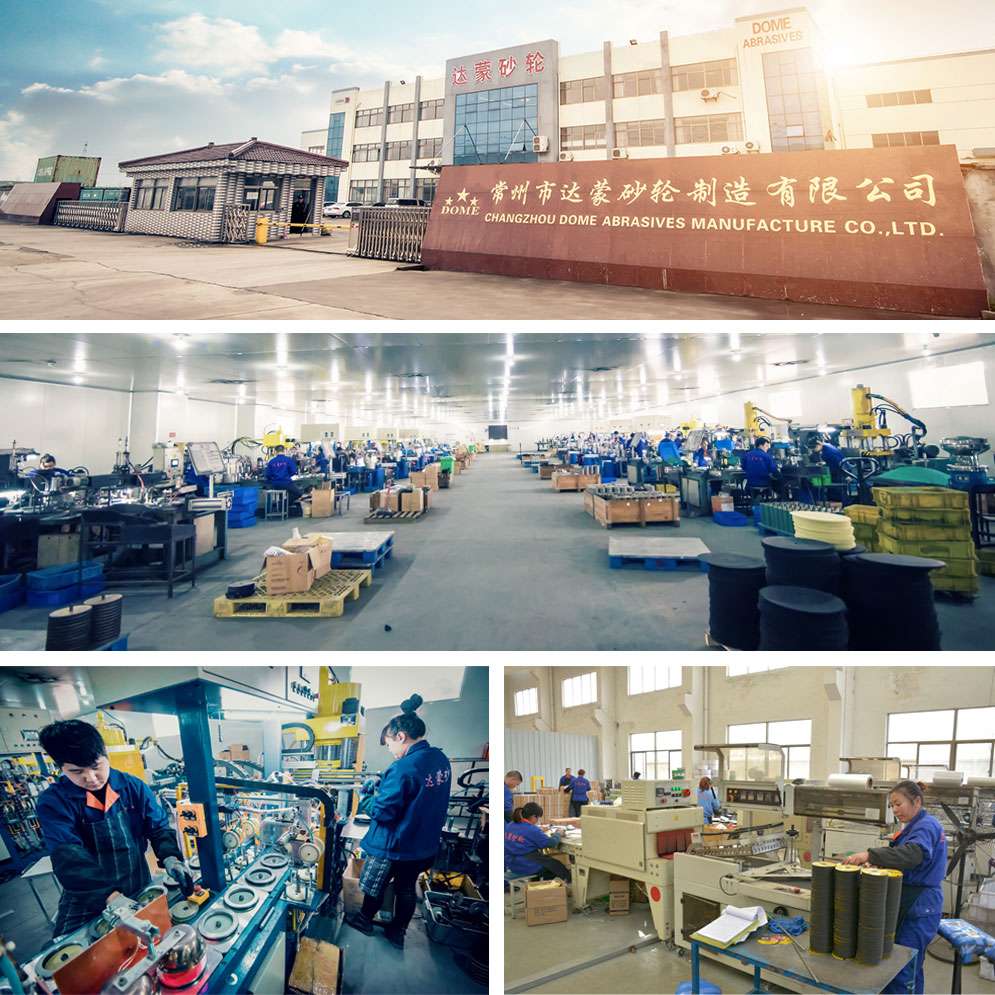
Dome is a ceramic grinding wheel manufacturer, not a trading company. We operate our own factory — 20,000m² of production space with 60 fully automated lines, producing over 600,000 discs daily. When you work with Dome, you work directly with the people who make the product.
We offer four core OEM capabilities to help distributors, tool brands, and industrial suppliers build their own ceramic grinding disc lines.

Custom Formulation
Different metals require different abrasive formulations. Stainless steel needs cool cutting to prevent discolouration; carbon steel demands aggressive stock removal; alloy steel requires abrasives that maintain cutting aggression under pressure. We adjust abrasive grain type, bond hardness, and additive packages based on your target materials and applications.
What we customise: Abrasive grain (ceramic / zirconia / aluminium oxide), grit size (24# / 36# / other), bond hardness, and additive formulations for specific grinding conditions.
Custom Sizes
Not every application fits standard dimensions. We manufacture ceramic grinding discs in a range of diameters to match different angle grinder sizes:
| Diameter | Inch | Typical Application |
|---|---|---|
| 100mm | 4″ | Compact grinders, light work |
| 115mm | 4.5″ | Standard grinders, general fabrication |
| 125mm | 5″ | Heavy fabrication, larger coverage |
| 150mm | 6″ | Medium-heavy work |
| 180mm | 7″ | High-power grinders, heavy grinding |
Bore sizes: 16mm, 22.23mm (7/8″), and custom. Thickness and flap density configurations are also adjustable.


Private Label
We help you build your own brand — not just by printing a logo, but by delivering a complete branded product that stands out on the shelf.
What we customise:
- Disc colour — match your brand identity
- Label design — brand name, logo, product code, grit, safety markings
- Inner packaging — shrink-wrap, colour boxes, display cartons
- Outer cartons — custom-printed with your branding and traceability data
Every disc carries your brand, your specifications, and your quality standards. We handle the manufacturing; you own the brand.
Sample Testing Process
We follow a structured process to ensure your custom ceramic grinding discs meet your exact requirements before full production:
1. Requirement — You provide target materials, applications, annual volume, and certification needs (EN12413, MPA, CE). We assess feasibility and recommend initial specifications.
2. Formula & Sample Development — Based on your requirements, we develop a custom formulation and produce samples. Multiple grit or size variations can be provided for comparison.
3. Performance Testing — You test samples on your own equipment — verifying grinding efficiency, service life, surface quality, and heat generation under your actual working conditions.
4. Approval — We move to mass production only after you approve performance. Free samples are available for testing before you commit to a bulk order.
5. Production & Delivery — Standard lead time: approximately 35 days from order confirmation. Rush orders available on request.
Contact our OEM team with your target market, annual volume, and performance requirements — we will respond with a custom solution within 24 hours.
Our Ceramic Grinding Disc OEM Process
Dome’s OEM process follows a structured workflow from initial requirement to final shipment. Each step is documented and traceable, ensuring that every custom order meets the agreed specifications.

1. Customer Requirement – You provide target materials, grinding applications, annual volume, and certification needs. We assess feasibility and recommend initial abrasive and specification options.
2. Formula Selection – Based on your requirements, we select the appropriate ceramic abrasive formulation — grit size (24# or 36#), flap density configuration, and backing specifications.
3. Sample Production – We produce samples (typically 3–5 discs) with preliminary test data covering dimensional accuracy, balance, and cutting performance. Multiple grit or size variations can be provided for comparison.
4. Performance Testing – You test samples on your own equipment — verifying grinding efficiency, service life, surface quality, and heat generation under your actual working conditions.
5. Customer Approval – We move to mass production only after you approve performance. Free samples are available for testing before you commit to a bulk order.
6. Mass Production – After sample approval, we scale up to full production. Automated lines in climate-controlled workshops ensure batch-to-batch consistency matches the approved samples.
7. Quality Inspection – Every batch undergoes dimensional inspection, balance testing, and sample burst testing (EN12413: burst speed ≥ 1.5× rated maximum RPM). Every disc is individually 100% RPM tested before shipment.
8. Packaging – Finished ceramic grinding discs are shrink-wrapped, labelled with your brand design, and packed into custom-printed cartons with batch numbers and traceability data.
9. Shipment – Orders are consolidated and shipped with a COA (Certificate of Analysis) covering key test data. Standard lead time: approximately 35 days from order confirmation. Rush orders available on request.
Ceramic Grinding Disc Manufacturing Capability
Dome operates a dedicated manufacturing facility for resin bonded abrasive products, including ceramic flap discs and grinding wheels. The following data reflects our current production capacity and technical resources.
| Capability | Specification |
|---|---|
| Factory Area | 20,000+ m² total |
| Production Workshop | 13,000 m² (climate-controlled) |
| Production Lines | Nearly 60 fully automated lines |
| Daily Output | 600,000 discs |
| R&D / Technical Staff | 10+ professionals |
Climate-controlled workshop: Temperature maintained at 15–25°C, humidity at 40–50% — ensuring stable resin curing and consistent product quality across all batches.
Automated production: From automated batching and pressing to in-line inspection and shrink-wrap packaging — reducing human error and ensuring batch-to-batch consistency.
Quality assurance: Every ceramic grinding disc undergoes 100% RPM testing before shipment, with batch samples subjected to EN12413 burst testing (burst speed ≥ 1.5× rated maximum RPM).
Global reach: Products exported to 60+ countries worldwide, serving distributors, tool brands, and industrial suppliers across multiple continents.
How We Manufacture Ceramic Grinding Discs
Dome’s ceramic grinding wheels are manufactured through a controlled process that ensures consistent quality, reliable performance, and safety at high operating speeds. The following steps outline the production flow from raw materials to finished product.

1. Raw Material Inspection – Every batch of incoming materials undergoes inspection before entering production. Ceramic abrasive cloth is tested for grain coverage and tensile strength. Reinforced fibreglass backing is checked for dimensional accuracy and structural integrity. Resin binders are verified for viscosity and curing properties. Only materials that pass inspection are approved for production.
2. Abrasive Mixing – For resin bonded ceramic grinding wheels (not flap discs), the abrasive mixing step combines ceramic abrasive grains, resin binders, fillers, and additives in precise proportions. The mixture is blended until uniformly distributed — ensuring consistent grinding performance across every disc.
3. Molding – The mixed material is fed into hydraulic presses and formed into disc shapes under high pressure. Each disc is pressed to a precise thickness tolerance. For flap discs, this step involves cutting abrasive cloth into uniform flaps and arranging them in overlapping layers on the backing plate.
4. Fibreglass Reinforcement – Multiple layers of fibreglass mesh are embedded during the molding process to provide tensile strength and structural integrity. This reinforcement is critical for high-speed operation — it resists centrifugal forces and prevents disc shattering during use.
5. Curing – Moulded discs are transferred to curing ovens and heated at approximately 175–200°C for several hours. This process polymerises the resin bond, transforming it from a soft, pliable state into a hardened, durable matrix that firmly holds the abrasive grains.
6. Dimensional Inspection – After curing, each disc is inspected for outer diameter, thickness, and bore size against specification tolerances. Visual inspection checks for cracks, bubbles, or surface irregularities. Discs that fail inspection are rejected.
7. Balance Testing – Every ceramic grinding disc is tested on a dynamic balancing machine to detect mass eccentricity. Out-of-balance discs are rejected. A balanced disc runs smoother, reduces operator fatigue, and extends angle grinder bearing life.
8. RPM / Burst Testing – Sample discs from each batch are accelerated until they break — burst speed must be at least 1.5× the rated maximum RPM (EN12413). Every disc is individually 100% RPM tested before shipment to verify structural integrity at operating speed.
9. Grinding Performance Testing – Sample discs are tested on standard workpieces (stainless steel, carbon steel) to verify material removal rate, wheel wear, and grinding efficiency. Performance data is recorded and traceable to each production batch.
10. Packaging – Ceramic abrasive grinding discs that pass all inspections are individually shrink-wrapped, labelled with product specifications and safety markings, and packed into cartons with batch numbers and traceability data for full supply chain visibility.
Ceramic Grinding Disc Quality Control
Dome’s quality control system covers every stage of production — from incoming raw materials to finished product. The following tests verify that each disc meets safety, performance, and consistency standards.

Raw Materials – Every batch of ceramic abrasive cloth, fibreglass backing, and resin binder is inspected before production. Abrasive grain coverage, tensile strength, and resin curing properties are verified against specifications. Rejected materials are returned or recycled.
Dimensions – Outer diameter, thickness, and bore size are inspected on every disc against tolerance specifications (±0.1mm for thickness). Discs that fall outside tolerance are rejected.
Balance – Dynamic balance testing detects mass eccentricity on every disc. Out-of-balance discs are rejected. A balanced disc reduces vibration, improves surface finish, and extends angle grinder bearing life.
Hardness / Bond – Sample discs from each batch are tested for bond hardness to verify that the resin curing process has achieved the required hardness grade. Bond hardness directly affects grain retention and grinding performance.
RPM – Every ceramic abrasive grinding disc is individually 100% RPM tested before shipment — not batch sampled. Each disc is spun at its rated maximum operating speed to verify structural integrity under centrifugal force.
Burst Strength – Sample discs from each batch are accelerated until they break. EN12413 requires burst speed ≥ 1.5× rated maximum RPM. Dome’s internal standards exceed this requirement, providing an additional safety margin.
Grinding Performance – Sample discs are tested on stainless steel and carbon steel workpieces to verify material removal rate, wheel wear, and grinding efficiency. Performance data is recorded and traceable to each production batch.
Ceramic Grinding Disc Certifications
Dome ceramic grinding discs are backed by internationally recognised certifications that verify product safety, quality management, and responsible manufacturing. Each certification represents a specific assurance for buyers — from structural integrity at high speed to ethical production standards.



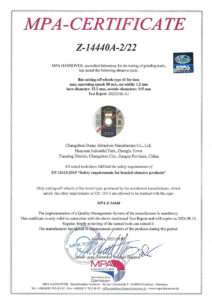

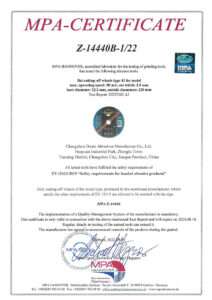
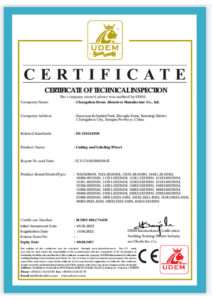

EN12413 – European safety standard for bonded abrasives. Confirms burst speed ≥ 1.5× rated RPM — mandatory for EU market compliance.
MPA – German safety certification for abrasive tools. Verifies compliance with Germany’s strict safety standards — key for European market access.
CE – EU market access mark. Confirms compliance with health, safety, and environmental requirements — legal sale across all EU member states.
ISO9001 – International quality management standard. Ensures batch‑to‑batch consistency, full traceability, and reliable product performance.
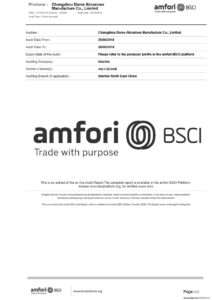
BSCI – European supply chain social audit. Verifies labour rights, health and safety, and environmental compliance — meets major brand procurement requirements.
Ceramic Grinding Disc FAQ
1. What is a ceramic grinding disc?
A ceramic grinding disc is an abrasive wheel that uses ceramic alumina (sol-gel) grains as the cutting medium. Unlike conventional abrasives that wear down gradually, ceramic grains micro‑fracture under pressure—continuously exposing fresh, sharp cutting edges while generating significantly less heat. This makes ceramic grinding discs ideal for hard metals, stainless steel, and heat‑sensitive alloys where productivity and surface integrity are critical.
2: What is a ceramic flap disc?
A ceramic flap disc is an abrasive tool consisting of overlapping cloth‑backed flaps coated with ceramic alumina grain. Unlike bonded grinding wheels, the flexible flaps conform to workpiece contours, enabling both aggressive grinding and finishing in a single step. The ceramic flap disc is mounted on an angle grinder and used for weld removal, surface preparation, deburring, and edge grinding on stainless steel, alloy steel, and titanium.
3: What is the difference between a ceramic grinding disc and a ceramic flap disc?
A ceramic grinding disc is a solid, bonded abrasive wheel used for heavy stock removal on flat surfaces. A ceramic flap disc consists of multiple flexible flaps that conform to contours and provide grinding plus finishing in one step. Grinding discs are faster on large flat areas; flap discs are more versatile on curved surfaces, edges, and weld seams—producing a smoother finish.
4: What is a ceramic flap disc used for?
A ceramic flap disc is used for weld grinding and blending, deburring and chamfering, surface preparation, rust and mill scale removal, and edge grinding. It is the preferred choice for stainless steel, alloy steel, and titanium applications where heat control, contamination prevention, and surface finish are critical. The T29 conical profile is ideal for aggressive edge work; the T27 flat profile is for flat surface blending.
5: Are ceramic flap discs good for stainless steel?
Yes, ceramic flap discs are excellent for stainless steel. The ceramic grain runs significantly cooler than zirconia or aluminum oxide, preventing work‑hardening, burn marks, and discolouration on 304 and 316 grades. For stainless, always choose a disc with INOX low‑iron formulation (Fe + S + Cl ≤ 0.1%) to prevent iron contamination and preserve corrosion resistance.
6: What grit ceramic flap disc should I use for weld removal?
For weld removal, use a coarse grit:
· 24 grit – Heavy weld removal, rapid stock removal, leveling large welds
· 36 grit – Weld blending, general weld smoothing, surface preparation
Start with 24 grit for aggressive removal, then progress to 36 grit for blending. For finishing after weld removal, move to 60–80 grit.
7: What is the difference between 24 grit and 36 grit ceramic discs?
24 grit ceramic discs are coarser and more aggressive—designed for heavy stock removal, weld leveling, and rapid material removal. 36 grit ceramic discs are slightly finer—designed for weld blending, surface preparation, and general grinding. 24 grit removes material faster; 36 grit produces a smoother finish. Choose 24 grit for initial roughing; choose 36 grit for finishing and blending.
8: What size ceramic flap disc should I use with an angle grinder?
Ceramic flap disc size depends on your angle grinder:
· 100mm / 4″ – Compact grinders, tight spaces, light work
· 115mm / 4.5″ – Standard angle grinders, general fabrication (most common)
· 125mm / 5″ – Larger angle grinders, extended reach, heavier work
Match the disc diameter to your grinder’s guard size and maximum RPM rating.
9: What is a T29 ceramic flap disc?
A T29 ceramic flap disc features a conical (angled) profile with flaps set at 15–25°. This design allows more aggressive stock removal on edges, contours, and weld seams. The T29 operates best at a 15–25° working angle, delivering higher material removal rates than flat (T27) discs on irregular surfaces. Ideal for edge grinding, beveling, and heavy weld dressing.
10: Are ceramic grinding discs better than zirconia?
Yes, ceramic grinding discs generally outperform zirconia on hard metals and stainless steel. Ceramic runs cooler, lasts 3–4 times longer, and delivers 53–66% faster cut rates on stainless. Zirconia is more cost‑effective for general grinding on carbon steel and structural sections. Choose ceramic for high‑productivity stainless and alloy work; choose zirconia for cost‑conscious general fabrication.
11: Can ceramic flap discs be used on carbon steel?
Yes, ceramic flap discs work effectively on carbon steel. The ceramic grain delivers fast stock removal, extended service life, and cool cutting on mild and structural steel. They are particularly beneficial on heavy‑duty carbon steel applications where productivity is a priority. For standard carbon steel, a 36 grit ceramic flap disc is recommended for general grinding and surface preparation.
12: Can ceramic flap discs be used on alloy steel?
Yes, ceramic flap discs are highly effective on alloy steel and hardened tool steels. The micro‑fracturing action of ceramic grains maintains cutting efficiency under high pressure, preventing glazing on tough materials. The cool cutting action minimises the heat‑affected zone—critical for maintaining material properties on hardened and heat‑treated alloys.
13: What is the best ceramic flap disc for stainless steel?
The best ceramic flap disc for stainless steel combines:
· Ceramic alumina grain – cool cutting, prevents work‑hardening
· INOX low‑iron bond – Fe + S + Cl ≤ 0.1%, prevents contamination
· 36 grit – optimal for weld blending and surface preparation
· T29 profile – for edge and contour work, or T27 for flat surfaces
· 115mm or 125mm – fits standard angle grinders
14: What is the difference between ceramic and aluminum oxide grinding discs?
Ceramic grinding discs feature advanced sol‑gel grains that micro‑fracture continuously—delivering faster cut rates, longer life (3–5×), and cooler cutting on hard metals and stainless steel. Aluminum oxide grinding discs are conventional abrasives that fracture at a blockier level—cost‑effective for general carbon steel grinding but slower and shorter‑lived on hard materials. Choose ceramic for stainless and alloys; choose aluminum oxide for carbon steel and general fabrication.
15: Can you provide samples before bulk orders?
Yes — we provide free samples for OEM and wholesale inquiries. Samples are sent with full specification data and preliminary test reports, including dimensional accuracy, balance, and cutting performance. You test the samples on your own equipment — verifying grinding efficiency, service life, surface quality, and heat generation under your actual working conditions. We move to mass production only after you approve performance.
Related Cutting & Grinding Products
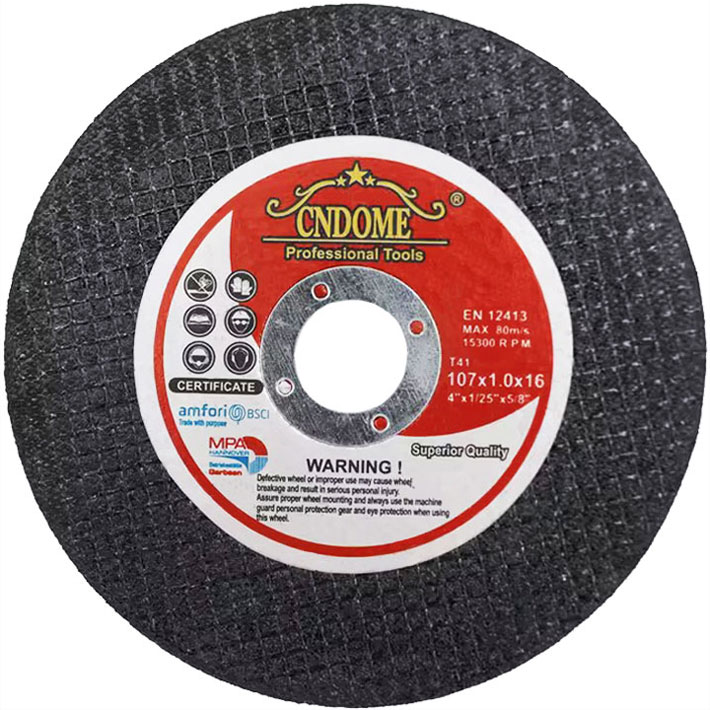
Metal Cutting Disc
General-purpose metal cutting disc for everyday cutting of carbon steel, structural steel, and ordinary steel.
Suitable Materials: Carbon steel / Structural steel / Iron
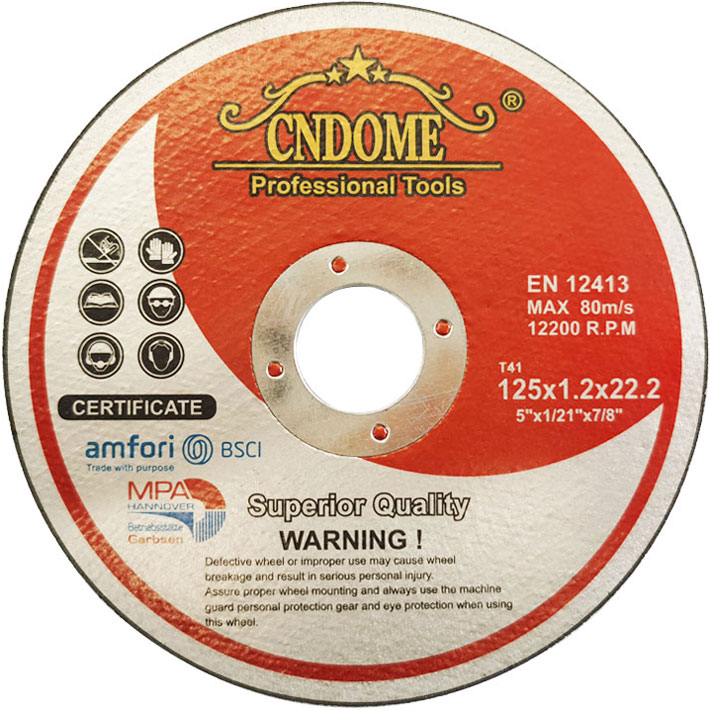
Stainless Steel Cutting Disc
Engineered for stainless steel cutting with Fe+S+Cl≤0.1% pure formula, delivering silver-bright, burn-free cuts.
Suitable Materials: 304 / 316 / 430 stainless steel
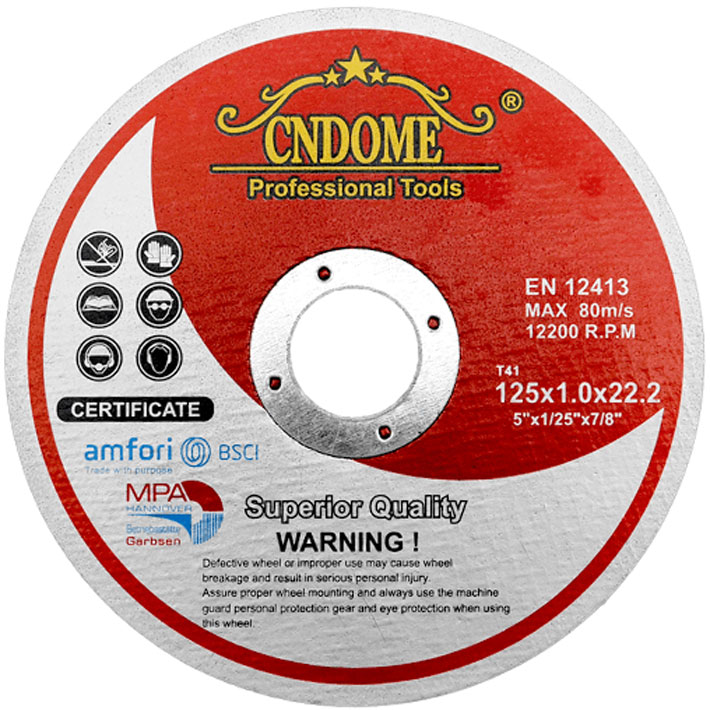
Ultra Thin Cutting Disc
Ultra-thin 1.0–1.6mm design for fast, low-heat, low-burr precision cutting of sheets and thin-wall tubes.
Suitable Materials: Stainless steel sheet / Carbon steel sheet / Thin-wall tube
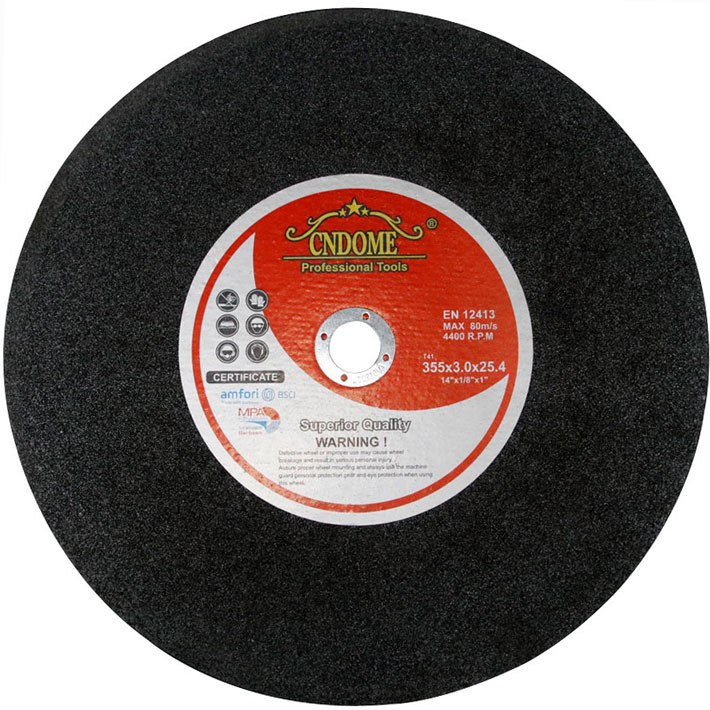
Large Diameter Cutting Disc
355mm large-diameter disc for stationary saws, cutting through large structural steel sections and heavy-wall pipes in one pass.
Suitable Materials: H-beams / I-beams / Large-diameter pipes / Rails
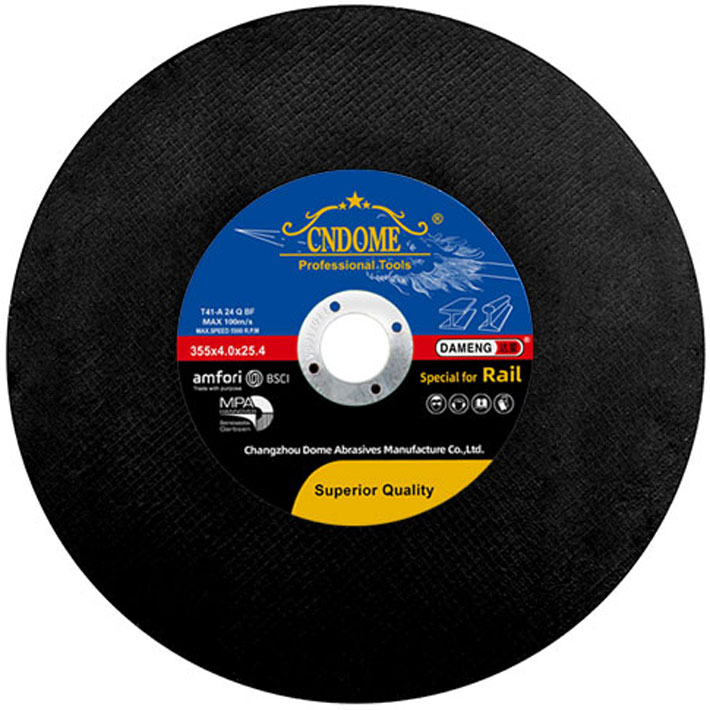
Rail Cutting Disc
Rail-specific disc with zirconia alumina and multi-layer fiberglass reinforcement, designed for heavy-duty high-hardness rail cutting.
Suitable Materials: U71Mn / U75V rails / Crane rails / High-manganese frogs
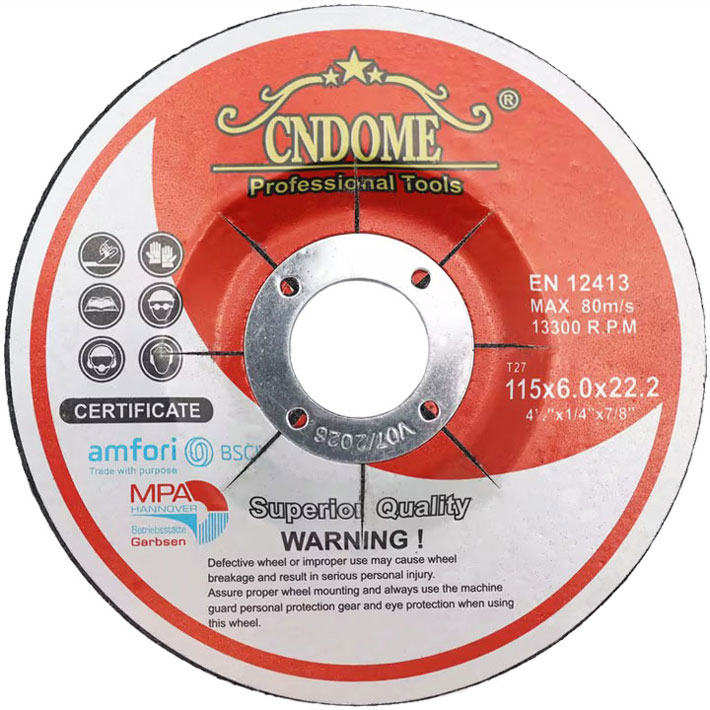
Grinding Wheel
Resin-bonded grinding wheel for surface grinding, weld dressing, and burr removal on all types of angle grinders.
Suitable Materials: Carbon steel / Stainless steel / Cast iron
Looking for a Ceramic Grinding Disc Manufacturer?
Tell us your required disc size, grit, workpiece material and application. Our technical team can recommend a suitable ceramic grinding disc and provide OEM or private label solutions.
Tel/WhatsApp
+86 18796960868
DomeGrinding@hotmail.com
Address
Zhenglu Garden Industrial Park, Tianning District, Changzhou City, Jiangsu Province
Manufacture & Delivery
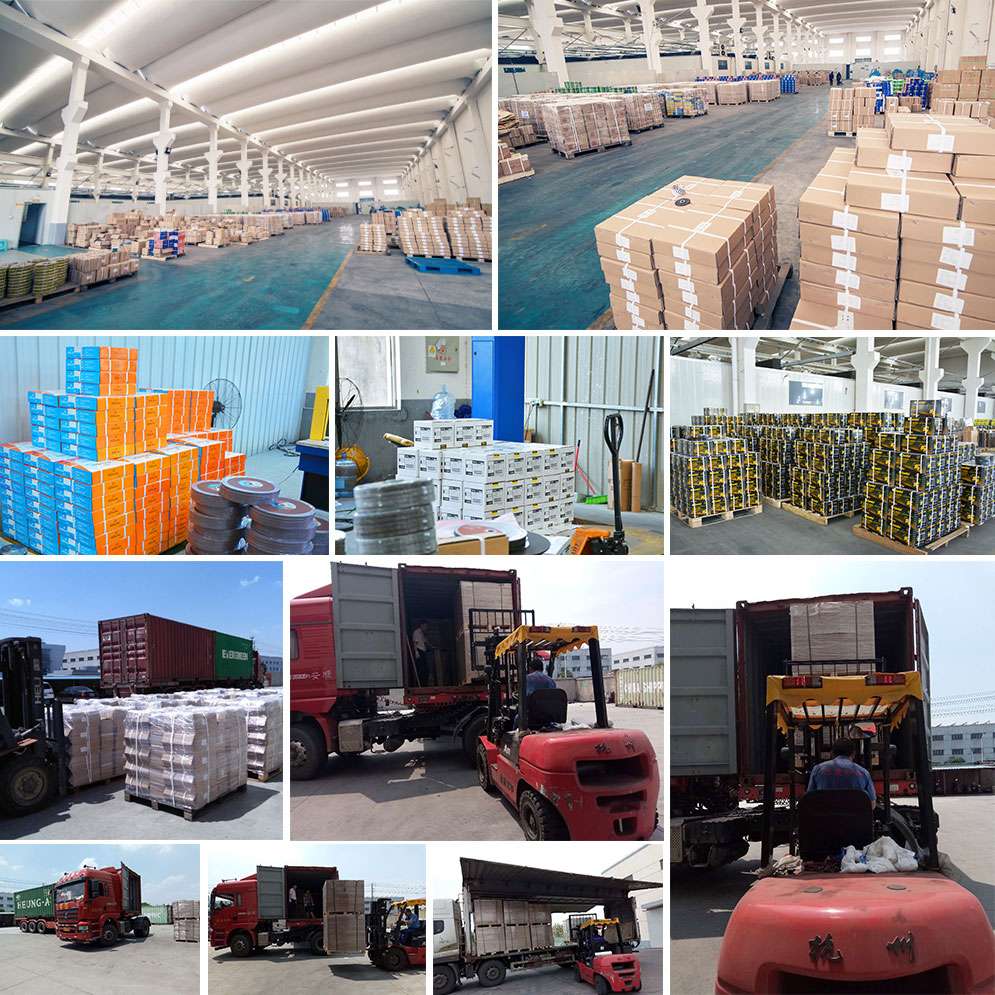
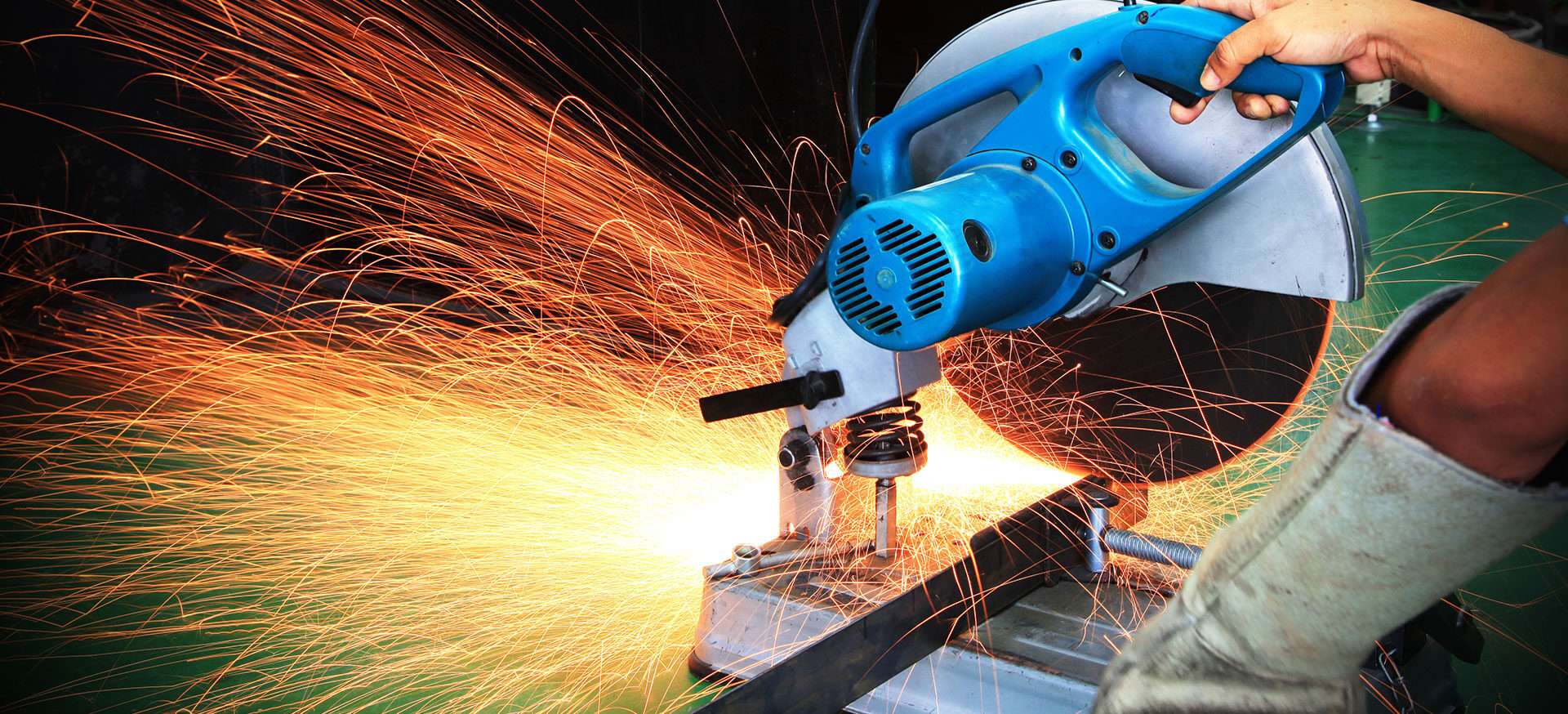
Below are actual photos of product application, product packaging and shipment, and workshop.
Factory and Workshop
Package and Delivery