

-
Jun, Tue, 2026

Ultra-Thin Cutting Disc: What You Need to Know Before Buying
You may have typed “ultra-thin cutting disc” into Google, trying to figure out if it is a real tool or just another marketing term. Maybe you are a welder cutting stainless steel pipes all day, a mechanic working on a rusty car body, or a contractor cutting rebar on a construction site. Maybe you are a DIY user fixing something in your garage. Whoever you are, you want the same thing: a cutting disc that cuts fast, wastes less material, and does the job safely.
As a resin-bonded grinding wheel manufacturer, we are not here to sell you a specific brand. We want to give you clear, honest information about what ultra-thin cutting discs are, how they work, and how to choose the right one. By the end of this guide, you will know enough to make your own decision.
What Does “Ultra-Thin” Actually Mean?
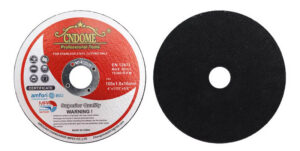
Let us start with a clear definition. In the abrasive industry, a cutting disc is considered “ultra-thin” when its thickness is 1.6 mm or less. Today, many manufacturers produce cutting discs at 1.0 mm and 0.8 mm for industrial use. Some mini cutting discs for precision work go as thin as 0.3 mm.
For comparison, a standard cutting disc is usually 2.0 mm to 3.0 mm thick. The difference may sound small, but it changes everything about how the cutting disc performs.
Making a cutting disc thinner is not simply pressing the same material into a slimmer shape. It requires stronger resin bonds to hold the abrasive grains, better fiberglass mesh layers to handle stress, and more precise curing processes to ensure uniform quality. If any of these steps is not done right, an ultra-thin cutting disc becomes a safety risk. A good ultra-thin cutting disc is a carefully engineered product.
Why Kerf Width Matters More Than You Think
The biggest benefit of an ultra-thin cutting disc is its narrow kerf, which is the width of the cut it makes.
A 3 mm standard cutting disc typically creates a kerf about 4 mm wide. A 1 mm ultra-thin cutting disc creates a kerf around 1.6 mm wide. That difference means you turn less metal into dust with every single cut. If you cut hundreds of pieces a day, the material you save adds up. For people working with stainless steel, copper, or precious metals, this is money saved.
A narrower kerf also means less resistance. The cutting disc has less contact with the workpiece, so it cuts through faster. You will feel the difference in your hands. The angle grinder pushes forward more easily, and you finish each cut in less time. For anyone cutting all day, this also means less fatigue.
Less Heat, Fewer Problems
If you have ever cut stainless steel and seen a blue ring appear around the cut edge, you have seen heat damage. That blue color is oxidation caused by friction heat that could not escape fast enough.
Standard cutting discs generate more heat because they have more contact with the material and cut more slowly. Ultra-thin cutting discs pass through the workpiece faster and carry heat away with the chips. The base metal stays cooler. This matters for anyone working with stainless steel, for bladesmiths cutting high-carbon steel, and for labs taking metallurgical samples. Less heat means fewer rejected parts, less secondary grinding, and better final quality.
Will an Ultra-Thin Cutting Disc Last as Long?
This is probably the most common question people ask. The concern is understandable: a thinner cutting disc has less abrasive material, so it seems like it should wear out faster.
The answer depends on how you measure durability. If you only count how many minutes a cutting disc lasts on the angle grinder, an ultra-thin cutting disc may indeed wear out sooner than a thick one. But that is not a fair comparison. An ultra-thin cutting disc does more work in less time. A better question to ask is: how many cuts can I make per disc, or how many workpieces can I finish per millimeter of disc wear? On that measure, many high-quality ultra-thin cutting discs outperform standard cutting discs.
Think of it like comparing a fine pen to a thick marker. The pen runs out faster, but it does a completely different kind of work. Judge a cutting disc by how much work it completes, not by how long it spins.
Where Ultra-Thin Cutting Discs Work Best
Ultra-thin cutting discs are not for every job, but in the right situations, they are hard to beat.
Thin-Walled Tubes and Pipes. If you cut stainless steel exhaust pipes, galvanized water pipes, or thin square tubing, an ultra-thin cutting disc helps prevent the pipe end from deforming. The cut stays clean and round, which makes welding and fitting easier.
Auto Body Repair. When cutting out rusted body panels, you need control. You want to remove the damaged part without cutting into good metal. The narrow kerf of an ultra-thin cutting disc gives you that control and reduces the amount of filler welding needed later.
Rebar Cutting on Construction Sites. Rebar workers make hundreds of cuts a day, often in awkward positions. A lighter, faster-cutting disc reduces arm fatigue and speeds up the work.
Precision Cutting and Lab Work. Bladesmiths cutting Damascus steel and lab technicians preparing samples need cuts with no heat damage. An ultra-thin cutting disc is often the only tool that meets this requirement.
Model Making and Jewelry Work. With a rotary tool and a mini cutting disc under 0.5 mm thick, you can make precise cuts on small metal parts without damaging nearby areas.
When Not to Use an Ultra-Thin Cutting Disc
Just as important is knowing when to choose something else. Ultra-thin cutting discs are not designed for heavy cast iron, irregular scrap metal, or any work that requires side grinding. They cannot handle lateral pressure. If you try to use the side of the cutting disc to grind or to straighten a crooked cut, the disc may shatter. For those jobs, use a standard cutting disc or a grinding wheel.
How to Pick the Right Cutting Disc
When you are looking at a shelf or a product listing, focus on these four factors rather than getting distracted by advertising claims.
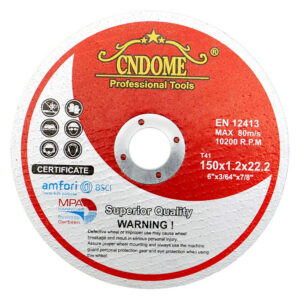
Match the Size to Your Tool. The most common angle grinder sizes are 115 mm and 125 mm, with a 22.23 mm bore. Check your grinder’s maximum RPM and make sure the disc’s rated speed is higher. Never remove the guard to fit a wrong-sized disc.
Pick the Right Material Formula. Resin ultra-thin cutting discs come in two main types: one for stainless steel, and one for regular steel. Stainless steel cutting discs contain special fillers that reduce heat and prevent bluing. Using a regular steel cutting disc on stainless steel will cause heavy bluing, rapid wear, and poor results. Match the cutting disc to your workpiece.
Choose Thickness Based on Your Work Conditions. If you are experienced and work in a stable position, a 1.0 mm or 0.8 mm cutting disc will give you the best speed. If you often work on scaffolding, in tight spaces, or at awkward angles, a 1.6 mm cutting disc gives you more forgiveness against accidental side pressure.
Watch for Consistent Quality. You cannot test this before buying, but pay attention during use. If one cutting disc in a pack runs smooth and another vibrates right away, the batch may have quality issues. Consistent performance across cutting discs is a sign of good manufacturing.
Why Some Cutting Discs Cost More Than Others
A 0.5-dollar cutting disc and a 2-dollar cutting disc may look similar, but they are not the same product. The differences are in things you cannot see: the quality and number of fiberglass mesh layers, the grade and uniformity of the abrasive grains, the heat resistance of the resin bond, and the precision of the curing process.
A cheap cutting disc may start to wobble or chip after a few minutes. A well-made cutting disc runs smoothly through its whole life and leaves clean cuts. When you add up the cost of downtime, wasted discs, and rework on bad cuts, the cheaper cutting disc is often more expensive in the end.
Safety Rules You Must Follow
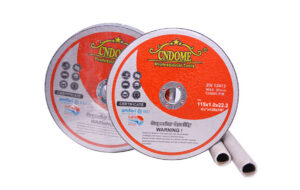
Ultra-thin cutting discs are safe when used correctly, but they have limits. The most important rule is: cut only with the edge, never use the side for grinding. The cutting disc is not designed for lateral force.
Always secure the workpiece before cutting. Let the cutting disc feed at its own pace. Do not force it. Keep the guard on your grinder at all times. Wear a face shield or goggles. If a cutting disc breaks, fragments fly at high speed, and your eyes are not protected, the result can be serious.
Also, never use a cutting disc with the wrong bore size. Some people use adapter rings or force a cutting disc onto a different arbor. This makes the cutting disc run off-center and puts unpredictable stress on it. It is extremely dangerous.
As a manufacturer, we test every batch at speeds far above the labeled maximum RPM before they leave the factory. That is our responsibility. Your responsibility is to follow the safety rules every time you pick up the grinder.
Making the Right Choice
You do not need to become an abrasives expert. Just remember three things: know your material, know your working conditions, and choose a cutting disc that matches both. Thickness is not a race to zero. It is a choice you make based on what you need to cut, where you are working, and how much control you have over the tool.
Our job as manufacturers is to make cutting discs that balance thickness, strength, and sharpness consistently. Your job is to pick the right cutting disc for the work in front of you. Do that, and you will get the result you want.
FAQ
1. What are the main advantages of using an ultra-thin cutting disc?
The five core benefits are: less material loss due to a thinner kerf, faster cutting speed from reduced resistance, a smaller heat-affected zone to prevent workpiece discoloration, cleaner cut edges that require less post-cut finishing, and less dust generation during operation.
2. Can I use an ultra-thin cutting disc to cut stainless steel?
Yes, but you must choose a disc specifically formulated for stainless steel. These discs contain special fillers that reduce cutting heat and inhibit oxidation. Using a standard disc designed for regular steel will likely cause heavy bluing, rapid disc wear, and poor cut quality on stainless steel.
3. Why does my ultra-thin cutting disc wobble or vibrate during use?
Wobbling or vibration is usually caused by one of the following: an incorrectly mounted disc, a worn or damaged angle grinder arbor, using a disc with the wrong bore size, poor batch quality from the manufacturer, or applying excessive side pressure during cutting. Try a disc from a different batch or supplier to help identify the root cause.
4. How do I choose the right thickness of ultra-thin cutting disc for my angle grinder?
The choice depends on your skill level and working conditions. If you are experienced and work in a stable position, a 1.0 mm or 0.8 mm disc offers maximum speed and efficiency. If you often work on scaffolding, in tight spaces, or at awkward angles where lateral force is harder to avoid, a 1.6 mm disc provides extra durability and safety margin.
5. Can I cut aluminum or other non-ferrous metals with an ultra-thin cutting disc?
It is generally not recommended. Aluminum and similar soft metals can clog the disc’s surface pores, drastically reducing cutting efficiency and causing dangerous heat buildup. For non-ferrous metals, always use a disc specifically designed for that material.
6. What do the colors on an ultra-thin cutting disc mean? Do they affect performance?
The color of a cutting disc usually comes from the specific abrasive grains and fillers used in its formulation. For example, discs for stainless steel are often blue or green due to added heat-reducing compounds, while discs for regular steel are typically black or brown. The color itself does not directly determine performance; what matters is whether the disc’s formulation matches your workpiece material.
7. How should I store ultra-thin cutting discs to maintain their quality?
Store discs flat or hung on a peg, in a dry, cool environment away from direct sunlight and moisture. Avoid stacking heavy objects on top of them, which can cause warping. Extreme temperature fluctuations and high humidity can degrade the resin bond over time, reducing the disc’s strength and safety. Never store discs near solvents or chemicals.
8. Can I use an ultra-thin cutting disc underwater or for wet cutting?
Standard resin-bonded ultra-thin cutting discs are designed for dry cutting. Using them with water can degrade the resin bond and increase the risk of breakage. If your application requires wet cutting, look for discs specifically labeled for wet use or consult the manufacturer.
9. How do I know when an ultra-thin cutting disc is worn out and needs replacing?
Replace the disc when its diameter has worn down to the minimum size marked on the disc label or when it no longer cuts effectively. A disc that requires excessive feed pressure, generates sparks but does not advance, or shows visible cracks or chips in the abrasive rim must be replaced immediately for safety.
10. Can an ultra-thin cutting disc be used on a cordless angle grinder?
Yes. Ultra-thin cutting discs are actually an excellent match for cordless angle grinders because their low cutting resistance consumes less battery power per cut. This allows you to make more cuts on a single battery charge compared to standard thicker discs.
