
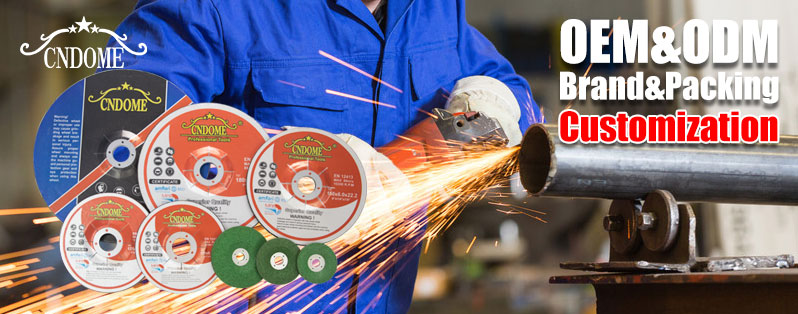
-
Mar, Thu, 2026

The Complete Guide to Angle Grinder Wheels for Metal: Your Ultimate OEM Partner
You pick up your angle grinder, ready to tackle that metal fabrication job. But as you press the wheel against the steel, it chatters, burns the workpiece, or worse—shatters into fragments. Another project delayed. Another near-miss safety incident. Another reason to question whether you’re using the right tool for the job.
If this scenario feels familiar, you’re not alone. Thousands of professionals and DIY enthusiasts struggle daily with angle grinder wheels that underperform, fail prematurely, or pose safety risks.
As a factory owner with nearly two decades of experience manufacturing abrasive wheels for metal, I’ve helped clients—from small workshops to Fortune 500 companies—solve exactly these problems. This comprehensive guide will teach you everything you need to know about selecting, using, and sourcing the perfect angle grinder wheels for metal applications.
Chapter 1: Understanding Angle Grinder Wheels for Metal
What Makes Metal Wheels Different?
Angle grinder wheels designed for metal are engineered with specific abrasive grains, bonding agents, and reinforcement structures to handle the unique challenges of cutting and grinding ferrous and non-ferrous materials .
The standard construction includes:
- Abrasive grains (aluminum oxide, zirconia alumina, ceramic, or silicon carbide)
- Resin bond that holds grains together
- Fiberglass reinforcement (typically double-layer) for safety at high speeds
- Depressed center or flat shape depending on application
The Two Main Families: Cutting vs. Grinding
Cutting Wheels (Type 41/42)
These thin wheels (typically 0.8-3.0mm) are designed for parting operations :
Grinding Wheels (Type 27)
These thicker wheels (4.0-8.0mm) are built for material removal, weld grinding, and surface preparation :
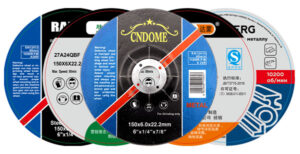
| Size | Thickness | Best For |
|---|---|---|
| 115×6.0×22.2mm | 6.0mm | Light grinding, weld dressing |
| 125×6.0×22.2mm | 6.0mm | General purpose grinding |
| 150×6.0×22.2mm | 6.0mm | Heavy stock removal |
| 180×6.0×22.2mm | 6.0mm | Large surface areas |
Chapter 2: Choosing the Right Wheel for Your Metal
Match the Abrasive to the Material
This is the single most important decision you’ll make. Different metals require different abrasive technologies .
For Carbon Steel & Mild Steel
- Recommended abrasive: Brown aluminum oxide
- Why: Cost-effective, durable, excellent for general purpose work
- Grit range: 24#-36# for cutting, 16#-24# for heavy grinding
- Our OEM advantage: We can optimize the grain size and bond hardness for your specific steel grades
For Stainless Steel (INOX)
- Recommended abrasive: Zirconia alumina or ceramic
- Why: Self-sharpening properties, heat resistance prevents blueing, 3-5x longer life than conventional abrasives
- Key feature: Low iron/sulfur/chlorine content (<0.1%) to prevent contamination
- Ultra-thin option: .032″ (0.8mm) wheels for fast, cool cutting
- Our OEM advantage: Specialized INOX formulas with cooling agents
For Aluminum & Non-Ferrous Metals
- Recommended abrasive: Silicon carbide or special anti-loading formulations
- Why: Prevents clogging (loading) that ruins ordinary wheels
- Best practice: Use coarser grits and wheels specifically designed for non-ferrous materials
- Our OEM advantage: Anti-loading配方 that keeps wheels cutting freely
For Cast Iron
- Recommended abrasive: Silicon carbide
- Why: Handles the brittle nature and graphite content of cast iron
- Application: Cutting risers, cleaning castings
For Hardened Steel & High-Temperature Alloys
- Recommended abrasive: Ceramic alumina
- Why: Micro-fracturing grain structure constantly creates new cutting edges
- Applications: Tool steel, titanium, Inconel, cobalt alloys
- Our OEM advantage: Premium ceramic blends for maximum productivity
Understanding Wheel Specifications
Every wheel tells a story through its markings. Learn to read them:
- A = Abrasive type (Aluminum oxide)
- 30 = Grit size (coarse)
- R = Hardness grade (medium-hard)
- BF = Bond type and reinforcement
Example: 115×1.0×22.23 A60N-BFP
- 115mm = Diameter
- 1.0mm = Thickness
- 22.23mm = Arbor hole
- A60N = Aluminum oxide, 60 grit, medium hardness
- BFP = Resin bond with fiberglass reinforcement
Thickness Matters
Chapter 3: Safety First—Because One Mistake Is One Too Many
Critical Safety Standards
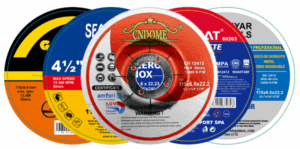
Quality wheels carry certifications that matter. Look for:
- EN12413 (European standard)
- MPA (German safety certification)
- ISO9001 (Quality management)
- OSA (Other regional certifications)
Our factory products meet all these standards, with iron/sulfur/chlorine content below 0.1% .
The Five Pre-Use Checks
1. Visual Inspection
Examine every wheel before mounting. Look for cracks, chips, or signs of damage. A cracked wheel can explode at speed .
2. The Ring Test
Suspend the wheel on your finger and tap it gently with a non-metallic tool. A clear ringing sound indicates a sound wheel. A dull thud means reject it.
3. Speed Rating Check
Never exceed the wheel’s maximum RPM. For 115mm wheels, this is typically 13,300 RPM ; for 125mm, 12,250 RPM ; for 150mm, 10,200 RPM ; for 230mm, 6,650 RPM .
4. Expiry Date
Resin-bonded wheels have a shelf life—typically 3 years from manufacture. Expired wheels become brittle and dangerous.
5. Arbor Size Match
Ensure the wheel’s arbor hole matches your grinder’s spindle. Common sizes: 22.2mm, 16mm, 20mm, 25.4mm . Never force a wheel onto the wrong size arbor.
Safe Operating Practices
Do:
- Always use the wheel guard
- Wear appropriate PPE (eye protection, gloves, hearing protection)
- Allow the wheel to reach full speed before cutting
- Use the correct angle (15-25° for grinding, 90° for cutting)
Never:
- Grind on the side of a cutting wheel
- Force the wheel or apply excessive pressure
- Remove the guard for “better access”
- Use a damaged or expired wheel
- Exceed the maximum RPM
Chapter 4: Why Partner With Us for Your OEM Needs?
Our Factory: By the Numbers
With nearly 26 years of manufacturing experience, we’ve become a trusted partner for brands worldwide.
Our Certifications
We hold the certifications that matter to your customers:
- ISO9001 International Quality System Certification
- German MPA Safety Certification
- EN12413 European Standard (since 2004)
- ISO14001 Environmental Management
- OHSAS18001 Occupational Health & Safety
Complete Product Range
We manufacture angle grinder wheels for metal from 75mm to 405mm diameter, with thicknesses from 0.8mm to 8mm . Our series include:
- Metal series (carbon steel)
- INOX series (stainless steel)
- Stone series (masonry)
What We Can Do For You
1. Full OEM Customization
You bring the brand vision. We handle everything:
- Formula development: Tailored to your target materials and markets
- Specification flexibility: Any diameter, thickness, arbor size
- Color customization: Match your brand colors
- Label design: Professional, compliant with regional requirements
- Packaging: From shrink wrap to retail-ready boxes
2. Quality Assurance You Can Trust
Our quality system includes:
- Incoming inspection of all raw materials
- In-process quality control at every stage
- Pre-shipment inspection for every order
- Performance testing on actual workpieces
- Computer-tracked data for full traceability
We pick 3 wheels from every 1,000 for rigorous testing—physical (weight, diameter, balance) and performance (cutting life, speed) .
3. Technical Expertise
Our technology foundation comes from:
- Joint venture with UK ARROW company
- Japanese-trained engineer with 10+ years experience
- Continuous R&D introducing new formulas for market requirements
4. Flexible Ordering
5. Global Reach
With branch offices in Shanghai and Dubai , we serve:
- North America
- Europe
- Middle East
- Africa
- Asia
We’ve established relationships with multinational corporations and purchasing groups worldwide .
Our Commitment to You
When you partner with us, you get:
- Consistent quality batch after batch
- Reliable delivery—we understand the cost of delays
- Technical support from experienced engineers
- Market knowledge from serving 70+ countries
- Long-term partnership focus—we grow with you
Chapter 5: Technical Specifications Reference
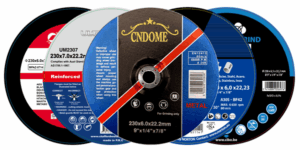
Cutting Wheels Specifications
Grinding Wheels Specifications
Chapter 6: Frequently Asked Questions
Q: What’s the difference between Type 27 and Type 42 wheels?
A: Type 27 wheels have a depressed center (raised hub) and are designed for grinding applications. Type 42 wheels are flat and optimized for cutting . Using the wrong type for your application is dangerous—never grind with a cutting wheel.
Q: Can I use the same wheel for all metals?
A: While you can, you shouldn’t expect optimal results. Stainless steel requires zirconia or ceramic abrasives to prevent burning and achieve reasonable life . Aluminum needs special anti-loading wheels . Carbon steel works well with standard aluminum oxide. Using dedicated wheels for each material will improve your productivity and quality.
Q: What causes wheels to wear out quickly?
A: Several factors:
- Wrong abrasive for the material
- Excessive pressure (let the wheel do the work)
- Incorrect operating speed
- Poor quality wheel construction
- Overheating from dull grains
Q: How do I know when to replace a wheel?
A: Replace when:
- Diameter is significantly reduced
- Cutting speed slows noticeably
- Vibration increases
- Visible damage appears
- Wheel is past its expiry date
Q: What certifications should I look for?
A: For international markets, prioritize EN12413 (Europe) and MPA (Germany) certifications . ISO9001 indicates quality management . For stainless steel applications, look for low iron/sulfur/chlorine content (<0.1%) .
Q: Can you match existing product specifications?
A: Absolutely. We can reverse-engineer existing wheels or develop new specifications based on your requirements. Our R&D team has decades of combined experience .
Q: What’s your typical lead time?
A: Standard production lead time is approximately 45 days after receiving advance payment and confirming all order details . For established customers with regular orders, we can work out scheduling to ensure continuous supply.
Q: Do you provide samples for testing?
A: Yes, we can arrange samples for qualified inquiries. Testing in your actual working conditions is the best way to verify performance.
Chapter 7: Storage and Handling Guidelines
Optimal Storage Conditions
To maintain wheel performance and safety:
- Temperature: 5°C-30°C (41°F-86°F)
- Humidity: Below 70%, avoid moisture
- Location: Off floors, away from walls
- Protection: Keep in original packaging until use
- Avoid: Direct sunlight, chemicals, extreme temperatures
Handling Best Practices
- Always handle carefully—wheels are brittle
- Store flat or upright as designed
- Prevent impact damage during transport
- Rotate stock—first in, first out
- Never roll wheels across the floor
Shelf Life Management
All resin-bonded wheels have a finite shelf life. Implement a system to:
- Track manufacturing dates
- Monitor inventory age
- Remove expired wheels from stock
- Educate customers about expiration
Conclusion: Your Success Starts Here
Angle grinder wheels for metal might seem like simple commodities, but as you’ve learned, they’re sophisticated products requiring careful selection, proper use, and reliable supply chains.
Whether you’re:
- A distributor looking for consistent quality
- A brand owner building your product line
- An importer serving specific market needs
- A large enterprise seeking strategic partnerships
We have the experience, capacity, and commitment to be your ideal OEM partner.
Our promise to you:
- Quality that meets international standards
- Consistency that builds your brand reputation
- Flexibility that adapts to your needs
- Partnership that grows with your business
Ready to start the conversation?
Contact us today to discuss your requirements. Let us show you why global brands trust us as their manufacturing partner.
Your brand. Our quality. Global success.
Contact Information:
- 📧 [DomeGrinding@hotmail.com]
- 📱 [+86 18796960868]
- 🌐 [https://czdome.com/]
