
-
Apr, Fri, 2026

Choose the right cutting wheels for angle grinders
You’ll use angle grinders in metal processing, construction sites, pipe installation, or auto repair shops. Cutting discs are high-frequency consumables for angle grinders. It directly affects your work efficiency, cutting quality, and personal safety.
There are countless cutting discs available for sale, in various materials, sizes, thicknesses, and certification standards… How can you choose the right cutting disc for your working conditions? If you are a trader, brand owner, or corporate purchaser, how can you determine whether a supplier is reliable and can provide stable supply in the long term?
We will help you understand how to choose cutting discs for stainless steel, pipes, or other metals? What do CE, MPA, and other certifications represent? And how to find a trustworthy cutting disc manufacturer?
1. What is an angle grinder cutting disc?
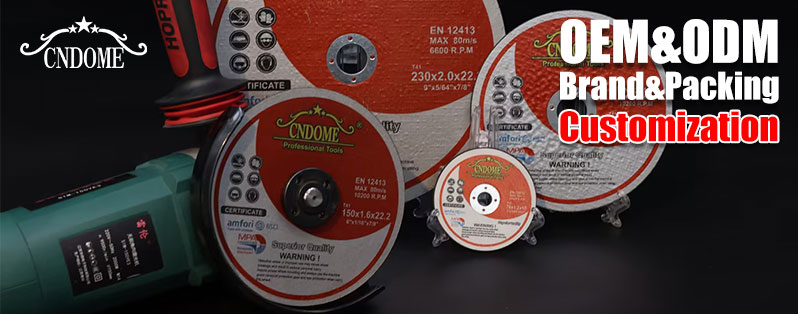
A cutting disc is a thin abrasive tool specifically designed for cutting and is mounted on an angle grinder. The outer diameter of the cutting blade is 38-405mm, and the maximum rotation speed is 3800-30100 rpm. It is mainly used for cutting metal materials such as steel, cast iron, and stainless steel. The cutting disc cannot be used for grinding or polishing.
Many beginners and even experienced users confuse cutting discs and grinding discs. From the outside, they are all disc-shaped. However, the two are fundamentally different in design, structure and usage scenarios.
| Comparison items | Cutting disc | Grinding disc |
|---|---|---|
| Thickness | Thin, typically 0.8-3.2mm | Thickness, 3-7mm, usually 6mm |
| Type | T41 | T27 |
| Main functions | Cutting materials | Surface grinding, deburring, weld grinding |
| Lateral force | Weak, easily broken under lateral pressure | Strong, capable of withstanding lateral pressure |
| Applicable Scenarios | Cutting pipes, plates, and profiles | Grind the surface and remove welding slag |
Using the wrong data type is not only inefficient, but also dangerous. Cutting disc rupture is one of the most common workplace accidents involving angle grinders. We recommend purchasing shatterproof cutting discs.
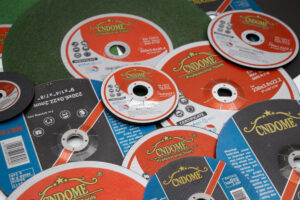
Structural composition of the cutting disc
A high-quality cutting disc typically consists of the following parts:
- Abrasive: Determines cutting efficiency and applicable materials. Common types include brown fused alumina, white fused alumina, and zirconium fused alumina.
- Binder: Used to bind abrasive particles together; usually resin.
- Mesh: Typically made of fiberglass mesh, providing tensile strength and impact resistance. High-quality cutting discs have at least two layers of mesh.
- Hole diameter: The center hole used for mounting on an angle grinder; the standard hole diameter is 22.2 mm.
2. How to choose a cutting disc for cutting different types of metal?
Cutting different metal materials requires matching different abrasives and adhesives. The following is a selection guide based on actual working conditions:
| Metallic materials | Cutting disc type | Features |
|---|---|---|
| Carbon steel, structural steel | Brown fused alumina cutting disc | General purpose. Select the thickness according to the precision requirements: 1.0-1.6mm is suitable for precision cutting of thin plates, and 3.2mm is suitable for cutting heavy structural steel. |
| Stainless steel/INOX | Stainless steel cutting disc (zirconia corundum) | It does not turn black or burn. This type of cutting disc generates low heat and does not contain iron or sulfur impurities. |
| Pipes, thin-walled profiles | Ultra-thin cutting blade (0.8-1.2mm) | Fewer burrs on the cut, less prone to deformation. Choose double-layer fiberglass mesh reinforcement to reduce vibration and ensure more stable cutting. |
| Cast iron | Zirconium corundum cutting disc | Materials with high hardness require harder abrasives; ordinary brown fused alumina wears down too quickly. |
If you encounter issues like the blade turning blue or black or becoming unable to cut stainless steel or cast iron, it’s highly likely that you haven’t chosen the right cutting disc.
3. Key parameters of the cutting disc: size, rotation speed, and thickness.
1. Diameter and aperture
Angle grinder cutting discs come in various diameters, the most common being:
- 4-inch (100mm/105mm/107mm): A universal size suitable for most handheld angle grinders.
- 4.5 inches (115mm): Slightly larger than 4 inches, with a slightly deeper cut.
- 7 inches (180mm): For heavy-duty angle grinders, allowing for deeper cuts.
- 9 inches (230mm): Largest size, used for large cutting operations.
2. MAX RPM
Each cutting disc will be marked with its maximum permissible rotation speed, such as “MAX PRM 15200”.
This number must be greater than or equal to the angle grinder’s rotational speed. If the cutting disc’s maximum rotational speed is lower than the angle grinder’s speed, the centrifugal force generated during high-speed rotation may cause the cutting disc to shatter and fly out, which is extremely dangerous.
Safety reference value:
- 4-inch cutting disc: MAX RPM 15200
- 4.5-inch cutting disc: MAX RPM 13300
- 7-inch cutting disc: MAX RPM 8500
- 9-inch cutting disc: MAX RPM 6600
3. Thickness Selection
The thickness of the cutting disc directly affects cutting efficiency and lifespan.
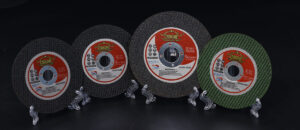
- 0.8-1.6mm (ultra-thin): Fast cutting speed, low material loss, suitable for precision cutting of stainless steel, thin plates, and pipes.
- 1.6-2.5mm (standard): Balances cutting speed and durability, suitable for general cutting.
- 2.5-3.2mm (thickness): High durability, suitable for heavy-duty cutting and rough machining.
4. What does the safety certification mark on the cutting disc represent?
For brand owners or traders, whether or not the cutting discs are certified determines whether they can enter the international market.
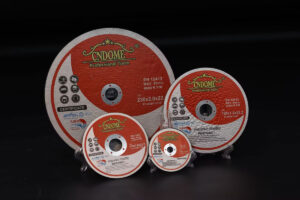
- MPA: Certification from a leading German testing organization. MPA certification is a mandatory requirement for both industrial and government projects.
- CE: A safety certification mark. It is considered a passport for manufacturers to open up and enter the European market.
- EN12413: European abrasive safety standard. Cutting discs that pass this certification must undergo rigorous burst speed and strength tests.
- ISO 9001: Quality Management System Certification, indicating that the manufacturer has a stable production process and quality control capabilities.
- BSCI: A set of internationally recognized social responsibility audit standards aimed at promoting corporate and supply chain social responsibilities such as protecting labor rights and ensuring safe and compliant production.
- OSHA: Requirements from the U.S. Occupational Safety and Health Administration. These are important considerations for exports to the U.S. market.
Why is cutter certification important?
In large-scale projects such as shipbuilding and infrastructure construction, the use of uncertified cutting discs may directly lead to product rejection and even affect project acceptance. For distributors, selling EN12413 certified cutting discs can significantly reduce the legal risks associated with safety accidents.
5. How to find a reliable cutting disc manufacturer?
Whether you are a tool importer, a building materials wholesaler, or a tool brand looking for OEM manufacturing, choosing the right cutting disc manufacturer directly affects your profits and reputation.
To determine whether a cutting disc manufacturer is reliable, you can start from the following aspects:
1. Is it a real factory?
- Do you have your own factory? Do you support on-site visits?
- How many automated production lines does the factory have? What is its daily output? What is the delivery cycle in days?
- How many product development engineers are there?
- Does it have import/export rights?
2. Can it be customized?
- Can you provide OEM/ODM services?
- Can you customize the packaging (logo, color box, tin box, supermarket shelf packaging)?
3. Are all certifications complete?
- MPA、CE、BSCI、EN12413
- Some countries require OSHA compliance certificates and certificates of origin.
4. Is the quality stable?
- Are the pore size and thickness of samples from different batches consistent?
- Is batch traceability possible?
- Can you provide product quality insurance?
5. Can it be tested in practice?
- Can you provide free samples for real-world testing?
- Do bulk products support random sampling tests?
6. Choosing the right cutting disc ensures safety and efficiency.
An angle grinder cutting disc may seem like an insignificant consumable, but it is connected to three important factors: efficiency, cost, and safety.
For frontline users, choosing the right cutting disc ensures smooth work and personal safety. Don’t try to save a few cents by buying inferior products; it’s not worth it if something goes wrong later.
For buyers and distributors, cutting discs are high-frequency consumables with high customer loyalty. However, the prerequisite is that you find a supplier with stable quality, complete certifications, and the ability to cooperate long-term. The lowest price is often the most expensive, because returns, customer complaints, and accidents all cost much more than a few cents.
If you are looking for a cutting disc manufacturer worth long-term cooperation—
Dome Abrasive Manufacture is a professional manufacturer of angle grinder cutting discs. It has MPA, CE, BSCI certifications and ISO 9001 quality system certification. Adjust the abrasive type and bonding strength according to the material you are cutting to give the cutting disc superior cutting speed, precision and durability.
Provided by Dome Abrasive Manufacture:
- We will send you free samples based on your working conditions and support actual testing.
- OEM/ODM customization; packaging can be designed according to your brand requirements.
- Stable supply for large-volume orders, delivery time can be promised.
Feel free to contact Dome Abrasive Manufacture and tell us your needs—
- What material is being cut?
- What size angle grinder should I use?
- What is the expected monthly usage?
Dome Abrasive Manufacture will provide you with targeted selection advice and a quote within 24 hours.
FAQ
1. What materials can angle grinder cutting wheels cut?
Angle grinder cutting discs can cut metals such as carbon steel, stainless steel, cast iron, aluminum, and copper, as well as stone materials such as ceramic tiles and concrete, and plastics. However, special cutting discs with different abrasive types, such as alumina, zirconium corundum, silicon carbide, or diamond, must be used depending on the material.
2. What size cutting wheel should I use for my angle grinder?
You should use the largest cutting disc within the range specified by the tool manufacturer, while ensuring the rotation speed is matched. This is crucial for safe and efficient operation.
3. What is the best cutting wheel for metal and stainless steel?
There is no single “one-size-fits-all” angle grinder cutting disc. The best disc depends on your specific material: cutting plain steel and cutting stainless steel require two different disc formulations.
4. How do I choose the right cutting wheel for an angle grinder?
Ensure that the cutting disc size and rotation speed match the angle grinder specifications, select the abrasive according to the material (alumina for ordinary steel, zirconium corundum for stainless steel, and diamond for stone), and select the thickness according to the cutting task (fine cutting of thin slices, heavy-duty cutting of thick slices).
5. Why do cutting wheels break and how to prevent it?
The main causes of cutting disc breakage are mismatched speed, side pressure operation, or use of damaged cutting discs. The key to prevention is to ensure that the speed is compliant, cut vertically without side pressure, and perform a ring test and no-load test before installation.
6. Can cutting wheels be customized for different applications?
Yes, cutting discs can be customized for different applications, including abrasive type (such as ceramic, zirconia, alumina), size (diameter, aperture), thickness, number of reinforcement layers, as well as OEM packaging and branding.
7. What should I consider when buying cutting wheels in bulk?
The core of bulk purchasing cutting discs is to base decisions on the cost per cut rather than the unit price, prioritizing suppliers with safety certifications such as EN12413, who support sample testing and deliver reliably, and reducing risks through phased verification (screening → testing → trial order → agreement).
8. What is the safest way to use cutting wheels on an angle grinder?
Before use, check the speed matching and perform a ring test. During installation, retain the protective cover and run it idle for a test run. When operating, hold it with both hands, cut vertically, and strictly prohibit side pressure. Wear a face mask and goggles throughout the process.
9. What are common mistakes when using cutting wheels?
Mismatched rotation speed, removal of protective cover, grinding with the side of the cutting disc, failure to inspect before installation (circumferential testing), pressing down or twisting the cutting disc, using expired or damp cutting discs, and not wearing a face shield or goggles.
10. How to store cutting wheels properly to extend shelf life?
Cutting wheels should be stored in an environment with a temperature of 15-25°C and a humidity of less than 60%, and should not be stacked flat in more than 5 layers. They should be used within a 3-year shelf life. Any product that has been dropped or has become damp must be discarded immediately.
