
Ultra-thin Kerf
Minimum material loss.
Fast Cutting
Shorter cutting cycles.
Clean Cutting
Smooth, burr‑free edges.
OEM & Private Label
Custom sizes, branding.
Ultra-thin Cutting Disc Manufacturer
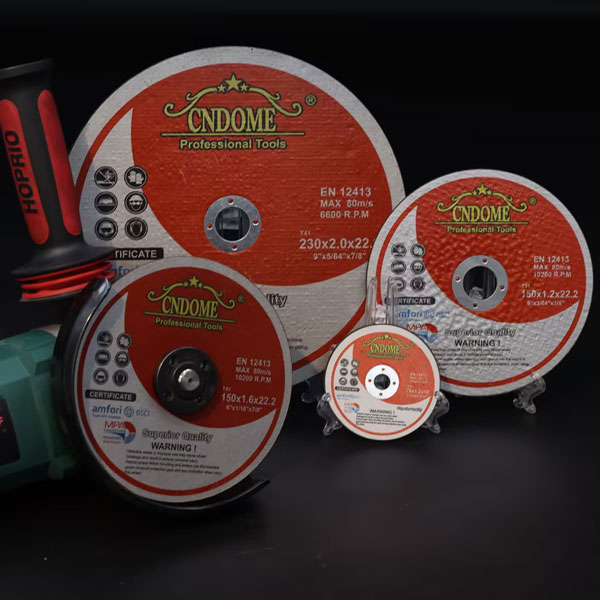
High‑performance resin bonded ultra‑thin cutting discs designed for fast, clean, and accurate cutting of stainless steel, carbon steel, and other metals. Available in multiple diameters (115mm, 125mm, 180mm, 230mm) and thicknesses (1.0mm, 1.2mm, 1.6mm) to suit different applications. As a direct manufacturer, we support OEM and private label projects with custom specifications and branded packaging for global distributors and industrial brands.
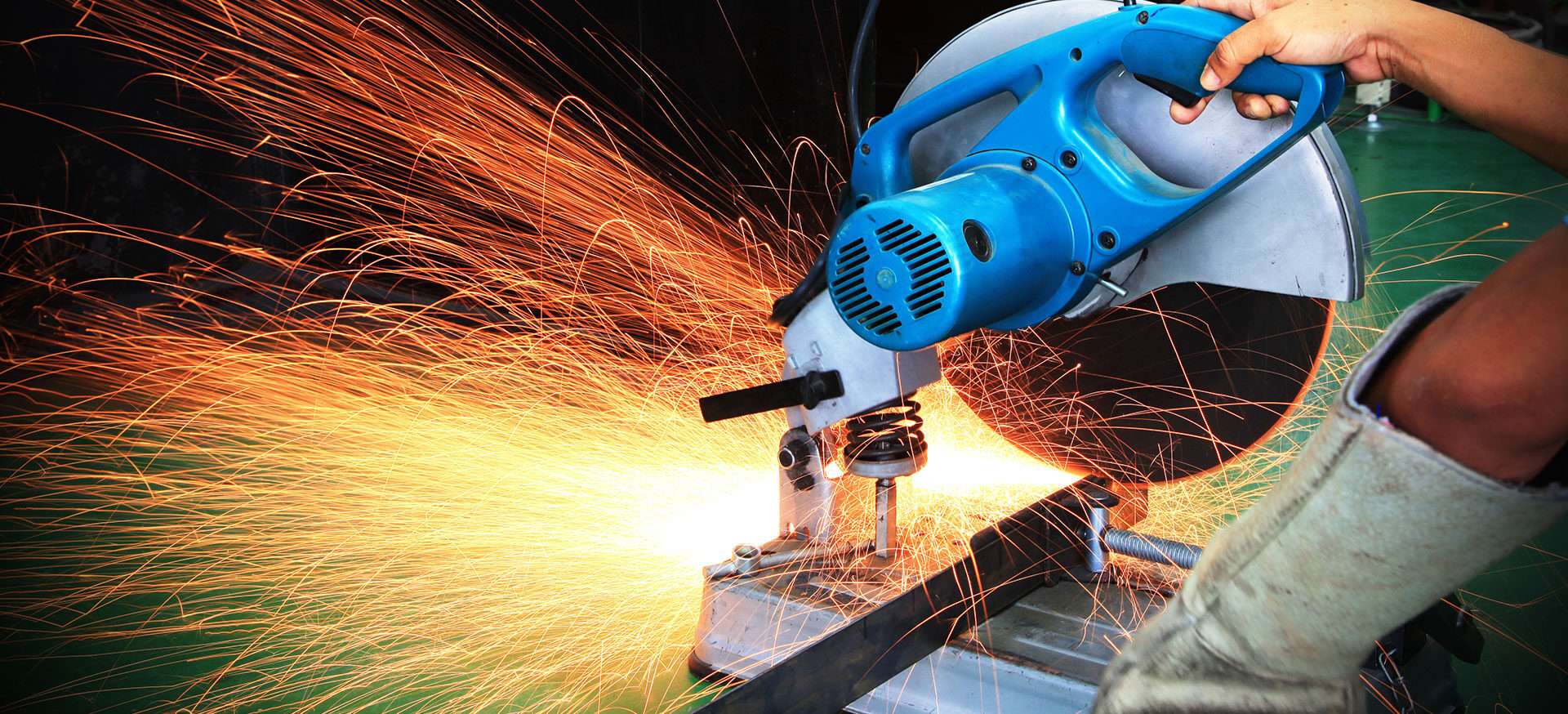
Dome Abrasives Catalogue
Ultra-thin Cutting Discs for Fast and Precise Metal Cutting
Ultra-thin cutting discs are resin-bonded abrasive wheels engineered with a reduced thickness — typically 1.6 mm or less, with many industrial-grade discs now available at 1.2 mm and 1.0 mm. Unlike standard cutting discs which range from 2.0 mm to 3.0 mm thick, ultra-thin cutting discs are designed to slice through metal with minimal resistance, delivering faster cuts, cleaner edges, and less material waste. The reduced thickness is achieved through advanced resin bond formulations, precision curing processes, and high-strength fibreglass reinforcement — ensuring the disc remains safe and structurally sound at high operating speeds.
Why Choose Ultra-thin Cutting Discs?
The defining advantage of an ultra-thin cutting disc lies in its narrow kerf — the width of the cut it makes. A 3 mm standard cutting disc typically creates a kerf around 4 mm wide, while a 1 mm ultra-thin cutting disc produces a kerf of approximately 1.6 mm. This difference directly translates to less material turned into waste with every cut, which is particularly valuable when working with expensive metals like stainless steel. The narrow kerf also means less cutting resistance — the cutting disc has less contact with the workpiece, so it moves through faster with less effort, reducing operator fatigue during extended cutting sessions. Additionally, the thinner profile generates significantly less friction heat, which helps prevent the blue discolouration commonly seen on stainless steel cut edges — a sign of thermal damage that often requires secondary grinding to remove.
Materials You Can Cut
Ultra-thin cutting discs are suitable for a wide range of metals, including stainless steel, carbon steel, mild steel, and other ferrous metals. They are particularly effective on thinner materials where heat control and cut quality are critical, but can also handle solid profiles and round bars with the appropriate disc selection.
Typical Applications
Common applications include sheet metal cutting, pipe and tube cutting, metal fabrication, and automotive repair. In metal fabrication workshops, ultra-thin cutting discs enable faster throughput with cleaner cuts that reduce post-cut finishing work. In automotive repair, they are used for cutting exhaust components, body panels, and chassis sections where precision and minimal heat input are essential.
OEM & Private Label Capabilities
As a direct manufacturer, we offer ultra-thin cutting discs in multiple thicknesses (1.0 mm, 1.2 mm, 1.6 mm) and diameters to suit different angle grinder sizes and applications. We also support OEM and private label projects — including custom specifications, branded labels, and tailored packaging for distributors, tool brands, and industrial suppliers.
Our Ultra-thin Cutting Disc Range
Browse our range of ultra-thin cutting discs by thickness, diameter, or application. All discs are resin-bonded with fibreglass reinforcement and EN12413 certified.
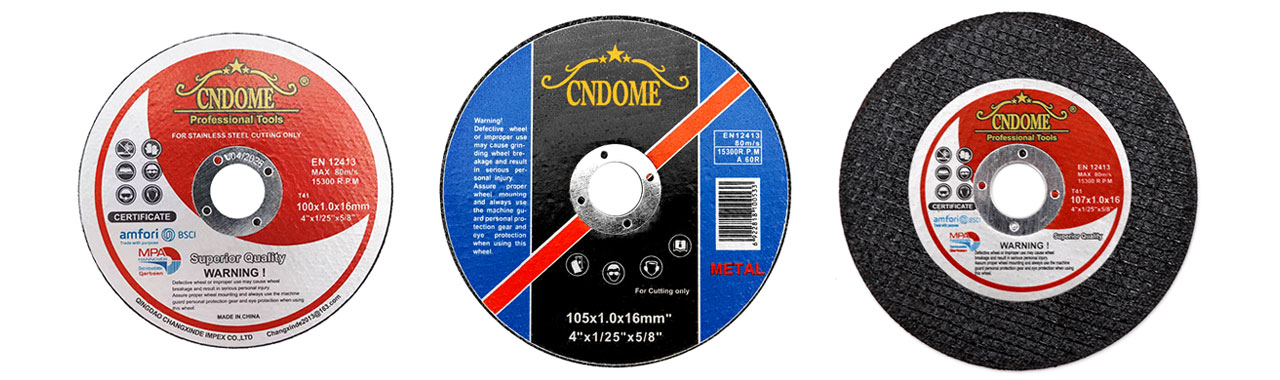
1.0mm Ultra-thin Cutting Disc for Precision Cutting
Diameter: 100mm · 105mm · 107mm
Thickness: 1.0mm
Bore: 16mm
Ultra-thin cutting disc designed for maximum precision on thin sheet metal and fine cutting work. The 1.0mm profile delivers the fastest cutting speed with minimal material loss and virtually no burrs. Ideal for stainless steel sheet, thin-walled tubes, and decorative metalwork where cut quality is critical.
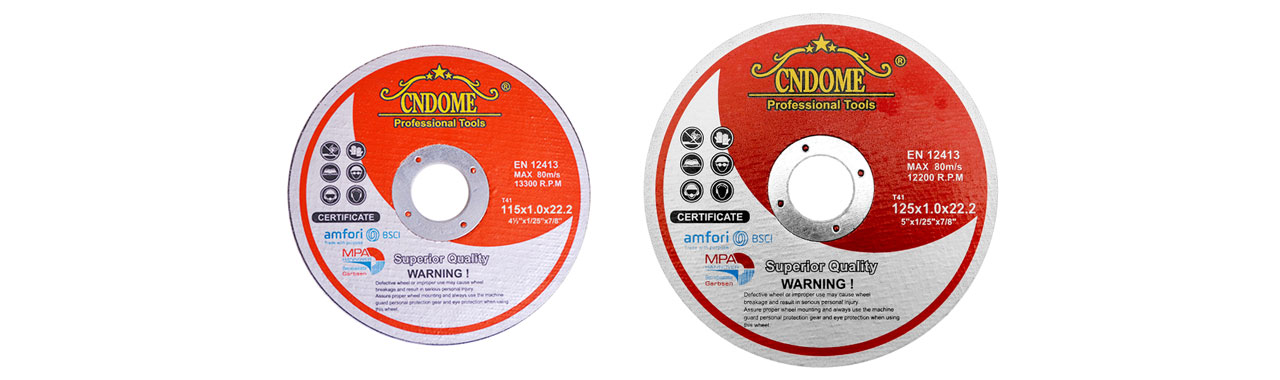
1.0mm Ultra-thin Cutting Disc for Stainless Steel
Diameter: 115mm · 125mm
Thickness: 1.0mm
Bore: 22.23mm
The most popular ultra-thin thickness for general metal cutting. Offers an excellent balance of cutting speed and durability. Designed for fast, clean cutting of stainless steel, carbon steel, and pipe. Low heat generation prevents discolouration on stainless steel cut edges.
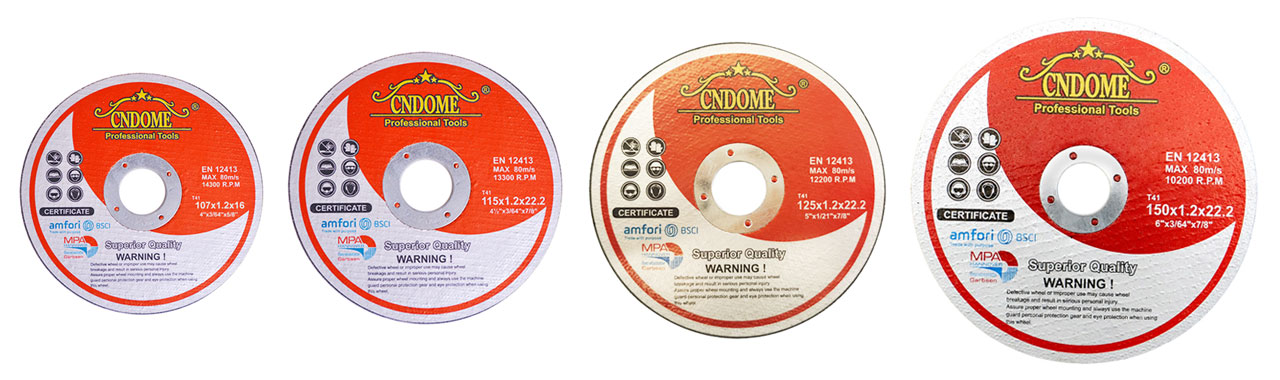
1.2mm Thin Cutting Disc for Metal Fabrication
Diameter: 107mm · 115mm · 125mm · 150mm
Thickness: 1.2mm
Bore: 16mm · 22.23mm
Versatile thin cutting disc for general metal fabrication and workshop use. Slightly thicker than the 1.0mm for added durability, while still maintaining fast cutting speed and clean edges. Suitable for cutting sheet metal, tubes, profiles, and solid bars across a range of metals.
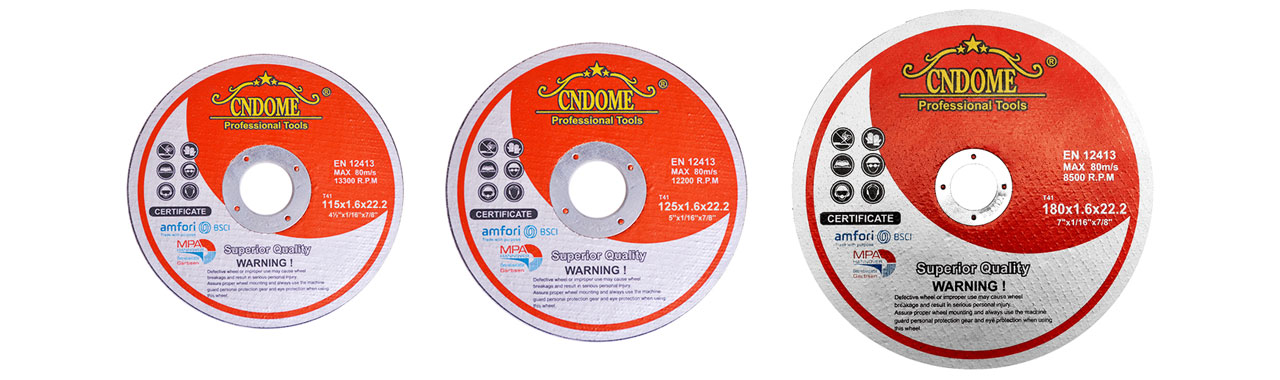
1.6mm Standard-thin Cutting Disc for General Use
Diameter: 115mm · 125mm · 180mm
Thickness: 1.6mm
Bore: 22.23mm
Entry-level thin cutting disc for workshops transitioning from standard 2.5–3.0mm discs. Offers faster cutting than conventional cutting discs with improved cut quality, while providing greater durability than thinner options. Suitable for general metal cutting applications where a balance of speed and service life is required.
What Is an Ultra-thin Cutting Disc?
An ultra-thin cutting disc is a resin-bonded abrasive wheel with a thickness of 1.6 mm or less — significantly thinner than standard cutting discs which typically range from 2.0 mm to 3.0 mm. The reduced thickness is made possible by high-strength fibreglass reinforcement and advanced resin formulations that maintain structural integrity at high speeds despite the slim profile. These cutting discs are designed to prioritise cutting speed, precision, and material conservation over durability and impact resistance. They are commonly used with angle grinders and cut-off machines for fast, clean cutting of thin metals, pipes, and profiles. While ultra-thin cutting discs have less abrasive volume than their thicker counterparts, their reduced cutting resistance and narrower kerf often result in shorter cycle times and less operator fatigue — delivering significant productivity gains in high‑volume cutting environments.
Structure of an Ultra-thin Cutting Disc
The construction of an ultra-thin cutting disc is built around four core components — each contributing to its performance, safety, and durability.
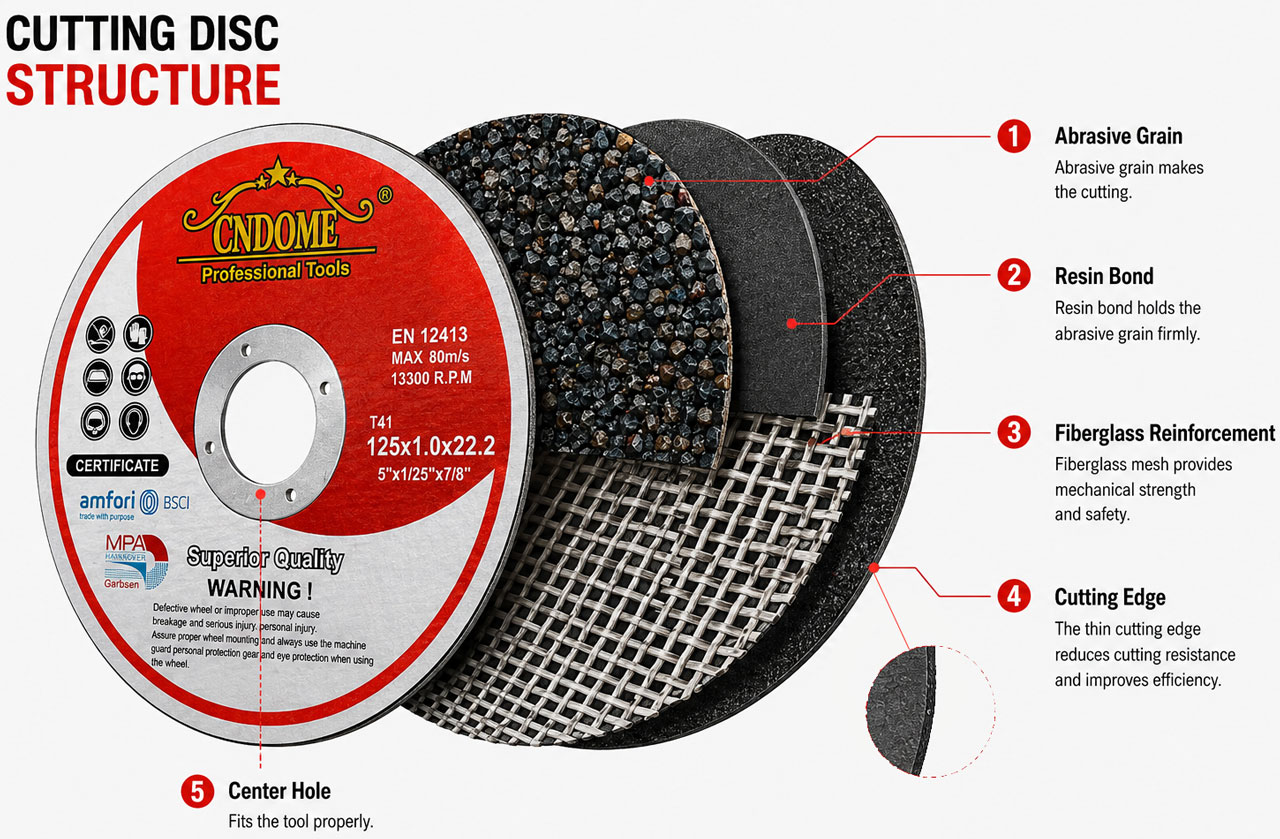
Abrasive Grain – The cutting particles on the cutting disc, typically aluminium oxide or zirconia alumina, are responsible for material removal. The grain type and size determine cutting speed, finish quality, and which metals the disc can handle effectively.
Resin Bond – The phenolic resin matrix holds the abrasive grains together. It controls the rate at which dull grains are released, maintaining cutting efficiency throughout the cutting disc‘s life. The bond also provides heat resistance during high-speed operation.
Fibreglass Reinforcement – Multiple layers of fibreglass mesh embedded in the cutting disc provide tensile strength to withstand centrifugal forces at high RPM — up to 13,300 RPM for a 115mm cutting disc. This reinforcement prevents the disc from shattering during use and is essential for safe angle grinder operation.
Cutting Edge – The thin cutting edge reduces contact area with the workpiece, minimising cutting resistance and friction heat. This allows the cutting disc to slice through metal faster with less effort.
Centre Hole – The arbor bore mounts the cutting disc to the angle grinder spindle. Standard sizes include 16mm for compact grinders and 22.23mm (7/8″) for standard angle grinders.
Benefits of Ultra-thin Cutting Discs
Ultra-thin cutting discs offer measurable advantages over standard cutting discs — from faster cycle times to cleaner cut quality. Here are six key benefits that explain why workshops, fabricators, and metalworkers are switching from standard 2.0–3.0mm cutting discs to ultra-thin alternatives.
Faster Cutting
Lower cutting resistance allows the disc to move through metal quickly. Ultra-thin discs can complete cuts 30–50% faster than standard 2.0mm discs. Less time per cut means higher productivity and lower labour costs.
Narrower Kerf
The cut width is determined by disc thickness. A 1.0mm disc creates a kerf of approximately 1.6mm, compared to 4mm for a standard 3mm disc. Narrower kerf means less material removed and less waste.
Less Material Waste
Less metal turned into swarf with every cut. This is particularly valuable when cutting expensive materials like stainless steel. Higher material yield means lower material costs per workpiece.
Cleaner Cuts
Reduced friction and heat generation produce smooth, burr-free cut edges. Clean cuts reduce or eliminate secondary finishing operations — saving time on grinding, deburring, and edge preparation.
Lower Cutting Effort
Less resistance means the operator applies less pressure to push the disc through the material. Reduced physical effort during extended cutting sessions means less fatigue, better control, and safer operation.
Suitable for Thin Materials
Ultra-thin discs are ideal for sheet metal, thin-walled tubes, and profiles where heat control and cut quality are critical. The low-heat cutting action prevents distortion and discolouration on thin materials.
Ultra-thin Cutting Disc Thickness Guide
Choosing the right thickness is the most important decision when selecting an ultra-thin cutting disc. Each thickness offers a different balance of cutting speed, precision, and durability.
| Thickness | Recommended Applications | Key Benefit |
|---|---|---|
| 1.0mm | Stainless steel sheet, thin-walled tubes, general metal cutting | Best balance of speed and versatility — most popular choice |
| 1.2mm | Sheet metal, profiles, pipes up to 20mm, general fabrication | Added durability while maintaining fast cutting |
| 1.6mm | General metal cutting, medium thickness materials | Entry-level thin disc with good durability |
1.0mm Ultra-thin Cutting Disc
The 1.0mm cutting disc is the most popular ultra-thin thickness for general metal cutting. Offers an excellent balance of cutting speed and disc durability. Designed for fast, clean cutting of stainless steel, carbon steel, and pipe. Low heat generation prevents discolouration on stainless steel cut edges. Suitable for sheet metal up to 3mm, pipes, profiles, and general fabrication work.
1.2mm Thin Cutting Disc
The 1.2mm cutting disc offers slightly more durability than the 1.0mm while maintaining fast cutting speed. Versatile thin cutting disc for general metal fabrication and workshop use. Suitable for cutting sheet metal, tubes, profiles, and solid bars across a range of metals. The added thickness provides better resistance to side loading and impact — making it a good choice for less experienced operators.
1.6mm Thin Cutting Disc
The 1.6mm cutting disc is the entry-level thin cutting disc for workshops transitioning from standard 2.5–3.0mm discs. Offers faster cutting than conventional discs with improved cut quality, while providing greater durability than thinner options. Suitable for general metal cutting applications where a balance of speed and service life is required.
Ultra-thin Cutting Disc Sizes
Choosing the right disc diameter ensures proper fitment on your angle grinder and optimal cutting performance. Each size is matched to a specific machine class and application range.
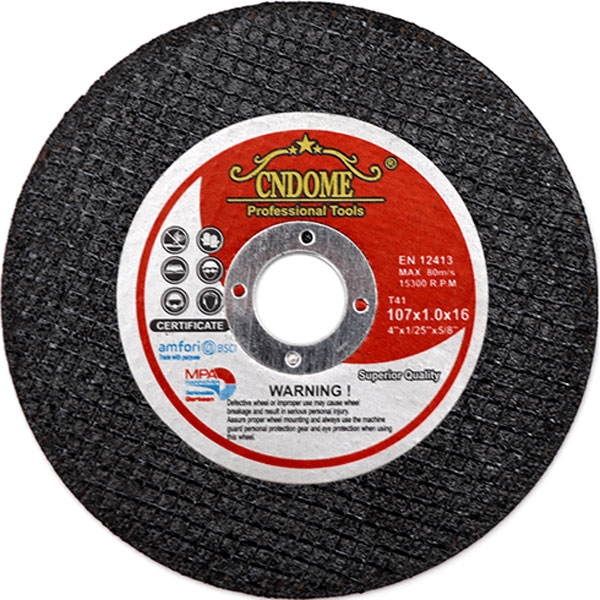
100mm / 4 Inch Ultra-thin Cutting Disc
Suitable Machine: 4″ Compact Angle Grinder
Common Applications: Light cutting, tight spaces, small components, DIY and hobby work
Recommended Materials: Stainless steel sheet, mild steel sheet, thin-walled tubes
The 100mm cutting disc is the smallest mainstream size, offering excellent manoeuvrability for cutting in confined spaces and on small metal components. Its compact size makes it ideal for detail work and light cutting tasks where larger discs cannot reach.
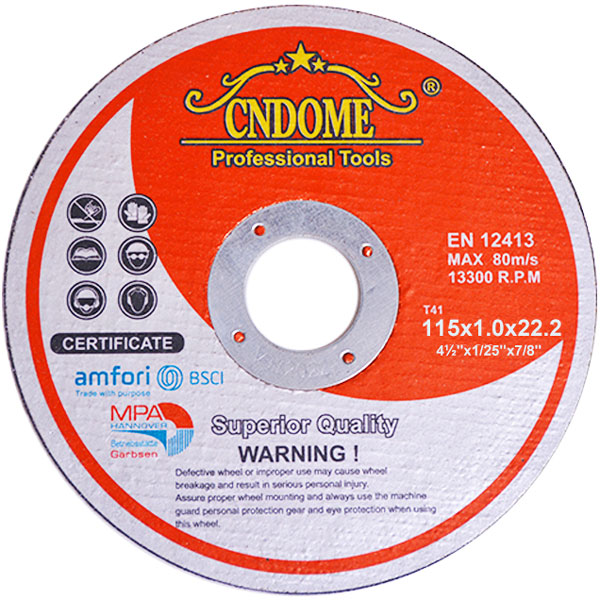
115mm / 4.5 Inch Ultra-thin Cutting Disc
Suitable Machine: 4.5″ Standard Angle Grinder
Common Applications: General metal cutting, fabrication, pipe cutting, automotive repair
Recommended Materials: Stainless steel, carbon steel, mild steel, sheet metal
The 115mm cutting disc is the most widely used cutting disc size globally. It fits standard 4.5-inch angle grinders and offers the best balance of control, cutting depth, and machine weight for workshop fabrication. The most common specification is 115 × 1.0 × 22.23 mm.
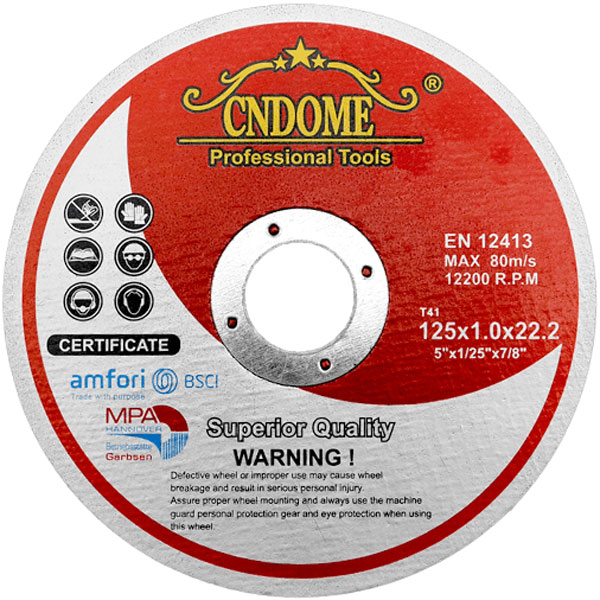
125mm / 5 Inch Ultra-thin Cutting Disc
Suitable Machine: 5″ Angle Grinder
Common Applications: Heavy fabrication, larger workpieces, longer cut lines
Recommended Materials: Stainless steel sheet, carbon steel plate, pipe, tube
The 125mm cutting disc offers approximately 18% more surface coverage than 115mm, delivering higher cutting capacity per pass while maintaining good manoeuvrability. It is the mainstream size in North American markets and is increasingly popular globally. Common specification: 125 × 1.0 × 22.23 mm.
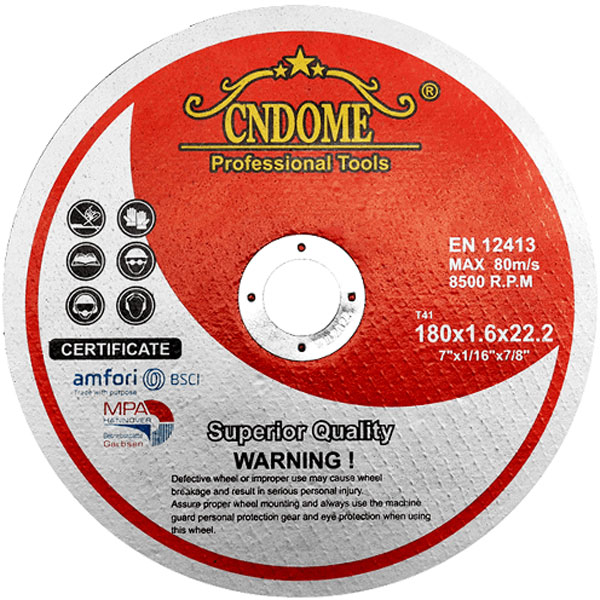
180mm / 7 Inch Ultra-thin Cutting Disc
Suitable Machine: 7″ High-Power Angle Grinder
Common Applications: Heavy cutting, larger profiles, thicker materials
Recommended Materials: Carbon steel, structural steel, thick-walled pipe
The 180mm cutting disc delivers significantly higher cutting capacity than smaller sizes, making it suitable for heavier cutting tasks. Designed for 7″ high-power angle grinders (1500–2000W). Common specification: 180 × 1.6 × 22.23 mm.
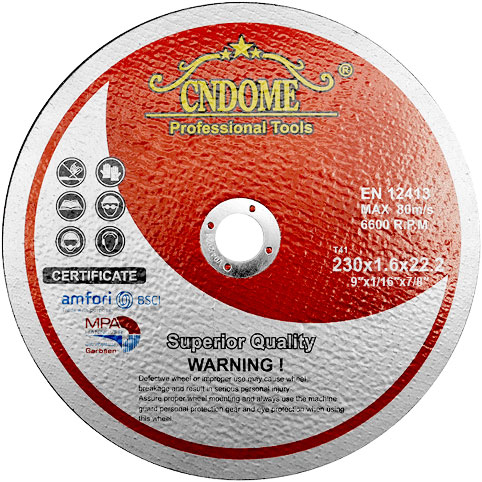
230mm / 9 Inch Ultra-thin Cutting Disc
Suitable Machine: 9″ Industrial Angle Grinder
Common Applications: Heavy-duty cutting, structural steel, large profiles
Recommended Materials: Structural steel, thick plate, large-diameter pipe
The 230mm cutting disc is the largest size for hand-held angle grinders, delivering maximum cutting capacity for heavy-duty applications. Designed for 9″ industrial-grade angle grinders (2000–2600W). Common specification: 230 × 1.6 × 22.23 mm.
Ultra-thin Cutting Discs for Different Metals
Ultra-thin cutting discs are suitable for a wide range of metals. The following guide helps you select the right disc for your material.
Stainless Steel
Ultra-thin cutting discs excel on stainless steel (304, 316, and other austenitic grades). The thin profile generates less friction heat than standard discs — preventing the blue or black discolouration that compromises surface quality and corrosion resistance. The narrow kerf minimises material loss on expensive stainless steel. Ideal for stainless steel sheet, tubes, profiles, and pipe cutting. Suitable for kitchen equipment, food machinery, architectural metalwork, and automotive exhaust systems.
Recommended thickness: 1.0mm for most applications; 0.8mm for thin sheet (≤1.5mm)
Carbon Steel
Ultra-thin cutting discs for carbon steel deliver fast, clean cutting on carbon steel and structural steel. The reduced cutting resistance allows for faster feed rates and shorter cycle times. Clean edges with minimal burrs reduce or eliminate secondary finishing work. Suitable for structural steel, plate, pipe, tube, and general fabrication. Common in construction, metal fabrication workshops, and steel service centres.
Recommended thickness: 1.0mm for general cutting; 1.2mm for heavier sections
Mild Steel
Ultra-thin cutting discs are highly effective on mild steel and low-carbon steel. The fast cutting action and clean edges make them ideal for general fabrication, sheet metal work, and workshop cutting tasks. Suitable for sheet metal, plate, pipe, tube, profiles, and bar stock. Common in DIY, general fabrication, and light industrial applications.
Recommended thickness: 1.0mm for sheet and tube; 1.2mm for general use
Ultra-thin Cutting Disc Applications
Ultra-thin cutting discs are versatile tools for a wide range of metal cutting tasks. Below are the key application scenarios where ultra-thin discs deliver superior performance.
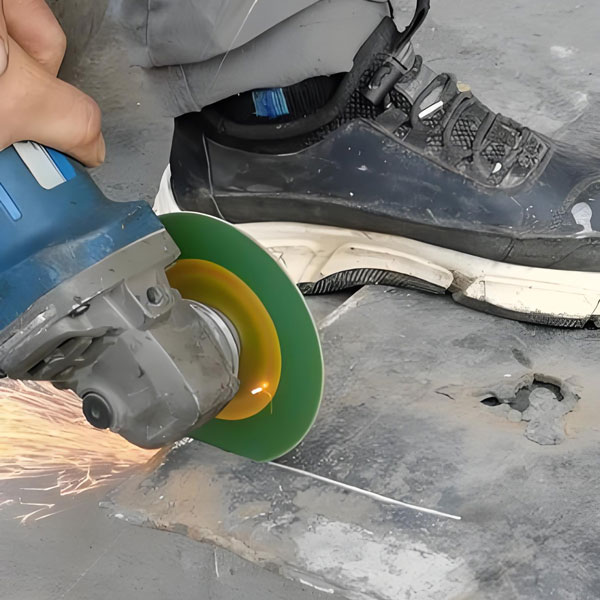
Sheet Metal Cutting
Ultra-thin cutting discs are ideal for cutting sheet metal — particularly thin gauge materials where heat control and cut quality are critical. The thin profile generates less heat than standard cutting discs, preventing warping and distortion on thin sheets. Clean, burr-free edges eliminate or reduce secondary finishing work. Suitable for stainless steel sheet, carbon steel sheet, and other ferrous metals. Common in HVAC, metal fabrication, automotive, and sheet metal workshops.
Recommended: 1.0mm or 1.2mm thickness
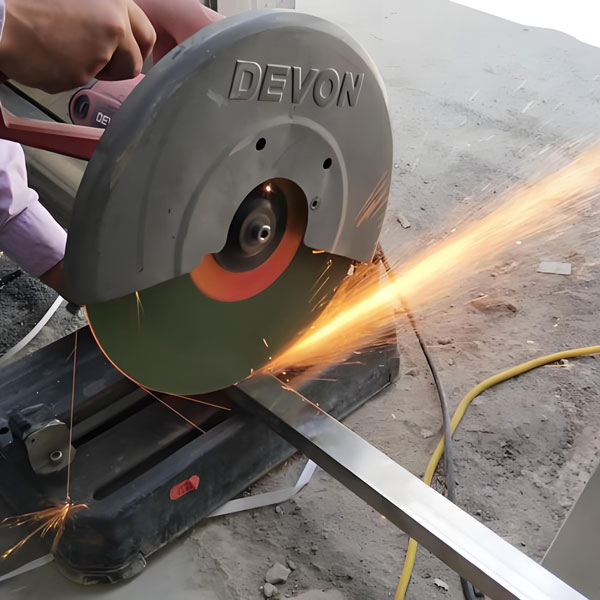
Stainless Steel Tube Cutting
Cutting stainless steel tube requires precision and heat control — ultra-thin discs deliver both. The thin profile generates less friction heat, preventing blue discolouration on stainless steel surfaces. The narrow kerf minimises material loss and produces clean, burr-free cut ends that require minimal finishing. Suitable for thin-walled stainless tubes, pipe, and profiles. Common in food equipment, architectural metalwork, and automotive exhaust systems.
Recommended: 1.0mm thickness
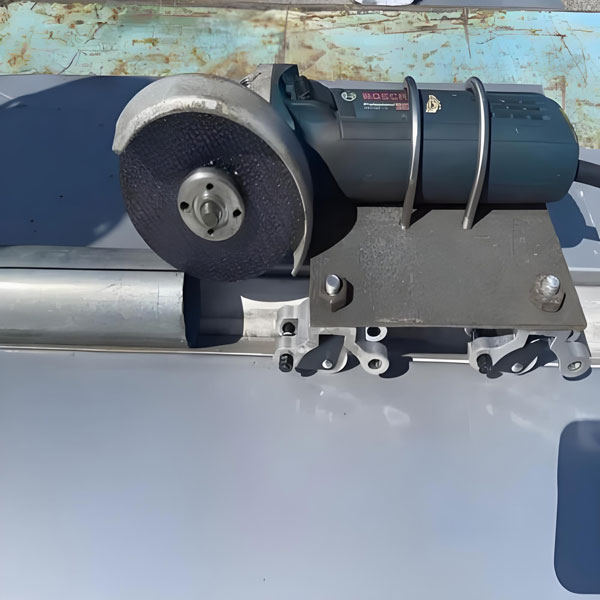
Pipe Cutting
Ultra-thin cutting discs are effective for cutting metal pipe — including carbon steel, stainless steel, and mild steel pipe. The fast cutting action reduces cycle time, while the clean cut edge minimises preparation work for welding or threading. Suitable for pipe diameters from small tubing to large-diameter pipe. Common in pipeline construction, plumbing, mechanical contracting, and structural fabrication.
Recommended: 1.0mm or 1.2mm thickness

Metal Bar Cutting
Ultra-thin cutting discs can cut solid metal bar stock — including round bar, square bar, and flat bar. The thin profile delivers faster cutting than standard cutting discs on solid sections, while the narrow kerf reduces material loss. Suitable for carbon steel, stainless steel, and other ferrous metals. Common in metal fabrication workshops, steel service centres, and manufacturing.
Recommended: 1.2mm or 1.6mm thickness for solid sections
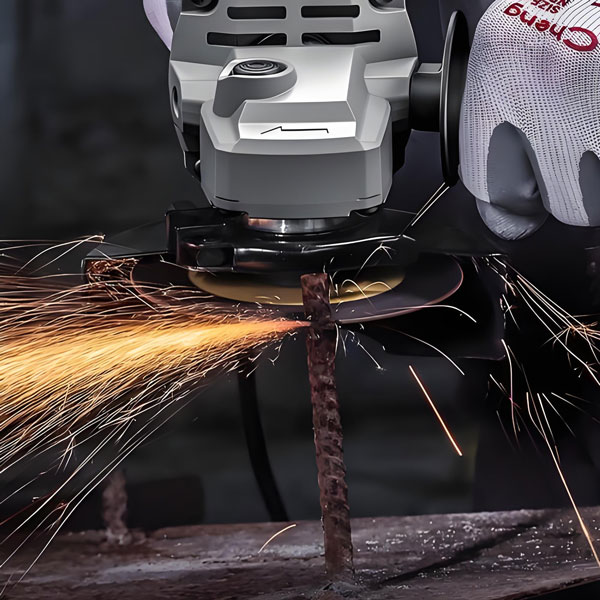
Rebar Cutting
Cutting rebar on construction sites requires a disc that can handle impact and vibration. Ultra-thin cutting discs cut rebar faster than standard discs, reducing time per cut. The clean cut edge minimises preparation for splicing or connecting. Suitable for rebar diameters from 6mm to 32mm. Common in construction, concrete reinforcement, and structural steel work.
Recommended: 1.6mm thickness for durability on rebar

Automotive Metal Cutting
Ultra-thin cutting discs are used in automotive manufacturing and repair for cutting exhaust components, body panels, and chassis sections. The precision and low-heat cutting action are essential for automotive applications where heat damage and distortion must be avoided. Suitable for stainless steel exhaust systems, body panels, and structural components. Common in auto body shops, exhaust shops, and automotive manufacturing.
Recommended: 1.0mm thickness for precision cuts

Metal Fabrication
Ultra-thin cutting discs are essential tools in metal fabrication workshops. From cutting plate and sheet to pipe and profiles, ultra-thin discs deliver faster cutting and cleaner edges than standard discs. The reduced finishing work saves time and labour costs. Suitable for a wide range of metals and thicknesses. Common in general fabrication, custom metalworking, and job shops.
Recommended: 1.0mm or 1.2mm thickness
Ultra-thin Cutting Disc Performance
Ultra-thin cutting discs deliver measurable performance advantages over standard discs. Here is how they cut faster, cleaner, and with less waste.
| Performance Metric | Ultra-thin Cutting Disc | Standard Cutting Disc | Advantage |
|---|---|---|---|
| Cutting Speed | 30–50% faster | Baseline | Shorter cycle times, higher productivity |
| Kerf Width | ~1.6mm | ~4.0mm | Less material removed, more precise cuts |
| Material Loss | ~1.6mm per cut | ~4.0mm per cut | Significant savings on expensive metals |
| Heat Generation | Low | High | Prevents discolouration on stainless steel |
| Service Life | Optimised for thin materials | Better for heavy sections | Competitive life on sheet, tube, and profiles |
| Spark Generation | Fewer sparks | More sparks | Improved workplace safety, lower fire risk |
Key Performance Highlights
Cutting Speed – A 1.0mm ultra-thin cutting disc completes cuts 30–50% faster than a standard 2.5mm disc. Faster cutting means higher throughput, lower labour costs per workpiece, and reduced operator fatigue over a full shift.
Kerf & Material Loss – For every cut, a 1.0mm cutting disc removes only 1.6mm of material compared to 4.0mm for a standard 3.0mm cutting disc. The difference is significant — particularly when cutting expensive stainless steel.
Heat Management – Less friction means less heat. Ultra-thin cutting discs generate significantly lower temperatures at the cut zone — preventing blue discolouration on stainless steel, reducing thermal distortion on thin materials, and extending cutting disc life by protecting the resin bond from thermal degradation.
Ultra-thin Cutting Disc vs Standard Cutting Disc
The choice between an ultra-thin cutting disc and a standard cutting disc depends on your application. The table below compares the two types across key performance dimensions.
| Feature | Ultra-thin Cutting Disc | Standard Cutting Disc |
|---|---|---|
| Thickness | 1.0 – 1.6mm | 2.0 – 3.0mm |
| Cutting Speed | Fast (30–50% faster) | Moderate |
| Kerf Width | Narrow (1.6–2.2mm) | Wide (3.5–4.0mm) |
| Material Loss | Lower | Higher |
| Cutting Effort | Lower — less resistance | Higher — more resistance |
| Heat Generation | Very low | Moderate to high |
| Cut Quality | Clean, burr-free | Rougher, requires deburring |
| Service Life | Shorter (less volume) | Longer (more volume) |
| Thin Sheet Performance | Excellent | Good |
| Thick Section Performance | Application dependent | More suitable |
Choose Ultra-thin Cutting Disc When:
- Cutting thin sheet metal (≤3mm)
- Cutting stainless steel where heat control is critical
- Cutting pipe and tube where clean edges are required
- Precision cutting where accuracy and finish matter
- Fast cutting where productivity is the priority
- Cutting expensive materials where material loss must be minimised
Choose Standard Cutting Disc When:
- Cutting thick metal (≥10mm) or heavy sections
- Cutting solid bar stock where durability is critical
- Heavy-duty cutting where service life is the priority
- Cutting materials with high impact or vibration
- General workshop cutting where cost per cut is the main consideration
How to Choose the Right Ultra-thin Cutting Disc
Follow this five-step guide to select the right ultra-thin cutting disc for your application.
Step 1 — Identify the Material
Different metals have different cutting characteristics:
| Material | Recommended Disc Type | Why |
|---|---|---|
| Stainless Steel | Ultra-thin (low heat) | Prevents discolouration, clean edges |
| Carbon Steel | Ultra-thin (fast cutting) | Fast cutting, reduced finishing |
| Mild Steel | Ultra-thin / Standard | Fast cutting for thin sections; standard for thick |
| Aluminium | Ultra-thin (specialised) | Prevents loading, clean cuts |
Step 2 — Choose the Thickness
Select thickness based on material thickness and application:
| Material Thickness | Recommended Disc Thickness |
|---|---|
| Thin sheet (≤1.5mm) | 1.0mm |
| Sheet metal (≤3mm), tube | 1.0mm |
| General fabrication, pipe | 1.2mm |
| Heavier sections, general use | 1.6mm |
Step 3 — Choose the Diameter
Match disc diameter to your angle grinder size:
| Disc Diameter | Inch | Machine Size |
|---|---|---|
| 100mm | 4″ | Compact Angle Grinder |
| 115mm | 4.5″ | Standard Angle Grinder |
| 125mm | 5″ | Angle Grinder |
| 180mm | 7″ | High-Power Angle Grinder |
| 230mm | 9″ | Industrial Angle Grinder |
Step 4 — Check Machine Compatibility
Before ordering, verify:
- Disc diameter matches your angle grinder‘s guard size
- Bore size matches your spindle (16mm or 22.23mm / 7/8″)
- Maximum RPM of your grinder does not exceed the disc‘s rated speed
Step 5 — Confirm Maximum RPM
Every cutting disc has a maximum RPM printed on the label. Never exceed this speed. If your grinder runs faster than the cutting disc‘s rating, the cutting disc could shatter. Check: Cutting Disc Max RPM ≥ Tool RPM.
Ultra-thin Cutting Disc Specifications
Below is the complete technical specification table for Dome ultra-thin cutting discs.
| Specification | Details |
|---|---|
| Product Type | Ultra-thin Cutting Disc |
| Abrasive | Aluminium Oxide / Zirconia Alumina |
| Bond | Resin Bonded (Phenolic) |
| Reinforcement | Fibreglass Mesh (multi-layer) |
| Thickness | 1.0mm · 1.2mm · 1.6mm |
| Diameter | 100mm · 115mm · 125mm · 150mm · 180mm · 230mm |
| Bore Size | 16mm · 22.23mm (7/8″) · Custom |
| Shape | T41 (Flat) |
| Material | Stainless Steel · Carbon Steel · Mild Steel · General Metal |
| Machine | Angle Grinder · Cut-off Machine |
| Max RPM | Product specific — check disc label |
| Certification | EN12413 / MPA |
| Testing | 100% RPM Tested |
| OEM | Available — custom thickness, diameter, bore, label, packaging |
| Private Label | Available — branded packaging, custom labelling |
Ultra-thin Cutting Disc Safety and RPM Guide
Ultra-thin cutting discs are safe when used correctly. Follow these safety guidelines to protect yourself and your equipment.
Maximum RPM – Never exceed the maximum operating speed marked on the cutting disc. Every cutting disc has a maximum RPM printed on the label. If your grinder runs faster than this speed, the cutting disc could shatter. For example, a 115mm cutting disc is typically rated at 13,300 RPM — your grinder must not exceed this speed.
Correct Cutting Disc Size – Always use the correct cutting disc diameter for your machine. The cutting disc must match your grinder‘s guard size. Using a cutting disc that is too large or too small is unsafe.
Correct Machine – Ultra-thin cutting discs are designed for angle grinders and cut-off machines. Do not use them on machines for which they are not rated.
Proper Installation – Ensure the cutting disc is properly mounted with the correct flanges. The bore size must match the grinder spindle. Tighten the locking nut securely — but do not overtighten.
Eye and Face Protection – Always wear safety glasses or a full face shield when cutting. Metal particles and sparks can cause serious eye injury.
Inspect Before Use – Check the cutting disc for cracks, chips, or damage before mounting. Discard any cutting disc that shows visible damage. A damaged cutting disc can shatter at high speed.
Do Not Use Damaged Cutting Discs – Never use a cutting disc that has been dropped or shows signs of damage. Even minor damage can become a fracture point at high RPM. If in doubt, discard the cutting disc.
Correct RPM – Ensure your grinder‘s speed is appropriate for the cutting disc. Most 115mm ultra-thin cutting discs are rated for 13,300 RPM. Check your grinder‘s specifications before use.
OEM Ultra-thin Cutting Disc Manufacturer
Dome is a direct manufacturer of ultra-thin cutting discs — not a trading company. We operate our own factory with 60 automated production lines, producing over 600,000 discs daily. When you work with Dome, you work directly with the people who make the product.
We offer four core OEM capabilities to help distributors, tool brands, and industrial suppliers build their own ultra-thin cutting disc lines.
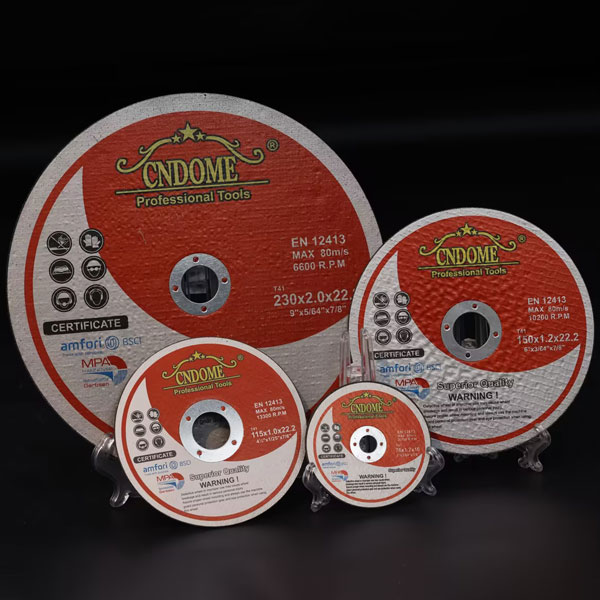
Custom Thickness – Choose from 1.0mm, 1.2mm, 1.6mm, or custom thicknesses to match your application requirements. Different markets and applications require different thicknesses — we adjust to your specifications.
Custom Formulation – We adjust abrasive type, bond hardness, and grit size based on your target materials and cutting applications. Stainless steel requires different formulations than carbon steel. We formulate accordingly.
Custom Size – Available diameters from 100mm to 230mm, with custom bore sizes (16mm, 22.23mm, or other). We can manufacture non-standard diameters and bore sizes for specialised applications.
Private Label – We support complete private label branding: cutting disc colour matching to your brand identity; custom label design with your logo, product code, and safety markings; branded inner packaging (shrink-wrap, colour boxes, display cartons); branded outer cartons with your branding and traceability data.
Performance Customisation – We can adjust cutting speed, disc life, cutting feel, and material compatibility based on your specific requirements. Tell us what you need — we will engineer a disc that delivers.
Our OEM Cutting Disc Manufacturing Process
Dome’s OEM process follows a structured workflow from initial requirement to final shipment. Each step is documented and traceable, ensuring every custom order meets the agreed specifications.
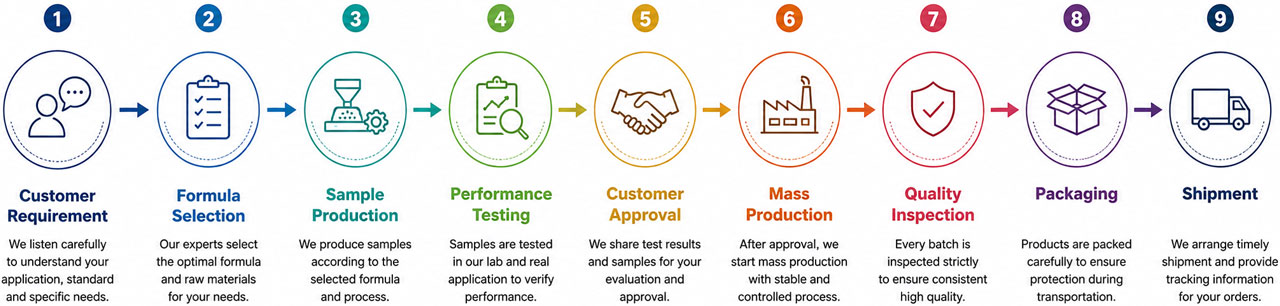
1. Customer Requirement – You provide target materials, cutting applications, annual volume, and certification needs. We assess feasibility and recommend initial specifications.
2. Formula Selection – Based on your requirements, we select the appropriate abrasive formulation — grit size, bond hardness, and additive package.
3. Sample Production – We produce samples with preliminary test data covering dimensional accuracy, balance, and cutting performance. Multiple thickness or size variations can be provided for comparison.
4. Performance Testing – You test samples on your own equipment — verifying cutting speed, service life, cut quality, and heat generation under your actual working conditions.
5. Customer Approval – We move to mass production only after you approve performance. Free samples are available for testing before you commit to a bulk order.
6. Mass Production – After sample approval, we scale up to full production. Automated lines in climate-controlled workshops ensure batch-to-batch consistency matches the approved samples.
7. Quality Inspection – Every batch undergoes dimensional inspection, balance testing, and sample burst testing (EN12413: burst speed ≥ 1.5× rated maximum RPM). Every disc is individually 100% RPM tested before shipment.
8. Packaging – Finished discs are shrink-wrapped, labelled with your brand design, and packed into custom-printed cartons with batch numbers and traceability data.
9. Shipment – Orders are consolidated and shipped with a COA (Certificate of Analysis) covering key test data. Standard lead time: approximately 35 days from order confirmation. Rush orders available on request.
Ultra-thin Cutting Disc Manufacturing Capability
Dome operates a dedicated manufacturing facility for resin bonded abrasive products, including ultra-thin cutting discs. The following data reflects our current production capacity.
| Capability | Specification |
|---|---|
| Factory Area | 20,000+ m² total |
| Production Workshop | 13,000 m² (climate-controlled) |
| Production Lines | Nearly 60 fully automated lines |
| Daily Output | 600,000 discs |
| R&D / Technical Staff | 10+ professionals |
Climate-controlled workshop: Temperature maintained at 20–30°C, humidity at 40–50% — ensuring stable resin curing and consistent product quality across all batches.
Automated production: From automated batching and pressing to in-line inspection and shrink-wrap packaging — reducing human error and ensuring batch-to-batch consistency.
Quality assurance: Every disc undergoes 100% RPM testing before shipment, with batch samples subjected to EN12413 burst testing (burst speed ≥ 1.5× rated maximum RPM).
Global reach: Products exported to 60+ countries worldwide, serving distributors, tool brands, and industrial suppliers across multiple continents.
Manufacture & Delivery
Below are actual photos of product application, product packaging and shipment, and workshop.
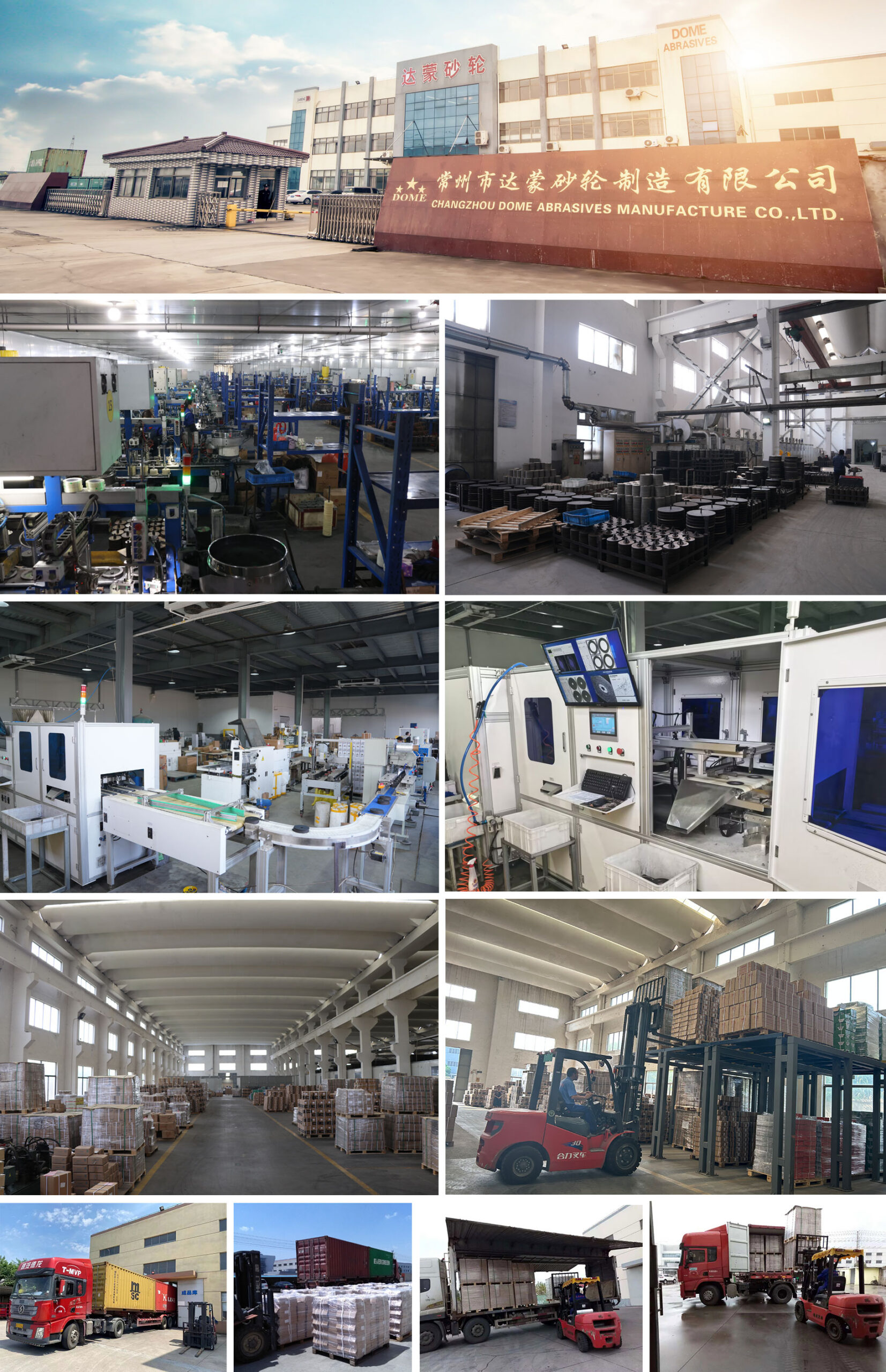
How We Manufacture Ultra-thin Cutting Discs
Dome’s ultra-thin cutting discs are manufactured through a controlled process that ensures consistent quality, reliable performance, and safety at high operating speeds. The following steps outline the production flow from raw materials to finished product.

1. Raw Materials – Every batch of incoming materials undergoes inspection before production. Abrasive grains are tested for particle size and composition. Resin binders are checked for viscosity and curing properties. Fibreglass mesh is tested for tensile strength. Only materials that pass inspection are approved for production.
2. Mixing – Abrasive grains, resin binders, fillers, and additives are blended in precise proportions until uniformly distributed. The mixing process must achieve complete homogeneity — any variation affects cutting performance and disc life.
3. Molding – The mixed material is fed into hydraulic presses and formed into disc shapes under high pressure. Each disc is pressed to a precise thickness tolerance (±0.1mm). The central bore hole is formed during this step.
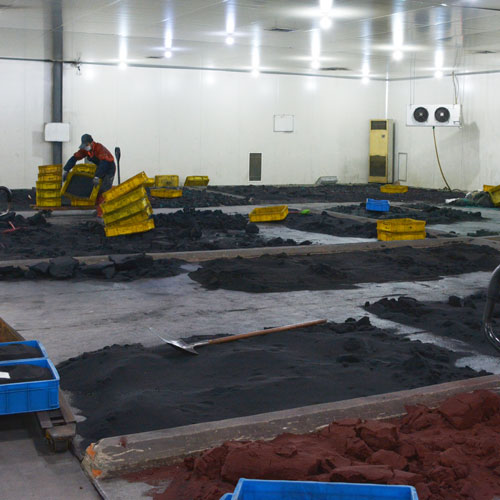
4. Fibreglass Reinforcement – Multiple layers of fibreglass mesh are embedded during the molding process to provide tensile strength and structural integrity. This reinforcement is critical for high-speed operation — it resists centrifugal forces and prevents disc shattering during use.
5. Pressing – The disc is pressed under high pressure to achieve the required density and thickness. Automated pressing lines reduce human error and ensure batch-to-batch consistency.
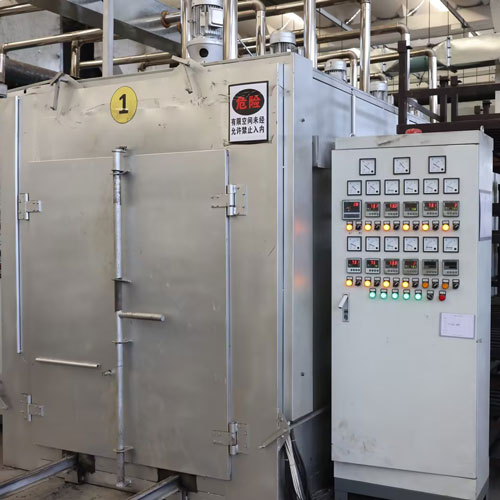
6. Curing – Moulded discs are transferred to curing ovens and heated at approximately 175–200°C for several hours. This process polymerises the resin bond, transforming it from a soft, pliable state into a hardened, durable matrix that firmly holds the abrasive grains.
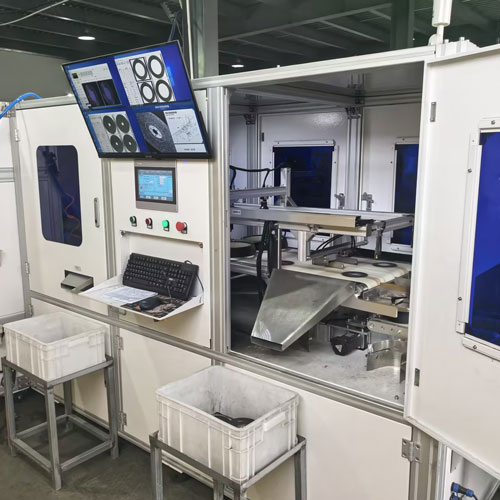
7. Inspection – After curing, each disc is inspected for outer diameter, thickness, and bore size against specification tolerances. Visual inspection checks for cracks, bubbles, or surface irregularities. Discs that fail inspection are rejected.
8. Testing – Sample discs from each batch undergo balance testing, burst testing (EN12413: burst speed ≥ 1.5× rated maximum RPM), and grinding performance testing on standard workpieces. Every disc is individually 100% RPM tested before shipment.
9. Packaging – Discs that pass all inspections are individually shrink-wrapped, labelled with product specifications and safety markings, and packed into cartons with batch numbers and traceability data.
Ultra-thin Cutting Disc Quality Control
Dome’s quality control system covers every stage of production — from incoming raw materials to finished product. The following tests verify that each ultra-thin cutting disc meets safety, performance, and consistency standards.
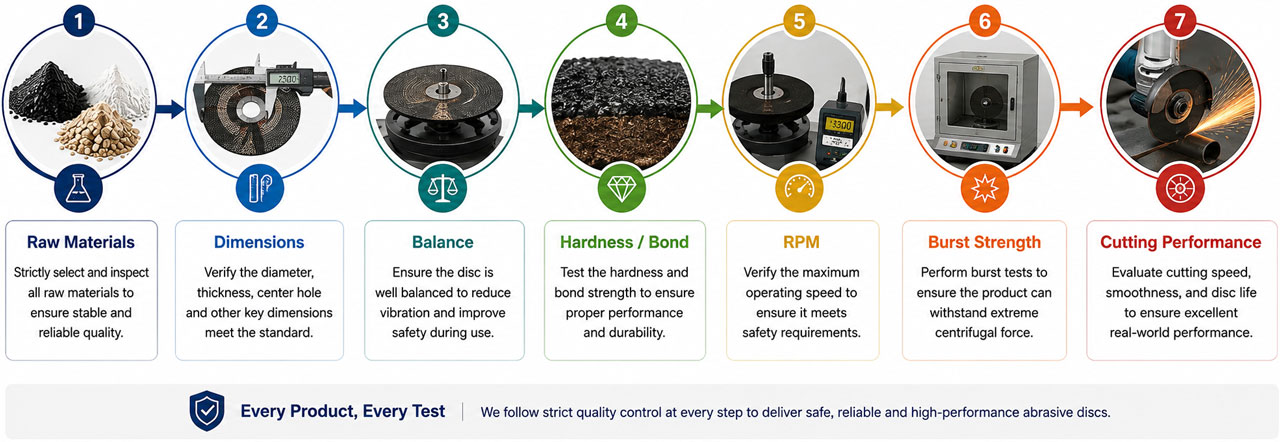
1. Raw Materials – Every batch of abrasive grains, resin binders, and fibreglass mesh is inspected before production. Particle size, chemical composition, viscosity, and tensile strength are verified against specifications. Rejected materials are returned or recycled.
2. Dimensions – Outer diameter, thickness, and bore size are inspected on every disc against tolerance specifications (±0.1mm for thickness). Discs that fall outside tolerance are rejected.
3. Balance – Dynamic balance testing detects mass eccentricity on every disc. Out-of-balance discs are rejected. A balanced disc reduces vibration, improves cut quality, and extends angle grinder bearing life.
4. Hardness / Bond – Sample discs from each batch are tested for bond hardness to verify that the resin curing process has achieved the required hardness grade. Bond hardness directly affects grain retention and cutting performance.
5. RPM – Every disc is individually 100% RPM tested before shipment — not batch sampled. Each disc is spun at its rated maximum operating speed to verify structural integrity under centrifugal force.
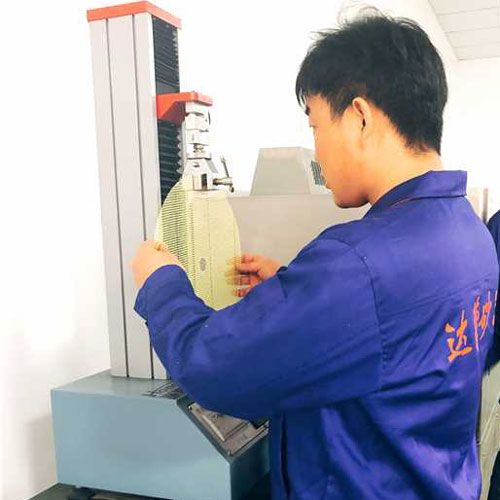
6. Burst Strength – Sample discs from each batch are accelerated until they break. EN12413 requires burst speed ≥ 1.5× rated maximum RPM. Dome’s internal standards exceed this requirement, providing an additional safety margin.
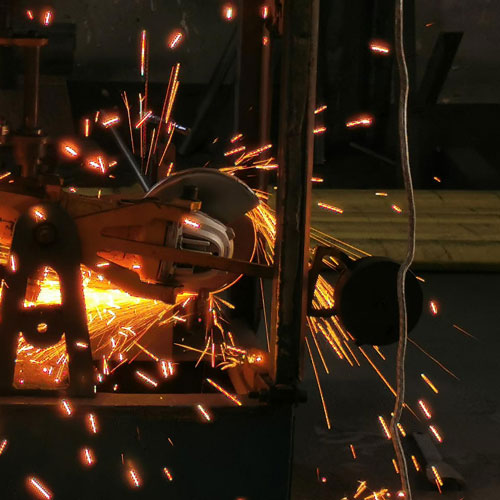
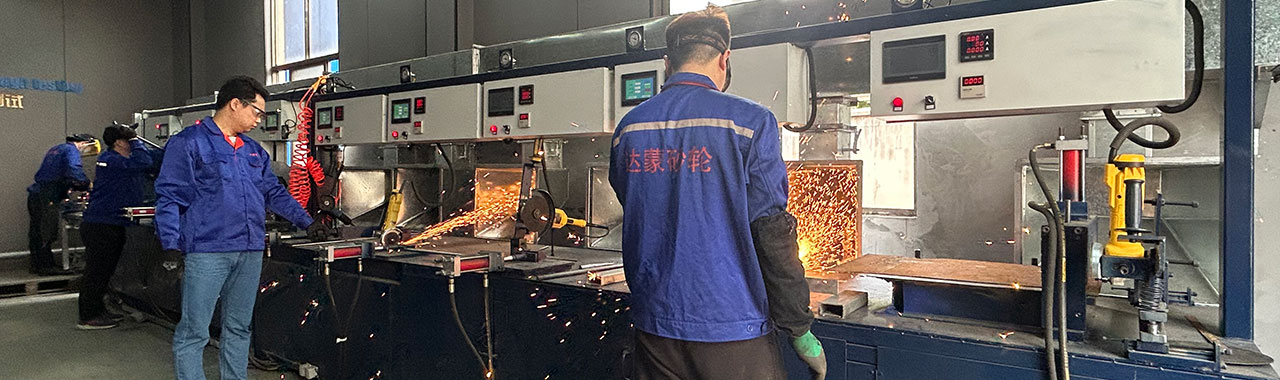
7. Cutting Performance – Sample discs are tested on standard workpieces to verify cutting speed, service life, cut quality, and heat generation. Performance data is recorded and traceable to each production batch.
Ultra-thin Cutting Disc Certifications
Dome ultra-thin cutting discs are backed by internationally recognised certifications that verify product safety, quality management, and responsible manufacturing.






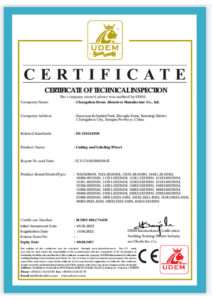

EN12413 – European safety standard for bonded abrasives. Confirms burst speed ≥ 1.5× rated RPM — mandatory for EU market compliance.
MPA – German safety certification for abrasive tools. Verifies compliance with Germany‘s strict safety standards — key for European market access.
CE – EU market access mark. Confirms compliance with health, safety, and environmental requirements — legal sale across all EU member states.
ISO9001 – International quality management standard. Ensures batch‑to‑batch consistency, full traceability, and reliable product performance.
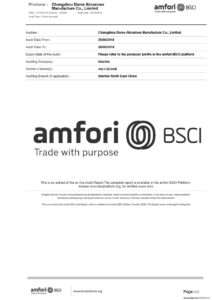
BSCI – European supply chain social audit. Verifies labour rights, health and safety, and environmental compliance — meets major brand procurement requirements.
Ultra-thin Cutting Disc FAQ
1. What is the thinnest cutting disc available?
The thinnest commonly available cutting disc is 0.8 mm. Some specialty discs go down to 0.6 mm or even thinner, but these are typically used for very specific applications like slitting or precision cutting on thin materials. For general metal cutting, 1.0 mm is considered the practical minimum that balances cutting speed with adequate durability and safety.
2. What is a 1mm cutting disc used for?
A 1.0 mm cutting disc is the most popular ultra-thin thickness for general metal cutting. It is used for fast, clean cutting of stainless steel sheet (up to 3 mm), carbon steel, thin-walled tubes, pipes, and profiles. The 1.0 mm thickness offers the best balance of cutting speed and versatility — fast enough for high productivity, yet durable enough for most workshop cutting tasks. It is the go-to choice for metal fabrication, automotive repair, and general workshop use.
3. Is a 1mm cutting disc better than a thicker disc?
It depends on what you are cutting. A 1.0 mm cutting disc is better for thin materials (sheet metal, tubes, profiles) because it cuts faster, generates less heat, and produces cleaner edges with minimal burrs. However, a thicker cutting disc (2.5–3.0 mm) is better for heavy sections, thick plate, and solid bar stock where durability and impact resistance matter more than cutting speed. For most general fabrication work on materials up to 6 mm thick, a 1.0 mm disc is the better choice.
4. Are ultra-thin cutting discs suitable for stainless steel?
Yes — ultra-thin cutting discs are highly suitable for stainless steel. The thin profile generates less friction heat than standard discs, which helps prevent the blue or black discolouration that compromises surface quality and corrosion resistance on stainless steel. The narrow kerf also minimises material loss on expensive stainless steel. For stainless steel sheet (≤3 mm) and thin-walled tubes, a 1.0 mm disc is recommended. For thinner sheet (≤1.5 mm), 0.8 mm delivers even better results.
5. Can ultra-thin cutting discs cut carbon steel?
Yes — ultra-thin cutting discs are highly effective on carbon steel and structural steel. The reduced cutting resistance allows for faster feed rates and shorter cycle times. Clean edges with minimal burrs reduce or eliminate secondary finishing work. Ultra-thin cutting discs are widely used in construction, metal fabrication workshops, and steel service centres for cutting plate, pipe, tube, and structural sections. A 1.0 mm cutting disc is recommended for general cutting; 1.2 mm for heavier sections.
6. Can ultra-thin cutting discs cut sheet metal?
Yes — ultra-thin cutting discs excel on sheet metal. The thin profile generates less heat than standard cutting discs, preventing warping and distortion on thin gauge materials. Clean, burr-free edges eliminate or reduce secondary finishing work. For sheet metal up to 1.5 mm thick, a 1.0 mm cutting disc delivers the best results. For sheet metal up to 3 mm, a 1.0 mm cutting disc is recommended. Ultra-thin cutting discs are commonly used in HVAC, metal fabrication, automotive, and sheet metal workshops.
7: Can ultra-thin cutting discs cut pipes?
Yes — ultra-thin cutting discs are effective for cutting metal pipe, including carbon steel, stainless steel, and mild steel pipe. The fast cutting action reduces cycle time, while the clean cut edge minimises preparation work for welding or threading. For thin-walled pipe (≤3 mm), use a 1.0 mm cutting disc. For heavier wall pipe, a 1.2 mm or 1.6 mm cutting disc offers better durability. Ultra-thin cutting discs are commonly used in pipeline construction, plumbing, and structural fabrication.
8: Can ultra-thin cutting discs be used on angle grinders?
Yes — ultra-thin cutting discs are designed for use on angle grinders. The disc diameter must match your grinder’s guard size — 115 mm for 4.5-inch grinders, 125 mm for 5-inch grinders, 180 mm for 7-inch grinders, and 230 mm for 9-inch grinders. Always check that the bore size (16 mm or 22.23 mm / 7/8″) matches your grinder’s spindle. Never use a ultra-thin cutting disc that is too large or too small for your machine.
9: What is the difference between ultra-thin and standard cutting discs?
The main difference is thickness. Ultra-thin cutting discs are 1.0–1.6 mm thick; standard cutting discs are 2.5–3.0 mm thick. This difference affects cutting speed, kerf width, material loss, heat generation, and durability. Ultra-thin cutting discs cut faster, produce narrower kerfs, waste less material, generate less heat, and produce cleaner edges. Standard cutting discs are more durable, last longer on heavy sections, and are better suited for thick materials and impact-prone applications.
10: Do thinner cutting discs cut faster?
Yes — thinner cutting discs cut significantly faster than thicker discs. The reduced thickness means less contact area with the workpiece — less friction, less resistance, and faster cutting. A 1.0 mm ultra-thin cutting disc can complete cuts 30–50% faster than a standard 2.5 mm cutting disc on the same material. The difference is most noticeable on thin materials like sheet metal, pipe, and tube, where the reduced cutting resistance allows the cutting disc to slice through quickly with minimal effort.
11: How long does an ultra-thin cutting disc last?
Service life varies with material thickness, cutting technique, and disc selection. Ultra-thin cutting discs have less abrasive volume than standard cutting discs, so they may not last as long on heavy sections. However, on thin materials, their cutting efficiency often results in competitive service life. A better measure is cuts per disc or workpieces finished per disc. For example, a 1.0 mm cutting disc on 3 mm stainless steel sheet may last 50–100 cuts, depending on operator technique and cutting conditions.
12: What thickness should I choose?
Choose thickness based on material thickness and application: 0.8 mm for thin sheet (≤1.5 mm) and precision cutting; 1.0 mm for sheet metal (≤3 mm), tubes, and general cutting — the most popular choice; 1.2 mm for general fabrication, pipes, and profiles where added durability is needed; 1.6 mm for heavier sections and general use where a balance of speed and durability is required.
13: What RPM should I use?
The maximum RPM is printed on every cutting disc label — never exceed it. Common ratings: 115 mm cutting discs — 13,300 RPM; 125 mm cutting discs — 12,200 RPM; 180 mm cutting discs — 8,500 RPM; 230 mm cutting discs — 6,600 RPM. Check your grinder’s no-load speed and ensure it is lower than or equal to the cutting disc’s rated maximum RPM. If in doubt, choose a slower grinder or a cutting disc with a higher RPM rating.
14: Can you manufacture OEM ultra-thin cutting discs?
Yes — Dome offers full OEM ultra-thin cutting disc manufacturing. Customisation options include thickness (1.0 mm, 1.2 mm, 1.6 mm, or custom), diameter (100 mm to 230 mm), bore size (16 mm, 22.23 mm, or custom), abrasive formulation, label design, and packaging. We also provide certification support including EN12413, MPA, and CE documentation. Free samples are available for testing before bulk orders.
15: What sizes can you customise?
We manufacture ultra-thin cutting discs in diameters from 100 mm to 230 mm (4″ to 9″). Thickness options include 1.0 mm, 1.2 mm, and 1.6 mm, with custom thicknesses available on request. Bore sizes include 16 mm, 22.23 mm (7/8″), and custom sizes. Custom formulations, abrasive types, label designs, and packaging are also available for OEM and private label orders. Contact us with your specifications for a custom quote.
Related Cutting & Grinding Products
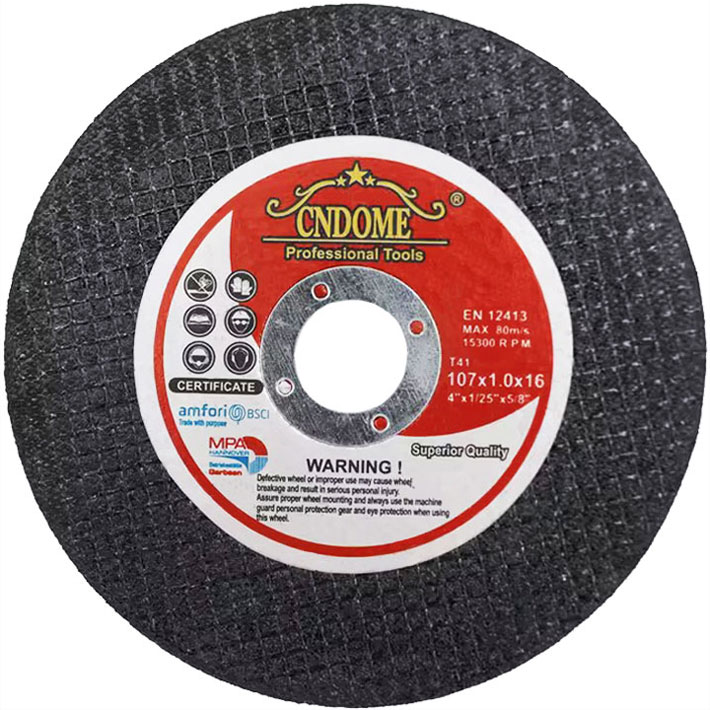
Metal Cutting Disc
General-purpose metal cutting disc for everyday cutting of carbon steel, structural steel, and ordinary steel.
Suitable Materials: Carbon steel / Structural steel / Iron
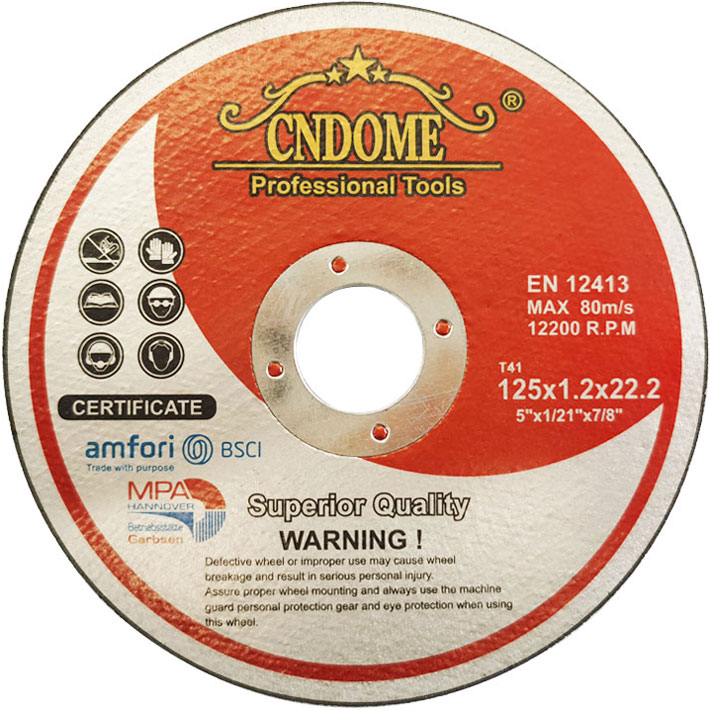
Stainless Steel Cutting Disc
Engineered for stainless steel cutting with Fe+S+Cl≤0.1% pure formula, delivering silver-bright, burn-free cuts.
Suitable Materials: 304 / 316 / 430 stainless steel
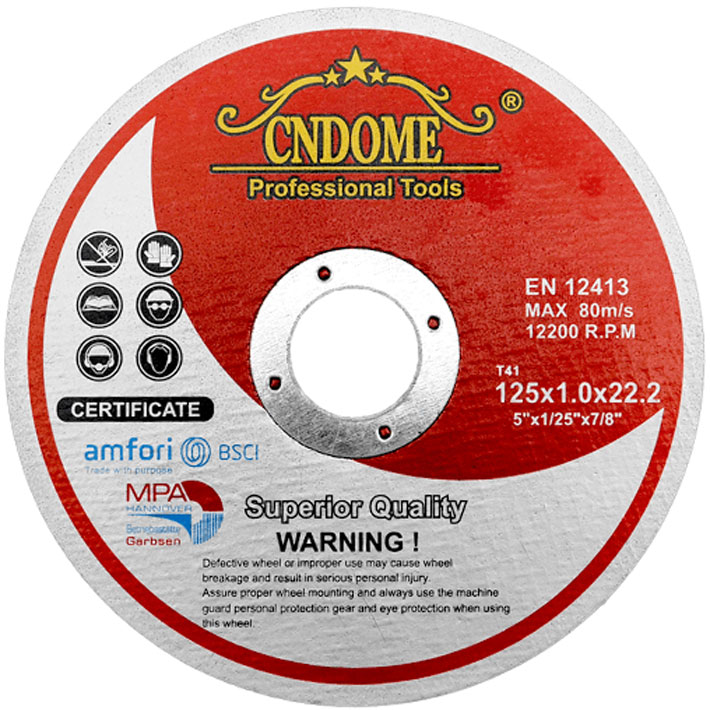
Ultra Thin Cutting Disc
Ultra-thin 1.0–1.6mm design for fast, low-heat, low-burr precision cutting of sheets and thin-wall tubes.
Suitable Materials: Stainless steel sheet / Carbon steel sheet / Thin-wall tube
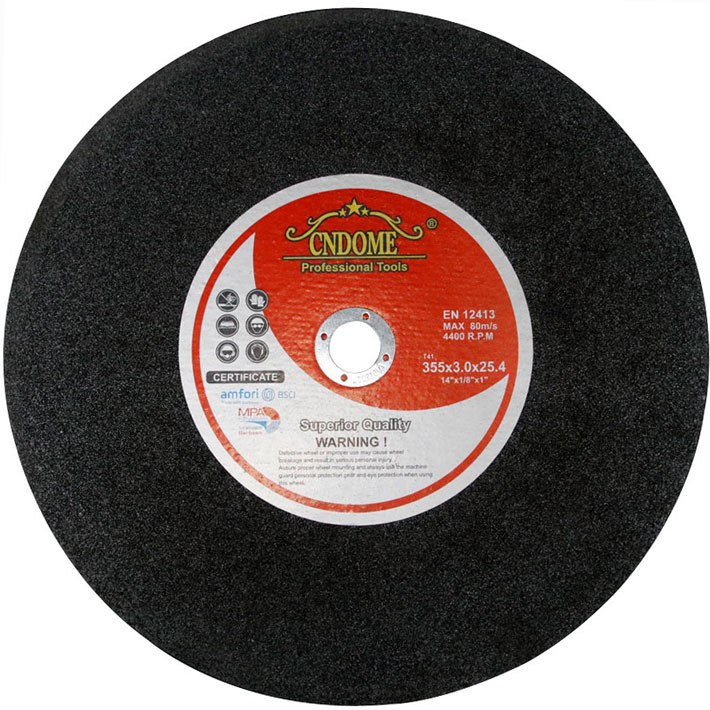
Large Diameter Cutting Disc
355mm large-diameter disc for stationary saws, cutting through large structural steel sections and heavy-wall pipes in one pass.
Suitable Materials: H-beams / I-beams / Large-diameter pipes / Rails
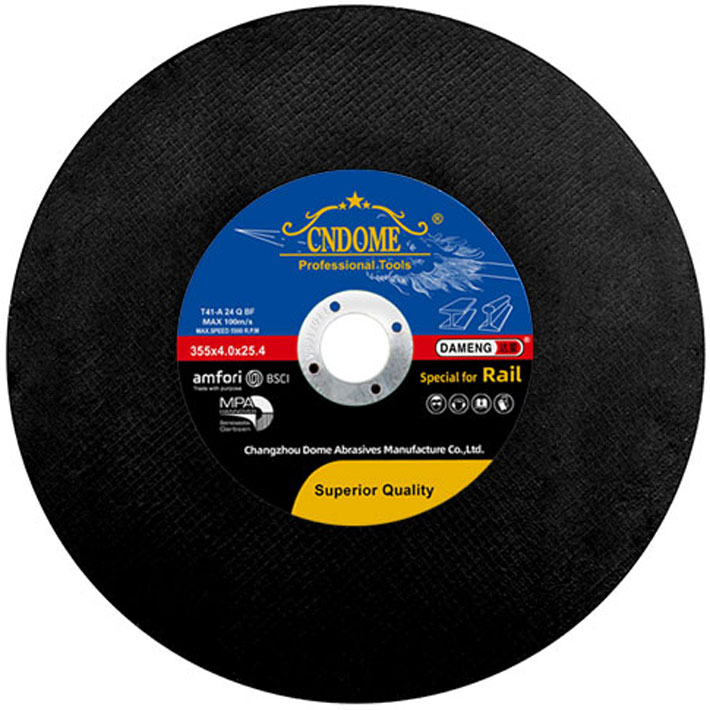
Rail Cutting Disc
Rail-specific disc with zirconia alumina and multi-layer fiberglass reinforcement, designed for heavy-duty high-hardness rail cutting.
Suitable Materials: U71Mn / U75V rails / Crane rails / High-manganese frogs
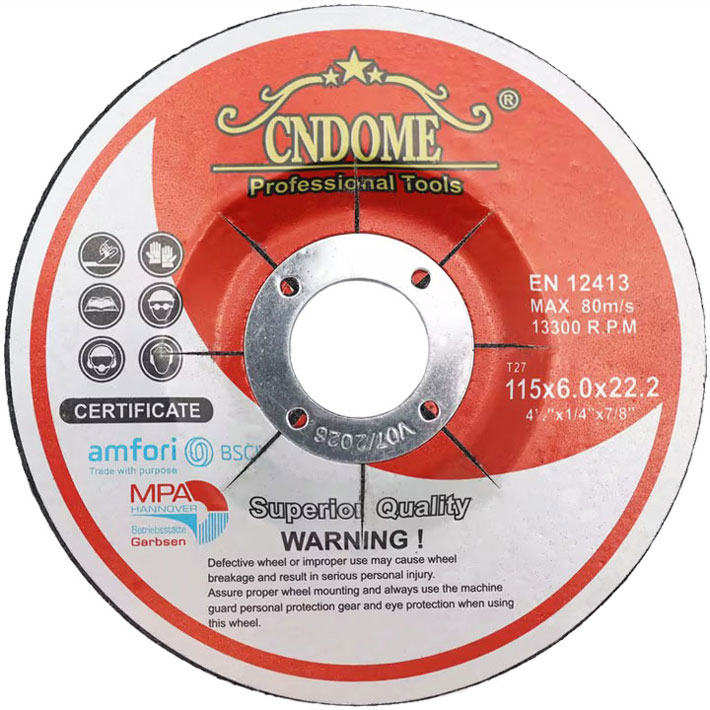
Grinding Wheel
Resin-bonded grinding wheel for surface grinding, weld dressing, and burr removal on all types of angle grinders.
Suitable Materials: Carbon steel / Stainless steel / Cast iron
Looking for an Ultra-thin Cutting Disc Manufacturer?
Tell us your required diameter, thickness, workpiece material and application. DOME provides ultra-thin cutting discs for metal cutting with OEM and private label solutions.
Tel/WhatsApp
+86 18796960868
DomeGrinding@hotmail.com
Address