
-
Jun, Wed, 2026

The only thing separating you from a perfect surface is a single grain of sand—a comprehensive analysis of abrasive particles
When you pull the trigger of a sandblasting gun, or load a brand-new resin grinding wheel onto an angle grinder, what truly fights the battle for you are those seemingly insignificant tiny particles. They are called abrasive particles. Your understanding of them directly determines whether you efficiently remove rust and smooth welds, or burn surfaces and waste piece after piece of consumables. Whether you’re in charge of steel structure corrosion protection in a shipyard or refurbishing an old motorcycle in a garage workshop, this topic is worth taking a few minutes to read carefully.
What are abrasive particles?
It’s not ordinary river sand, nor is it just any handful of gravel you can grab. Abrasive particles are sharp-edged particles obtained by crushing, washing, and screening high-hardness minerals or man-made materials. Its core evaluation metric isn’t as simple as “hardness,” but rather determined by four factors: hardness, toughness, particle shape, and particle size analysis. Hardness ensures it can cut into the workpiece; toughness ensures it doesn’t easily crumble into powder; shape determines its cutting sharpness; and particle size directly relates to the rate of material removal and the final surface texture.
Mesh count: Did you choose the right one?
The term “mesh count” appears on almost every bag of abrasive packaging. Simply put, mesh count indicates the number of openings per inch of a sieve. A smaller mesh count means larger, coarser particles, resulting in higher material removal rates but also deeper surface scratches; a larger mesh count means finer, denser particles, suitable for precision grinding and surface matte finishing. The 80-mesh alumina and 120-mesh garnet sand you buy may appear as just a pile of powder to the naked eye, but under a microscope, their size and cutting ability differ significantly. Many first-time buyers search for “particle size charts” precisely to understand this correspondence.
Abrasive Material: Choosing the right material is more important than choosing the most expensive one.
You might ask, how do these names like alumina, silicon carbide, zirconium oxide, and garnet relate to my work?
Brown fused alumina (alumina) is the most commonly used abrasive on the market. It has high hardness and good toughness, making it particularly suitable for heavy-duty grinding of metals such as carbon steel, alloy steel, and cast iron, and it’s also very affordable. If your grinding wheel is mostly used for cutting angle iron and grinding welds, brown fused alumina is a basic choice. White fused alumina is purer and has a sharper cutting edge, but it is relatively brittle and suitable for harder steels and precision grinding where heat damage needs to be minimized. You’ll find white fused alumina used extensively in many knife sharpening and medical instrument grinding processes.
Silicon carbide is harder than alumina, but it is brittle and its particles easily break into new cutting edges, making it exceptionally sharp on materials like cast iron, non-ferrous metals, stone, and glass. Factories that do sandblasting and engraving on tombstones almost exclusively use silicon carbide. If you’re doing waterjet cutting, garnet abrasive is your staple. It’s naturally sharp, contains no free silicon, has minimal dust hazard, and is very stable when cutting steel plates, stone, and glass.
Zirconia abrasive, on the other hand, is extremely tough, able to withstand high pressure and impact, and is often used in heavy-duty grinding and stainless steel polishing. You can think of it as the “hardest bone” among abrasives—it doesn’t break easily, and its self-sharpening mechanism is completely different.
In reality, the various workpieces you encounter—stainless steel, low-carbon steel, aluminum, wood, glass, cement—react to abrasive particles in completely different ways. Using the wrong material can lead to a series of problems, such as the abrasive being bitten by the workpiece, wheel clogging, and overheating. Many workshop operators have been surprised to find that changing just one grain of abrasive can double their efficiency after switching materials.
From a single grain to a grinding wheel
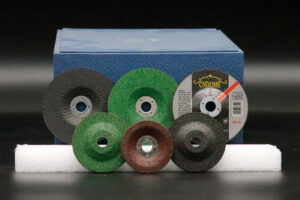
Some people pour bulk garnet into sandblasting machines, while others add zirconium oxide to resin binders. Regardless of the desired dispersion, the working principle of the abrasive particles is entirely the same. In sandblasting, particles impact the surface at high speed, using impact force and micro-cutting to remove rust, paint, and roughen the surface. In bonded abrasives, such as resin-bonded grinding wheels, belts, and flap wheels, the abrasive particles are fixed by the binder and cut into the workpiece by high-speed rotation.
As a manufacturer of resin-bonded grinding wheels, we’ve repeatedly observed a proven fact: the same alumina grain can exhibit vastly different wear resistance and self-sharpening properties depending on the binder system and curing temperature. This means that two cutting discs that look similar on the market can have completely different lifespans and feel, the difference stemming from the precise matching of the abrasive particles with the resin binder. You don’t need to memorize those complex formulas, but you should at least know that the essence of a high-quality resin-bonded grinding wheel lies in ensuring that each abrasive grain is in the right position, breaking and detaching at the right time, constantly revealing a fresh cutting edge.
Practical Rules for Granularity Selection
Everyone who has ever worked with grinding has probably experienced this dilemma: “How coarse should the grit be?” Actually, you can simplify it to three coarse lines.
The 24-60 mesh range is considered coarse-grained. It’s used for removing large amounts of excess metal, cleaning thick rust layers, and polishing casting flash. This type of grit cuts very sharply, but the surface texture is rough. If you’re going to apply a rust-preventive primer immediately after sandblasting, it’s best to keep it within this range. Too fine a grit will affect adhesion, while too coarse a grit will create overly noticeable pitting.
80 to 120 mesh is the most widely used medium grit size. Most metal surface preparation, weld cleaning, old paint removal, and routine cutting and grinding with resin wheels fall into this range. The 4-inch angle grinder blades you have are most likely made with a mixture of 80 and 100 mesh. This setting ensures high removal rates while making subsequent processing less laborious.
150 mesh and above represent fine and even micro-machining processes. Precision tool sharpening, jewelry matte finishing, dental sandblasting, and microparticle sandblasting for antique painting restoration all rely on this range. You can hardly see scratches visible to the naked eye, but the surface roughness has reached the micrometer level. Users doing this type of work often have extremely precise search queries, specifically specifying long-tail keywords like “220 mesh white alumina.”
Here’s a little-known fact: many people use too fine an abrasive wheel, which can actually be counterproductive. Too fine an abrasive can easily clog soft metals and generate excessive frictional heat on hard workpieces. Proper matching is far more important than simply pursuing a high grit number.
Several pitfalls you are prone to falling into
The first pitfall is thinking that hardness is everything. If the abrasive particles are very hard but lack toughness, they will crumble into powder at the slightest touch, thus losing their cutting power and generating a lot of dust. Many people reuse garnet for sandblasting to save money, unaware that it has lost its sharp edges and become rounded, resulting in “polishing” instead of removing paint.
The second pitfall is ignoring the chemical reaction between the workpiece material and the abrasive. Silicon carbide abrasive steel easily reacts with iron at high temperatures, accelerating wear. If you are grinding titanium alloys or stainless steel, some types of abrasives can even introduce harmful contaminants. In scenarios with strict corrosion protection requirements, choosing iron-free abrasives, such as glass beads or white corundum, is basic common sense.
The third pitfall is confusing the difference between loose abrasives and grinding wheel abrasives. Alumina with the same mesh size can have completely different particle shape, bulk density, cleanliness, and even toughness index between abrasives used for sandblasting and those used for grinding wheels. If you compare prices in the market focusing only on mesh size and material name, while ignoring the industrial grade, the price could differ by a factor of two, but the performance could also differ by a factor of two.
The fourth pitfall is neglecting safety precautions. Whether it’s sandblasting, grinding, or polishing, free silica dust, metal dust, and gases released from the binder resin when heated will all harm your respiratory system. Always wear an N95 or higher standard dust mask when dry polishing and maintain adequate ventilation. You don’t want to risk damaging your lungs to save a few minutes.
How exactly should you choose?
Returning to the initial question, when faced with a long list of product pages, you essentially need to do three things: confirm the substrate type and select the matching abrasive material; determine the mesh size range based on the desired surface roughness and removal rate; and finally, consider your equipment type and operating environment to choose between bulk particles, bonded abrasives, or sanding discs with a felt backing, or small grinding wheels with a shaft. Many purchasing personnel, when searching for “abrasive particles,” are essentially considering these steps.
If you’re a sandblasting contractor, your core concern is the cost per unit area for paint and rust removal. In this case, prioritize a combination of garnet and steel grit mesh sizes, balancing efficiency and environmental friendliness. If you’re an auto body repair technician, pay close attention to heat sensitivity. Alumina resin grinding wheels with medium to fine grit can help you remove old paint without damaging the underlying steel. If you’re an artist in a glass studio, you’ll need high-purity, strictly graded alumina or silicon carbide, with near-obsessive requirements for particle size uniformity. And if you’re just a DIY enthusiast who spends weekends in your garage, look for small, multi-mesh sample kits. Try one sample first to find the combination that suits your needs.
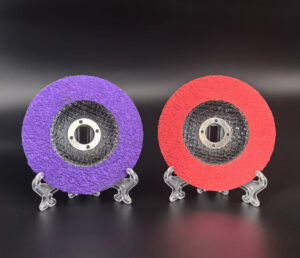
By now, you may have realized that the often-overlooked “abrasive grains” are actually a condensation of a whole set of materials science and engineering application experience. You don’t need to memorize all the technical details, but the next time you see the words “abrasive grains” on packaging, you’ll know to stop and think: what material is it, what is its mesh size, and is it intended for the work you’re doing? This pause is often the dividing line between professionalism and casualness.
FAQ
1. How should I choose between alumina abrasives and silicon carbide abrasives?
Alumina has good toughness and impact resistance, making it particularly suitable for grinding high-tensile-strength materials such as steel and alloy steel, as it is not easily broken. Silicon carbide is harder but more brittle, and it performs better on cast iron, glass, stone, and non-ferrous metals because its particles can quickly shatter into new sharp edges under pressure. Choose alumina for steel parts and silicon carbide for stone and glass.
2. Why do I get such different results and lifespan when I use the same grinding wheel to grind different materials?
The root cause lies in the chemical compatibility between the abrasive and the workpiece material. For example, the carbon element in silicon carbide easily reacts with steel at high temperatures, accelerating its own wear. Additionally, soft and tough metals (such as aluminum) can clog the pores of hard and brittle abrasives, leading to grinding wheel failure. Matching the materials is the first and most crucial step.
3. How can you understand the complete specifications of an “abrasive particle” product?
The key is to look at four dimensions: material type (determines the applicable object), mesh size (determines the coarseness), particle size distribution (reflects dimensional consistency), and application recommendations or industry standards. Professional abrasives will clearly indicate compliance with FEPA (European Federation of Abrasive Manufacturers) or ANSI (American National Standards), which means that the particle distribution is stable and reliable.
4. Why do some abrasives cause my welds to rust when polishing stainless steel?
This is electrochemical corrosion caused by “iron contamination.” When polishing stainless steel with ordinary steel grit or iron-containing alumina abrasives, tiny iron particles become embedded in the surface. These particles form galvanic cells when exposed to moisture, leading to rust. Polishing stainless steel must be done with “iron-free” abrasives, such as white corundum, glass beads, or specialized iron-free alumina grinding wheels.
5. What is “self-sharpening”? Why is it so crucial to my polishing efficiency?
Self-sharpening refers to the characteristic of abrasive particles to break down appropriately under high stress, exposing new, sharp cutting edges. Without self-sharpening, the abrasive will only be worn down continuously, causing slippage, overheating, and even burning of the workpiece; while excessive self-sharpening will cause the abrasive to shatter and fall off instantly, resulting in excessive consumption. The feeling that a good grinding wheel “grinds quickly and is durable” is essentially due to proper control of its self-sharpening.
6. What are the fundamental differences between resin grinding wheels and ceramic grinding wheels in the use of “abrasive particles”?
Resin-bonded grinding wheels are elastic and impact-resistant, allowing the use of coarser, less resilient abrasives, making them suitable for high-speed cutting and heavy-duty grinding, and less prone to breakage under lateral forces. Ceramic-bonded grinding wheels are highly rigid and porous, providing a stronger hold on the abrasive, making them suitable for precision profile grinding. The same alumina abrasive exhibits completely different sharpness and heat dissipation capabilities in resin and ceramic grinding wheels.
7. If a resin grinding wheel turns blue and smokes during grinding, is it because the wrong abrasive was chosen?
It’s very likely. The workpiece turning blue indicates that the temperature in the grinding zone has exceeded 600°C, resulting in a localized metallurgical phase transformation. If excessive pressure and mismatched rotation speed are ruled out, the problem usually points to an abrasive that is too dull, has failed to sharpen itself, or is too fine, leading to an excessively large friction area. In this case, a coarser, sharper abrasive should be used, or a zirconia abrasive that retains its micro-fragmentation ability at high temperatures should be selected. Furthermore, a lack of heat-dissipating filler in the resin grinding wheel’s formulation can also exacerbate this phenomenon.
8. How can I quickly determine whether the alumina abrasive I have is brown fused alumina or white fused alumina?
Color and hardness are the most direct indicators of alumina’s properties. Brown fused alumina ranges from brownish-black to dark brown, contains a small amount of titanium oxide, has good toughness, is inexpensive, and is the most common. White fused alumina is snow-white and translucent, with an aluminum oxide purity exceeding 99%, slightly harder but more brittle, and more expensive. There is also a single-crystal fused alumina, with single crystals, light gray in color, and extremely resistant to breakage. If you are sharpening precision tools, you will most likely need white fused alumina; for grinding ordinary structural steel, brown fused alumina is perfectly adequate.
9. Why does my grinding wheel always get clogged when I’m polishing aluminum? What kind of abrasive should I use?
Aluminum is soft and sticky, and under the heat of grinding, it softens rapidly and fills the pores of the abrasive, a process known as “clogging.” There are two solutions: one is to use a highly brittle, self-sharpening abrasive, such as silicon carbide; the other is to use an open-structure grinding wheel or a specialized lubricant/anti-clogging agent. For resin-coated grinding wheels on aluminum alloys, semi-brittle white corundum combined with special fillers can also effectively combat clogging.
10. Do abrasive particles have a shelf life? Can they still be used if they get damp?
Bonded abrasives, such as resin-bonded grinding wheels, have a clearly defined shelf life because the resin binder absorbs moisture and ages. However, the chemical properties of loose abrasive particles themselves are stable. Alumina, silicon carbide, and garnet sand, once exposed to moisture, will retain their physical properties as long as they are thoroughly dried. The only thing to note is that metallic abrasives, such as steel shot and steel grit, will rust and harden when exposed to moisture. Even after drying, they cannot fully restore their fluidity and individual impact characteristics; it is recommended to discard them or downgrade their use. Your storage strategy is simple: protect non-metallic abrasives from moisture but do not discard them; metallic abrasives must be stored dry.

The variety of games here is insane. I never get bored because there is always something new to try. Definitely my new favorite sz777casino