
26+ Years Manufacturer
OEM & Private Label
EN12413 Certified
Export to 60+ Countries
Metal Cutting Discs & Metal Cutting Wheels
DOME is an OEM manufacturer and supplier of resin bonded metal cutting discs and metal cutting wheels. At DOME, we specialize in the manufacture of high‑performance metal cutting discs that deliver fast, smooth cuts across a wide range of metal profiles, including carbon steel, stainless steel, rebar, angle iron, pipe, and sheet metal.
Choose DOME for 26 years of abrasives expertise, in-house OEM manufacturing, international certifications (EN12413, MPA, BSCI, ISO9001), a full size range (38–405mm), and flexible OEM/ODM solutions for global partners.
Dome Abrasives Catalogue
What Is a Metal Cutting Discs, Metal Cutting Wheels & Cut-Off Wheels
Metal cutting discs are also commonly called metal cutting wheels, cut-off discs, or cut-off wheels. These resin-bonded abrasive wheels are designed for cutting carbon steel, stainless steel, rebar, pipes, sheet metal, structural steel and other metal materials. Cutting discs for metal are manufactured by bonding abrasive material (such as aluminum oxide) with a resin binder and embedding a fiberglass mesh to enhance impact resistance. Metal cutting discs operate by spinning at high speeds, using the abrasive material to cut through and separate the metal.
The thickness of the metal cutting discs directly affects cutting efficiency: thinner discs (e.g., 1 mm) offer greater precision and produce fewer burrs but are relatively fragile, whereas thicker discs are more durable.
When using metal cutting wheels, it is essential to ensure that the tool’s actual rotational speed (RPM) does not exceed the disc’s rated maximum safe speed; exceeding this limit can cause the disc to shatter.
Why Choose Resin Bonded Metal Cutting Disc
Resin-bonded metal cutting discs are the most commonly used type in the industrial cutting sector. Compared to those with ceramic, rubber, or metal bonds, they offer significant advantages in terms of cutting efficiency, safety, and versatility.
Self‑sharpening – Abrasive grains naturally break away during use, constantly exposing new sharp grains to maintain high cutting performance.
Ultra‑thin design – Down to 1 mm thick, significantly reducing cutting resistance for fast, precise cuts with minimal burrs.
Impact resistance & high‑RPM capability – The resin binder, reinforced with fiberglass mesh, ensures safe operation at high speeds, allowing you to fully utilize your tool’s power.
How Metal Cutting Disc Works
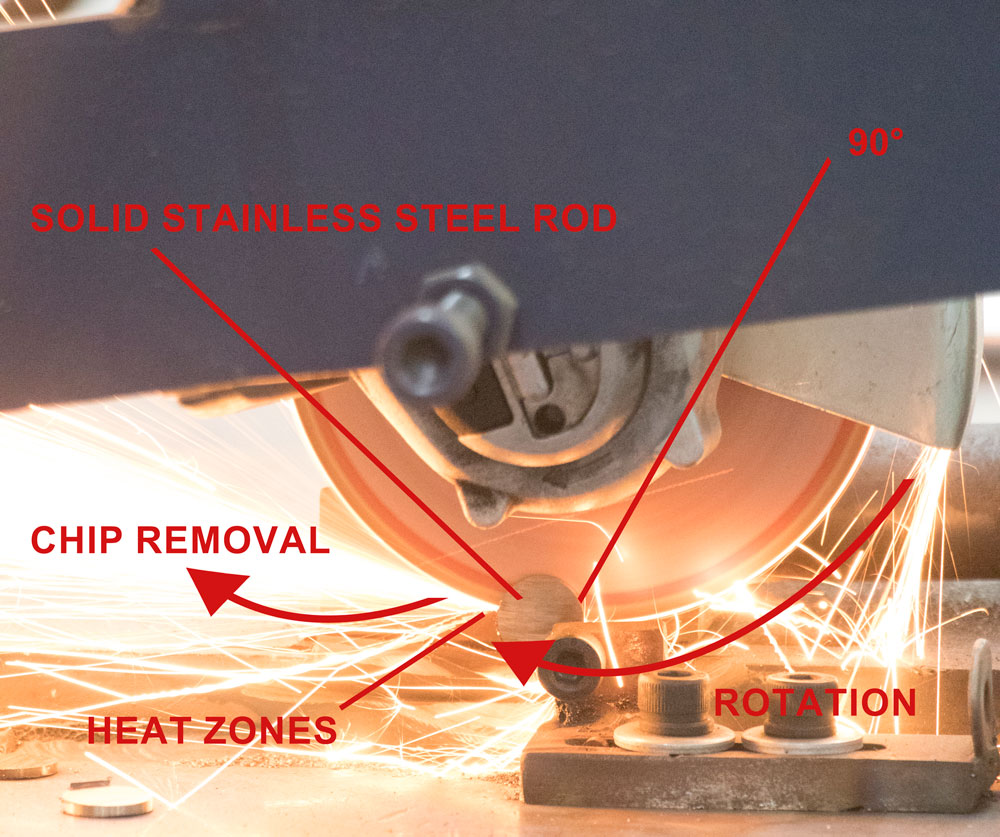
A metal cutting disc is essentially a high-speed rotating grinding tool; its “cutting” action does not rely on the shearing force of a blade edge, but rather on high-speed friction between abrasive grains and the metal surface, which generates chips and separates the material.
The material removal efficiency of a metal cutting disc is determined by a combination of factors: abrasive grain cutting characteristics, the self-sharpening behavior regulated by the bond, dynamic reinforcement via the fiber mesh, and the optimized matching of disc thickness with rotational speed. Formulations for abrasives and bonding agents must be adjusted according to the specific metal type to achieve optimal performance.
Metal Cutting Discs by Material
Different metals respond differently to cutting—heat conductivity, hardness, and alloy composition all influence how a cutting disc wears and cuts. Selecting a metal cutting disc engineered for your specific material ensures faster cuts, longer wheel life, and a cleaner finish.
Carbon Steel Cutting Discs
Our carbon steel cutting disc delivers reliable performance on mild steel, angle iron, and structural beams. The carbon steel cutting wheel features a tough aluminum oxide grain that self-sharpens under load, maintaining consistent cut rates. For general fabrication, the cutting disc for carbon steel offers excellent value, while the carbon steel cut off wheel handles heavy stock removal with minimal burr formation.
Stainless Steel Cutting Discs
Stainless steel tends to work-harden when overheated, making grain selection critical. Our INOX cutting disc uses zirconia or ceramic abrasives that fracture at microscopic levels, preventing heat buildup. The stainless steel cutting wheel incorporates special fillers to reduce edge discoloration, while the cutting disc for stainless steel delivers smooth, burr-free cuts that minimize secondary finishing.
Rebar Cutting Discs
Rebar surfaces carry mill scale and impurities that quickly dull standard wheels. Our rebar cutting disc uses a reinforced bond to absorb the shock of interrupted cutting. The rebar cutting wheel and cutting disc for rebar maintain their edge through embedded contaminants, while the rebar cut off wheel offers fast severing for construction site productivity.
Steel Pipe Cutting Discs
Cutting round profiles demands a disc that resists deflection and stays true to the cut line. Our pipe cutting disc features a thin, rigid profile for clean entry into curved surfaces. The steel pipe cutting disc (cutting disc for steel pipe) minimize burrs on both inner and outer pipe walls, ensuring weld-ready edges.
Sheet Metal Cutting Discs
Thin gauges warp easily under heat and pressure. Our sheet metal cutting disc uses an ultra-thin 1.0mm profile to reduce friction and preserve panel flatness. The sheet metal cutting wheel delivers fast, accurate cuts without pulling the material, while the thin metal cutting disc is ideal for automotive panels, ducts, and cladding.
Cast Iron Cutting Discs
Cast iron’s hard, abrasive surface wears out softer grain quickly. Our cast iron cutting disc uses silicon carbide abrasive for aggressive cutting on high-carbon alloys. The cast iron cutting wheel resists edge chipping, while the cutting disc for cast iron maintains stability when cutting irregular castings and risers.
Quick Material-to-Abrasive Guide
| Workpiece Material | Recommended Grain | Key Feature |
|---|---|---|
| Carbon Steel | Aluminum Oxide | Tough, self-sharpening |
| Stainless Steel / Inox | Zirconia or Ceramic | Heat-resistant, low discoloration |
| Rebar | Reinforced Aluminum Oxide | Impact-absorbent bond |
| Steel Pipe | Aluminum Oxide | Thin profile, stable tracking |
| Sheet Metal | Aluminum Oxide | Ultra-thin (1.0mm) for low distortion |
| Cast Iron | Silicon Carbide | Hard, aggressive cutting |
Metal Cutting Disc Sizes
Metal Cutting Disc diameter determines your maximum cutting depth, machine compatibility, and cutting speed. Match the size to your grinder’s power rating and the cross-section of your workpiece for safe, efficient operation.
100mm (4″) Metal Cutting Disc
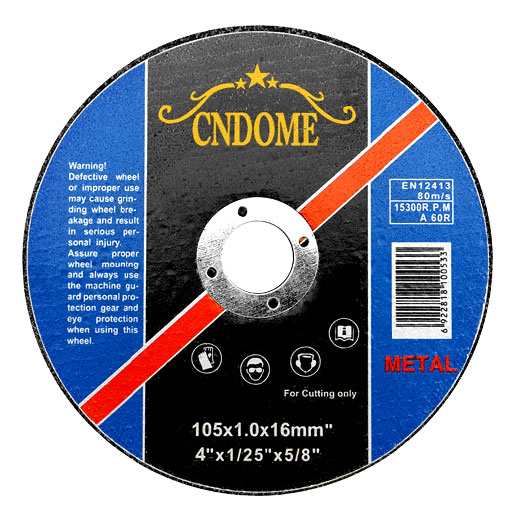
The 100mm (4-inch) metal cutting disc is the go-to for pneumatic die grinders and compact electric tools. A 4 inch metal cutting disc excels at trimming thin sheet, cutting threaded rods, and accessing tight engine compartments. For metric users, the 4 inch cutting wheel and 100mm cutting wheel share the same diameter—commonly paired with 500W–700W angle grinders for maintenance and auto repair tasks.
115mm (4.5″) Metal Cutting Disc
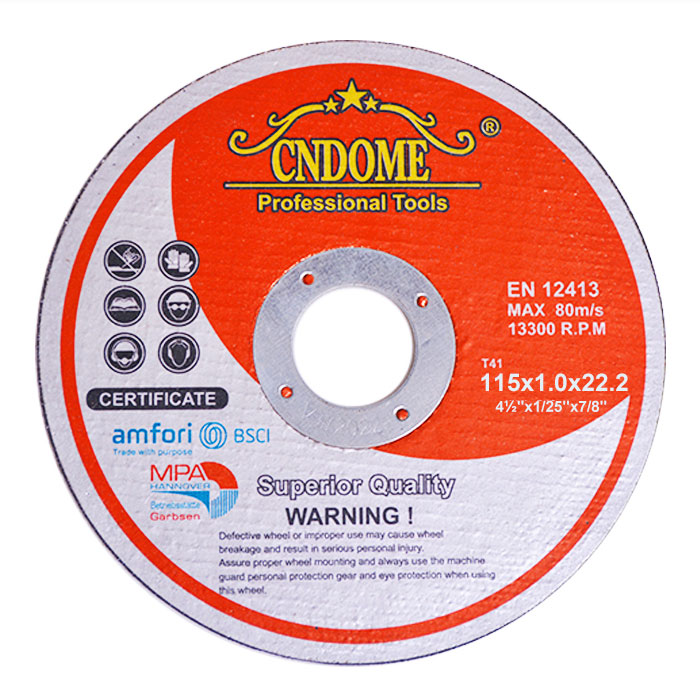
Globally, the 115mm (4.5-inch) metal cutting disc dominates workshop floors. A 4.5 inch metal cutting disc balances cut depth and consumable cost, making it the standard for structural steel up to 6mm thick. The 4.5 inch cutting wheel (115mm cutting wheel) handle the full range of angle iron, rebar, and tubing on 700W–900W angle grinders—delivering speed without overloading the motor.
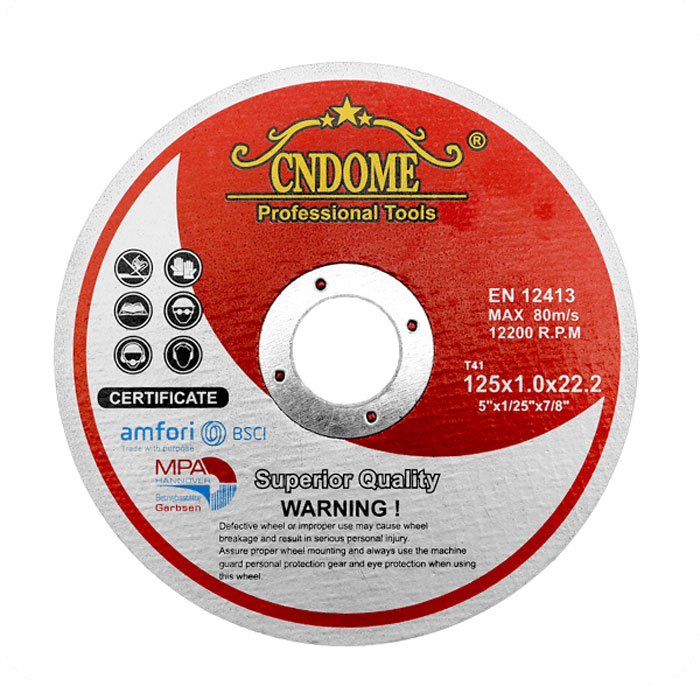
125mm (5″) Metal Cutting Disc
Stepping up to 1,000W+ grinders, the 125mm (5-inch) metal cutting disc offers 2–3mm additional cutting depth over 115mm—critical for coping channel sections or 2-inch nominal pipe. A 5 inch metal cutting disc typically uses a 22mm arbor for efficient torque transfer. Both the 5 inch cutting wheel and 125mm cutting wheel maintain cool cutting on solid stock up to 12mm diameter.
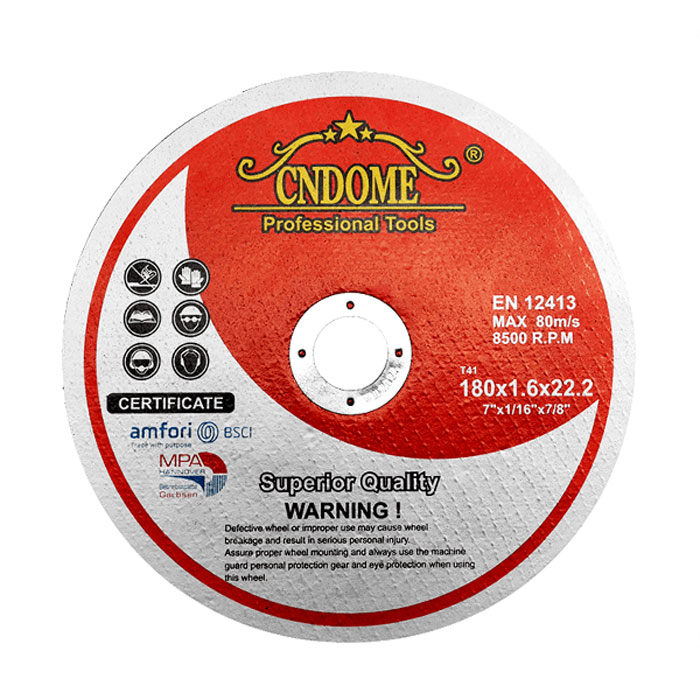
180mm (7″) Metal Cutting Disc
For industrial grinder motors above 1,400W, the 180mm (7-inch) metal cutting disc is the minimum size for severing 20mm+ rebar or thick-walled beams. A 7 inch metal cutting disc incorporates reinforced inner rings to handle the increased vibration. The 7 inch cutting wheel delivers clean cuts on structural profiles, making it a favorite in steel service centers and heavy fabrication.
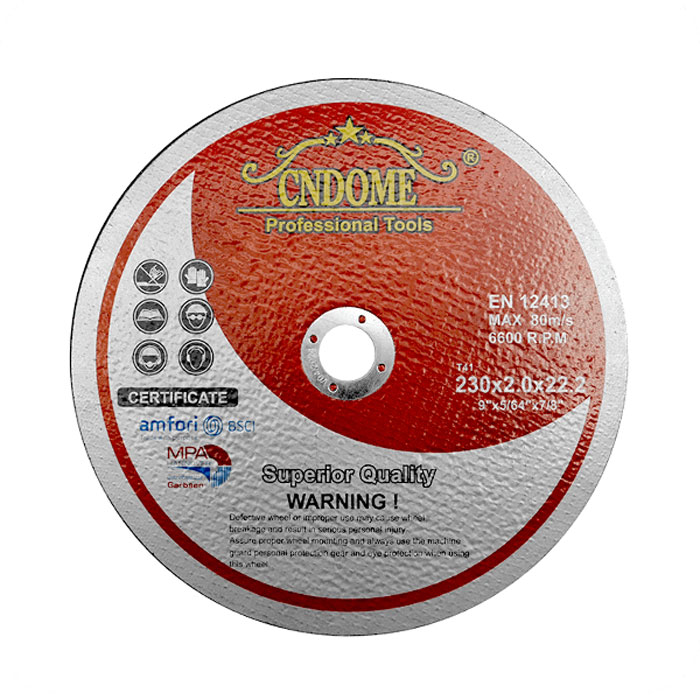
230mm (9″) Metal Cutting Disc
Paired with 2,000W–2,500W angle grinders, the 230mm (9-inch) metal cutting disc chews through railroad rails, large castings, and solid shafts. A 9 inch metal cutting disc features maximum fiberglass reinforcement to absorb kickback from deep passes. The 9 inch cutting wheel and 230mm cutting wheel offer the linear speed needed to sever 25mm rebar in under 5 seconds—essential for demolition and emergency repair work.
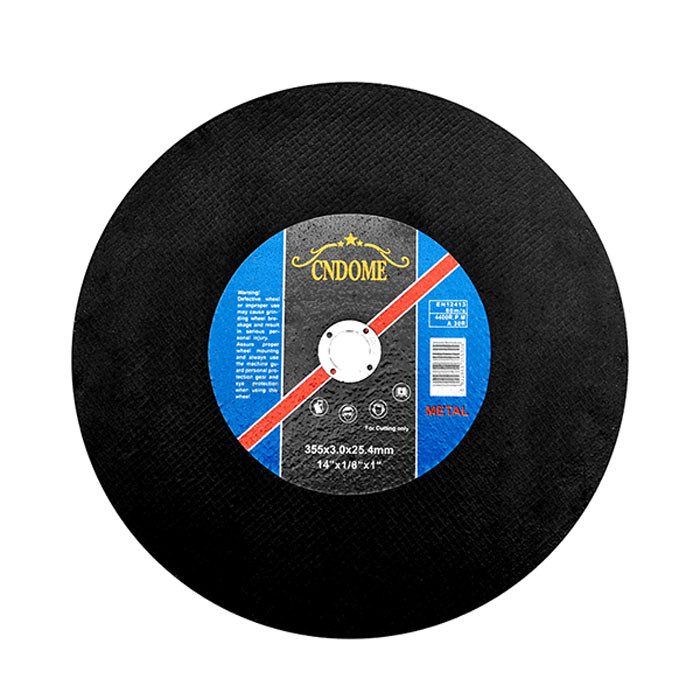
355mm (14″) Metal Cutting Disc
Exclusively for stationary or semi-stationary chop saws, the 355mm (14-inch) metal cutting disc is designed for continuous, high-torque operation. A 14 inch metal cutting disc runs at lower RPM (typically <4,000) but uses immense torque to part bundled tubes, angle irons, and beams cleanly. The 14 inch cutting wheel and 355mm cutting wheel feature a standard 25.4mm arbor, ensuring universal fitment on industrial cut-off machines for square, weld-ready edges every cycle.
Metal Cutting Disc Thickness
Metal Cutting Disc thickness directly impacts kerf width, heat generation, and resistance to side-loading. Thin cutting discs cut faster with less material waste; thick discs handle heavy feeds and impact. Match the gauge to your grinder power and workpiece cross-section.
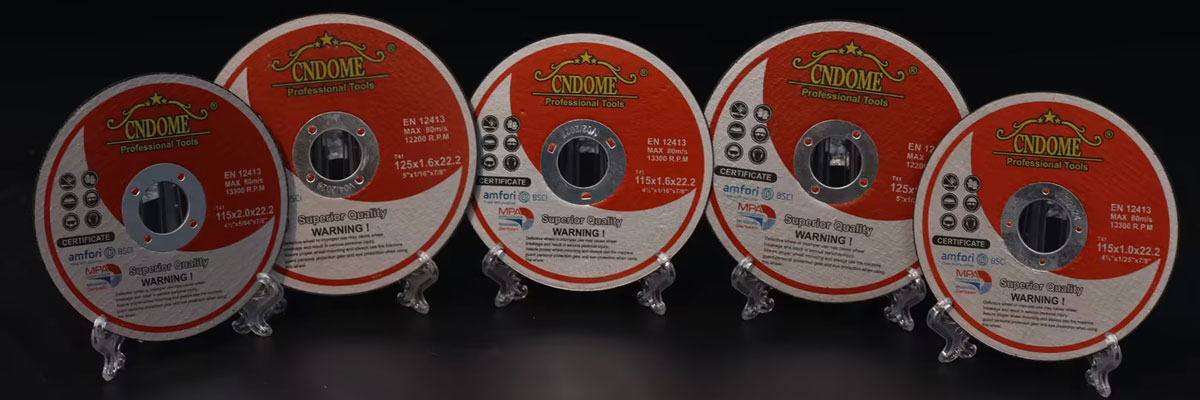
1.0mm Metal Cutting Disc
Our 1mm metal cutting disc delivers the narrowest kerf, reducing material loss and post-cut cleanup. The 1.0mm cutting disc generates minimal friction, preventing heat discoloration on stainless and coated sheets. For thin-walled tubing and automotive panels, the 1mm cutting wheel offers exceptional agility, while the ultra thin metal cutting disc in this gauge ensures clean, burr-free edges with low operator effort.
1.2mm Metal Cutting Disc
The 1.2mm cutting disc bridges ultra-thin agility with improved deflection resistance. A 1.2mm metal cutting disc maintains speed on thin pipe and sheet while absorbing minor off-angle feeding—ideal for general maintenance and light fabrication where control matters.
1.6mm Metal Cutting Disc
The 1.6mm cutting disc is the industry default for carbon steel, angle iron, and rebar—balancing cut speed and wheel life across most 800W–1,200W grinders. Our 1.6mm metal cutting wheel handles mixed materials with consistent performance, making it the go-to for daily fabrication and repair work.
2.0mm Metal Cutting Disc
When longer wheel life outweighs ultra-fast cutting, the 2mm metal cutting disc delivers. A 2mm cutting wheel offers increased abrasive mass for extended runs on structural steel and heavy plate. The 2mm metal cutting disc resists wear through mill scale and surface impurities, reducing changeover downtime on multi-shift job sites.
2.5mm Metal Cutting Disc
The 2.5mm cutting disc steps into heavy-duty territory, providing the backbone for cutting thick-walled beams and solid bars. Our heavy duty metal cutting disc at this thickness absorbs high torque and intermittent shock without deforming. Choose this gauge when you need durability over raw speed—especially on 1,500W+ grinders and chop saws.
3.0mm Metal Cutting Disc
For foundry work, rail cutting, and large-diameter stock, the 3mm cutting disc offers unmatched resilience. A thick metal cutting disc at 3.0mm withstands aggressive feed rates, side-loading, and high-vibration environments. The 3mm cutting disc maintains structural integrity where thinner wheels would glaze or shatter—ensuring safety and productivity on the heaviest applications.
Quick Thickness Selection Guide
| Thickness | Best For | Max Material Thickness |
|---|---|---|
| 1.0mm | Sheet metal, thin pipe, stainless | Up to 3mm |
| 1.2mm | Light tubing, coated panels | Up to 4mm |
| 1.6mm | Carbon steel, rebar, general fab | Up to 6mm |
| 2.0mm | Structural steel, continuous use | Up to 10mm |
| 2.5mm | Heavy beams, thick plate | Up to 15mm |
| 3.0mm | Castings, rails, large diameters | 15mm+ |
Metal Cutting Discs by Machine
Every cutting machine delivers power differently—high RPM for hand-held agility, high torque for chop saw impact, or continuous load for stationary production runs. Using a metal cutting disc matched to your machine’s operating characteristics ensures safer handling, longer wheel life, and cleaner cuts.
Metal Cutting Disc for Angle Grinder
Our metal cutting disc for angle grinder is engineered for the extreme rotational speeds (11,000+ RPM) of hand-held tools. A metal cutting wheel for angle grinder features reinforced centers to resist twisting forces during freehand operation. For daily shop use, the angle grinder cutting wheel delivers fast, cool cuts on rebar, pipe, and sheet, while the angle grinder cut off wheel in thinner profiles minimizes burr formation and operator fatigue.
Metal Cutting Disc for Chop Saw
Fixed-base chop saws generate sudden downward strokes and high starting torque. Our chop saw cutting disc incorporates extra fiberglass reinforcement to absorb impact without deformation. The chop saw cutting wheel operates at lower surface speeds but demands a thicker bond to maintain structural integrity under heavy feed pressure. For production shops, the metal cutting disc for chop saw delivers straight, weld-ready kerfs on bundles, angle irons, and solid bars.
Stationary Metal Cut-Off Wheel
For automatic or semi-automatic industrial saws, our stationary cutting disc prioritizes dimensional stability over long shifts. A stationary cut off wheel uses coarser grit blends to maintain free-cutting action through hundreds of cycles. When you need a large diameter metal cutting disc for cutting billets, beams, or thick-walled pipe, our stationary-grade wheels feature coolant-compatible bonds to prevent edge hardening and ensure consistent parting-off quality.
Quick Machine-to-Disc Match
| Machine Type | Key Demand | Recommended Feature |
|---|---|---|
| Angle Grinder | High RPM, manual control | Thin profile, reinforced center |
| Chop Saw | Pivoting impact, high torque | Extra reinforcement, thicker bond |
| Stationary Saw | Long runs, consistency | Coarse grit, coolant-compatible |
T41 vs T42 Metal Cutting Discs
The shape code—T41 (Type 1) versus T42 (Type 27)—dictates the wheel’s mounting geometry and safe approach angle. Selecting the correct type for your machine setup ensures proper flange support, optimal cutting depth, and operator safety.
T41 Metal Cutting Discs
The T41 metal cutting disc features a completely flat profile with no raised center—classified as a Type 1 metal cutting disc. This design allows a flat cutting disc to utilize its full radius for the deepest possible straight-line cut. A T41 metal cutting wheel requires full-face flange support on both sides, making it the standard for stationary chop saws, automatic cut-off lines, and fixed-spindle machines. Choose this when absolute depth penetration on solid bars and thick structural sections is your priority.
T42 Metal Cutting Discs
The T42 metal cutting disc incorporates a dish-shaped, recessed center that offsets the rim forward—known globally as a Type 27 metal cutting disc. This geometry allows a depressed center cutting disc to operate at shallow angles (15°–30°) without the grinder’s guard or spindle contacting the workpiece. A T42 metal cutting wheel also provides a natural “crush zone” that absorbs side-loading, significantly reducing kickback risk if the disc binds. This is the universal standard for all hand-held angle grinder applications.
Quick Selection Guide
| Type | Shape | Best For |
|---|---|---|
| T41 / Type 1 | Flat profile | Stationary chop saws, fixed machines, maximum depth cuts |
| T42 / Type 27 | Depressed center | Hand-held angle grinders, flush cutting, tight spaces |
Metal Cutting Discs by Abrasive Grain
The abrasive grain determines how a metal cutting disc cuts, wears, and handles heat. Selecting the right mineral for your workpiece material ensures faster cutting, longer wheel life, and a superior surface finish.
Aluminum Oxide Cutting Discs
Our aluminum oxide cutting disc is the industry standard for general-purpose metal cutting. The aluminum oxide cutting wheel fractures at a controlled rate, continuously exposing fresh, sharp edges for consistent performance on carbon steel and structural shapes. For everyday fabrication and maintenance, the aluminum oxide abrasive wheel delivers reliable cut rates at an economical cost-per-cut.
Zirconia Alumina Cutting Discs
The zirconia cutting disc exhibits a unique micro-fracturing mechanism that activates under elevated temperatures, preventing glazing on tough materials. A zirconia alumina cutting wheel self-sharpens as heat builds, maintaining aggressive cut rates on stainless steel, Inox, and high-strength alloys. When work-hardening is a concern, the zirconia abrasive cutting disc offers superior longevity compared to standard aluminum oxide.
Resin Bonded Cutting Discs
The bond system—not just the grain—determines disc performance. A resin bonded cutting disc uses a phenolic resin matrix that offers excellent heat resistance and shock absorption. The resin bonded cutting wheel delivers a balanced combination of cut speed and durability, making it suitable for both hand-held angle grinders and stationary saws. For general metalworking, the resin cutting disc provides the flexibility to withstand minor side-loading without compromising safety.
Quick Abrasive Selection Guide
| Grain Type | Fracture Behavior | Best-Suited Materials |
|---|---|---|
| Aluminum Oxide | Controlled, blocky fracture | Carbon steel, mild steel, structural beams |
| Zirconia Alumina | Heat-activated micro-fracture | Stainless steel, Inox, high-strength alloys |
| Resin Bonded | Bond system for impact resistance | General metalworking, hand-held and stationary use |
Metal Cutting Disc Applications
Different applications place unique demands on metal cutting discs—from impact resistance on rebar to heat control on thin sheet. Matching the metal cutting disc to your specific job ensures faster cuts, longer wheel life, and cleaner results.
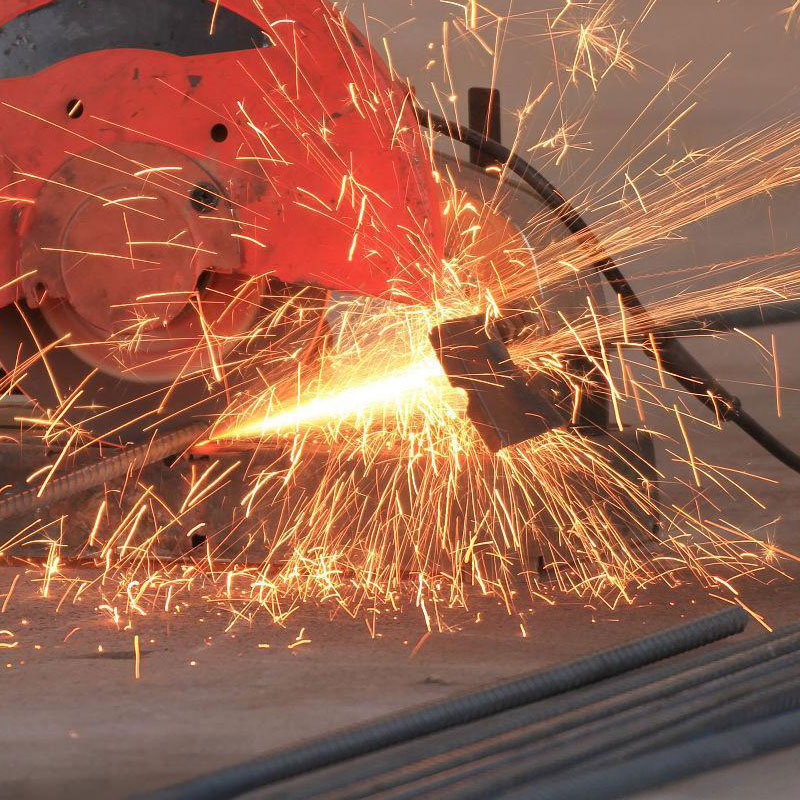
Rebar Cutting
Rebar surfaces carry mill scale and impurities that quickly dull standard wheels. Our rebar cutting disc uses a reinforced bond to absorb the shock of interrupted cutting. The rebar cutting wheel maintains its edge through embedded contaminants, while the cutting wheel for rebar delivers fast severing for construction site productivity.
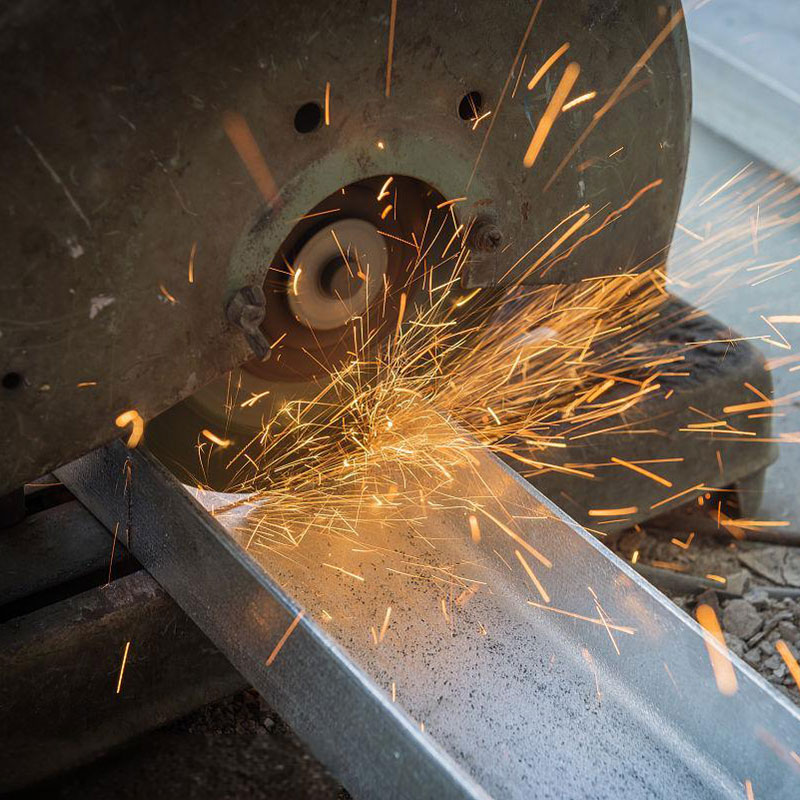
Structural Steel Cutting
Cutting I-beams, channels, and heavy plate demands a disc that handles continuous heavy feed. Our structural steel cutting disc features a tough aluminum oxide grain for consistent cut rates. The steel beam cutting disc and steel section cutting wheel are engineered with extra reinforcement to maintain stability through thick cross-sections.
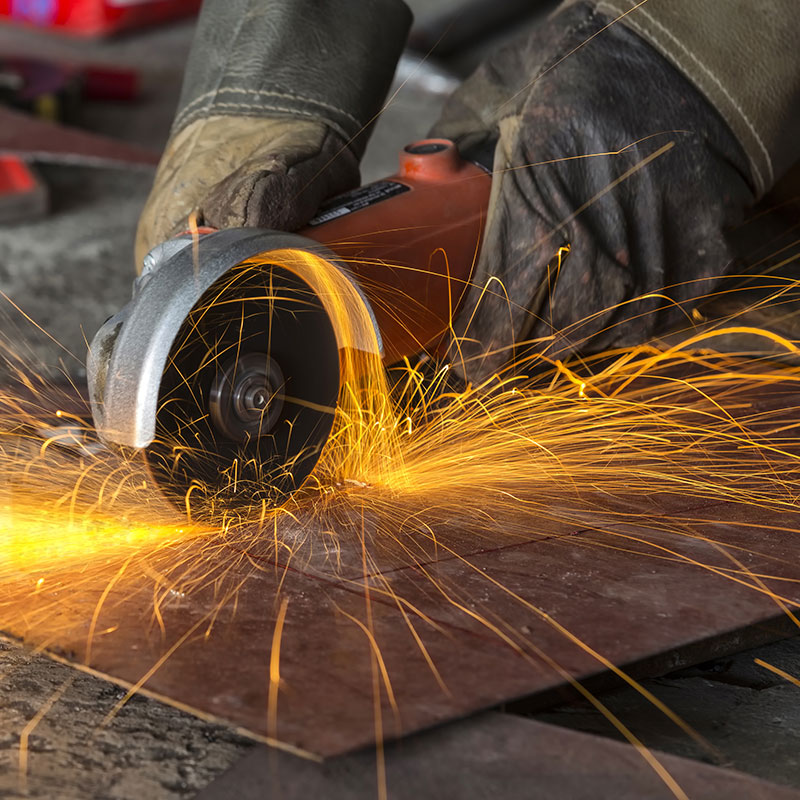
Sheet Metal Cutting
Thin gauges warp easily under heat and pressure. Our sheet metal cutting disc uses an ultra-thin profile to reduce friction and preserve panel flatness. The thin sheet metal cutting wheel delivers fast, accurate cuts without pulling the material—ideal for automotive panels, ducts, and cladding.
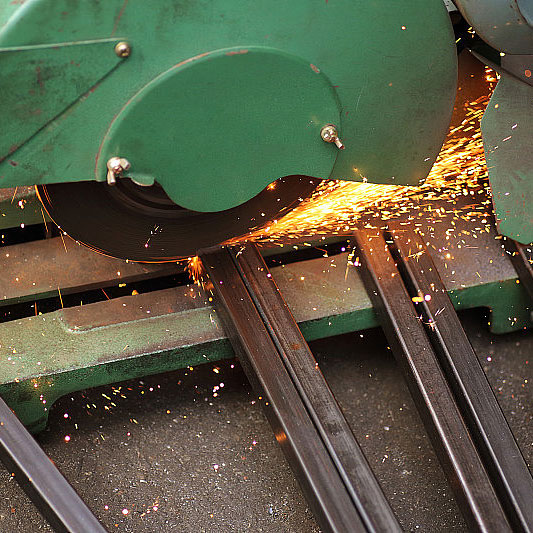
Pipe Cutting
Cutting round profiles demands a disc that resists deflection and stays true to the cut line. Our pipe cutting disc features a rigid, thin profile for clean entry into curved surfaces. The steel pipe cutting wheel minimizes burrs on both inner and outer pipe walls, ensuring weld-ready edges.
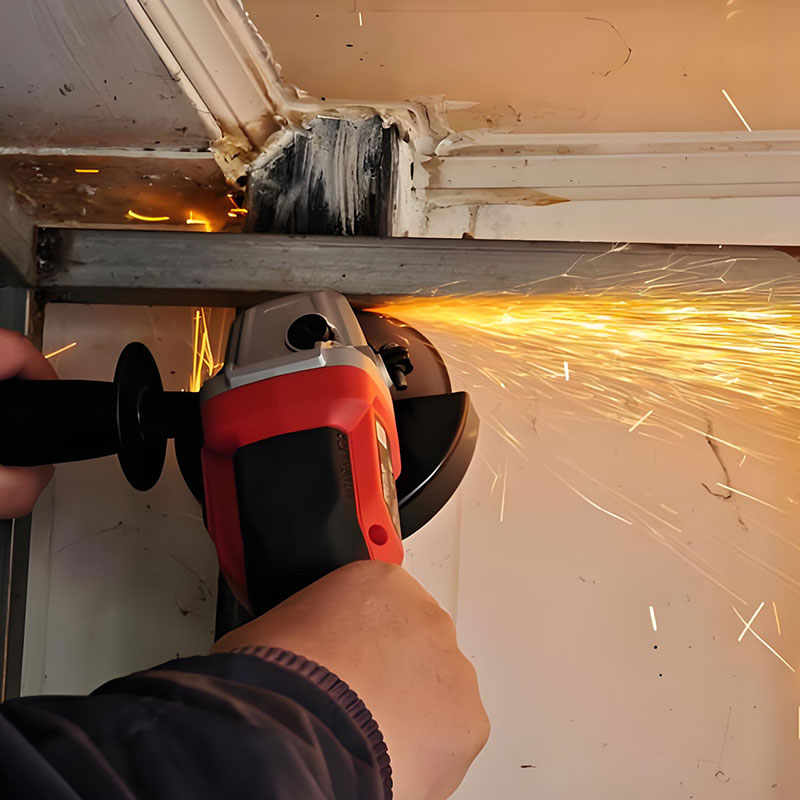
Angle Iron Cutting
Angle iron requires a disc that can handle both flat and edge cutting without binding. Our angle iron cutting disc delivers clean, burr-free cuts on equal and unequal angles. The angle iron cutting wheel offers the durability needed for repetitive fabrication work.

Rail Cutting
Rail cutting demands the highest level of reinforcement to absorb vibration and shock. Our rail cutting disc features heavy-duty fiberglass mesh and a thick bond for maximum structural integrity. The rail cutting wheel maintains aggressive cut rates even on high-manganese steel, making it the trusted choice for track maintenance and repair crews.
How to Choose Metal Cutting Disc
Selecting the right metal cutting disc directly impacts cutting efficiency, safety, and overall costs. Whether you are a distributor, wholesaler, or workshop operator, simply focus on four key factors: workpiece material, disc thickness, equipment rotational speed, and the operating environment. We help you quickly match the ideal high-performance resin cutting discs—suitable for common materials like stainless steel, rebar, and structural steel—to boost cutting speed, extend service life, and lower the cost per cut.
Thickness– Thin for Speed, Thick for Durability
The thickness of a cutting disc directly determines cutting efficiency and service life. Ultra-thin cutting discs (1.0–1.6 mm) offer fast cutting, minimal burrs, and high precision, making them ideal for thin sheets and tubing. Standard cutting discs (2.0–3.0 mm) are more durable and impact-resistant, suitable for solid materials and heavy-duty cutting. Match the cutting disc to the workpiece thickness: use thin discs for thin materials and thick discs for thick ones. An incorrect choice can lead to an inability to cut or cutting disc breakage, compromising both safety and efficiency.
Diameter – Your Tool Decides the Size
The outer diameter of the cutting disc must match the angle grinder or cutting machine. Cutting discs sized 100–150mm are paired with handheld angle grinders for flexibility and ease of use. Cutting discs sized 180–230mm are used with high-power angle grinders, suitable for heavy-duty on-site work. Cutting discs sized 305–405mm are used with stationary cutting machines, allowing for single-pass cuts on large structural steel and rails. When selecting a cutting disc, first check the tool model and match the size accordingly. Do not choose a cutting disc that is too large to fit, nor attempt to force a small cutting disc to cut through a large cross-section.
RPM – Speed Match Is a Safety Must
Every cutting disc is marked with a maximum safe rotational speed (RPM). The actual operating speed of the equipment must never exceed this limit; if the speed is too high, excessive centrifugal force can cause the disc to crack and fly apart. Speed limits are even stricter for large-diameter discs—for instance, a 355mm cutting disc typically should not exceed 4,400 RPM. Checking the label before use to ensure the equipment’s speed is below the rated limit is a crucial step for safety.
Material – Match the Abrasive to Your Steel
Brown fused alumina cutting discs offer the best value for carbon steel, while specialized zirconia or ceramic alumina cutting discs are required for stainless steel to prevent burning and chip adhesion. Rail steel demands dedicated rail-cutting discs with multi-layer reinforcement to withstand high hardness and heavy impact. Using the wrong material leads to issues ranging from low efficiency and short service life to workpiece burning or cutting disc shattering that causes injury. DOME uses color-coding based on material type, making identification clear at a glance and preventing mix-ups.
Bond – Hardness Tunes Life and Self‑Sharpening
The bond holds the abrasive grains together; if it is too hard, dull grains fail to shed, preventing effective cutting and causing heat buildup. If it is too soft, grains shed prematurely, resulting in a short service life. Since stainless steel has poor thermal conductivity, a slightly softer bond is preferred to allow dull grains to shed promptly, thereby maintaining constant sharpness. Conversely, because carbon steel dissipates heat well, a harder bond can be used, allowing for more complete utilization of the abrasive grains and a longer service life.
Grit – Fineness Determines Surface Finish
Grit size indicates the coarseness of the abrasive. Coarse grits (24#–36#) offer fast cutting and high efficiency, making them suitable for rough cuts and thick materials. Fine grits (46#–60#) provide smooth cuts and high precision, ideal for thin sheets and detailed work. Medium grits (30#–46#) are the most versatile choice for home DIY and general construction sites, balancing cutting speed with acceptable cut quality.
Application – Choose the Right Disc for Each Job
Use 2.5mm-thick cutting discs for rebar to minimize vibration. Use 1.0mm ultra-thin cutting discs for thin-walled tubing to prevent deformation. Use specialized zirconia-alumina cutting discs for stainless steel to avoid burn marks. When cutting angle iron, starting the cut at the sharp edge ensures a smoother process. Structural steel requires large-diameter cutting discs paired with a stationary cut-off machine. When cutting sheet metal, use a straightedge to guide the cut for greater precision. Match the cutting disc to the specific material; making do with the wrong cutting disc not only reduces efficiency but also poses safety risks.
Common Mistakes
Common mistakes include using carbon steel cutting discs on stainless steel—which causes blackening from heat and necessitates regrinding—and using ultra-thin cutting discs on rebar, where the ribs cause vibration that leads to shattering. Other errors involve mounting cutting discs without checking the RPM rating, resulting in failure due to overspeeding, or using cutting discs for grinding tasks, where lateral pressure causes them to crack. We see these mistakes every day—don’t make them yourself. Simply choose the right cutting disc, check the speed rating, and avoid applying lateral pressure; get these three things right, and you’ll ensure both safety and efficiency.
Professional Tips
Remember three key rules: match the cutting disc thickness to the workpiece thickness; select the right abrasive material for the job (brown fused alumina for carbon steel, zirconia alumina for stainless steel, and specialized discs for rail steel); and verify compatibility regarding arbor size and RPM ratings before installation. If you are unsure, just ask the manufacturer—DOME’s technical support team is always online to help you choose the perfect cutting disc. After all, using the right cutting disc for the right job is what matters most.
OEM & Private Label Metal Cutting Disc Manufacturer
As a dedicated metal cutting disc supplier, we offer end-to-end OEM and private label services for distributors, tool brands, and industrial buyers worldwide. From custom formulations to branded packaging, we deliver cutting discs tailored to your market specifications—without the overhead of in-house production.
Private Label Cutting Discs – Your Brand, Our Expertise
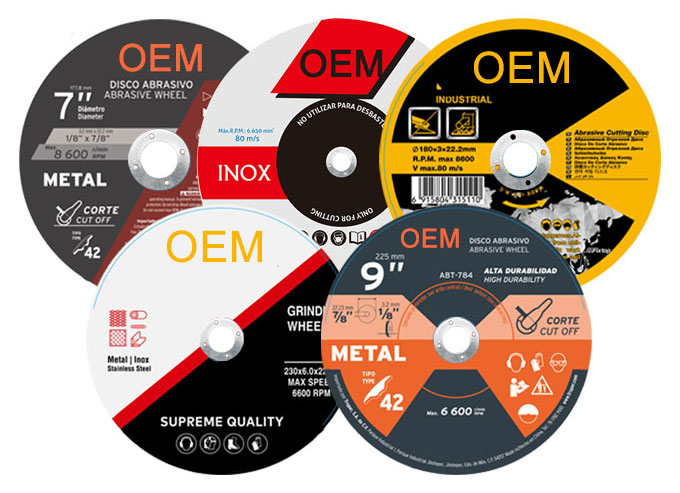
Launch your own line of abrasives with our private label cutting discs. We handle everything from manufacturing to packaging, so you can focus on sales and distribution. Our private label cutting wheels are available with your logo, color scheme, and branded packaging—creating a professional product line that builds customer loyalty and recurring orders.
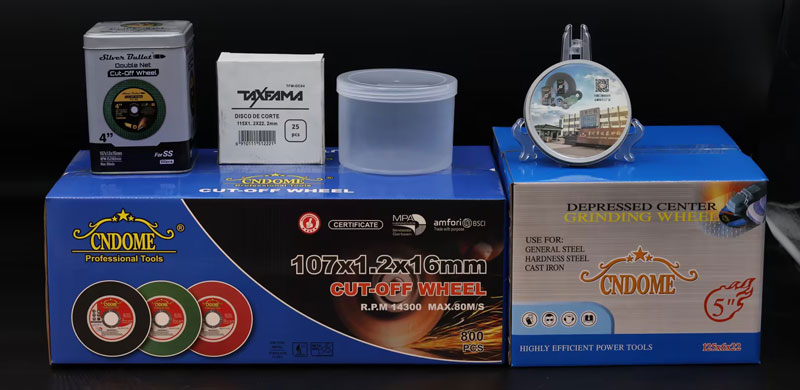
Custom Metal Cutting Discs – Formulated for Your Application
Not all cutting jobs are the same. Our custom metal cutting discs are engineered to your exact performance specifications—abrasive grain, bond hardness, thickness, and diameter. Need a specialized custom cutting wheel for a unique alloy or production environment? Our technical team will develop a formulation that delivers consistent results, giving you a competitive edge in your market.
OEM Cutting Wheel – Factory-Direct Supply for Brands
For tool manufacturers and industrial brands, our OEM cutting wheel services provide reliable, high-quality abrasive solutions at competitive wholesale pricing. We produce OEM metal cutting disc runs to your exact dimensional and performance specs, with rigorous quality control at every stage. Our factory-direct model ensures consistent supply, short lead times, and full traceability.
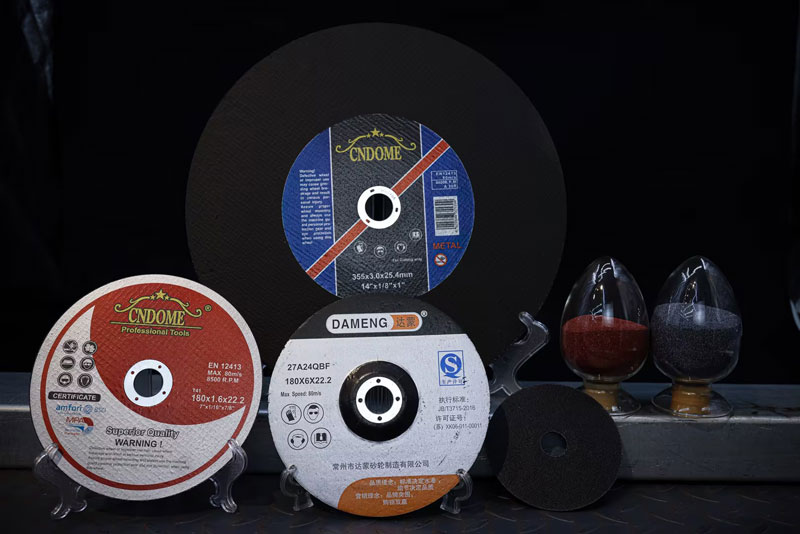
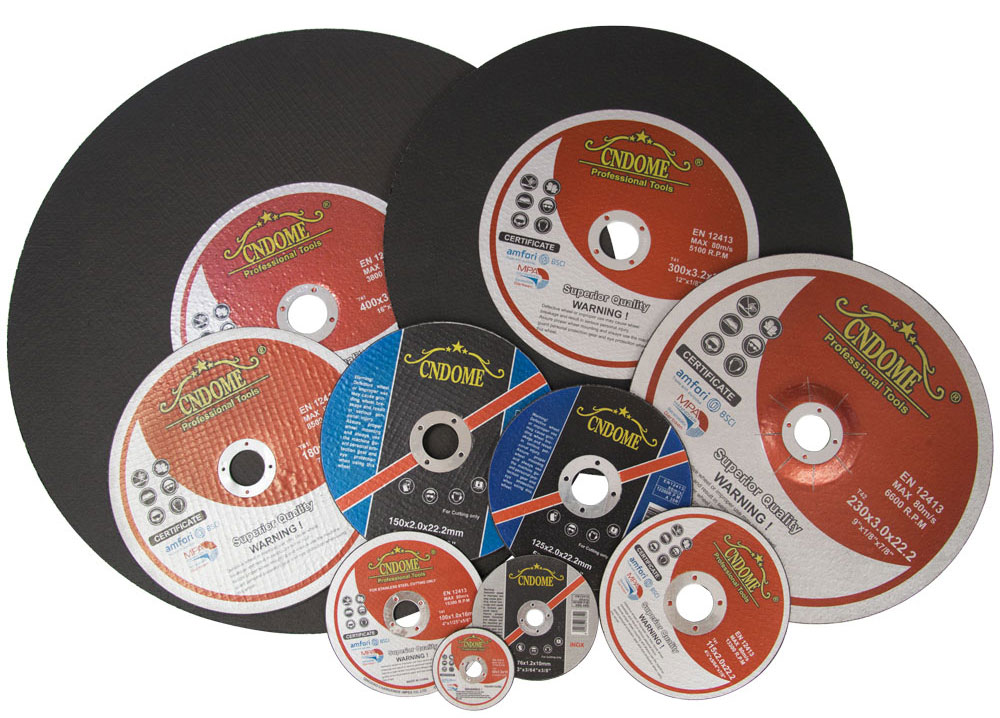
Wholesale & Bulk Metal Cutting Discs – Scalable Supply for Distributors
Stock your inventory with confidence through our wholesale metal cutting discs program. We offer bulk metal cutting discs in various quantities—from pallet orders to full container loads—with flexible logistics to meet your demand cycles. As a trusted metal cutting wheel supplier, we maintain raw material inventory and production capacity for rapid fulfillment, ensuring you never face stockouts.
Our OEM & Private Label Capabilities
| Service | Options Available |
|---|---|
| Custom Logo | Laser etching, pad printing, label design |
| Custom Packaging | Box design, blister packs, carton branding |
| Custom Formulas | Grain type, bond strength, fillers |
| Custom Sizes | Diameters from 38mm to 405mm, thickness from 1mm to 3mm |
| Private Label | Full branding with your product name and identity |
Why Partner With Us?
- Factory-Direct Pricing – Eliminate middleman costs
- Quality Assurance – EN 12413 and ISO-certified production
- Flexible MOQ – From trial batches to high-volume production
- Technical Support – Application engineering for custom formulations
- Global Export – Reliable shipping to over 60 countries
Metal Cutting Disc Manufacturing & Quality Control
Metal Cutting Disc Manufacturing Process
Every high-performance cutting disc begins with precise material science and ends with rigorous quality validation. Our manufacturing process follows a strictly controlled six-stage workflow—ensuring consistent bond integrity, dimensional accuracy, and operator safety in every disc we produce.

Sand Calcination – Preparing the Abrasive Foundation
The manufacturing process begins with sand calcination, where raw abrasive grains (typically aluminum oxide or zirconia) are subjected to high-temperature treatment. This thermal process modifies the crystalline structure of the abrasive, enhancing its hardness and fracture characteristics. Proper calcination ensures each grain will break down at a controlled rate during cutting, maintaining self-sharpening properties throughout the disc’s service life.
Mixing – Formulating the Homogeneous Bond System
In the mixing stage, calcined abrasives are combined with phenolic resin binders, fillers, and reinforcing fibers in precise ratios. This critical step determines the disc’s final hardness, cut speed, and heat resistance. Our proprietary mixing process achieves complete homogenization—every grain is uniformly coated with resin, ensuring consistent performance from the first cut to the last.
Molding – Shaping Under High Pressure
The mixed compound is transferred to precision molds and subjected to molding under extreme hydraulic pressure (up to several hundred tons). This compression step creates a dense, void-free disc structure with uniform density throughout. During molding, the embedded fiberglass mesh reinforcement is positioned precisely to maximize structural strength where it matters most—at the center and rim.
Hardening – Curing for Maximum Bond Strength
After molding, the green discs enter our computer-controlled hardening ovens. The hardening (curing) stage subjects each disc to a precisely timed thermal profile—gradually raising and holding temperature to fully cross-link the resin bond. This thermosetting process locks in the abrasive grains, achieving optimal hardness and heat resistance while preventing brittle failure during high-speed operation.
Balance Testing – Ensuring Vibration-Free Operation
Every disc undergoes mandatory balance testing on precision balancing equipment. This quality checkpoint detects even microscopic mass imbalances that could cause vibration, premature wear, or operator fatigue during use. Discs that fail balance tolerances are rejected immediately—ensuring only perfectly balanced wheels reach our customers for smooth, safe cutting performance.
Packaging – Ready for Safe Storage and Transit
The final stage involves packaging each disc with protective interleaving to prevent edge chipping during transit. Our packaging is designed for clear product identification, proper stacking stability, and compliance with international shipping regulations. Barcode labeling and batch traceability ensure full transparency from our factory to your workshop.
Metal Cutting Disc Quality Control
Safety and performance start with uncompromising quality control. Every cutting disc we manufacture undergoes a mandatory six-stage inspection protocol—from raw material verification to final packaging—ensuring compliance with EN 12413 and international safety standards.
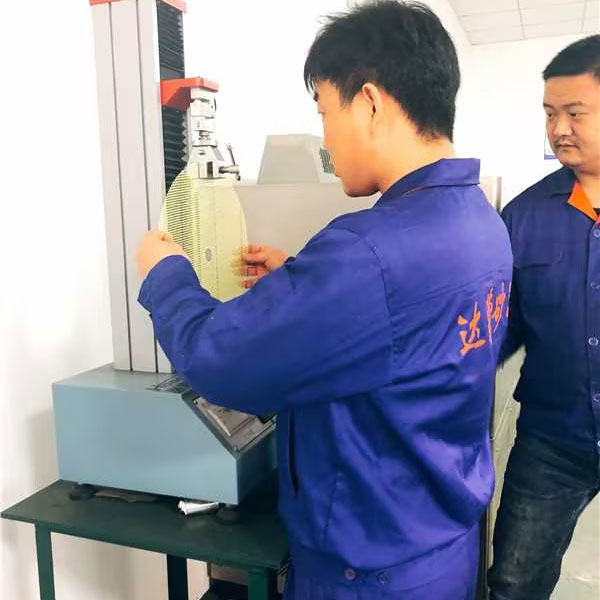
Incoming Inspection – Raw Material Verification
Quality begins before production. Our incoming inspection process tests every batch of abrasive grains, resin binders, and fiberglass mesh for purity, particle size distribution, and mechanical strength. Only materials meeting our strict specifications proceed to the production floor—eliminating variability at the source.
RPM Test – Speed Rating Verification
Each disc batch undergoes RPM testing to validate its maximum operating speed against the marked rating. Using high-precision tachometers, we confirm that every disc can safely sustain its designated RPM without deformation or failure—critical for matching your grinder’s specifications.
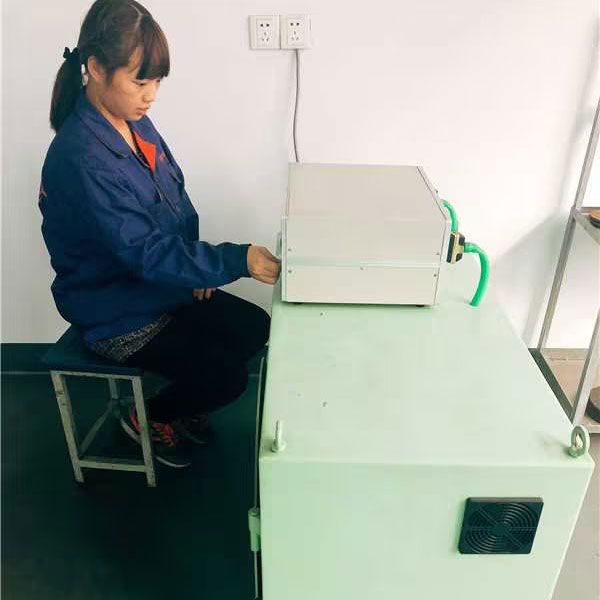
Burst Test – Safety Under Extreme Load
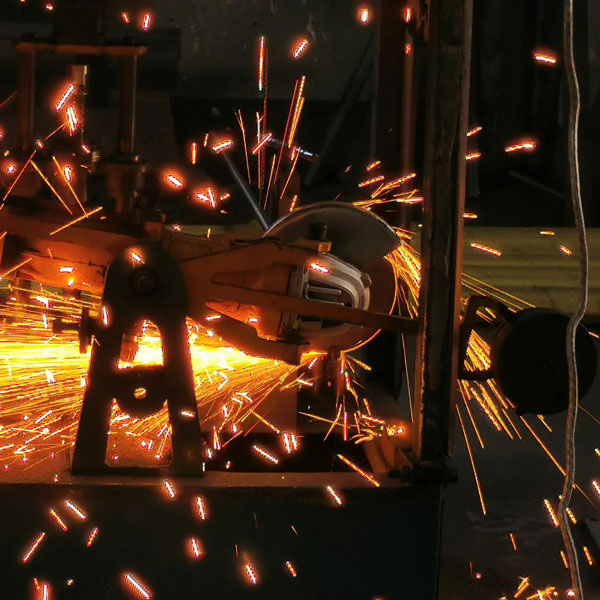
The burst test is our most critical safety checkpoint. Discs are spun at significantly above their rated speed (typically 1.5x to 2x maximum RPM) in reinforced test chambers. This destructive test confirms the disc’s structural integrity under extreme centrifugal forces. Only discs that withstand the burst threshold without fragmentation receive final approval—ensuring operator safety in real-world use.
Attenuation Test – Vibration Damping Validation
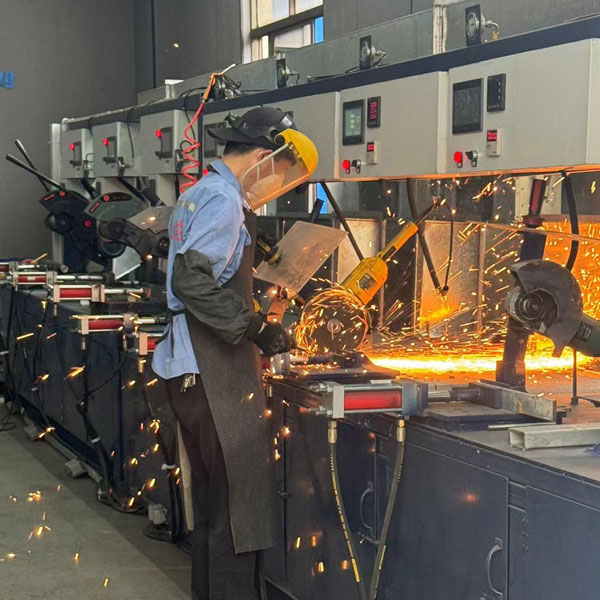
Using specialized vibration analysis equipment, our attenuation test measures how effectively the disc absorbs and dissipates vibrational energy during rotation. Proper attenuation reduces operator fatigue, minimizes grinder wear, and prevents chatter marks on the workpiece. Discs that fail vibration damping tolerances are rejected and reformulated.
Balance Test – Zero-Vibration Certification
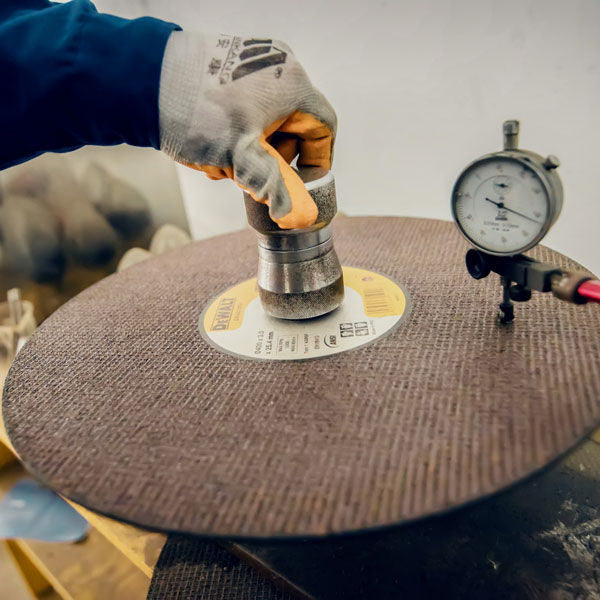
The balance test verifies mass distribution uniformity across the entire disc surface. Even microscopic imbalances cause wobble, premature wear, and poor cut quality. Our precision balancing equipment detects deviations as small as 0.01 grams—ensuring perfectly balanced discs for smooth, vibration-free operation on any machine.
Packing Inspection – Damage-Free Delivery Assurance
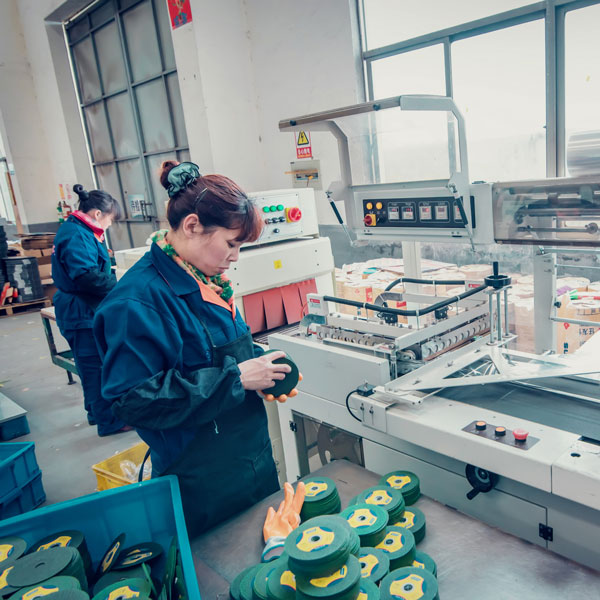
The final quality checkpoint is packing inspection. Every packaged disc undergoes visual and dimensional verification—checking for edge chips, proper interleaving, accurate labeling, and carton integrity. This ensures your order arrives in perfect condition, ready for immediate use or retail display.
Metal Cutting Disc FAQ
1. What is the difference between a cutting disc and a grinding wheel?
Cutting discs are thin and designed for clean, precise cuts through metal. Grinding wheels are thicker and used for surface finishing and smoothing. Never use a grinding wheel for cutting or vice versa.
2. How long does a metal cutting disc last?
Lifespan depends on the material being cut, frequency of use, and proper handling. A well-maintained resin cutting disc can last several hours of continuous cutting. Heavy-duty applications like cutting thick steel beams will wear discs faster.
3. Can I use the same cutting disc for different metals?
Not recommended. Each disc is formulated for specific materials. Using a steel disc on aluminum can cause clogging, while using a general-purpose disc on stainless steel may cause burn marks or rapid wear.
4. Can a metal cutting disc cut aluminum?
Standard metal cutting discs are not ideal for aluminum—the soft metal tends to clog the abrasive grains. Use specialized non-ferrous metal discs with different bonding systems to prevent clogging and overheating.
5. Can you use a metal cutting disc on stone?
No. Stone and masonry require carbide or diamond cutting discs. Metal cutting discs are not durable enough for stone and will wear out or break quickly.
6. Do cutting discs have an expiry date?
Yes. The expiry date is printed on the metal ring of the disc. The resin bond can deteriorate over time, creating safety hazards if used beyond the expiration date.
7. What are the signs that a cutting disc needs to be replaced?
Reduced cutting performance, excessive edge wear, visible cracks, chips, or unusual vibration during operation are all signs it’s time to replace the disc.
8. Thin vs. thick cutting disc – which one should I choose?
Thin discs (1.0–1.6 mm) cut faster, generate less heat, and produce cleaner edges—ideal for sheet metal and stainless steel. Thick discs (2.0 mm and above) last longer and handle heavy-duty jobs like rebar and structural steel.
9. How do I know which RPM rating my cutting disc needs?
Always check your angle grinder’s maximum RPM and match it to the disc’s rated speed. If the disc is not rated for your grinder’s speed, it could shatter during operation. The RPM rating is printed on every disc.
10. What are resin cutting discs made of?
Resin cutting discs are made by bonding abrasive grains—typically aluminum oxide or silicon carbide—with a synthetic resin binder, reinforced with fiberglass mesh for strength and safety. This combination provides both flexibility and durability for high-speed metal cutting.
11. How long does a cutting disc last?
It depends on what you’re cutting and how you use it – a 2.5mm cutting disc on rebar might last 200 cuts, while a 1.0mm cutting disc on stainless might only do 50; thicker discs last longer, but the real answer is watch the wear line – when it reaches the flange, replace it, and never force a worn disc because that’s when they break.
12. Can I cut stainless steel?
Yes, but you need a stainless steel specific disc with zirconia alumina abrasive and a softer resin bond – standard carbon steel discs will burn the material, turn edges blue-black, and wear out fast; use 1.0mm or 1.2mm thickness, keep the RPM high, and let the disc do the work without pushing hard.
13. Can I cut aluminum?
Yes, but aluminum is soft and gummy – it clogs regular cutting discs instantly; you need a cutting disc with a special lubricant additive to prevent loading, use coarse grit and keep the speed moderate; never use the same cutting disc for steel and aluminum because steel particles embed in the disc and cause contamination.
14. What is T41?
T41 is the European standard type designation for flat cutting discs with no recess – the most common cutting disc shape used on angle grinders for general metal cutting; it means the cutting disc is flat across its entire surface, mounts directly between two flanges, and is designed for straight cutting, not grinding or side loading.
15. What is T42?
T42 is the European standard type designation for depressed center cutting discs – also known as raised hub discs – where the center is recessed to allow the disc to reach into corners and tight spaces; the recess also gives you a better cutting angle and makes the disc less likely to bind in deep cuts, common in pipeline and structural steel work.
16. What grit?
Grit numbers tell you how coarse or fine the abrasive is – 24# to 36# is coarse, cuts fast and rough, for thick material and heavy work; 46# to 60# is fine, gives smooth clean edges, for thin sheets and precision; for general purpose, 30# to 46# is the sweet spot – fast enough and smooth enough for most jobs.
17. How to store cutting discs?
Store them flat, not on edge, in a cool dry place away from direct sunlight and moisture – humidity and UV light can degrade the resin bond over time; keep them off concrete floors because moisture wicks up, and never stack heavy objects on top of them – that causes hidden cracks that can shatter when spinning.
18. Can cutting discs expire?
Yes – resin bonded cutting discs have a shelf life of about three years from the date of manufacture if stored properly; after that, the resin can degrade, especially in heat or humidity, reducing bond strength and increasing the risk of breakage; always check the manufacturing date on the label and avoid using old or damaged cutting discs.
19. What RPM should I use?
The maximum safe RPM is printed on every cutting disc – never exceed it; for 115mm cutting discs, that’s usually 13,300 RPM; for 230mm cutting discs, it’s typically 6,600 RPM; for 355mm large cutting discs, it’s around 4,400 – always check your grinder’s speed and make sure it’s lower than the disc’s rating.
20. Can I use a grinding wheel to cut?
No – never use a grinding wheel for cutting; grinding wheels are thicker and designed for side loads, while cutting discs are thin and made for edge cutting only – using a grinding wheel for cutting forces side pressure where it’s not designed, creating dangerous stress and high risk of breakage; use the right tool for the job.
Related Cutting & Grinding Products
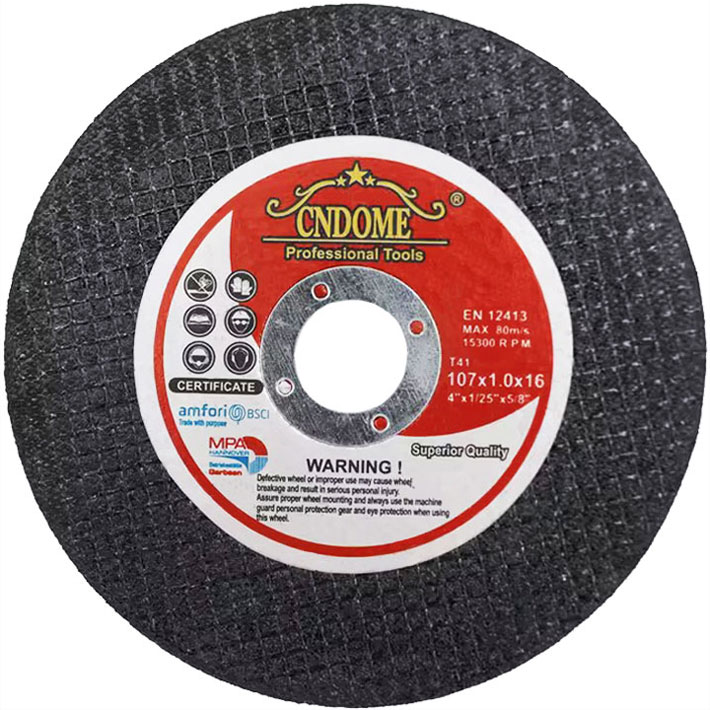
Metal Cutting Disc
General-purpose metal cutting disc for everyday cutting of carbon steel, structural steel, and ordinary steel.
Suitable Materials: Carbon steel / Structural steel / Iron
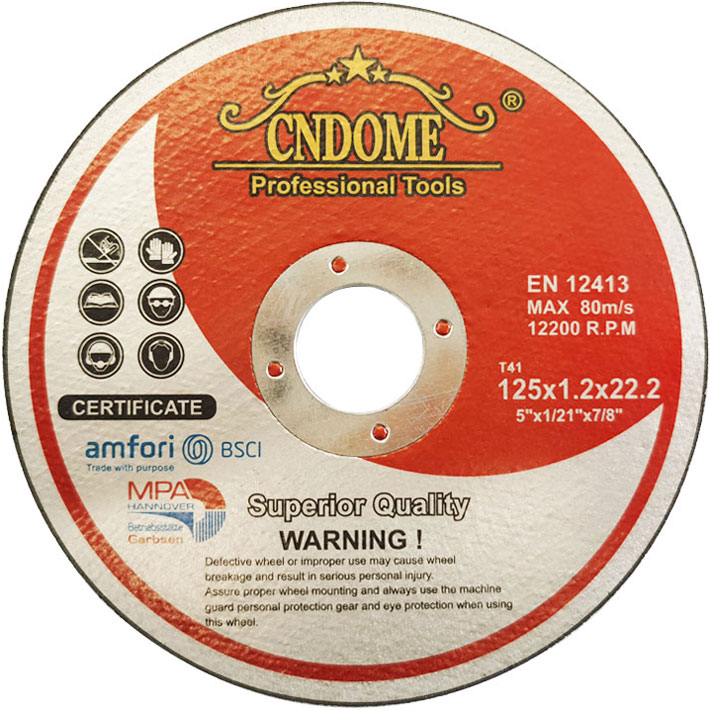
Stainless Steel Cutting Disc
Engineered for stainless steel cutting with Fe+S+Cl≤0.1% pure formula, delivering silver-bright, burn-free cuts.
Suitable Materials: 304 / 316 / 430 stainless steel
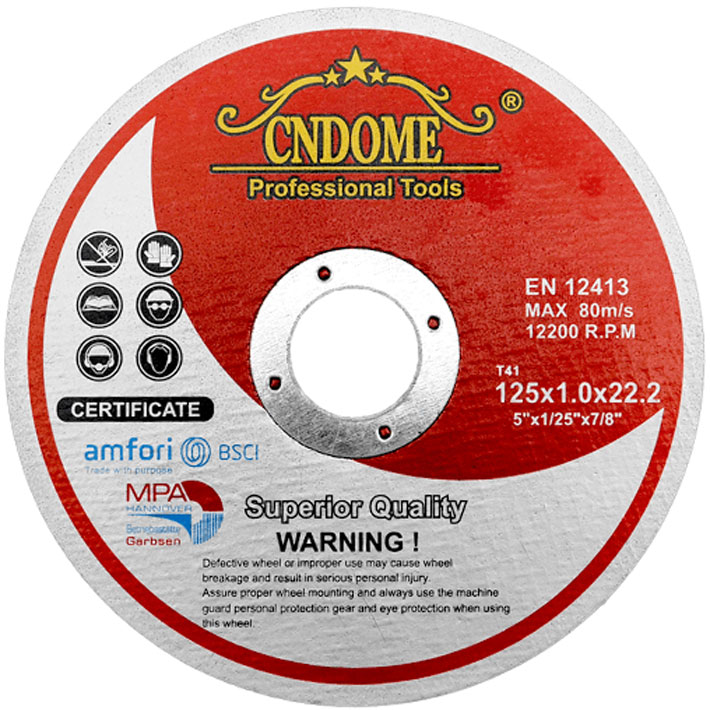
Ultra Thin Cutting Disc
Ultra-thin 1.0–1.6mm design for fast, low-heat, low-burr precision cutting of sheets and thin-wall tubes.
Suitable Materials: Stainless steel sheet / Carbon steel sheet / Thin-wall tube
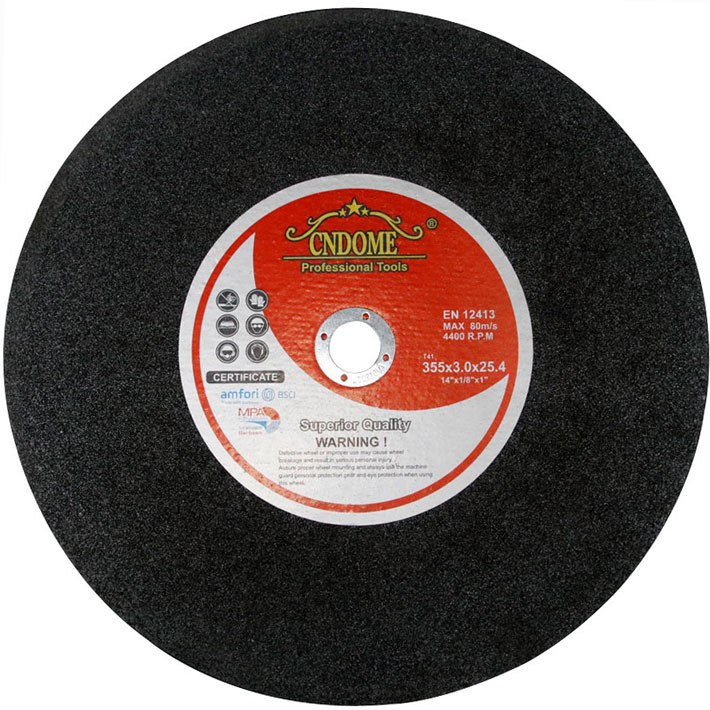
Large Diameter Cutting Disc
355mm large-diameter disc for stationary saws, cutting through large structural steel sections and heavy-wall pipes in one pass.
Suitable Materials: H-beams / I-beams / Large-diameter pipes / Rails
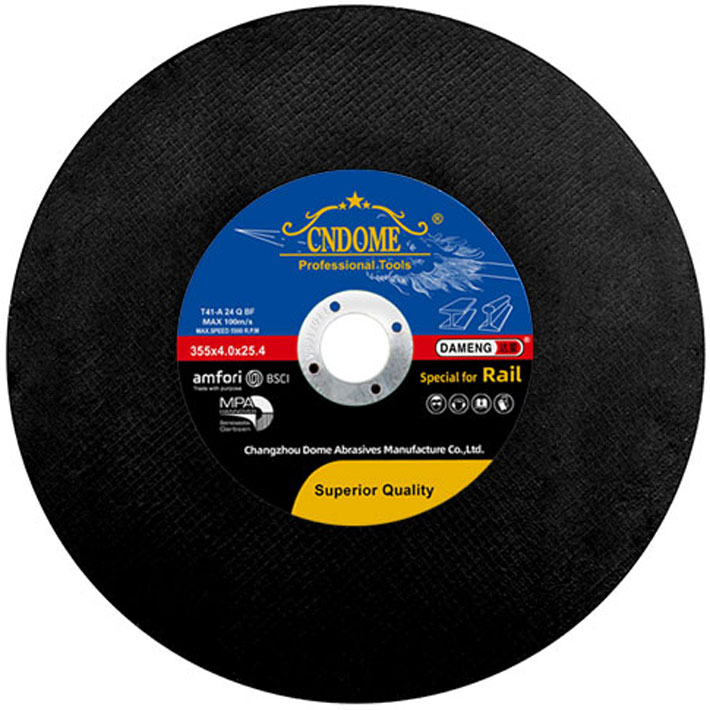
Rail Cutting Disc
Rail-specific disc with zirconia alumina and multi-layer fiberglass reinforcement, designed for heavy-duty high-hardness rail cutting.
Suitable Materials: U71Mn / U75V rails / Crane rails / High-manganese frogs
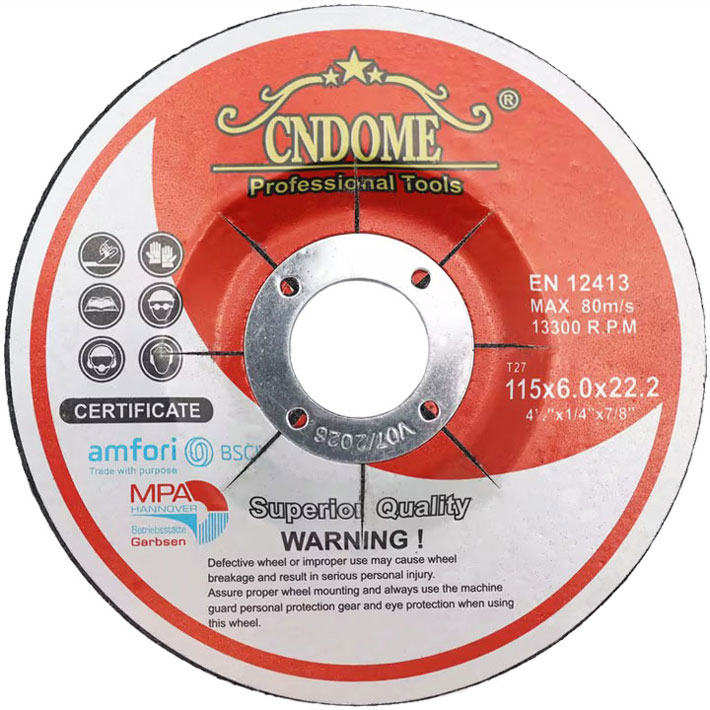
Grinding Wheel
Resin-bonded grinding wheel for surface grinding, weld dressing, and burr removal on all types of angle grinders.
Suitable Materials: Carbon steel / Stainless steel / Cast iron
Related Articles
- Choose the right cutting wheels for angle grinder
- The Ultimate Guide to Cutting Discs for Rotary Tools
Online Message
Minimum Order Quantity: 5,000 Pcs, 10 Pcs Free Samples.
Contact Us For More Information!
Tel/WhatsApp
+86 18796960868
DomeGrinding@hotmail.com
Address
Zhenglu Garden Industrial Park, Tianning District, Changzhou City, Jiangsu Province
Why Global Buyers Choose DOME
Factory data
| Category | Details |
|---|---|
| Workshop Area | 20,000 m² |
| Employees | 100+ |
| Monthly Capacity | Over 1.5 million pieces |
| Export Countries | 60+ |
| OEM Experience | 26 Years |
| Production Lines | 60 |
| Certifications | MPA/ISO9001/EN12413/ISO14001/BSCI |
| Quality Inspection | RPM Test/Burst Test/Attenuation test/Balance Test/Packing Inspection |
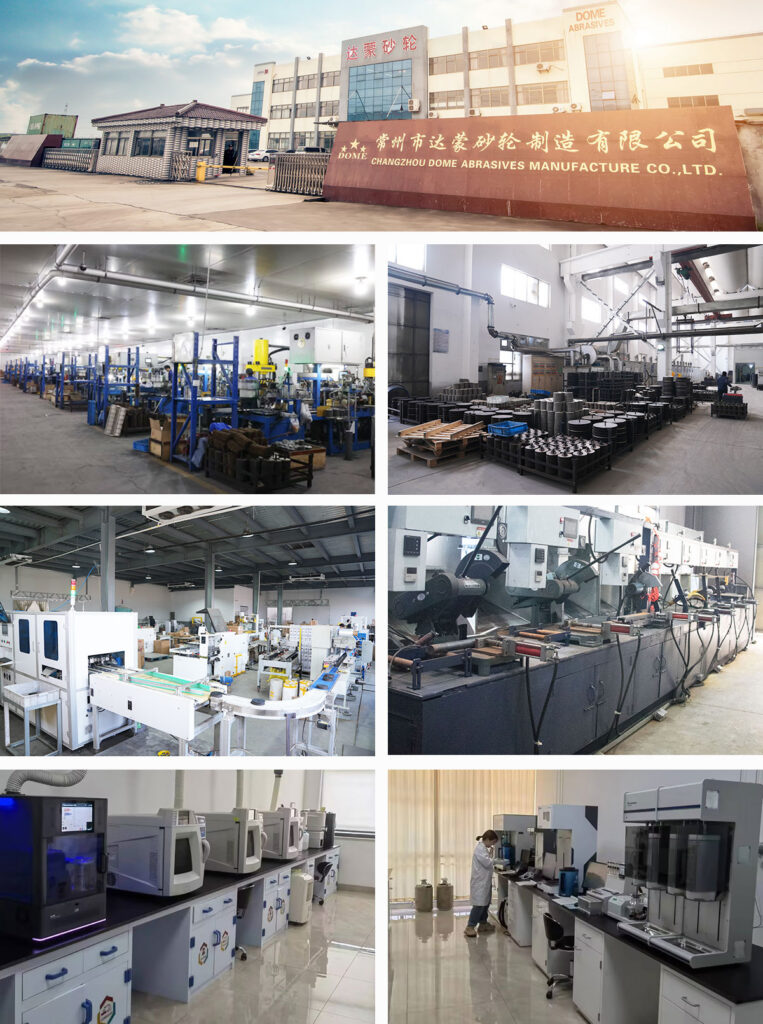
Factory View
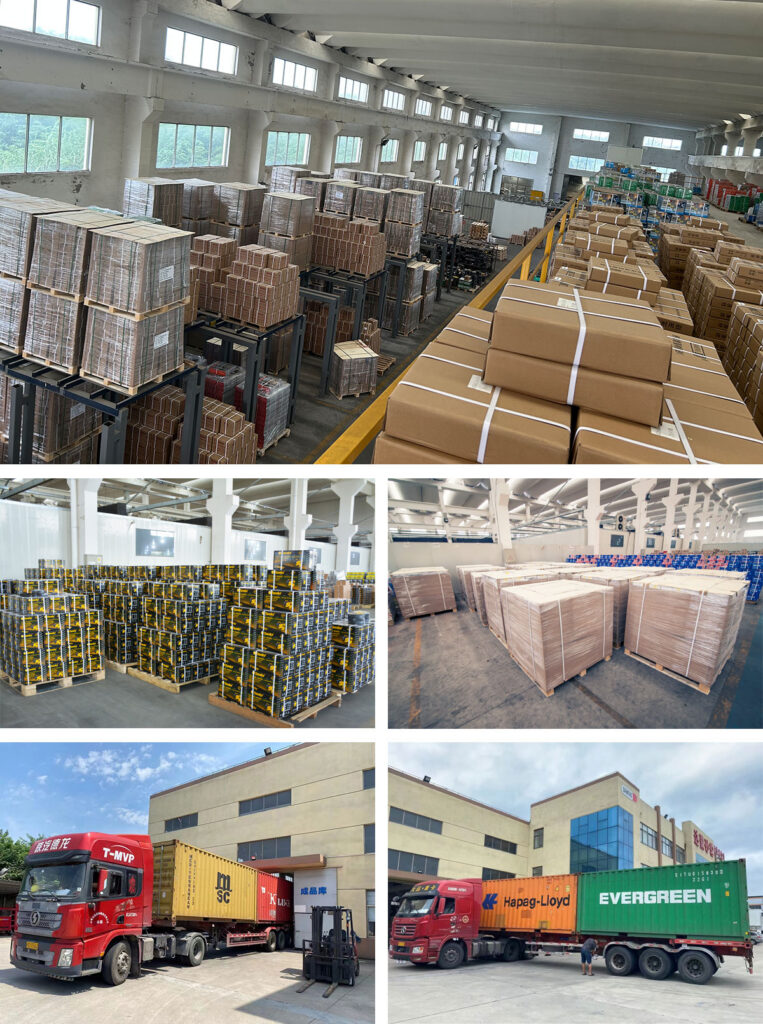
The following are actual photos of the factory, laboratory, warehouse, and the loading of metal cutting discs into containers.
Factory and Laboratory
Warehousing and Container Loading
Major Export Markets
As a manufacturer with 80% of our products exported worldwide, we understand global quality and compliance standards firsthand. We have built our reputation on reliably serving international markets. Choose Dome Leverage our global export expertise to develop your custom abrasive solutions with confidence.
Latin America

Mainstream Models:
115×1.0x22.2mm
115×3.0x22.2mm
115×6.0x22.2mm
180×1.6×22.2mm
230×2.0x22.2mm
355×3.0x25.4mm
Europe

Mainstream Models:
115×1.0x22.2mm
125×1.0x22.2mm
125×6.0x22.2mm
150×1.6×22.2mm
180×1.2×22.2mm
230×2.0x22.2mm
Africa

Mainstream Models:
115×1.0x22.2mm
180×6.0x22.2mm
230×2.0x22.2mm
Asia

Mainstream Models:
100×6.0x16mm
107×1.0x16mm
355×2.5×25.4mm
355×3.0x25.4mm