Premium Ceramic Abrasive Grains
Aggressive material removal with consistent grinding performance.
Engineered for Steel & Alloys
Designed for demanding metal grinding applications.
Wide Range of Grits & Sizes
Available in different grits, diameters and specifications.
OEM & Private Label Services
Custom formula, logo, label and packaging available.
Ceramic Grinding Disc Manufacturer
Dome’s T29 ceramic grinding discs deliver high-performance grinding and finishing on stainless steel, carbon steel, and hard metals. Featuring 100% ceramic abrasive cloth on a reinforced fibreglass backing, the conical shape enables aggressive flat grinding and edge radiusing. Self-sharpening ceramic grains micro-fracture under pressure for faster stock removal and longer life than aluminium oxide or zirconia discs, while a cooling coating reduces heat to prevent discolouration on stainless steel. Ideal for weld blending, deburring, rust removal, and surface preparation. Available in diameters 100–180mm, grits 24#/36#, and bore sizes 16mm or 22.23mm, with custom sizes on request. EN12413 certified and 100% tested. Full OEM and private label services – custom grits, flap density, backing colour, and branded packaging – support distributors and industrial brands worldwide.
Dome Abrasives Catalogue
Ceramic Grinding Discs for High-Performance Metal Grinding
Ceramic grinding discs represent a significant advancement in abrasive technology for demanding metalworking applications. Unlike conventional aluminium oxide or zirconia abrasives, a ceramic grinding disc uses engineered ceramic abrasive grains that deliver superior cutting performance, extended service life, and cooler operation on hard-to-machine metals.
What Is a Ceramic Grinding Disc?
A ceramic grinding disc is an abrasive tool where the cutting grains are made from ceramic alumina — a microcrystalline material engineered with millions of fracture points that enable self-sharpening during use. As each ceramic grain dulls, it fractures at a microscopic level to expose fresh, sharp cutting edges underneath. This continuous self-sharpening action means a ceramic grinding disc maintains its cutting efficiency far longer than conventional abrasives. The T29 conical shape — with flaps angled at approximately 8 degrees — maximises surface contact when grinding at 15° to 35°, delivering aggressive stock removal on flat surfaces while remaining effective for edge work and contoured surfaces.
Why Ceramic Abrasive Excels in Metal Grinding
The performance advantage of ceramic grinding discs comes from four core properties:
- Self-Sharpening Micro-Fracture – Ceramic alumina grains are sintered from sub-micron particles, creating a structure that fractures along crystalline boundaries rather than wearing flat. Each grain continuously exposes new sharp edges, delivering consistent material removal throughout the disc’s life.
- Cooler Grinding – The micro-fracturing action generates significantly less friction heat than conventional abrasives. For heat-sensitive materials like stainless steel, this means reduced risk of discolouration, burn marks, and surface damage. A specialised cooling coating further minimises grinding temperatures.
- Aggressive Material Removal – Ceramic grains remove material faster than aluminium oxide or zirconia abrasives. The self-sharpening action keeps the disc cutting aggressively throughout its service life, reducing grinding time per workpiece.
- Extended Service Life – Ceramic grinding discs last substantially longer than aluminium oxide or zirconia discs. This translates to fewer disc changes, less downtime, and lower cost per workpiece in production environments.
What Materials Can You Grind?
Ceramic grinding discs are engineered for demanding applications on hard-to-grind metals. They are suitable for:
- Stainless steel — 304, 316, and other austenitic grades. Ceramic discs run cooler than other abrasives, preventing heat tint and discolouration on stainless surfaces.
- Carbon steel — Including mild steel, structural steel, and high-carbon grades.
- Alloy steel and tool steel — High-alloy steels, hardened tool steels, and other tough materials.
- Cast iron — For heavy stock removal and surface conditioning.
Ceramic abrasives are also effective on aerospace alloys, nickel-based superalloys, and titanium.
What Are the Common Applications?
Ceramic grinding discs are versatile tools used across multiple industries and processes:
- Weld grinding and seam blending — Removing weld beads, blending welds flush with the surrounding surface, and smoothing welded joints.
- Deburring and edge radiusing — Removing sharp burrs from cut edges and rounding sharp corners for safety and preparation for coating.
- Heavy stock removal — Aggressive material removal on thick plates, structural sections, and large fabrications.
- Surface preparation — Removing rust, mill scale, oxidation, and surface imperfections before painting, coating, or further processing.
- Surface finishing and blending — Achieving smooth, consistent surface finishes on metal components.
Dome Ceramic Grinding Discs
Dome manufactures a comprehensive range of ceramic grinding discs featuring 100% ceramic abrasive cloth on a reinforced fibreglass backing. Available in T29 conical shape with single, double, or staggered flap configurations in standard or high-density arrangements. Grits range from 24# to 36#, diameters from 100mm to 180mm (custom sizes available), and standard bore sizes of 16mm or 22.23mm. Every disc is EN12413 certified and 100% tested for safety. For distributors, tool brands, and industrial suppliers, Dome offers full OEM and private label manufacturing — custom grit specifications, flap density, backing colour, and branded packaging available to meet specific market requirements.
Our Ceramic Grinding Disc Range
Dome manufactures a focused range of ceramic grinding discs in 24 grit and 36 grit — the two most essential coarse grades for aggressive metal grinding. Both grits are available across multiple diameters and flap configurations, with full OEM customisation for distributors and industrial brands.

24 Grit Ceramic Grinding Disc – Heavy Stock Removal
Size: 100mm · 115mm · 125mm · 150mm · 180mm
Grit: 24
Type: T29 (Conical / Reversed Edge)
Bore: 16mm / 22.23mm
Flap Arrangement: Single / Double / Staggered (Standard or High-Density)
Aggressive ceramic grinding disc engineered for maximum material removal on stainless steel, carbon steel, and hard alloys. The coarse 24 grit ceramic abrasive cloth delivers rapid stock removal on heavy welds, large surface areas, and thick castings. Self-sharpening ceramic grains with cooling aid coating maintain cutting aggression under high pressure while reducing friction heat — preventing discolouration on heat-sensitive materials. The T29 conical (reversed edge) shape provides an optimal 15–25° grinding angle for flat surfaces and edge work. Ideal for foundry operations, heavy fabrication, and removing thick weld seams. Reinforced fibreglass backing ensures stability at high RPM. EN12413 certified. 100% tested.
36 Grit Ceramic Grinding Disc – Weld Removal & Surface Prep
Size: 100mm · 115mm · 125mm · 150mm · 180mm
Grit: 36
Type: T29 (Conical / Reversed Edge)
Bore: 16mm / 22.23mm
Flap Arrangement: Single / Double / Staggered (Standard or High-Density)
Versatile ceramic grinding disc designed for weld removal, deburring, and surface preparation on steel and stainless steel. The 36 grit ceramic abrasive offers an optimal balance of material removal and surface finish — aggressive enough for weld seam blending, yet fine enough to minimise post-grinding finishing. Self-sharpening ceramic grains with cooling aid coating reduce friction heat, preventing discolouration on heat-sensitive stainless steel. The T29 conical (reversed edge) shape enables effective grinding on flat surfaces, edges, and contoured workpieces. Suitable for rust removal, mill scale removal, edge radiusing, and surface preparation before coating or welding. Available in multiple diameters from 100mm to 180mm.
Ceramic Grinding Disc Construction
A ceramic grinding disc is a precision-engineered composite structure where each component plays a specific role in grinding performance, safety, and durability. The diagram below illustrates the internal construction of a resin bonded ceramic grinding disc.

Component Functions
1. Ceramic Abrasive Grain – The Cutting Element
The ceramic abrasive grain is responsible for the actual cutting and material removal. Engineered from high-purity alumina with a microcrystalline structure, each grain is designed to micro-fracture under grinding pressure — continuously exposing fresh, sharp cutting edges. This self-sharpening action delivers faster material removal, cooler grinding temperatures, and significantly longer service life than conventional aluminium oxide or zirconia abrasives. Ceramic grains are particularly effective on stainless steel, carbon steel, alloy steel, and other hard-to-grind materials.
2. Resin Bond – The Matrix That Controls Performance
The resin bond (phenolic resin) holds the ceramic abrasive grains together in a solid disc structure. The bond formulation determines the disc’s hardness grade — softer bonds release dull grains faster for aggressive grinding on hard materials like stainless steel; harder bonds retain grains longer for extended life on softer materials. The resin bond also provides heat resistance during high-speed operation and contributes to the disc’s self-sharpening characteristics by allowing controlled grain release at the optimal moment.
3. Fibreglass Reinforcement – Strength and Safety
Multiple layers of fibreglass mesh are embedded within the disc to provide tensile strength and structural integrity. This reinforcement is critical for high-speed operation — it resists the centrifugal forces generated at RPMs up to 13,300 (for 115mm discs), preventing the disc from shattering during use. The fibreglass also adds impact resistance, allowing the disc to withstand the mechanical stresses of heavy grinding applications. Without this reinforcement, resin bonded grinding discs would not be safe for angle grinder operation.
4. Center Hole (Arbor) – Machine Mounting
The centre hole, or arbor bore, is the mounting point that attaches the disc to the angle grinder spindle. Standard bore sizes include 16mm for compact grinders and 22.23mm (7/8″) for standard angle grinders. The bore must match the grinder spindle exactly — an incorrect bore size prevents proper mounting and creates a serious safety hazard. Custom bore sizes are available for specialised equipment and OEM requirements.
Key Features of Ceramic Grinding Discs
Dome ceramic grinding discs are engineered with advanced abrasive technology to deliver superior performance on demanding metal grinding applications. Here are the six key features that set them apart from conventional abrasives.
Ceramic Abrasive Grain
High cutting efficiency with premium ceramic alumina grains that outperform conventional abrasives on stainless steel, carbon steel, and hard alloys.
Self-Sharpening Action
Fresh cutting edges are continuously exposed as ceramic grains micro‑fracture under pressure, maintaining aggressive cutting action throughout the disc’s life.
High Material Removal
Designed for aggressive grinding and heavy stock removal — removes more material per pass than aluminium oxide or zirconia discs.
Long Working Life
Engineered for demanding applications with extended service life — fewer disc changes, less downtime, and lower cost per workpiece.
Controlled Heat Generation
Advanced cooling aid coating and micro‑fracturing action reduce friction heat, preventing discolouration on heat‑sensitive stainless steel surfaces.
Consistent Performance
Stable, predictable grinding performance across every production batch — ensuring repeatable results from disc to disc and batch to batch.
Ceramic Grinding Disc Grit Guide
Choosing the correct grit size determines how fast you remove material and what finish you achieve. Coarse grits excel at rapid stock removal and weld elimination, while finer grits are better suited for surface blending and preparation. Dome ceramic grinding discs are available in 24 grit and 36 grit — the two most effective coarse grades for demanding metal grinding applications.

24 Grit Ceramic Grinding Disc
Best for: Heavy grinding, weld removal, and aggressive stock removal on stainless steel, carbon steel, and hard alloys.
The 24 grit ceramic grinding disc is the coarsest and most aggressive option in the Dome range. Large, widely spaced abrasive grains remove material rapidly — making it the preferred choice for heavy-duty applications where speed and productivity are critical.
Typical applications:
- Removing thick weld seams and heavy weld beads
- Heavy stock removal on structural steel and castings
- Rapid surface preparation on rough or uneven workpieces
- Removing mill scale, rust, and heavy oxidation
- Foundry work and heavy fabrication
Why 24 grit? The large grain size delivers maximum cutting aggression and the highest material removal rates. The open grain structure reduces clogging and heat build-up during heavy grinding. Choose 24 grit when productivity and speed are the primary requirements.

36 Grit Ceramic Grinding Disc
Best for: General grinding, weld blending, surface preparation, and deburring on steel and stainless steel.
The 36 grit ceramic grinding disc offers an optimal balance between material removal and surface finish. It is aggressive enough for weld seam blending and stock removal, yet produces a smoother finish than 24 grit — reducing the need for subsequent finishing operations.
Typical applications:
- Weld seam blending and smoothing after initial heavy grinding
- Surface preparation before coating, painting, or welding
- Deburring cut edges and radiusing sharp corners
- Removing rust, mill scale, and surface oxidation
- General metal fabrication and maintenance grinding
Why 36 grit? The medium-coarse grain size provides effective material removal while generating a more consistent surface finish. It is the most versatile grit for general fabrication work, offering a practical balance of cutting speed and finish quality on stainless steel, carbon steel, and alloy steel.
Quick Selection Guide
| Your Task | Recommended Grit | Why |
|---|---|---|
| Heavy weld removal on structural steel | 24 Grit | Maximum aggression, fastest stock removal |
| Weld seam blending on stainless steel | 36 Grit | Balance of removal and surface finish |
| Heavy stock removal on castings | 24 Grit | Rapid material removal, open grain structure |
| Surface preparation before coating | 36 Grit | Consistent finish, ready for painting or welding |
| Deburring cut edges and radiusing | 36 Grit | Smoother finish, better contro |
| Rust and mill scale removal | 36 Grit | Effective cleaning without excessive gouging |
Grit Selection Logic
| Grit | Grain Size | Best For | Material Removal | Surface Finish |
|---|---|---|---|---|
| 24 | Coarse | Heavy grinding, weld removal, stock removal | ★★★★★ | ★★☆☆☆ |
| 36 | Medium-Coarse | Weld blending, surface prep, general grinding | ★★★★☆ | ★★★☆☆ |
How to choose: Start with 24 grit for heavy weld removal and initial stock removal. Switch to 36 grit for blending and surface preparation. For finishing work, finer grits are available in our zirconia and aluminium oxide ranges.
Not sure which grit to choose? Contact our technical team for application-specific recommendations.
Ceramic Grinding Disc Sizes
Selecting the right disc diameter ensures proper fitment on your angle grinder and optimal grinding coverage. Each size is matched to a specific machine class and application range.

115mm / 4.5 Inch Ceramic Grinding Disc
Suitable Machine: 4.5″ Standard Angle Grinder
Best for: General fabrication, weld grinding, surface preparation, and workshop grinding tasks.
The 115mm (4.5″) disc is the most widely used grinding disc size globally. It fits standard 4.5-inch angle grinders and offers the best balance of control, material removal, and machine weight for workshop fabrication. The 115mm ceramic disc delivers aggressive cutting action on stainless steel and carbon steel while maintaining excellent manoeuvrability for detailed work.
Common specification: 115 × 22.23 mm (disc diameter × bore)

125mm / 5 Inch Ceramic Grinding Disc
Suitable Machine: 5″ Angle Grinder
Best for: Heavy fabrication, weld grinding, edge preparation, and larger surface area work.
The 125mm (5″) disc offers approximately 18% more surface coverage than 115mm, delivering higher material removal per pass while maintaining good manoeuvrability. It is the mainstream size in North American markets and is increasingly popular globally for fabrication where higher stock removal rates are required. The larger diameter covers more surface area per rotation, reducing grinding time on large flat surfaces and long weld seams.
Common specification: 125 × 22.23 mm (disc diameter × bore)
Quick Size Reference
| Disc Size | Inch | Machine | Typical Application |
|---|---|---|---|
| 115mm | 4.5″ | Standard Angle Grinder | General fabrication, weld grinding, surface prep |
| 125mm | 5″ | Angle Grinder | Heavy fabrication, weld grinding, edge prep |
Core principle: Match the disc diameter to your angle grinder‘s guard size. Always check that the bore size (22.23mm / 7/8″) matches your grinder’s spindle. Custom sizes are available on request.
Ceramic Grinding Discs for Different Metals
Ceramic abrasives are engineered to handle the toughest metals. The self-sharpening micro-fracturing action of ceramic grains delivers aggressive cutting performance on materials where conventional abrasives dull quickly. Below is a material-by-material guide to help you select the right ceramic grinding disc for your application.
Stainless Steel
Ceramic grinding discs excel on stainless steel (304, 316, and other austenitic grades). The self-sharpening ceramic grains maintain cutting efficiency under pressure while generating less friction heat than conventional abrasives — preventing the blue or black discolouration that compromises surface quality and corrosion resistance. Ideal for stainless steel weld removal, edge finishing, and surface preparation. Virtually contaminant-free formulations ensure no cross-contamination on stainless surfaces.
Best grit: 24 grit for heavy weld removal; 36 grit for blending and surface preparation
Carbon Steel
Ceramic grinding discs deliver aggressive stock removal on carbon steel, mild steel, and structural steel. The micro-fracturing ceramic grains maintain cutting speed even under heavy pressure, making them ideal for high-productivity environments where rapid material removal is critical. Suitable for weld grinding, beveling, flame-cut edge clean-up, and general fabrication on carbon steel components.
Best grit: 24 grit for heavy stock removal and weld grinding; 36 grit for surface preparation and blending
Alloy Steel
Ceramic abrasives are particularly effective on alloy steels, tool steels, and high-chrome alloys where conventional abrasives dull quickly. The self-sharpening action maintains cutting aggression on tough, work-hardening materials. Suitable for aerospace alloys, high-strength steel components, and demanding fabrication applications.
Best grit: 24 grit for aggressive stock removal; 36 grit for finishing and blending
Quick Material Reference
| Material | Recommended Abrasive | Best Grit | Key Benefit |
|---|---|---|---|
| Stainless Steel | Ceramic | 24 / 36 | Cool cutting, no discolouration, contaminant-free |
| Carbon Steel | Ceramic | 24 / 36 | Fast stock removal, high productivity |
| Alloy Steel | Ceramic | 24 / 36 | Maintains aggression on tough materials |
Ceramic Grinding Disc Applications
Ceramic grinding discs are versatile tools for a wide range of metalworking tasks. Below are the key application scenarios where ceramic abrasives deliver superior performance.
Weld Removal
Used for: Removing weld beads, weld seams, and excess welding material.
Ceramic grinding discs excel at weld removal on stainless steel, carbon steel, and alloy steel. The self-sharpening ceramic grains maintain cutting aggression under pressure, removing weld material quickly without generating excessive heat. Ideal for both heavy weld cap removal and精细 weld blending. The 24 grit disc is recommended for initial heavy weld removal, followed by 36 grit for smoothing and blending.
Heavy Stock Removal
Used for: Rapid removal of large amounts of material from surfaces.
When you need to remove significant material quickly — from castings, structural steel, or thick plates — ceramic grinding discs deliver maximum stock removal rates. The aggressive cutting action of 24 grit ceramic grains removes more material per pass than conventional abrasives, reducing grinding time and increasing productivity. Suitable for foundry work, heavy fabrication, and rough surface preparation.
Edge Grinding
Used for: Trimming, beveling, chamfering, and radiusing metal edges.
Ceramic grinding discs are effective for edge work on stainless steel, carbon steel, and alloy steel components. The T29 conical shape provides an aggressive grinding angle for edge beveling and chamfering, while the self-sharpening grains maintain a consistent cut. Ideal for preparing edges for welding, removing sharp corners for safety, and finishing cut edges.
Surface Preparation
Used for: Preparing metal surfaces for welding, painting, coating, or further processing.
Surface preparation is critical for achieving strong welds and durable coatings. Ceramic grinding discs remove mill scale, rust, oxidation, and surface imperfections efficiently. The 36 grit disc provides an optimal balance of material removal and surface finish — aggressive enough to clean surfaces thoroughly, yet fine enough to leave a profile suitable for coating adhesion.
Deburring
Used for: Removing burrs and sharp edges from cut or machined metal components.
Deburring is essential for safety and assembly. Ceramic grinding discs remove burrs quickly and cleanly from stainless steel, carbon steel, and alloy steel parts. The 36 grit disc offers better control for deburring operations, producing smoother edges without excessive material removal. Suitable for both manual and automated deburring processes.
Metal Fabrication
Used for: General metalworking, shaping, and finishing in fabrication workshops.
Ceramic grinding discs are the workhorse of metal fabrication shops. From weld preparation to final finishing, ceramic abrasives deliver consistent performance across a wide range of metals and tasks. The 36 grit disc is the most versatile choice for general fabrication, covering weld blending, surface preparation, deburring, and edge finishing.
Quick Application Reference
| Application | Recommended Grit | Key Benefit |
|---|---|---|
| Weld Removal | 24 / 36 | Fast material removal, cool cutting |
| Heavy Stock Removal | 24 | Maximum aggression, highest removal rate |
| Edge Grinding | 36 | Precise control, consistent finish |
| Surface Preparation | 36 | Clean surface, ready for coating |
| Deburring | 36 | Smooth edges, good contro |
| Metal Fabrication | 36 | Versatile, covers most workshop tasks |
Industries Using Ceramic Grinding Discs
Ceramic grinding discs are essential tools across multiple industries where metal fabrication, welding, and surface finishing are core operations. Below are the key industries that benefit from ceramic abrasive technology.

Metal Fabrication
Metal fabrication workshops use ceramic grinding discs daily for weld preparation, surface conditioning, and finishing work on fabricated components. From structural steel sections to custom fabrications, ceramic abrasives deliver consistent material removal and extended service life. The 36 grit disc is the most versatile choice for general fabrication, covering weld blending, surface preparation, and deburring.

Automotive
The automotive sector uses ceramic grinding discs in both manufacturing and repair workshops. Applications include stainless steel exhaust system grinding, metal component finishing, rust removal, and surface preparation. In collision repair, grinding discs level welds on replacement panels and prepare surfaces for body filler and painting. The 115mm and 125mm sizes are most common in automotive work, offering good manoeuvrability for work in tight engine bays and underbody spaces.

Shipbuilding
Shipbuilding is one of the most demanding applications for ceramic grinding discs. Shipyards work with high-tensile steel plates, thick weld seams, and large structural components that require aggressive material removal. Ceramic abrasives maintain cutting efficiency under heavy pressure, delivering faster stock removal and longer service life than conventional abrasives. The 125mm and larger diameters are preferred for heavy-duty grinding on hull plates and structural sections.

Railway
Railway maintenance and manufacturing require grinding discs for rail profiling, weld removal on track components, and surface preparation. The high hardness of rail steel demands abrasives that maintain cutting aggression under heavy pressure. Ceramic grinding discs are effective on the tough, wear-resistant steels used in railway applications.

Foundry
Foundries use ceramic grinding discs for gate removal, riser cutting, flash grinding, and surface cleaning on castings. The aggressive cutting action of 24 grit ceramic abrasives removes casting skin and defects quickly, while the self-sharpening grains maintain performance on the abrasive surfaces of cast iron and steel castings.

Construction
Construction sites rely on ceramic grinding discs for processing steel structures, beams, columns, and reinforcing bars. Tasks include smoothing welds on structural steel connections, grinding down surfaces, and preparing edges for welding or coating. Ceramic abrasives withstand the vibration and irregular feed conditions common on construction sites while maintaining consistent performance.

Machinery Manufacturing
Machinery manufacturing involves precision grinding of components for industrial equipment. Ceramic grinding discs are used for weld preparation, surface finishing, and deburring on machine parts, frames, and assemblies. The cool-cutting action of ceramic abrasives prevents heat damage to precision components while delivering the material removal rates needed for efficient production.
Ceramic Grinding Disc Specifications
Below is the complete technical specification table for Dome ceramic grinding discs (T29 flap disc format). All parameters are listed with options to help you select the right disc for your application.
| Specification | Details |
|---|---|
| Product Type | Ceramic Abrasive Grinding Disc |
| Abrasive Material | 100% ceramic abrasive cloth |
| Backing Material | Reinforced Fibreglass |
| Shape | T29 (Conical / Reversed Edge) |
| Grit Range | 24 / 36 |
| Diameter | 100mm · 115mm · 125mm · 150mm · 180mm |
| Bore Size | 16mm · 22.23mm (7/8″) · Custom |
| Flap Arrangement | Standard / High Density · Single / Double / Staggered |
| Application | Metal Grinding — stainless steel, carbon steel, alloy steel |
| Machine | Angle Grinder |
| Certification | EN12413 |
| Testing | 100% RPM Tested |
| OEM | Available — custom sizes, grits, backing colour, flap density |
| Private Label | Available — branded packaging, custom labelling |
Ordering information: Standard products are available in popular sizes. Custom specifications — including grit size, disc diameter, flap density, backing colour, and packaging — are available for OEM and wholesale orders. Contact our sales team with your requirements.
How to Choose the Right Ceramic Grinding Disc
Selecting the correct ceramic grinding disc ensures optimal grinding efficiency, surface quality, and wheel life. Follow this five-step guide to find the right disc for your application.
Step 1 — Choose Your Material
Different metals require different grinding approaches. Identify the material you are working with:
| Material | Recommended Abrasive | Why |
|---|---|---|
| Stainless Steel | Ceramic | Cool cutting, prevents discolouration |
| Carbon Steel | Ceramic | Fast stock removal, high productivity |
| Alloy Steel | Ceramic | Maintains aggression on tough materials |
Ceramic abrasives are effective across all three material types, making them the versatile choice for mixed-material workshops.
Step 2 — Choose Your Task
The grinding task determines the required grit size and disc specification:
| Task | Recommended Grit | Why |
|---|---|---|
| Weld Removal | 24 | Maximum aggression for removing weld beads |
| Heavy Grinding | 24 | Fastest stock removal on large surfaces |
| Surface Preparation | 36 | Balance of removal and finish |
| Weld Blending | 36 | Smooths welds after initial removal |
| Deburring | 36 | Good control, smooth edges |
Step 3 — Choose Your Grit
Dome ceramic grinding discs are available in two grit sizes:
- 24 Grit — Coarse, for heavy grinding, weld removal, and aggressive stock removal
- 36 Grit — Medium-coarse, for general grinding, weld blending, and surface preparation
Rule of thumb: Start with 24 grit for heavy removal, switch to 36 grit for finishing and blending.
Step 4 — Choose Your Size
Select the disc diameter that matches your angle grinder:
| Disc Size | Inch | Machine Type | Best For |
|---|---|---|---|
| 115mm | 4.5″ | Standard Angle Grinder | General fabrication, weld grinding |
| 125mm | 5″ | Angle Grinder | Heavy fabrication, larger surface areas |
Always check that the bore size (22.23mm / 7/8″) matches your grinder‘s spindle.
Step 5 — Confirm Machine Specifications
Before ordering, verify:
- Grinder size matches the disc diameter (115mm or 125mm)
- Bore size matches your spindle (22.23mm / 7/8″ is standard)
- Maximum RPM of your grinder does not exceed the disc‘s rated speed
- Guard is correctly sized for the disc diameter
Important: Never exceed the disc‘s maximum RPM rating. Always use the correct guard for your disc size.
Quick Selection Summary
| Your Material | Your Task | Grit | Size | Machine |
|---|---|---|---|---|
| Stainless Steel | Weld Removal | 24 | 115mm | 4.5″ Grinder |
| Stainless Steel | Weld Blending | 36 | 115mm | 4.5″ Grinder |
| Carbon Steel | Heavy Stock Removal | 24 | 125mm | 5″ Grinder |
| Carbon Steel | Surface Preparation | 36 | 115mm | 4.5″ Grinder |
| Alloy Steel | General Grinding | 36 | 115mm | 4.5″ Grinder |
Not sure which disc to choose? Contact our technical team with your material, task, and machine specifications — we will recommend the right ceramic grinding disc for your application.
Ceramic vs Zirconia vs Aluminum Oxide Grinding Discs
Choosing the right abrasive grain directly impacts grinding efficiency, surface quality, and consumable costs. Each abrasive type offers a different balance of material removal rate, service life, and cost — the table below compares the three main options across key performance dimensions based on typical industry benchmarks and in‑house testing.
| Feature | Aluminum Oxide | Zirconia | Ceramic |
|---|---|---|---|
| Material Removal Rate | Medium | High | Very High |
| Stainless Steel Suitability | Good | Excellent | Excellent |
| Heavy Grinding Performance | Moderate | Excellent | Excellent |
| Service Life | Medium | High | Very High |
| Heat Generation | Medium–High | Low–Medium | Low |
| Cost | Low | Medium | Higher |
Comparison notes: Ceramic discs typically deliver faster cut rates and significantly longer service life than zirconia and aluminium oxide on hard‑to‑grind materials, while aluminium oxide offers the most economical entry point for general‑purpose work.
Which Abrasive Should You Choose?
Aluminum Oxide – Suitable for general‑purpose grinding on carbon steel, mild steel, and structural steel. It offers a cost‑effective solution for workshops with moderate grinding volumes where performance requirements are not extreme. Best for light to medium material removal, surface finishing, and general fabrication work.
Zirconia – Designed for medium to high‑intensity grinding on stainless steel, alloy steel, and heavy fabrication. Zirconia alumina is a self‑sharpening grain that offers longer life and faster cutting than aluminium oxide under pressure. Ideal for weld removal, heavy stock removal, and demanding fabrication where productivity matters.
Ceramic – Engineered for high‑performance grinding and heavy material removal on stainless steel, alloy steel, and hard‑to‑grind metals. Ceramic alumina grains micro‑fracture under pressure to continuously expose fresh cutting edges, delivering the fastest cut rates, coolest operation, and longest service life. Best for production environments, demanding applications, and situations where downtime is expensive.
Quick Selection Guide
| Your Requirement | Recommended Abrasive | Why |
|---|---|---|
| General grinding on carbon steel | Aluminum Oxide | Cost‑effective, adequate performance |
| Weld removal on stainless steel | Zirconia | Self‑sharpening, longer life, cooler cutting |
| Heavy grinding on alloy steel | Ceramic | Fastest cut, longest life, coolest operation |
| High‑volume production grinding | Ceramic | Maximum productivity, minimum downtime |
Ceramic Grinding Disc vs Flap Disc
Ceramic Grinding discs and flap discs are both used with angle grinders, but they serve fundamentally different purposes. Understanding the difference helps you choose the right tool for the job — improving efficiency, surface quality, and consumable costs.
| Feature | Ceramic Grinding Disc | Flap Disc |
|---|---|---|
| Primary Purpose | Heavy material removal, weld grinding | Blending, finishing, light deburring |
| Material Removal Rate | High | Medium |
| Weld Removal | Excellent — removes weld beads quickly | Limited — not designed for heavy weld removal |
| Surface Finishing | Moderate — leaves a coarser finish | Excellent — produces smoother, more consistent finish |
| Heavy Grinding | Excellent — designed for aggressive stock removal | Limited — not suitable for heavy grinding |
| Service Life | Long — ceramic grains self‑sharpen | Medium — flaps wear progressively |
| Best Used For | Weld removal, heavy stock removal, surface preparation | Surface blending, finishing, edge radiusing, light deburring |
When to choose a ceramic grinding disc: If your task involves heavy material removal — grinding down weld beads, removing thick weld seams, or rapid stock removal on structural steel and castings — a ceramic grinding disc is the right choice. The aggressive ceramic grain removes material quickly and maintains cutting efficiency under heavy pressure.
When to choose a flap disc: If your task involves finishing, blending, or light deburring — smoothing welded joints, removing light rust, achieving a consistent surface finish, or radiusing edges — a flap disc is more suitable. Flap discs produce a smoother finish and are easier to control for detailed work.
Workflow recommendation: For weld grinding applications, start with a ceramic grinding disc for heavy weld removal, then switch to a flap disc for blending and finishing. This two‑step approach delivers the fastest material removal and the best surface finish.
OEM Ceramic Grinding Disc Manufacturer
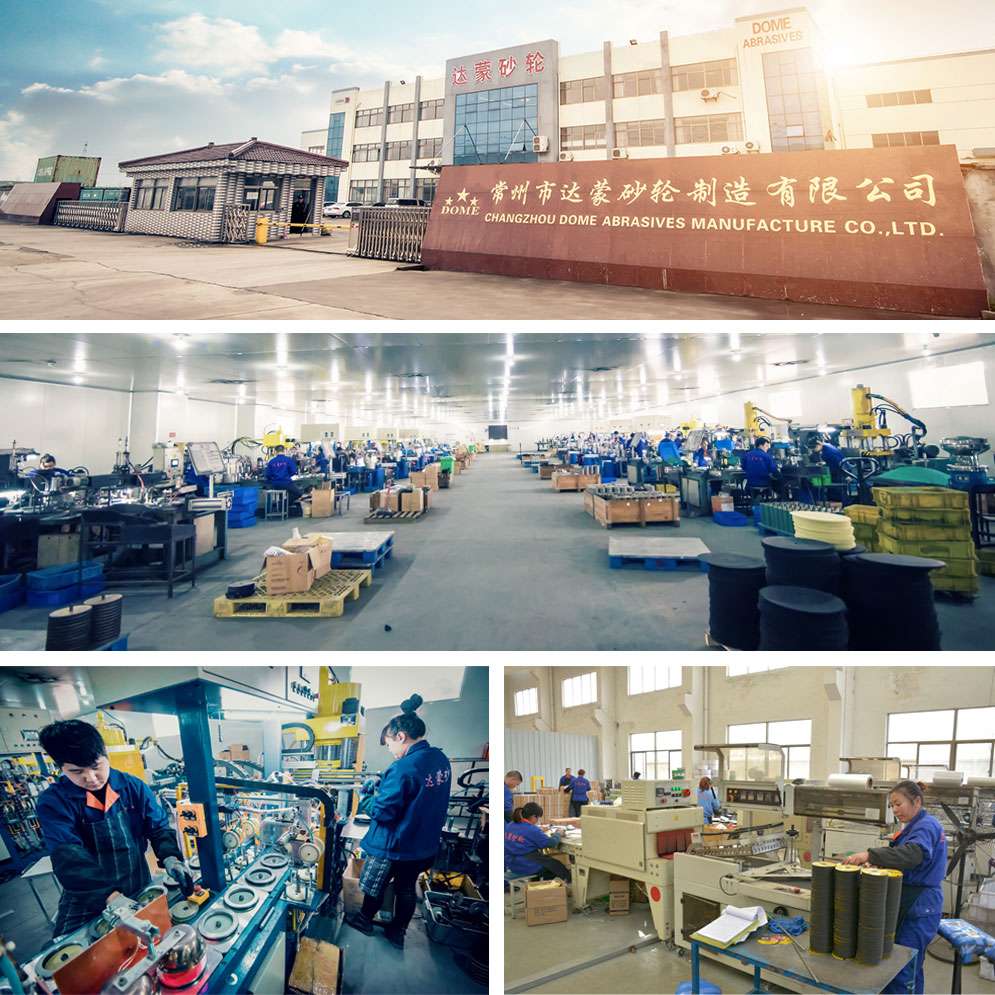
Dome is a ceramic grinding disc manufacturer, not a trading company. We operate our own factory — 20,000m² of production space with 60 fully automated lines, producing over 600,000 discs daily. When you work with Dome, you work directly with the people who make the product.
We offer four core OEM capabilities to help distributors, tool brands, and industrial suppliers build their own ceramic grinding disc lines.

Custom Formulation
Different metals require different abrasive formulations. Stainless steel needs cool cutting to prevent discolouration; carbon steel demands aggressive stock removal; alloy steel requires abrasives that maintain cutting aggression under pressure. We adjust abrasive grain type, bond hardness, and additive packages based on your target materials and applications.
What we customise: Abrasive grain (ceramic / zirconia / aluminium oxide), grit size (24# / 36# / other), bond hardness, and additive formulations for specific grinding conditions.
Custom Sizes
Not every application fits standard dimensions. We manufacture ceramic grinding discs in a range of diameters to match different angle grinder sizes:
| Diameter | Inch | Typical Application |
|---|---|---|
| 100mm | 4″ | Compact grinders, light work |
| 115mm | 4.5″ | Standard grinders, general fabrication |
| 125mm | 5″ | Heavy fabrication, larger coverage |
| 150mm | 6″ | Medium-heavy work |
| 180mm | 7″ | High-power grinders, heavy grinding |
Bore sizes: 16mm, 22.23mm (7/8″), and custom. Thickness and flap density configurations are also adjustable.


Private Label
We help you build your own brand — not just by printing a logo, but by delivering a complete branded product that stands out on the shelf.
What we customise:
- Disc colour — match your brand identity
- Label design — brand name, logo, product code, grit, safety markings
- Inner packaging — shrink-wrap, colour boxes, display cartons
- Outer cartons — custom-printed with your branding and traceability data
Every disc carries your brand, your specifications, and your quality standards. We handle the manufacturing; you own the brand.
Sample Testing Process
We follow a structured process to ensure your custom ceramic grinding discs meet your exact requirements before full production:
1. Requirement — You provide target materials, applications, annual volume, and certification needs (EN12413, MPA, CE). We assess feasibility and recommend initial specifications.
2. Formula & Sample Development — Based on your requirements, we develop a custom formulation and produce samples. Multiple grit or size variations can be provided for comparison.
3. Performance Testing — You test samples on your own equipment — verifying grinding efficiency, service life, surface quality, and heat generation under your actual working conditions.
4. Approval — We move to mass production only after you approve performance. Free samples are available for testing before you commit to a bulk order.
5. Production & Delivery — Standard lead time: approximately 30 days from order confirmation. Rush orders available on request.
Contact our OEM team with your target market, annual volume, and performance requirements — we will respond with a custom solution within 24 hours.
Our Ceramic Grinding Disc OEM Process
Dome’s OEM process follows a structured workflow from initial requirement to final shipment. Each step is documented and traceable, ensuring that every custom order meets the agreed specifications.

1. Customer Requirement – You provide target materials, grinding applications, annual volume, and certification needs. We assess feasibility and recommend initial abrasive and specification options.
2. Formula Selection – Based on your requirements, we select the appropriate ceramic abrasive formulation — grit size (24# or 36#), flap density configuration, and backing specifications.
3. Sample Production – We produce samples (typically 3–5 discs) with preliminary test data covering dimensional accuracy, balance, and cutting performance. Multiple grit or size variations can be provided for comparison.
4. Performance Testing – You test samples on your own equipment — verifying grinding efficiency, service life, surface quality, and heat generation under your actual working conditions.
5. Customer Approval – We move to mass production only after you approve performance. Free samples are available for testing before you commit to a bulk order.
6. Mass Production – After sample approval, we scale up to full production. Automated lines in climate-controlled workshops ensure batch-to-batch consistency matches the approved samples.
7. Quality Inspection – Every batch undergoes dimensional inspection, balance testing, and sample burst testing (EN12413: burst speed ≥ 1.5× rated maximum RPM). Every disc is individually 100% RPM tested before shipment.
8. Packaging – Finished discs are shrink-wrapped, labelled with your brand design, and packed into custom-printed cartons with batch numbers and traceability data.
9. Shipment – Orders are consolidated and shipped with a COA (Certificate of Analysis) covering key test data. Standard lead time: approximately 35 days from order confirmation. Rush orders available on request.
Ceramic Grinding Disc Manufacturing Capability
Dome operates a dedicated manufacturing facility for resin bonded abrasive products, including ceramic flap discs and grinding wheels. The following data reflects our current production capacity and technical resources.
| Capability | Specification |
|---|---|
| Factory Area | 20,000+ m² total |
| Production Workshop | 13,000 m² (climate-controlled) |
| Production Lines | Nearly 60 fully automated lines |
| Daily Output | 600,000 discs |
| R&D / Technical Staff | 10+ professionals |
Climate-controlled workshop: Temperature maintained at 15–25°C, humidity at 40–50% — ensuring stable resin curing and consistent product quality across all batches.
Automated production: From automated batching and pressing to in-line inspection and shrink-wrap packaging — reducing human error and ensuring batch-to-batch consistency.
Quality assurance: Every disc undergoes 100% RPM testing before shipment, with batch samples subjected to EN12413 burst testing (burst speed ≥ 1.5× rated maximum RPM).
Global reach: Products exported to 60+ countries worldwide, serving distributors, tool brands, and industrial suppliers across multiple continents.
How We Manufacture Ceramic Grinding Discs
Dome’s ceramic grinding discs are manufactured through a controlled process that ensures consistent quality, reliable performance, and safety at high operating speeds. The following steps outline the production flow from raw materials to finished product.

1. Raw Material Inspection – Every batch of incoming materials undergoes inspection before entering production. Ceramic abrasive cloth is tested for grain coverage and tensile strength. Reinforced fibreglass backing is checked for dimensional accuracy and structural integrity. Resin binders are verified for viscosity and curing properties. Only materials that pass inspection are approved for production.
2. Abrasive Mixing – For resin bonded ceramic grinding wheels (not flap discs), the abrasive mixing step combines ceramic abrasive grains, resin binders, fillers, and additives in precise proportions. The mixture is blended until uniformly distributed — ensuring consistent grinding performance across every disc.
3. Molding – The mixed material is fed into hydraulic presses and formed into disc shapes under high pressure. Each disc is pressed to a precise thickness tolerance. For flap discs, this step involves cutting abrasive cloth into uniform flaps and arranging them in overlapping layers on the backing plate.
4. Fibreglass Reinforcement – Multiple layers of fibreglass mesh are embedded during the molding process to provide tensile strength and structural integrity. This reinforcement is critical for high-speed operation — it resists centrifugal forces and prevents disc shattering during use.
5. Curing – Moulded discs are transferred to curing ovens and heated at approximately 175–200°C for several hours. This process polymerises the resin bond, transforming it from a soft, pliable state into a hardened, durable matrix that firmly holds the abrasive grains.
6. Dimensional Inspection – After curing, each disc is inspected for outer diameter, thickness, and bore size against specification tolerances. Visual inspection checks for cracks, bubbles, or surface irregularities. Discs that fail inspection are rejected.
7. Balance Testing – Every disc is tested on a dynamic balancing machine to detect mass eccentricity. Out-of-balance discs are rejected. A balanced disc runs smoother, reduces operator fatigue, and extends angle grinder bearing life.
8. RPM / Burst Testing – Sample discs from each batch are accelerated until they break — burst speed must be at least 1.5× the rated maximum RPM (EN12413). Every disc is individually 100% RPM tested before shipment to verify structural integrity at operating speed.
9. Grinding Performance Testing – Sample discs are tested on standard workpieces (stainless steel, carbon steel) to verify material removal rate, wheel wear, and grinding efficiency. Performance data is recorded and traceable to each production batch.
10. Packaging – Discs that pass all inspections are individually shrink-wrapped, labelled with product specifications and safety markings, and packed into cartons with batch numbers and traceability data for full supply chain visibility.
Ceramic Grinding Disc Quality Control
Dome’s quality control system covers every stage of production — from incoming raw materials to finished product. The following tests verify that each disc meets safety, performance, and consistency standards.

Raw Materials – Every batch of ceramic abrasive cloth, fibreglass backing, and resin binder is inspected before production. Abrasive grain coverage, tensile strength, and resin curing properties are verified against specifications. Rejected materials are returned or recycled.
Dimensions – Outer diameter, thickness, and bore size are inspected on every disc against tolerance specifications (±0.1mm for thickness). Discs that fall outside tolerance are rejected.
Balance – Dynamic balance testing detects mass eccentricity on every disc. Out-of-balance discs are rejected. A balanced disc reduces vibration, improves surface finish, and extends angle grinder bearing life.
Hardness / Bond – Sample discs from each batch are tested for bond hardness to verify that the resin curing process has achieved the required hardness grade. Bond hardness directly affects grain retention and grinding performance.
RPM – Every disc is individually 100% RPM tested before shipment — not batch sampled. Each disc is spun at its rated maximum operating speed to verify structural integrity under centrifugal force.
Burst Strength – Sample discs from each batch are accelerated until they break. EN12413 requires burst speed ≥ 1.5× rated maximum RPM. Dome’s internal standards exceed this requirement, providing an additional safety margin.
Grinding Performance – Sample discs are tested on stainless steel and carbon steel workpieces to verify material removal rate, wheel wear, and grinding efficiency. Performance data is recorded and traceable to each production batch.
Ceramic Grinding Disc Certifications
Dome ceramic grinding discs are backed by internationally recognised certifications that verify product safety, quality management, and responsible manufacturing. Each certification represents a specific assurance for buyers — from structural integrity at high speed to ethical production standards.





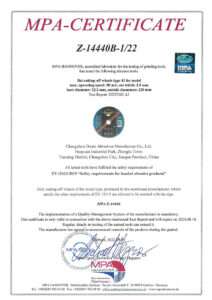
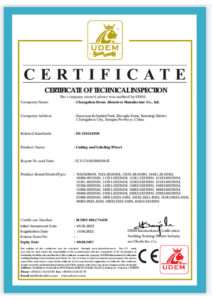
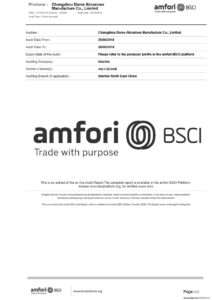
EN12413 – European safety standard for bonded abrasives. Confirms burst speed ≥ 1.5× rated RPM — mandatory for EU market compliance.
MPA – German safety certification for abrasive tools. Verifies compliance with Germany’s strict safety standards — key for European market access.
CE – EU market access mark. Confirms compliance with health, safety, and environmental requirements — legal sale across all EU member states.
ISO9001 – International quality management standard. Ensures batch‑to‑batch consistency, full traceability, and reliable product performance.
BSCI – European supply chain social audit. Verifies labour rights, health and safety, and environmental compliance — meets major brand procurement requirements.
Ceramic Grinding Disc FAQ
1. What is a ceramic grinding disc?
A ceramic grinding disc is an abrasive tool that uses engineered ceramic alumina as the cutting grain. Unlike conventional aluminium oxide or zirconia abrasives, ceramic grains are designed to micro-fracture under pressure — continuously exposing fresh, sharp cutting edges. This self-sharpening mechanism delivers faster material removal, cooler grinding temperatures, and significantly longer service life on demanding metals such as stainless steel, carbon steel, and alloy steel. Dome ceramic grinding discs are available in flap disc format with 100% ceramic alumina abrasive cloth on reinforced fibreglass backing.
2: What are ceramic grinding discs used for?
Ceramic grinding discs are used for demanding metal grinding applications including weld seam removal and blending, heavy stock removal on structural steel and castings, deburring and edge radiusing of cut components, rust and mill scale removal, and surface preparation before coating, painting, or welding. They are particularly effective on hard-to-grind materials such as stainless steel, alloy steel, and hardened metals where conventional abrasives dull quickly and generate excessive heat.
3: Are ceramic grinding discs suitable for stainless steel?
Yes — ceramic grinding discs are highly suitable for stainless steel. The self-sharpening ceramic grains maintain cutting efficiency under pressure while generating less friction heat than conventional abrasives. This cool-cutting action helps prevent the blue or black discolouration that compromises surface quality and corrosion resistance on stainless steel. Dome ceramic grinding discs with 24 or 36 grit are ideal for weld removal, edge finishing, and surface preparation on 304 and 316 stainless steel.
4: Are ceramic grinding discs suitable for carbon steel?
Yes — ceramic grinding discs are excellent for carbon steel grinding. The aggressive cutting action of ceramic alumina delivers fast stock removal on mild steel, structural steel, and carbon steel components. The self-sharpening grains maintain cutting speed even under heavy pressure, making them ideal for high-productivity environments where rapid material removal is critical. Use 24 grit for heavy stock removal and weld grinding; 36 grit for surface preparation and blending on carbon steel workpieces.
5: What grit should I use for heavy grinding?
For heavy grinding applications — such as removing thick weld seams, heavy stock removal on structural steel, and aggressive material removal on castings — 24 grit is the recommended choice. The large, coarse grains provide maximum cutting aggression and the highest material removal rates. The open grain structure reduces clogging and heat build-up during heavy grinding. For weld blending and surface preparation after initial heavy removal, switch to 36 grit for a smoother finish.
6: What is a 24 grit ceramic grinding disc used for?
A 24 grit ceramic grinding disc is used for the most aggressive metal grinding applications. It is designed for heavy weld removal (removing thick weld beads and seams), heavy stock removal on structural steel and castings, rapid surface preparation on rough or uneven workpieces, and removing mill scale, rust, and heavy oxidation. The coarse 24 grit grains deliver maximum cutting aggression and the highest material removal rates, making it the preferred choice when productivity and speed are the primary requirements.
7: What is a 36 grit ceramic grinding disc used for?
A 36 grit ceramic grinding disc offers a balance between material removal and surface finish. It is used for weld seam blending and smoothing after initial heavy grinding, surface preparation before coating, painting, or welding, deburring cut edges and radiusing sharp corners, removing rust and mill scale, and general metal fabrication work. The medium-coarse 36 grit provides effective material removal while generating a more consistent surface finish than 24 grit — reducing the need for subsequent finishing operations.
8: What size ceramic grinding disc fits an angle grinder?
The disc diameter must match your angle grinder’s guard size. A 115mm (4.5″) disc fits standard 4.5-inch angle grinders — the most common size for general fabrication and weld grinding. A 125mm (5″) disc fits 5-inch angle grinders, offering approximately 18% more surface coverage for heavier work. Always check that the bore size (22.23mm / 7/8″) matches your grinder’s spindle. Custom sizes from 100mm to 180mm are available on request.
9: What is the difference between ceramic and zirconia grinding discs?
Ceramic and zirconia are both high-performance abrasives, but they differ in grain structure and cutting action. Zirconia alumina is a self-sharpening grain that fractures under pressure — it offers longer life than aluminium oxide and is suitable for medium to heavy grinding on stainless steel. Ceramic alumina is engineered with a microcrystalline structure that micro-fractures at a finer level, delivering faster cut rates, cooler operation, and longer service life than zirconia on hard-to-grind materials. Ceramic is the premium choice for high-performance and heavy grinding applications.
10: Can ceramic grinding discs remove welds?
Yes — ceramic grinding discs are excellent for weld removal. The aggressive ceramic grains cut through weld beads and weld seams quickly, removing material efficiently without generating excessive heat. For heavy weld removal, use a 24 grit disc for initial bead removal, then switch to a 36 grit disc for blending and smoothing. Ceramic discs maintain cutting aggression under pressure, making them ideal for both heavy weld cap removal and finer weld blending on stainless steel, carbon steel, and alloy steel.
11: How long does a ceramic grinding disc last?
Service life varies depending on material, grinding pressure, and application. Ceramic discs typically outlast conventional aluminium oxide and zirconia discs significantly on demanding applications — often delivering 2–5× longer life on hard-to-grind materials. In heavy grinding on stainless steel, a ceramic disc can remove substantially more material than a zirconia or aluminium oxide disc before replacement. Actual life depends on operator technique, grinding pressure, and workpiece material. Replace the disc when grinding performance drops noticeably.
12: Can you manufacture OEM ceramic grinding discs?
Yes — Dome offers full OEM ceramic grinding disc manufacturing. Customisation options include abrasive formulation (ceramic, zirconia, aluminium oxide), grit size (24# / 36#), disc diameter (100mm to 180mm), bore size (16mm / 22.23mm / custom), flap density configurations (single/double/staggered, standard/high density), backing colour, and branded packaging. We also provide certification support including EN12413, MPA, and CE documentation bearing your brand name. Free samples are available for testing before committing to a bulk order.
13: What sizes can you customise for OEM orders?
We manufacture ceramic grinding discs in diameters from 100mm to 180mm (4″ to 7″), with bore sizes of 16mm, 22.23mm (7/8″), and custom sizes on request. Grit options include 24 and 36. Thickness and flap density configurations — standard or high density, single/double/staggered arrangements — can be adjusted to suit your specific application requirements. Custom backing colours and branded packaging are also available. Contact us with your specifications for a custom quote.
14: What is your minimum order quantity for OEM discs?
MOQ varies based on customisation scope. For standard sizes with packaging customisation, MOQ typically starts from 5,000 discs. Custom grits, non-standard sizes, special colours, or custom packaging have higher MOQs. We work with both emerging brands and established distributors — contact us with your annual volume and requirements for a specific quote. Free samples are available for testing before committing to a bulk order.
15: Can you provide samples before bulk orders?
Yes — we provide free samples for OEM and wholesale inquiries. Samples are sent with full specification data and preliminary test reports, including dimensional accuracy, balance, and cutting performance. You test the samples on your own equipment — verifying grinding efficiency, service life, surface quality, and heat generation under your actual working conditions. We move to mass production only after you approve performance.
Related Abrasive Products
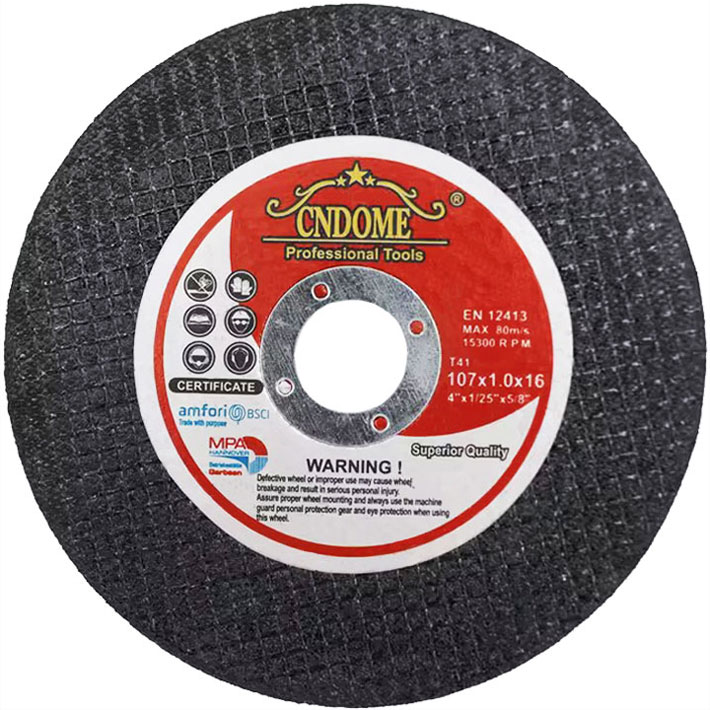
Metal Cutting Disc
General-purpose metal cutting disc for everyday cutting of carbon steel, structural steel, and ordinary steel.
Suitable Materials: Carbon steel / Structural steel / Iron
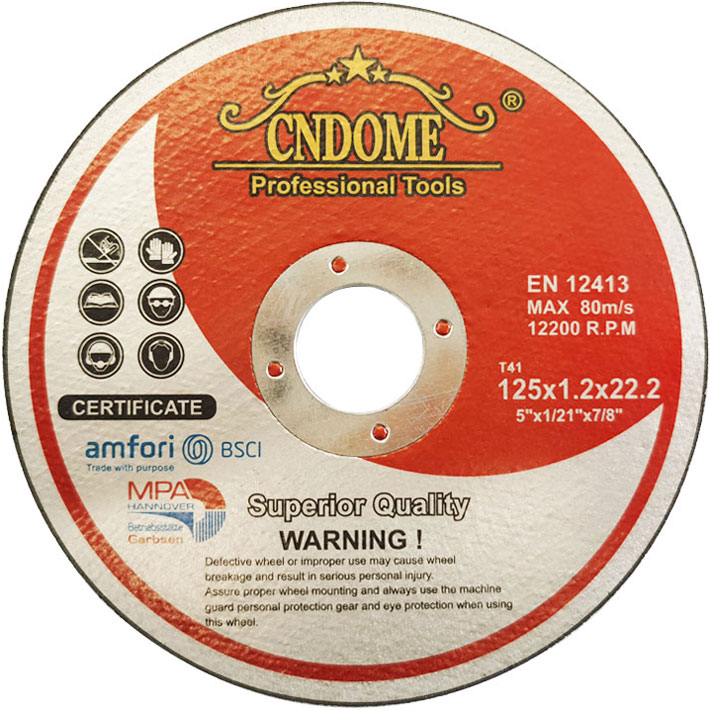
Stainless Steel Cutting Disc
Engineered for stainless steel cutting with Fe+S+Cl≤0.1% pure formula, delivering silver-bright, burn-free cuts.
Suitable Materials: 304 / 316 / 430 stainless steel
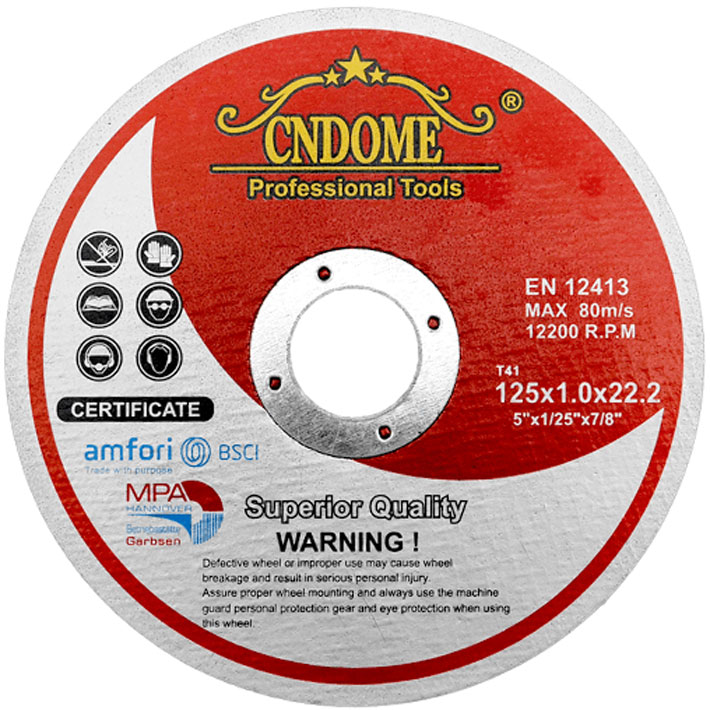
Ultra Thin Cutting Disc
Ultra-thin 0.8–1.0mm design for fast, low-heat, low-burr precision cutting of sheets and thin-wall tubes.
Suitable Materials: Stainless steel sheet / Carbon steel sheet / Thin-wall tube
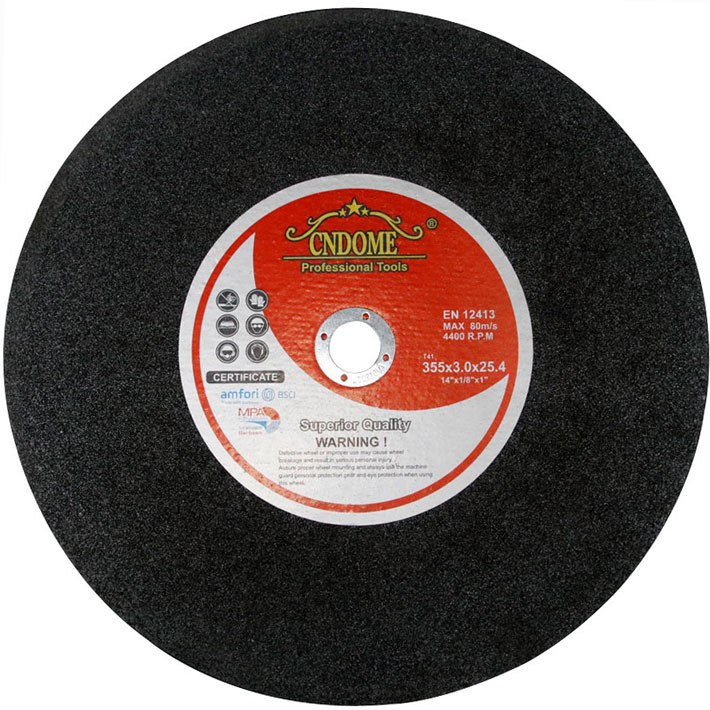
Large Diameter Cutting Disc
355mm large-diameter disc for stationary saws, cutting through large structural steel sections and heavy-wall pipes in one pass.
Suitable Materials: H-beams / I-beams / Large-diameter pipes / Rails
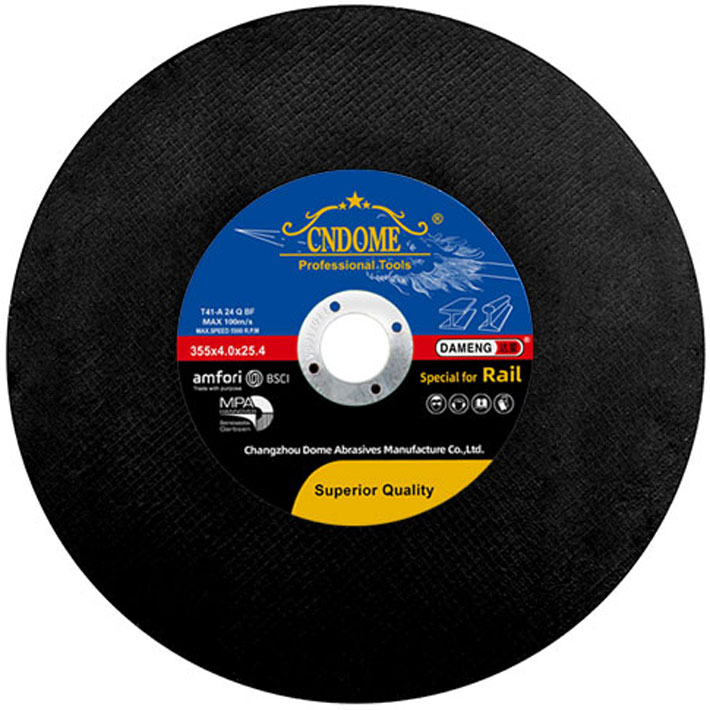
Rail Cutting Disc
Rail-specific disc with zirconia alumina and multi-layer fiberglass reinforcement, designed for heavy-duty high-hardness rail cutting.
Suitable Materials: U71Mn / U75V rails / Crane rails / High-manganese frogs
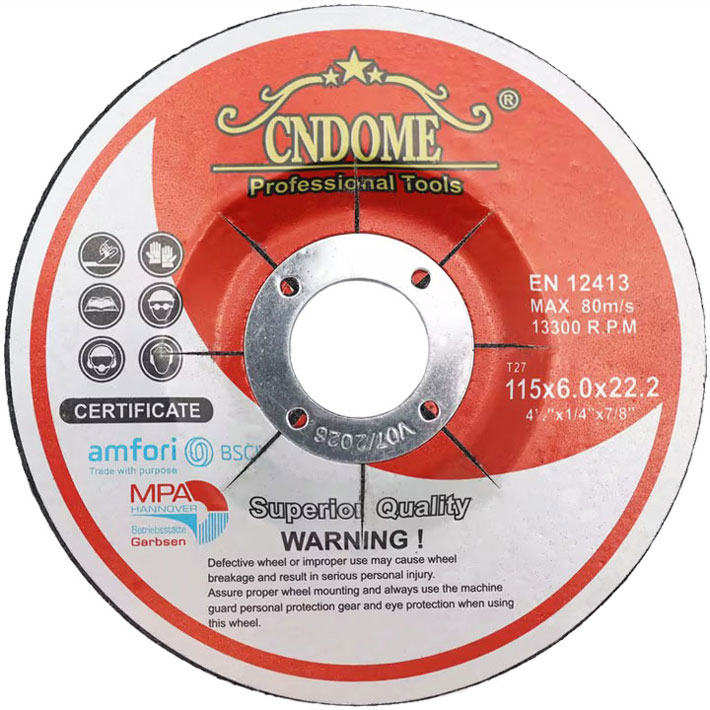
Grinding Wheel
Resin-bonded grinding wheel for surface grinding, weld dressing, and burr removal on all types of angle grinders.
Suitable Materials: Carbon steel / Stainless steel / Cast iron
Looking for a Ceramic Grinding Disc Manufacturer?
Tell us your required disc size, grit, workpiece material and application. Our technical team can recommend a suitable ceramic grinding disc and provide OEM or private label solutions.
Tel/WhatsApp
+86 18796960868
DomeGrinding@hotmail.com
Address
Zhenglu Garden Industrial Park, Tianning District, Changzhou City, Jiangsu Province
Manufacture & Delivery
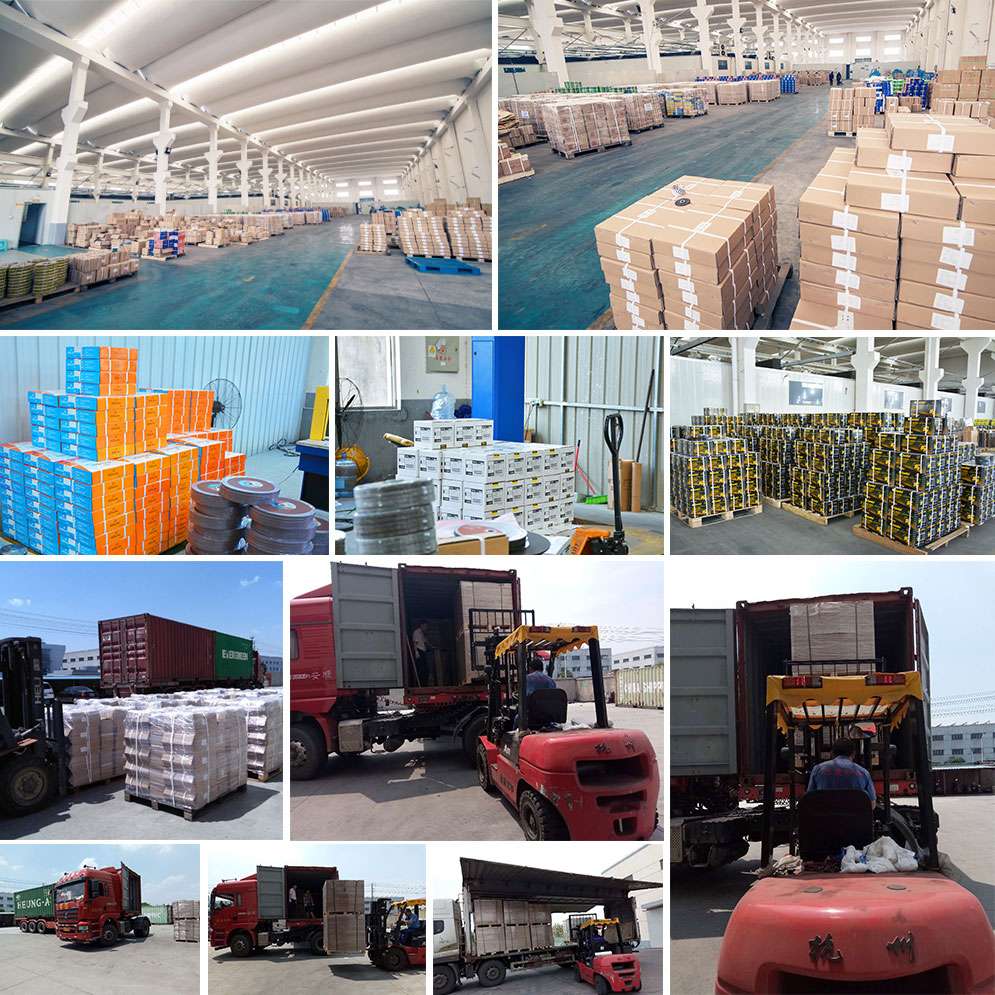
Below are actual photos of product application, product packaging and shipment, and workshop.
Factory and Workshop
Package and Delivery