
Heavy-duty Rail Cutting
Designed for demanding railway rail cutting applications.
Reinforced Construction
Fiberglass-reinforced structure for high-speed cutting applications.
Fast & Controlled Cutting
Designed for efficient cutting with controlled performance.
OEM & Private Label
Custom specifications, labels and packaging available.
Rail Cutting Disc Manufacturer
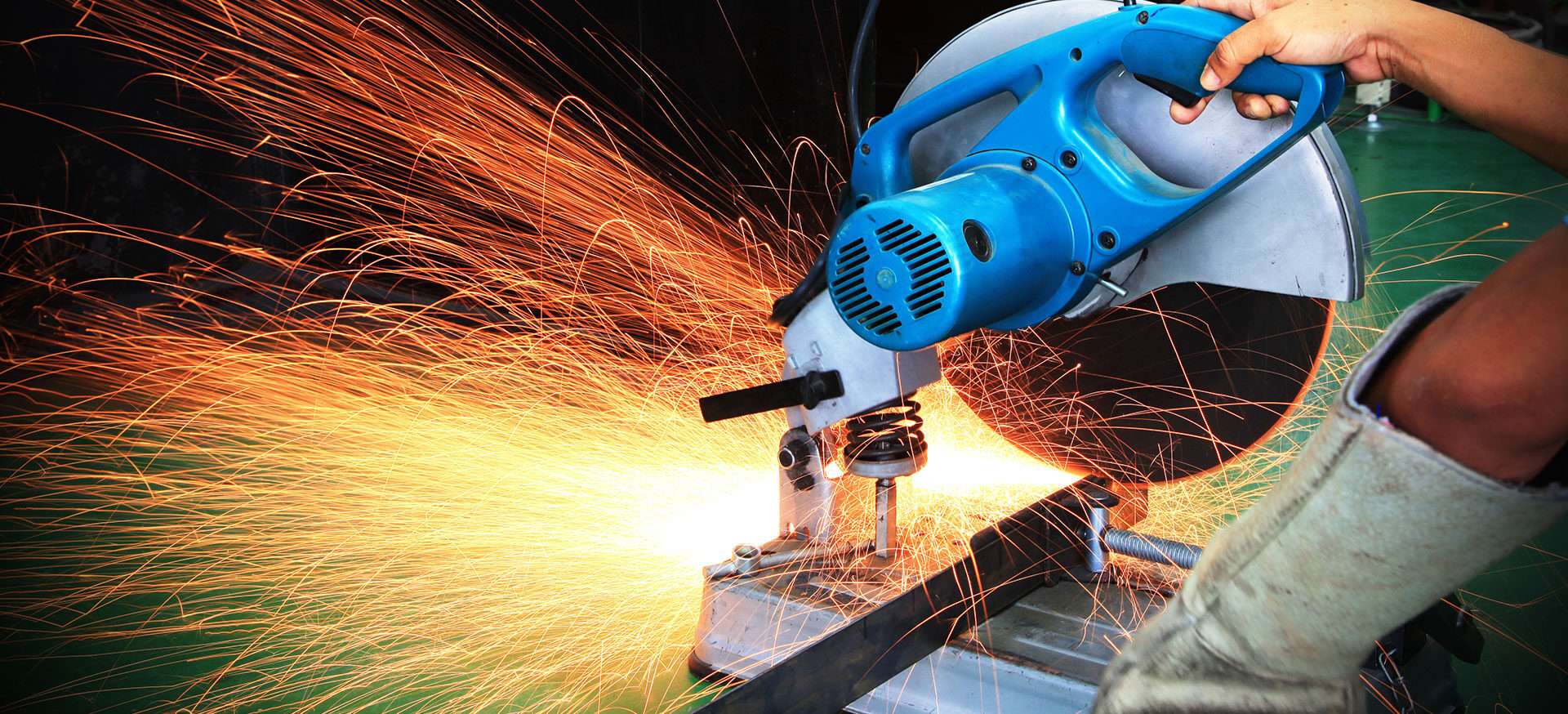
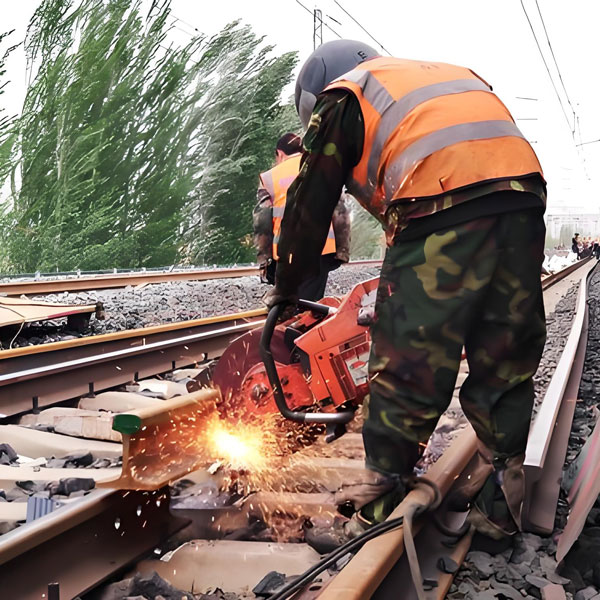
High-performance reinforced rail cutting discs engineered specifically for cutting railway rails and steel track components. Designed for demanding track maintenance, rail replacement, and new line construction, our resin-bonded rail cutting discs deliver fast, precise cuts on high-hardness rail steel while ensuring operator safety with multi-layer fibreglass reinforcement. Available in 355mm and 405mm diameters with 25.4mm arbor, compatible with petrol and electric rail saws. As a direct manufacturer, we support OEM and private label solutions with custom specifications and branded packaging for railway maintenance suppliers, tool brands, and industrial distributors worldwide.
Dome Abrasives Catalogue
Rail Cutting Discs for Railway Track Maintenance
What Is a Rail Cutting Wheel?
A rail cutting wheel is a resin-bonded abrasive disc specifically engineered for cutting railway rails and steel track components. Unlike general-purpose metal cutting discs, a rail cutting disc is built with multi-layer fibreglass reinforcement and thicker profiles (typically 3.0–4.5mm) to withstand the extreme forces generated when cutting high-hardness steel rail. Standard metal cutting discs are not designed for the impact, vibration, and heat generated by rail cutting — using one on a rail can lead to disc failure, increased cutting time, and safety risks.
Rail Steel & Abrasive Requirements
Rail steel — typically U71Mn, U75V, and other high-carbon manganese grades — has significantly higher hardness and wear resistance than structural steel. This requires a reinforced cutting disc with zirconia alumina or ceramic abrasive grains that maintain cutting aggression under pressure, combined with a resin bond that provides controlled grain release and heat resistance. The railway cutting disc is designed specifically for these demanding conditions.
Compatible Machines & Common Sizes
Rail cutting discs are used with rail cutting machines, petrol-powered rail saws, and abrasive rail saws. Common diameters include 355mm (14 inch) and 405mm (16 inch) with 25.4mm bore, designed for fixed rail saws and portable cutting machines. Thickness typically ranges from 3.0mm to 4.5mm, with thicker discs providing greater durability for heavy rail sections — making them the preferred choice for rail maintenance and railway track work.
OEM & Private Label Solutions
As a direct manufacturer, Dome offers rail cutting discs with custom specifications — including diameter, thickness, bore size, and abrasive formulation — along with private label packaging for railway maintenance suppliers and industrial distributors worldwide. Whether you need a reinforced cutting disc for heavy rail sections or a standard railway cutting disc for routine track work, we provide tailored solutions backed by EN12413 certification and 100% RPM testing.
Our Rail Cutting Disc Range
Browse our rail cutting discs by diameter, thickness, or application. All discs are resin-bonded with multi-layer fibreglass reinforcement and EN12413 certified.
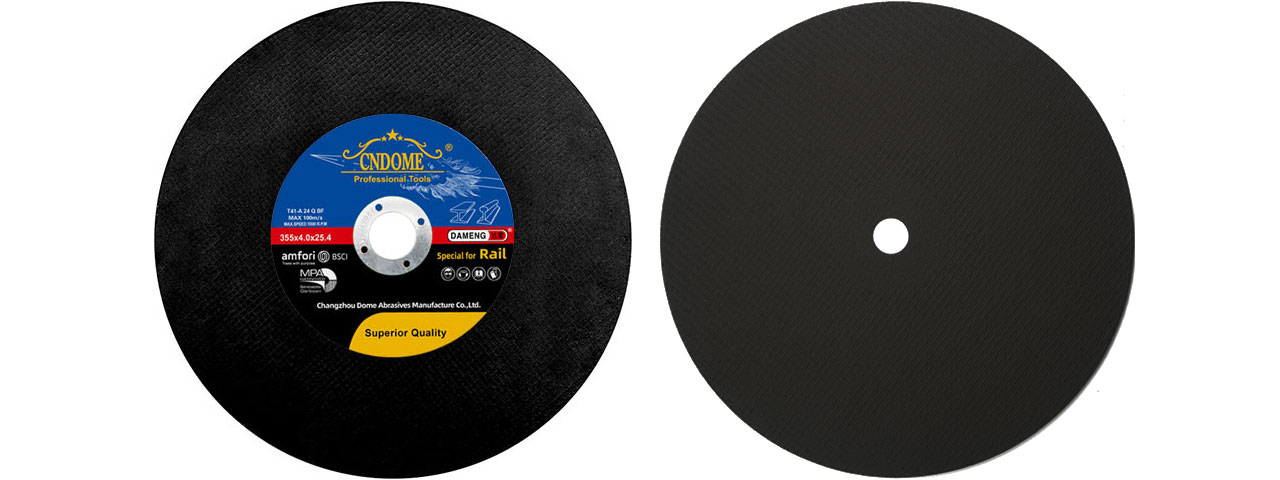
355mm Rail Cutting Disc
Diameter: 355mm (14 inch)
Thickness: 4.0mm
Bore: 25.4mm
Abrasive: Zirconia Alumina
Application: Railway Rail Cutting
Reinforced abrasive cutting disc designed for efficient cutting of railway steel rails and track components. Multi-layer fibreglass reinforcement provides the strength and stability needed for high-hardness rail steel. Compatible with petrol rail saws and rail cutting machines. EN12413 certified.
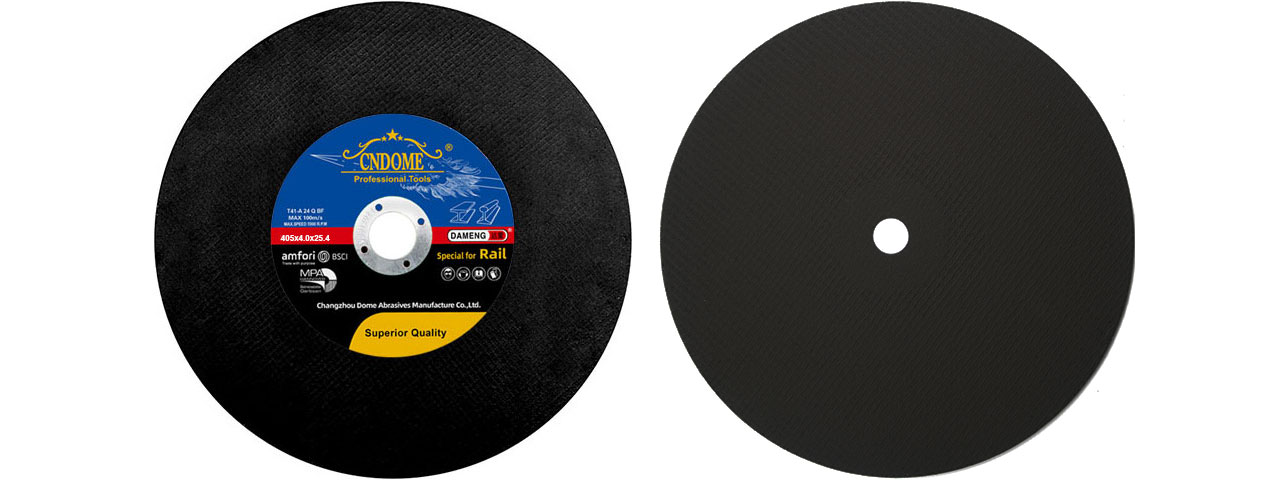
405mm Rail Cutting Disc
Diameter: 405mm (16 inch)
Thickness: 4.0mm
Bore: 25.4mm
Abrasive: Zirconia Alumina
Application: Heavy Rail Cutting
Large-diameter rail cutting disc designed for heavy-duty rail cutting applications. The 405mm diameter provides maximum cutting depth for larger rail sections. Thick profile and multi-layer reinforcement ensure durability under continuous heavy cutting. Compatible with hydraulic and gas-powered rail saws.
What Is a Rail Cutting Disc?
A rail cutting disc is a high-strength, resin-bonded abrasive wheel specifically designed for cutting railway rails and related steel track components. Unlike general-purpose cutting discs, rail cutting discs are built with multi-layer fibreglass reinforcement and thicker profiles to withstand the extreme forces generated when cutting high-hardness rail steel.
Abrasive Grain – The Cutting Element
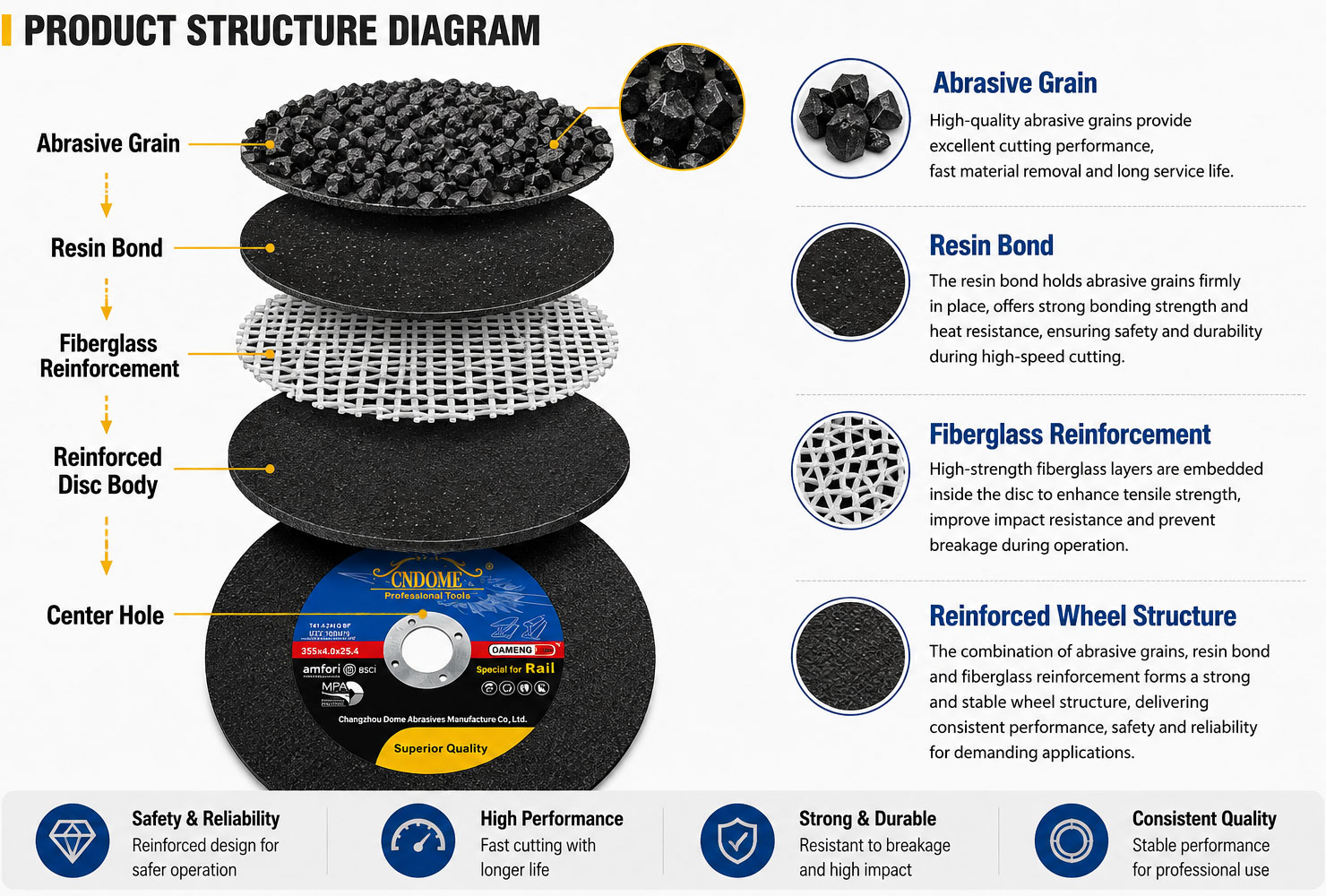
The cutting particles on the disc — typically zirconia alumina or a blend of zirconia and aluminium oxide — are responsible for material removal. Rail steel is significantly harder than structural steel, requiring abrasives that maintain cutting aggression under heavy pressure. Zirconia alumina grains self-sharpen during cutting, continuously exposing fresh cutting edges to maintain consistent cutting speed throughout the rail cutting disc’s service life.
Resin Bond – Controlling Grain Release
The phenolic resin matrix holds the abrasive grains together and controls the rate at which dull grains are released. This ensures cutting efficiency is maintained throughout the rail cutting disc’s working life. The bond also provides heat resistance during high-speed rail cutting operations, preventing premature bond breakdown that would otherwise compromise rail cutting wheel integrity and safety.
Fibreglass Reinforcement – Strength & Safety
Multi-layer fibreglass mesh embedded in the rail cutting wheel provides tensile strength to withstand the centrifugal forces and impact loads generated during rail cutting. This reinforcement prevents the disc from shattering during use and is essential for operator safety — particularly important when cutting at high RPM with powerful rail saws.
Disc Thickness – Durability for Heavy Sections
Rail cutting discs are noticeably thicker than general-purpose cutting discs — typically 3.0–4.5mm — to provide the durability and impact resistance needed for cutting heavy rail sections. The increased thickness also contributes to longer service life and greater stability during demanding cutting operations on high-hardness steel.
Center Bore – Machine Compatibility
The arbor bore mounts the rail cutting disc to the rail cutting machine. The standard size is 25.4mm (1 inch) for petrol and hydraulic rail saws, ensuring compatibility with most rail cutting equipment on the market. Always confirm bore size matches your machine before installation.
Rail Cutting Disc Construction
A rail cutting disc is a layered composite structure where each component is engineered for the specific demands of cutting high-hardness rail steel. The diagram below illustrates the internal construction.
Rail Cutting Discs for Different Railway Applications
Rail cutting discs are used across a range of railway applications. The following guide helps you select the right disc for your specific rail type and cutting task.
Railway Rails
Railway rails are typically manufactured from high-carbon manganese steel grades such as U71Mn and U75V — materials with significantly higher hardness and wear resistance than structural steel. Cutting these rails requires a cutting disc that maintains cutting aggression under heavy pressure. Dome rail cutting discs are suitable for standard railway rail cutting, including track maintenance, rail replacement, and new line construction.
Recommended thickness: 4.0mm for standard rail sections; 3.2mm for lighter sections
Heavy Rail
Heavy rail sections — used in mainline railways, high-speed lines, and heavy-haul freight corridors — require cutting discs with greater durability and cutting depth. The 400mm and 405mm diameters provide maximum cutting depth for larger rail sections. Thicker cutting discs (4.0–4.5mm) provide the durability needed for continuous heavy cutting.
Recommended thickness: 4.0mm or 4.5mm
Track Components
Rail cutting discs are also used for cutting rail-related steel components — including switch rails, crossing noses, guard rails, and other track components. These components are often made from the same high-hardness rail steel grades and require the same cutting performance as standard rails.
Rail Cutting Disc Sizes
Selecting the right disc diameter ensures proper fitment on your rail cutting machine and optimal cutting depth. Each size is matched to a specific machine class and application.
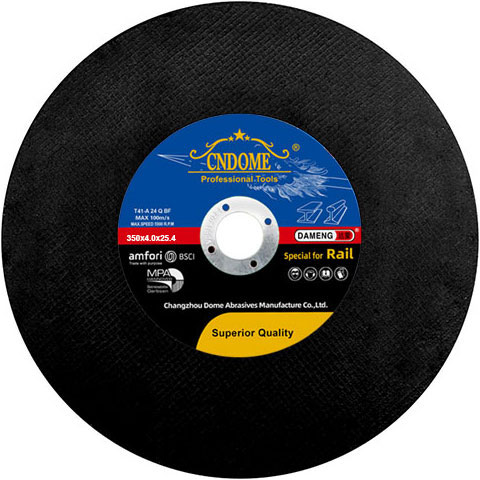
350mm Rail Cutting Disc
The 350mm (14 inch) rail cutting disc is designed for rail cutting machines and petrol rail saws. It offers a balance of cutting depth and machine compatibility for standard rail sections. Common specification: 350 × 4.0 × 25.4mm.
Best for: Standard rail cutting, track maintenance
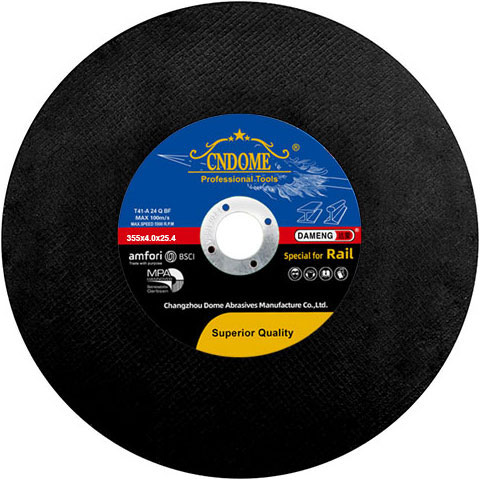
355mm Rail Cutting Disc
The 355mm (14 inch) rail cutting disc is the most widely used size for railway rail cutting. It is compatible with petrol rail saws, hydraulic rail saws, and rail cutting machines. Common specifications: 355 × 4.0 × 25.4mm and 355 × 3.2 × 25.4mm.
Best for: Railway rail cutting, track maintenance, rail replacement
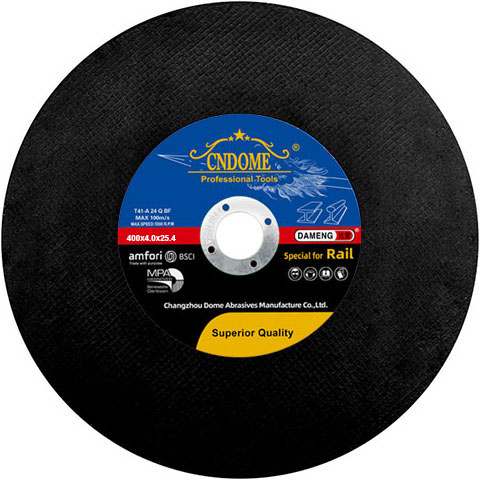
400mm Rail Cutting Disc
The 400mm (16 inch) rail cutting disc provides greater cutting depth for larger rail sections. Designed for heavy-duty rail cutting applications and large rail sections. Common specification: 400 × 4.0 × 25.4mm.
Best for: Heavy rail sections, mainline railways
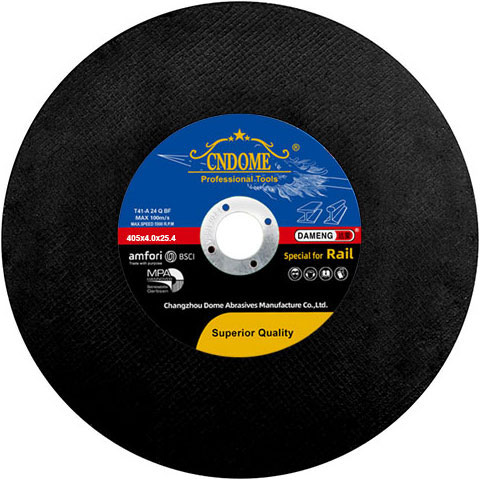
405mm Rail Cutting Disc
The 405mm (16 inch) rail cutting disc offers maximum cutting depth for the heaviest rail sections. Designed for industrial rail cutting applications and large rail sections.
Best for: Heavy rail sections, mainline railways
Quick Size Reference
| Disc Size | Inch | Machine Type | Typical Application |
|---|---|---|---|
| 350mm | 14″ | Rail Saw | Standard rail sections |
| 355mm | 14″ | Rail Saw / Cutting Machine | Most common rail cutting size |
| 400mm | 16″ | Rail Cutting Machine | Heavy rail sections |
| 405mm | 16″ | Rail Cutting Machine | Maximum rail sections |
Rail Cutting Disc Thickness Guide
Choosing the right thickness is critical for rail cutting applications. Each thickness offers a different balance of cutting speed, durability, and impact resistance.
| Thickness | Recommended Applications | Key Benefit |
|---|---|---|
| 3.0mm | General rail cutting, lighter rail sections | Faster cutting, less resistance |
| 3.2mm | Rail maintenance, standard rail cutting | Balanced performance for routine work |
| 4.0mm | Heavy-duty rail cutting, mainline rails | Greater durability for continuous cutting |
| 4.5mm | Heavy rail sections, demanding applications | Maximum durability for the heaviest rails |
How to choose: Thinner discs (3.0–3.2mm) cut faster with less resistance, making them suitable for lighter rail sections and routine maintenance. Thicker discs (4.0–4.5mm) provide greater durability and impact resistance for heavy rail sections and demanding cutting conditions.
3.2mm Rail Cutting Disc
The 3.2mm rail cutting disc offers balanced performance for standard rail maintenance and cutting applications. It provides faster cutting than thicker discs while maintaining adequate durability for routine rail work.
4.0mm Rail Cutting Disc
The 4.0mm rail cutting disc is the most commonly used thickness for railway rail cutting. It provides the durability needed for continuous cutting on standard rail sections. Common specification: 355 × 4.0 × 25.4mm.
Rail Cutting Disc for Rail Cutting Machines
Rail cutting discs are designed for use with rail cutting machines, petrol rail saws, and abrasive rail saws. Selecting the right rail cutting wheel for your machine ensures optimal cutting performance and operator safety. The table below outlines the key compatibility considerations for each machine type.
Petrol Rail Saw – Portable Cutting Power
Petrol rail saws are portable, petrol-powered cutting machines widely used for rail maintenance and track work. These saws are compatible with 355mm discs with a 25.4mm bore. Common brands include Husqvarna, Stihl, and Geismar. The rail cutting disc for rail saw applications requires a disc that balances cutting speed with durability — essential for field conditions where consistent power supply may not be available. This is the most common configuration for railway track maintenance crews.
Hydraulic Rail Saw – Heavy-Duty Cutting
Hydraulic rail saws are hydraulic-powered cutting machines designed for heavy rail cutting applications. These machines provide consistent power and are often used in demanding environments such as mainline rail replacement and heavy maintenance. They are compatible with 400mm and 405mm discs with a 25.4mm bore, offering greater cutting depth for larger rail sections. The railway cutting machine disc used in hydraulic saws must withstand sustained high-pressure operation while maintaining cutting precision on heavy rail sections.
Abrasive Rail Saw – Versatile Cutting Solution
Abrasive rail saws — available in electric or petrol-powered configurations — use abrasive cutting discs for rail work. These saws are compatible with 355mm discs with a 25.4mm bore. When selecting a rail saw cutting disc for these machines, consider the saw’s power output and the rail type being cut. Abrasive rail saws are commonly used in both new rail installation and emergency repair scenarios where portability and speed are essential.
Compatible Machines Overview
| Machine Type | Compatible Disc Size | Bore Size | Typical Application |
|---|---|---|---|
| Rail Cutting Machine | 355mm / 400mm | 25.4mm | Stationary or portable rail cutting |
| Petrol Rail Saw | 355mm | 25.4mm | Track maintenance, field work |
| Hydraulic Rail Saw | 400mm / 405mm | 25.4mm | Heavy rail cutting |
| Abrasive Rail Saw | 355mm | 25.4mm | Electric or petrol-powered rail work |
Choosing the Right Disc for Your Machine
When selecting a rail cutting disc for rail saw or rail cutting machine application, always verify:
- Disc diameter matches your machine’s specifications
- Bore size is 25.4mm (1 inch) — the standard for rail cutting equipment
- Maximum RPM of the disc is equal to or greater than your machine’s no-load speed
Using the correct railway cutting machine disc ensures optimal cutting performance, extended disc life, and operator safety. If you are unsure which rail cutting disc is compatible with your equipment, consult your machine manual or contact our technical team.
Rail Cutting Disc Cutting Performance
Rail cutting discs are engineered to deliver consistent, measurable performance on high-hardness rail steel. Unlike general-purpose cutting discs that prioritise speed or longevity alone, rail cutting discs must balance cutting speed, service life, cutting stability, and safety. The following performance metrics define how a rail cutting disc performs in real-world railway maintenance and construction applications.
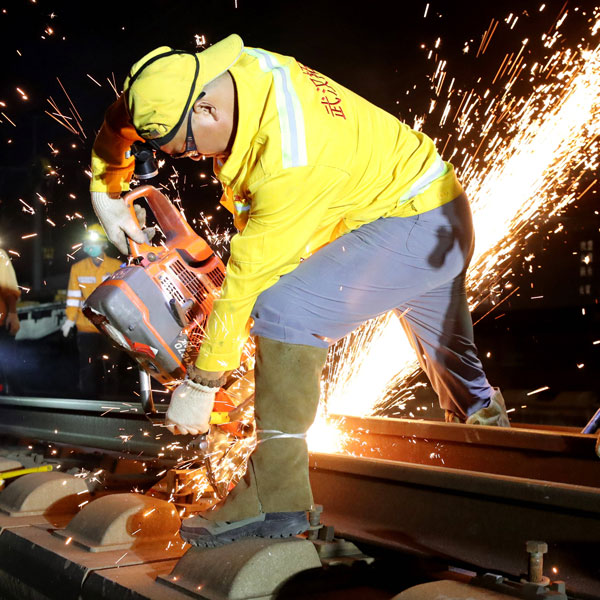
Cutting Speed – Faster Rail Cutting
Cutting speed directly impacts track downtime and labour costs. A high-performance rail cutting disc should cut through 60kg/m rail steel in under 110 seconds on a standard rail saw. Rail cutting discs with advanced zirconia alumina or ceramic abrasive grains achieve cutting efficiency of approximately 1.6 minutes per 60kg/m rail section — up to 40% faster than conventional cutting discs. The combination of high linear speed (up to 100 m/s) and aggressive grain action reduces cutting time per rail significantly.
Service Life – More Cuts per Disc
Rail cutting discs must deliver sufficient cuts per disc to justify the cost of frequent rail maintenance operations. Industry standards require a minimum of 7 cuts on 52kg/90UTS rail and 6 cuts on 60kg/90UTS rail at discard diameter. High-performance ceramic or zirconia alumina rail cutting discs can achieve 4–5 cuts per disc on 60kg/m rails — up to 87–133% more cuts than conventional cutting discs. Extended service life means fewer cutting disc changes, less downtime, and lower consumable costs per rail cut.
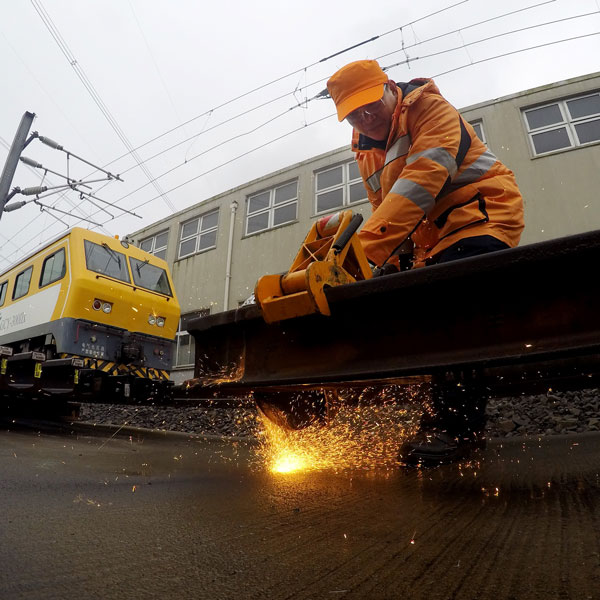
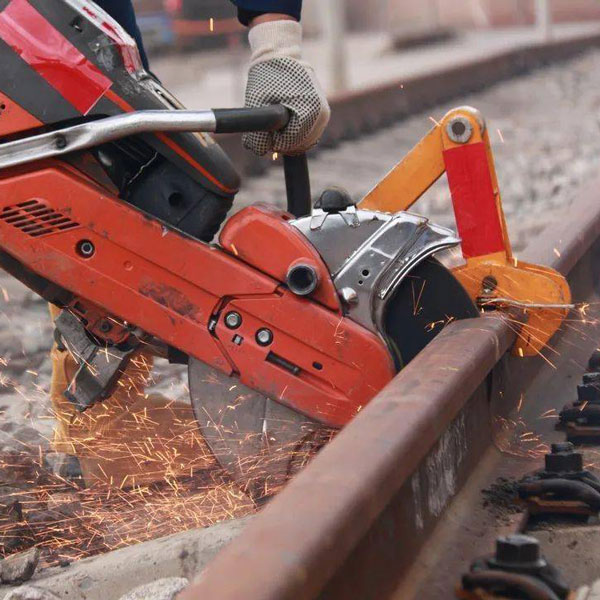
Cutting Stability – Precision and Safety
Cutting stability ensures a straight, perpendicular cut face — critical for rail welding and joint alignment. A stable cutting disc maintains vertical deviation of the notch and rail within ≤0.30mm and bidirectional cutting interface deviation within ≤0.35mm. Stability is achieved through multi-layer fibreglass reinforcement and precise balance control, which reduce vibration and prevent the cutting disc from wandering during deep cuts.
Cutting Disc Wear – Uniform, Predictable Consumption
Rail cutting discs are designed for uniform wear across the cutting face, maintaining consistent cutting performance until the disc reaches its discard diameter (typically around 260mm for 355mm discs). The resin bond formulation controls grain release so that the cutting disc wears evenly — avoiding the glazing or uneven edge wear that causes cutting inefficiency and premature cutting disc failure.

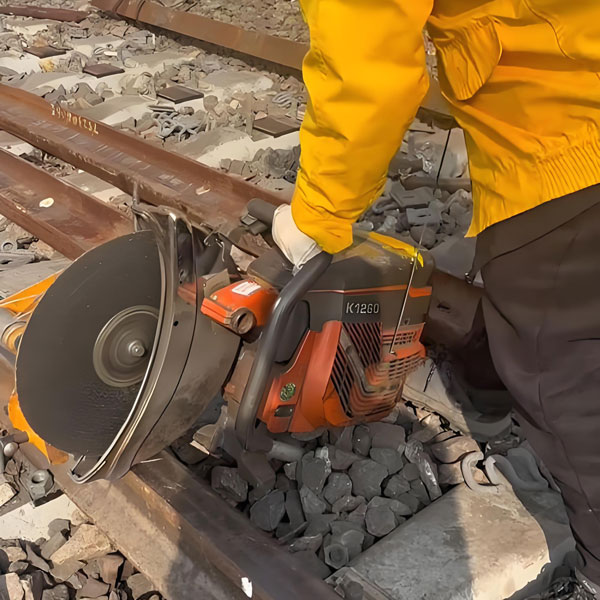
Cutting Kerf – Narrower, Less Material Loss
The kerf width is determined by cutting disc thickness. A 4.0mm rail cutting disc produces a kerf of approximately 5–6mm — narrower than many alternative cutting methods. A narrower kerf means less rail steel is turned into waste with every cut, preserving more of the valuable rail material and reducing the volume of swarf that must be collected and removed from the track work site.
Spark Control – Safer Rail Cutting
Rail cutting generates sparks that can pose fire risks in dry conditions or near flammable track-side materials. Advanced rail cutting discs are formulated to produce controlled, low-spark emissions during cutting. Spark control is achieved through specialised grain and bond formulations that reduce friction heat at the cutting interface. Lower spark generation improves workplace safety, reduces fire risk, and makes rail cutting operations more comfortable for the operator.
Rail Cutting Performance Test
The following table presents representative performance data for Dome rail cutting discs under standard test conditions. Test methods follow industry practice for abrasive rail cutter performance verification.
| Test Parameter | Specification / Result |
|---|---|
| Rail Type | 60kg/m, 90 UTS rail steel |
| Cutting Machine | Petrol/Hydraulic Rail Saw, 4,400–4,700 RPM |
| Disc Specification | 355 × 4.0 × 25.4mm |
| Linear Speed | 80–100 m/s |
| Cutting Time per Rail | < 110 seconds |
| Number of Cuts per Disc | 6–8 cuts (60kg/m rail) |
| Disc Wear at Discard | Uniform, reaches discard diameter at ~260mm |
| Cutting Accuracy | Vertical deviation ≤0.30mm |
Note: Actual performance may vary depending on rail grade, cutting machine condition, operator technique, and environmental factors. Contact our technical team for application-specific performance data.
Rail Cutting Disc vs General Metal Cutting Disc
Rail cutting discs and general-purpose metal cutting discs are designed for fundamentally different applications. Using a general-purpose cutting disc on railway rails can lead to cutting disc failure, increased cutting time, and safety risks.
| Feature | Rail Cutting Disc | General Metal Cutting Disc |
|---|---|---|
| Application | Railway rails, track components | General metal fabrication |
| Rail Steel Compatibility | Designed for high-hardness rail steel | Not specifically designed for rail |
| Reinforcement | Multi-layer fibreglass | Standard reinforcement |
| Thickness | 3.0–4.5mm | 1.0–3.0mm |
| Cutting Stability | High — reinforced for rail cutting | Application dependent |
| Impact Resistance | High — designed for rail cutting loads | Moderate |
| Machine Compatibility | Rail saws, rail cutting machines | Angle grinders, cut-off machines |
| Rail Cutting | Designed for rail | Not recommended |
When to choose a rail cutting disc: If you are cutting railway rails, track components, or other high-hardness rail steel — choose a rail cutting disc. The reinforced construction and specialised abrasive formulation are designed for the specific demands of rail cutting applications.
When to choose a general metal cutting disc: If you are cutting structural steel, plate, pipe, or other general metal sections — a general-purpose metal cutting disc is typically sufficient.
Key takeaway: Using a general-purpose metal cutting disc on railway rails is not recommended. Rail cutting discs are specifically engineered for the high-hardness steel and demanding conditions of railway applications.