• 0

    No products in the cart.

  • Get A Quote

Abrasive Wheels

20,000㎡ Factory
60 Production Lines
600,000 PCS/Day
EN12413 Certified

Abrasive Wheels Manufacturer for Cutting & Grinding Applications

Cutting Wheels • Grinding Wheels • Flap Discs • Ceramic Grinding Wheels • OEM Manufacturing

DOME is an experienced abrasive wheels manufacturer in China, specializing in resin bonded abrasive wheels for metal cutting, grinding and surface finishing. Our product range includes cutting wheels, grinding wheels, flap discs and ceramic grinding discs, with OEM and private label abrasive wheel manufacturing available for global brands.

With 26 years of OEM experience serving global brands including Truper, Vonder, DeWalt, and Stanley, we deliver custom cutting wheel solutions with consistent performance, long service life, and EN12413 safety certification. Available in all popular sizes – 115mm, 125mm, 230mm, and 355mm cutting discs for angle grinders and stationary machines.

What Is an Abrasive Wheel?

An abrasive wheel is a precision-engineered cutting and grinding tool composed of abrasive grains held together by a bonding agent and reinforced with fiberglass for strength and safety. Unlike saw blades that cut with teeth, resin bonded abrasive cutting discs remove material through high-speed friction — millions of sharp abrasive particles on the wheel’s surface grind away tiny chips of metal with each rotation.

Abrasive Grain – The Cutting Edge

The abrasive grain does the actual cutting. Common types include aluminum oxide for steel and iron, silicon carbide for concrete and stone, zirconia alumina for stainless steel and hard alloys, and ceramic alumina for difficult-to-grind metals. Grain type determines cutting speed, wheel life, and material compatibility.

Bond – The Matrix That Holds It Together

The bonding agent binds abrasive grains into a solid structure. A hard bond extends life on soft materials; a soft bond releases dull grains to expose fresh cutting edges on hard materials. Resin bonded wheels are the most widely used for cutting applications.

Fiberglass Reinforcement – Strength and Safety

Multiple layers of fiberglass mesh are embedded in the wheel to withstand centrifugal forces at high RPM, resist lateral pressure, and prevent shattering. Reinforced bonds are mandatory for cut-off wheels used on angle grinders and stationary machines.

Structure – Precision Engineering

An abrasive wheel is a three-dimensional composite. Grit size, wheel thickness, and reinforcement layers are precisely balanced to optimize cutting speed, wheel life, and safety. Thinner discs cut faster with less heat; thicker discs offer greater durability for heavy-duty applications.

In short: an abrasive wheel is a high-performance composite tool made of abrasive grains, resin bond, and fiberglass reinforcement — each component working together to cut, grind, and finish materials efficiently and safely across metal fabrication, construction, foundries, shipbuilding, and steel processing.

Types of Abrasive Wheels for Metalworking

Abrasive wheels come in many varieties, broadly classified by function: cutting, grinding, polishing, and finishing. Below are the four main product categories offered by DOME.

Cutting Wheels

Abrasive Cutting Wheels / Abrasive Cutting Discs

Applications: Cutting wheels are the primary tool for industrial cutting, widely used in metal fabrication, construction, shipbuilding, pipe installation, and automotive repair. They are designed to cut carbon steel, stainless steel, cast iron, rebar, pipes, angle iron, profiles, and various other metals. Typically mounted on angle grinders or stationary cut‑off machines, cutting wheels separate materials quickly through high‑speed rotation.

Key Features:

  • Ultra‑thin design (1.0–3.0mm) – thin cutting discs deliver fast cutting, low heat, narrow kerf, and minimal burrs; thick discs offer greater durability, impact resistance, and heavy‑duty performance
  • Multiple abrasive options – brown fused alumina for carbon steel and structural steel; zirconia alumina for stainless steel and tough‑to‑cut materials
  • Fiberglass reinforcement – multi‑layer mesh provides tensile strength, resisting centrifugal forces and preventing breakage
  • EN12413 safety certified – every cutting disc meets EN12413 standards, with burst speed ≥ 1.5× rated maximum RPM
  • Full size range – diameters from 38mm to 405mm, thicknesses from 1.0mm to 3.0mm, compatible with angle grinders and stationary saws
Grinding Wheels

Abrasive Grinding Wheels / Abrasive Grinding Discs

Applications: Grinding wheels are used for surface grinding, weld dressing, burr removal, and surface finishing of metal workpieces. They are widely applied in steel fabrication, post‑weld treatment, foundry casting cleaning, machinery manufacturing, and automotive repair. Thicker and more durable than cutting discs, grinding wheels can withstand side pressure, making them suitable for weld removal, edge conditioning, and surface flattening.

Key Features:

  • Thick body design (4–7mm) – greater rigidity than cutting discs, capable of withstanding lateral grinding pressure
  • Resin bond system – provides stable grain retention, ensuring consistent grinding efficiency and service life
  • Fiberglass reinforcement – multi‑layer mesh delivers tensile strength, preventing breakage at high speeds
  • Multiple grit sizes – coarse grit (16–24#) for rapid material removal; fine grit (36–60#) for finishing and surface refinement
  • Wide angle grinder compatibility – diameters from 50mm to 230mm, fitting all standard angle grinder sizes
Ceramic Grinding Discs

Ceramic Abrasive Wheels / Ceramic Grinding Discs

Applications: Ceramic grinding discs use ceramic alumina abrasive, which offers exceptional self‑sharpening and heat dissipation properties. They are specifically engineered for high‑efficiency grinding of difficult‑to‑machine materials such as stainless steel, heat‑resistant alloys, and tool steels. Widely used in aerospace, mould and die manufacturing, medical devices, and precision machining industries where performance and surface quality are critical.

Key Features:

  • Ceramic alumina abrasive – micro‑fracturing self‑sharpening properties continuously expose fresh cutting edges during operation
  • Extremely high material removal rates – grinding efficiency far exceeds standard brown fused alumina and zirconia alumina products
  • Excellent heat dissipation – specialised bond system reduces grinding temperatures, preventing workpiece burn
  • Extended service life – self‑sharpening maintains high cutting efficiency until the abrasive is fully consumed
  • Designed for tough materials – stainless steel, titanium alloys, nickel‑based alloys, tool steels, and other hard‑to‑grind metals
Flap Discs

Abrasive Flap Discs / Flap Grinding Discs

Applications: Flap discs combine grinding and polishing in one tool, consisting of multiple layers of abrasive cloth flaps arranged in a fan‑shaped overlapping pattern. They are ideal for weld blending, rust removal, deburring, polishing, and surface finishing on metal workpieces. Flap discs perform particularly well on curved surfaces and contours, offering a versatile, cost‑effective solution for metalworking workshops.

Key Features:

  • Multi‑layer flap construction – as the flap discs wear, fresh abrasive is continuously exposed, extending service life
  • Two‑in‑one functionality – grinds and polishes in a single operation, reducing tool changes and saving time
  • Lower vibration and noise – smoother operation compared to traditional grinding discs, improving operator comfort
  • Reduced workpiece damage – easier to control than grinding discs, minimising the risk of over‑grinding
  • Multiple abrasive options – zirconia alumina for stainless steel and hard metals; aluminium oxide for carbon steel and softer materials

Abrasive Wheels for Metal – Material × Application × Product Guide

Selecting the right abrasive wheel starts with matching the abrasive to the material. Different metals have different hardness, thermal conductivity, and grinding characteristics — using the wrong wheel wastes time, damages the workpiece, and shortens wheel life.

Below is a material-by-material guide covering the most common metals in metal fabrication, along with the recommended abrasive wheels for each application.

Metal — Abrasive Wheels for Metal

Metal cutting wheels and metal grinding wheels are the workhorses of general fabrication. For most ferrous metals — mild steel, structural steel, and general-purpose alloys — aluminium oxide abrasive wheels provide the best balance of cost and performance. Aluminium oxide is tough, durable, and maintains its cutting edge through repeated impacts.

Recommended products:

  • Cutting: Metal cutting wheels (Type 41 / T41) in 115mm, 125mm, and 180mm diameters
  • Grinding: Metal grinding wheels (Type 27 / T27) with aluminium oxide abrasive

Common applications: Structural steel cutting, plate profiling, general fabrication, weld preparation, and surface conditioning.

Stainless Steel — Abrasive Wheels for Stainless Steel

INOX abrasive wheels are specially formulated for stainless steel applications. Standard metal cutting wheels contain iron, sulphur, and chlorine — contaminants that embed in the stainless surface during cutting and cause future rust and pitting. True INOX wheels contain less than 0.1% iron, sulphur, and chlorine, making them contaminant-free and safe for high-value stainless steel parts.

Stainless steel has poor thermal conductivity — heat concentrates at the cut zone. INOX wheels are engineered with zirconia alumina or ceramic abrasives that run cooler, reducing heat build-up and preventing the blue/black discolouration that compromises surface quality and corrosion resistance.

Recommended products:

  • Cutting: Stainless steel cutting wheels with contaminant-free INOX formulation
  • Grinding: Stainless steel grinding wheels with zirconia alumina abrasive

Common applications: Stainless steel fabrication, food equipment manufacturing, architectural metalwork, automotive exhaust systems, and marine components.

Carbon Steel — Carbon Steel Cutting Wheels & Grinding Wheels

Carbon steel is the most commonly ground metal in workshops and construction sites. Its relatively good thermal conductivity and moderate hardness make it forgiving on abrasives. For carbon steel, aluminium oxide is the industry standard — tough, durable, and cost-effective. For high-production environments, zirconia alumina wheels offer longer life and faster cutting under heavy pressure.

Recommended products:

  • Cutting: Carbon steel cutting wheels with aluminium oxide abrasive
  • Grinding: Carbon steel grinding wheels with aluminium oxide or zirconia alumina

Common applications: Structural steel fabrication, plate cutting, pipe beveling, weld dressing, and general workshop grinding.

Aluminium — Aluminium Cutting Wheels & Abrasive Wheels for Aluminium

Aluminium is soft and gummy — it tends to clog standard abrasive wheels. Specialised aluminium cutting wheels use a non-loading formula that prevents material build-up on the abrasive surface. These wheels feature a special abrasive mixture and bond technology that prevents clogging, even on soft aluminium alloys.

Recommended products:

  • Cutting: Aluminium cutting wheels with non-loading formulation
  • Grinding: Aluminium grinding wheels with open-structure bond

Common applications: Aluminium profile cutting, sheet metal fabrication, window and door manufacturing, and aerospace component fabrication.

Cast Iron — Cast Iron Cutting Wheels & Grinding Wheels

Cast iron is hard and brittle — it requires wheels that can cut through casting skin and defects without excessive heat build-up. Reinforced zirconia alumina and silicon carbide-blend abrasives are commonly used for aggressive cutting and grinding of cast iron. Silicon carbide is particularly effective on cast iron due to its hardness and sharp cutting action.

Recommended products:

  • Cutting: Cast iron cutting wheels with silicon carbide or zirconia alumina
  • Grinding: Cast iron grinding wheels with silicon carbide or blended abrasive

Common applications: Foundry fettling, gate and riser removal, casting cleaning, and engine component manufacturing.

Quick Selection Reference

MaterialRecommended AbrasiveBest For
Metal (General)Aluminium OxideCost‑effective general fabrication
Stainless Steel (INOX)Zirconia Alumina / Ceramic (Contaminant‑free)Cool cutting, no discolouration, no contamination
Carbon SteelAluminium Oxide / Zirconia AluminaStructural steel, general fabrication
AluminiumAluminium Oxide (Non‑loading formula)Clog‑free cutting on soft metals
Cast IronSilicon Carbide / Zirconia AluminaHard, brittle materials, foundry work

Select the right abrasive wheel for your material — and get faster cuts, longer wheel life, and better surface quality every time.

Abrasive Wheel Main Applications

Abrasive wheels are essential tools in metal fabrication, construction, foundries, automotive manufacturing, shipbuilding, and railway maintenance. Below are the specific applications of DOME abrasive wheels across six core industries.

Metal Fabrication

Abrasive Wheels for Metal Fabrication

Metal fabrication is the most critical application area for abrasive wheels. Cutting discs are used for fast cutting of carbon steel, stainless steel, and structural steel profiles; grinding wheels for weld dressing, edge conditioning, and surface finishing; flap discs combine grinding and polishing for contours and curved surfaces. DOME offers a complete product range from 1.0mm ultra‑thin cutting discs to 7mm thick grinding wheels, compatible with angle grinders and stationary saws – meeting every need from rough stock removal to precision finishing. Ceramic grinding discs, with their micro‑fracturing self‑sharpening properties, perform exceptionally well on stainless steel and tool steel.

Construction

Abrasive Wheels for Construction

The construction industry relies heavily on abrasive wheels for cutting rebar, steel pipe, angle iron, and metal framing. Rebar cutting is the most common task – deformed bars from 6mm to 32mm diameter need fast, accurate cutting. Other tasks include steel plate cutting, embedded part fabrication, and scaffolding tube cutting. DOME cutting discs use brown fused alumina abrasive for fast cutting with low heat generation, available in 4.5‑inch and 9‑inch sizes for angle grinders – a reliable choice for on‑site construction work.

Foundry

Abrasive Wheels for Foundry Applications

Foundries present one of the most demanding applications for abrasive wheels. Cutting discs remove casting gates and risers, separating castings from the gating system; grinding wheels clean flash, burrs, and parting lines from casting surfaces. Foundry grinding demands exceptional wheel wear resistance and cutting efficiency. DOME uses zirconia alumina and ceramic alumina abrasives with optimised resin bond systems – delivering outstanding performance in roughing and finishing of cast iron, cast steel, and stainless steel castings, helping foundries achieve higher material removal rates with fewer wheel changes.

Automotive

Abrasive Wheels for Automotive Manufacturing

The automotive industry covers both OEM manufacturing and aftermarket repair. In OEM production, abrasive wheels are used for chassis weld removal, stamping deburring, and assembly line defect repair. In automotive repair and collision repair, cutting discs remove damaged body panels, cut exhaust pipes and mufflers, and sever fasteners; grinding wheels grind spot welds, remove rust, and strip old paint. DOME offers cutting and grinding discs in multiple diameters for various angle grinders – helping technicians work efficiently in confined spaces while maintaining cut precision and surface quality.

Shipbuilding

Abrasive Wheels for Shipbuilding

Shipbuilding imposes extremely demanding requirements on abrasive wheels. Shipyards operate in tight spaces with thick materials and high cutting volumes – requiring high‑power angle grinders for extended continuous operation. Cutting discs are used for hull plates, piping systems, and structural profiles; grinding wheels for weld dressing, beveling, and surface preparation. DOME stainless steel cutting discs use Fe+S+Cl ≤0.1% pure formulation to prevent iron embedment and future rust on stainless surfaces. Thick disc design combined with large diameters (230mm/355mm) meets shipbuilding’s dual requirements for cut depth and durability.

Railway

Abrasive Wheels for Railway Maintenance

Railway maintenance is a specialised application for abrasive wheels. Rail steel (U71Mn, U75V) is high‑carbon, high‑manganese steel with extreme hardness and wear resistance. DOME rail cutting discs use zirconia alumina abrasive with micro‑fracturing self‑sharpening properties, plus multi‑layer thickened fibreglass reinforcement for impact resistance. The 355/405mm rail cutting disc is designed specifically for stationary rail cutting machines, with 4.0mm thickness – cutting standard rails in one pass with square, flat cut faces. Beyond rail cutting, railway maintenance also involves rail head grinding and side profiling to eliminate corrugation and fatigue cracks.

How to Choose the Right Abrasive Wheel

Many customers struggle with choosing the right abrasive wheel. Pick the wrong one, and you get slow cutting, burned workpieces, or even safety hazards. Follow this three‑step guide — Material → Machine → Process — to find the right product quickly.

Step 1: Abrasive Wheel by Material

Different metals require completely different cutting disc formulations. Choosing the wrong abrasive leads to low efficiency, short life, and even workpiece damage.

MaterialRecommended AbrasiveWhy
Abrasive Wheels for Carbon Steel / Structural SteelBrown Fused AluminaCost‑effective and durable – the industry standard for carbon steel cutting
Abrasive Wheels for Stainless Steel (304/316)Zirconia AluminaSelf‑sharpening, continuously exposing fresh cutting edges. Must use INOX cutting discs with Fe+S+Cl ≤0.1% – standard cutting discs contain iron particles that embed in the stainless surface, causing future rust
Abrasive Wheels for Aluminium / Copper / Soft MetalsBFA + Anti‑loading AdditivesSoft metals tend to clog the abrasive – special formulations prevent loading
Abrasive Wheels for Cast IronSilicon CarbideVery hard and sharp – ideal for cast iron’s chip‑breaking characteristics

Step 2: Abrasive Wheel by Machine

The abrasive disc diameter must match your tool. Choose the wrong diameter, and it either won’t fit, won’t cut deep enough, or creates a safety risk.

Tool TypeRecommended DiameterNotes
Small Angle Grinder100–125mmLightweight and flexible – ideal for precision cutting and everyday jobs
High‑Power Angle Grinder180–230mmDeeper cut depth – suitable for thick plates and heavy on‑site work
Stationary Cut‑off Saw300–355mmDesigned for batch cutting and large structural sections – one‑pass through large profiles

Critical rule: The abrasive disc’s maximum RPM rating must be equal to or higher than your tool’s actual speed. Overspeed is the number one cause of disc breakage.

Step 3: Abrasive Wheel by Application

Cutting and grinding are different operations requiring different tools.

ProcessTool TypeThicknessNotes
Metal CuttingCutting Disc1.0–3.0mmThin design for edge‑only cutting – never apply side pressure
Metal GrindingGrinding Wheel4–7mmThick body withstands side pressure – for weld dressing and surface finishing
Metal Grinding + PolishingFlap DiscMulti‑layer flapsTwo‑in‑one – ideal for contours and curved surfaces

Cutting Disc Thickness Selection Logic:

Workpiece ThicknessRecommended Disc ThicknessWhy
Thin sheet / Thin‑wall tube (≤3mm)1.0mmNarrow kerf, fast, low heat, no deformation
Medium plate / Profiles (3–15mm)1.6mmMost versatile – best balance of speed and durability
Thick plate / Solid bar (≥15mm)2.5–3.0mmHigh rigidity, durability, impact resistance

Core rule: thinner workpiece → thinner disc; thicker workpiece → thicker disc.

Recommended Abrasive Wheels

Based on the three‑step selection logic above, here are abrasive wheels recommendations for common applications:

Your ApplicationRecommended ProductExample Spec
Cutting carbon steel thin sheet (≤3mm)Ultra Thin Cutting Disc115×1.0×22.23mm
Cutting carbon steel medium plate (3–15mm)Metal Cutting Disc115×1.6×22.23mm
Cutting stainless steel (304/316)INOX Cutting Disc115×1.2×22.23mm
Cutting thick plate / solid bar (≥15mm)Heavy Duty Cutting Disc230×3.0×22.23mm
Cutting large sections / batch cuttingLarge Diameter Cutting Disc355×3.0×25.4mm
Weld grinding / surface finishingGrinding Wheel115×6.0×22.23mm
Grinding + polishing in one stepFlap Disc115×22.23mm

Abrasive Wheel Selection Guide

Below is a unified selection guide for DOME‘s four main abrasive wheel product categories. Each product is presented across four dimensions – Suitable Materials → Recommended Machines → Applications → Popular Sizes – to help you quickly find the right wheel for your needs.

Cutting Wheels

Cutting Wheels

Cutting wheels are the most common abrasive wheel product, used for fast cutting and parting off of metal materials. They feature resin bond and fibreglass reinforcement, compatible with angle grinders and stationary cut‑off machines.

ItemDetails
Suitable MaterialsCarbon Steel · Stainless Steel (304/316) · Cast Iron · Aluminum · Copper
Recommended MachinesAngle Grinder (4″–9″) · Stationary Cut‑off Machine (14″)
ApplicationsMetal fabrication · Construction · Shipbuilding · Pipe cutting · Rebar cutting
Popular Sizes115×1.0/1.2/1.6×22.23mm · 125×1.2×22.23mm · 180×1.6×22.23mm · 230×2.5×22.23mm · 355×2.5/3.0×25.4mm

Thickness selection logic: Thin sheet → 1.0mm ultra‑thin disc (fast, low heat); medium plate → 1.2–1.6mm standard disc (all‑purpose); thick plate/solid bar → 2.5–3.0mm thick disc (durable).

Grinding Wheels

Grinding Wheels

Grinding wheels are used for surface grinding, weld dressing, burr removal, and surface finishing of metal workpieces. Thicker than cutting discs, they can withstand side pressure and are suitable for both rough and finish grinding.

ItemDetails
Suitable MaterialsCarbon Steel · Stainless Steel · Cast Iron · Aluminum
Recommended MachinesAngle Grinder (4″–9″)
ApplicationsMetal fabrication · Weld dressing · Foundry cleaning · Automotive repair · Shipbuilding
Popular Sizes115×6.0×22.23mm · 125×6.0×22.23mm · 180×6.0×22.23mm · 230×6.0×22.23mm

Grit size selection logic: Coarse grit (16–24#) for rapid material removal and rough grinding; medium grit (30–46#) for general‑purpose grinding; fine grit (60–80#) for finishing and surface refinement.

Ceramic Grinding Discs

Ceramic Grinding Discs

Ceramic grinding discs use ceramic alumina abrasive with micro‑fracturing self‑sharpening properties, specifically engineered for high‑efficiency grinding of difficult‑to‑machine materials such as stainless steel, heat‑resistant alloys, and tool steels.

ItemDetails
Suitable MaterialsStainless Steel (304/316) · Tool Steel · Heat‑Resistant Alloys · Titanium Alloys · Nickel‑Based Alloys
Recommended MachinesAngle Grinder (4″–7″) · Stationary Grinding Machines
ApplicationsAerospace · Mold manufacturing · Precision machining · Medical devices · Hard‑to‑grind metals
Popular Sizes115×6.0×22.23mm · 125×6.0×22.23mm · 180×6.0×22.23mm

Core advantages: Micro‑fracturing self‑sharpening continuously exposes fresh cutting edges; material removal rate is 30–50% higher than brown fused alumina; low heat generation prevents workpiece burn; service life is 2–3 times that of zirconia alumina.

Flap Discs

Flap Discs

Flap discs consist of multiple layers of abrasive cloth flaps arranged in a fan‑shaped overlapping pattern. They combine grinding and polishing in one tool, making them ideal for curved surfaces and contour work – a versatile, cost‑effective solution.

ItemDetails
Suitable MaterialsCarbon Steel · Stainless Steel · Aluminum · Copper
Recommended MachinesAngle Grinder (4″–5″)
ApplicationsSurface finishing · Weld blending · Rust removal · Deburring · Contour polishing
Popular Sizes115×22.23mm · 125×22.23mm

Abrasive selection logic: Zirconia alumina for stainless steel and hard metals; aluminium oxide for carbon steel and softer materials; ceramic alumina for high‑demand finishing applications.

Quick Selection Reference Table

Your RequirementRecommended ProductRecommended AbrasiveTypical Spec
Cutting carbon steel thin sheet (≤3mm)Cutting WheelBrown Fused Alumina115×1.0×22.23mm
Cutting stainless steel (304/316)Cutting Wheel (INOX)Zirconia Alumina115×1.2×22.23mm
Cutting thick plate / solid barCutting WheelBFA / Zirconia230×2.5×22.23mm
Weld grindingGrinding WheelBFA / Zirconia115×6.0×22.23mm
Surface finishing / contour grindingFlap DiscZirconia / Aluminium Oxide115×22.23mm
Stainless steel / tough material finishingCeramic Grinding DiscCeramic Alumina115×6.0×22.23mm

Abrasive Wheel Specifications

Product TypeDimension (mm)ShapeMax RPMMax Speed (m/s)Bond TypeAbrasive GrainReinforcementRecommended MaterialMachine TypeOEM
Ultra Thin Cutting Disc115×1.0–1.2×22.23
125×1.0–1.2×22.23
T41115: 13,300
125: 12,200
80ResinZirconia AluminaMulti‑layer FiberglassStainless steel sheet (≤3mm), thin‑wall tubes4–5″ Angle Grinder
Standard Cutting Disc115×1.2–1.6×22.23
125×1.2–1.6×22.23
T41115: 13,300
125: 12,200
80ResinBFA / ZirconiaMulti‑layer FiberglassCarbon steel, stainless steel, profiles, medium plates4–5″ Angle Grinder
Heavy Duty Cutting Disc180×1.6–3.0×22.23
230×1.6–3.0×22.23
T41180: 8,500
230: 6,600
80ResinBFA / ZirconiaMulti‑layer FiberglassThick plates (≥15mm), solid bars, structural steel7–9″ Angle Grinder
Large Diameter Disc355×2.0–4.0×25.4T414,40080ResinZirconia AluminaMulti‑layer FiberglassH‑beams, I‑beams, large‑bore pipes, railsStationary Cut‑off Saw
Grinding Wheel115–230×6.0×22.23T27115: 13,300 230: 6,60080ResinBFA / ZirconiaMulti‑layer FiberglassWeld dressing, surface finishing, deburring4–9″ Angle Grinder
Flap Disc115×22.23
125×22.23
T27115: 13,300
125: 12,200
80ResinZirconia / Aluminium OxideMulti‑layer flapsSurface finishing, weld blending, rust removal, contour polishing4–5″ Angle Grinder
Ceramic Grinding Disc100×16
115-125×22.23
T27115: 13,300
125: 12,200
80ResinCeramic AluminaMulti‑layer FiberglassStainless steel, titanium alloys, tool steels, heat‑resistant alloys4–5″ Angle Grinder

How to Read Abrasive Wheel Specifications

  • T41 = Flat disc, for straight cutting (edge‑only use, no side pressure)
  • T27 = Depressed center disc, for grinding and cutting in corners
  • BFA = Brown Fused Alumina
  • All dimensions are listed as Diameter × Thickness × Bore Size
  • All products are EN12413 certified
  • OEM supports full customisation: formula, spec, colour, label, packaging

Abrasive Wheel Manufacturer in China

DOME is a full‑chain abrasive wheel manufacturer with our own formulation system, automated production lines, in‑house testing laboratory, and global compliance certifications. The following six capabilities define who we are as a manufacturer.

1. Formula Development

We develop formulations based on the material being cut. Carbon steel uses brown fused alumina with medium‑hard resin for balanced speed and life. Stainless steel uses zirconia alumina with softer bond for self‑sharpening, plus low‑iron formulation (Fe+S+Cl ≤0.1%) to prevent contamination. Aluminium uses anti‑loading agents to prevent clogging. Thin‑sheet cutting needs open structure for heat dissipation; solid bar cutting needs denser structure for rigidity. Every formulation is developed, tested, and validated in‑house. We don’t do “one formula fits all” – we do precision engineering for each application.

Formula Development
Stable Quality

2. Stable Quality

DOME ensures stability through three layers of control: raw material – every batch of abrasive grain, resin, and fibreglass mesh is inspected before production; production – automated batching ensures precise proportions, climate‑controlled workshops (15–25°C, 40–50% humidity) eliminate environmental variables; process – automated pressing maintains consistent thickness (±0.1mm), programmable curing ovens follow precise temperature curves for uniform resin cross‑linking. Every disc in a batch has the same density, thickness, and cutting performance – no surprises.

3. OEM Capability

OEM at DOME means full customisation across five dimensions: formula – abrasive type, bond hardness, additives adjusted to your application; specification – diameter, thickness, bore size, grit size; colour – disc colour matched to your brand; label – brand name, logo, product info, safety markings (EN12413, max RPM, MPA) designed to your brand VI; packaging – shrink‑wrap, colour boxes, display cartons all custom‑printed. We also provide certification support – EN12413, MPA, or other compliance documents bearing your brand name.

OEM Capability
Testing System

4. Testing System

DOME maintains a complete in‑house testing system covering every stage of production:

  • Raw material inspection – abrasive grain size distribution, resin viscosity and solid content, fibreglass tensile strength – all tested before production begins.
  • In‑process inspection – disc thickness, outer diameter, and bore size are measured on every disc; visual inspection for cracks, bubbles, and surface defects.
  • Balance testing – dynamic balancing machine checks mass eccentricity on every disc. Out‑of‑balance discs are rejected.
  • Burst testing (EN12413) – sample discs from each batch are accelerated to burst, with burst speed recorded. EN12413 requires burst speed ≥ 1.5× rated maximum RPM. DOME’s internal standard exceeds this.
  • Cutting performance testing – sample discs are mounted on actual grinders and tested on standard workpieces to verify cutting speed and service life.

Every disc is 100% RPM tested individually before leaving the factory – not batch sampling, every single disc.

5. Global Compliance

DOME abrasive wheels meet multiple international safety and environmental standards, enabling access to global markets:

  • EN12413 – European mandatory safety standard for bonded abrasive products. All DOME cutting discs meet EN12413 requirements for burst strength, side load capacity, and maximum RPM.
  • MPA – German National Materials Testing Institute certification. Optional for European markets requiring the highest safety verification.
  • RoHS – Restriction of Hazardous Substances Directive, ensuring our products are free from restricted hazardous materials.
  • CE – mandatory market access mark for the European Economic Area.
  • ISO9001 – quality management system certification covering our entire production process.

We provide full compliance documentation with every shipment, including test reports and certificates.

Global Compliance
Flexible MOQ

6. Flexible MOQ

DOME understands that not every customer needs a full container. We offer flexible order quantities to support customers at every stage:

  • Small‑batch orders – emerging brands and small distributors can start with as few as 5,000 discs (depending on specification) to test the market without overcommitting capital.
  • Mixed‑spec orders – one order can include multiple diameters, thicknesses, and bore sizes, reducing inventory complexity.
  • Fast delivery – standard lead time 35 days; with packaging materials ready, as fast as 30 days.
  • Sample first – free samples available for testing before placing a bulk order.

Low MOQ does not mean low quality. The same formula, same production line, same testing standards apply to every order – small or large.

Why Choose Dome OEM Custom Abrasive Wheel?

At Dome, we transform your unique requirements into high-performance abrasive discs. Our OEM service combines advanced material science with flexible manufacturing to deliver products that match your exact specifications—from grain composition to brand packaging.

Comprehensive Customization Scope

  • Material Formulas: Proprietary blends optimized for metal, stainless steel, alloys, and specialty materials.
  • Dimensions & Design: Custom diameters, thicknesses, bore sizes, and reinforced construction.
  • Brand Integration: Full packaging customization with your logo, colors, and product labeling.
  • Performance Tuning: Adjusted hardness, density, and structure for your operating conditions.

The Dome OEM Advantage

  • 26 Years in abrasive manufacturing.
  • CE/ISO/MPA Certified quality assurance.
  • 1,500+ Successful OEM projects delivered.
  • 35-Day Average production turnaround.
  • Flexible MOQs for growing brands.

Our 4-Step OEM Process

  • Needs Analysis: Technical consultation and material evaluation.
  • Sample Development: Custom formula creation and testing.
  • Production: Strict quality control throughout manufacturing.
  • Delivery&Support: Logistics coordination and ongoing technical assistance.

Abrasive Wheel OEM Customization – Workflow

OEM customisation is far more than printing a new label on a standard product. DOME’s OEM process covers every stage from initial consultation to final delivery – ensuring the finished abrasive discs truly match your market and application requirements.

Step 1: Requirement Gathering – Define Your Needs

Tell us your target market, the materials you cut, the machines you use, your annual volume, and any certification requirements. We assess feasibility and recommend an initial solution – covering formulation direction, specification parameters, and compliance standards. Getting this step right saves time and prevents problems downstream.

You provide: Target market · Material to cut · Machine type · Annual quantity · Certification needs

Step 2: Formula Design – Custom Abrasive Formulation

Once requirements are confirmed, we develop the abrasive formula. Based on your materials (carbon steel, stainless steel, aluminum, or others) and performance targets (cutting speed, service life, heat control), we adjust abrasive grain type, bond hardness, and additive ratios. True OEM capability means tailoring the chemistry – not just changing colours while keeping the same formulation.

Adjustable parameters: Abrasive type · Bond hardness · Grit size blend · Additive system

Step 3: Sample Production – Test Before You Commit

After the formula is finalised, we produce samples for your evaluation. Sample quantities are flexible – we can provide multiple options with different thicknesses or formulations so you can compare and choose. Each sample comes with preliminary test data (dimensional accuracy, dynamic balance, hardness) to support your verification on your own equipment.

Sample delivery: 3–5 discs · Preliminary test report included · Multiple formulations available for parallel testing

Step 4: Customer Validation – Real‑World Testing

Once samples arrive, you test them on your own equipment – verifying cutting speed, service life, cut quality, and safety. This is the most critical step: we move to production only after you approve performance under your actual working conditions. Our technical support team is available throughout the testing phase to help with any adjustments needed.

What to verify: Cutting speed · Number of cuts per disc · Cut edge quality · Safety performance

Step 5: Mass Production – Scale Up with Consistency

After sample approval, we move to full‑scale production. Our 60 fully automated lines operate in a climate‑controlled workshop (20–30°C, 40–50% humidity) to ensure batch‑to‑batch consistency with the approved samples. Every batch undergoes dimensional inspection, dynamic balance testing, and sample burst testing (EN12413 standard: burst speed ≥ 1.5× rated maximum RPM).

Quality assurance: Automated lines · Climate‑controlled environment · 100% RPM testing · Batch burst testing

Step 6: Packaging – Branded for Your Market

We design labels and cartons according to your brand identity – brand name, product specifications, and safety markings (EN12413, MPA, max RPM) are all aligned with your visual identity. Inner packaging options include shrink‑wrap, blister trays, or colour boxes. Outer cartons support mixed‑spec orders – one box can hold different diameters and thicknesses, reducing inventory complexity.

Customisation options: Label design · Brand logo · Specification info · Safety markings · Inner/outer packaging

Step 7: Shipment – Delivered with Full Traceability

Finished discs are packed, labelled, and shipped with a COA (Certificate of Analysis) covering key test data – dimensional accuracy, dynamic balance, burst test results. Standard lead time is approximately 30 days, with express delivery available in 20 days when packaging materials are ready. From formulation to delivery – every step is traceable.

Delivery package: Finished discs · COA test report · Full chain traceability

OEM Customisation Capability Summary

Customisation DimensionAvailable Options
FormulaAbrasive type, bond hardness, additive ratios, INOX pure formulation
SpecificationDiameter, thickness, bore size, grit size, shape (T41/T42)
ColourDisc colour matched to your brand identity
LabelBrand name, logo, product information, safety markings (EN12413/MPA/max RPM)
PackagingShrink‑wrap, colour boxes, blister trays, outer carton design
Certification SupportEN12413, MPA, and other compliance documents bearing your brand name

Abrasive Wheel Manufacturing Process

Cutting wheels and grinding discs are safety‑critical tools. Their real‑world performance depends not just on raw material quality, but on process consistency and strict production controls. Below is DOME’s complete resin bonded abrasive wheel manufacturing process, from raw materials to finished goods.

1. Raw Material Inspection

Every batch of abrasive grain, resin binder, and fiberglass mesh undergoes strict inspection upon arrival. Abrasive grain is tested for particle size distribution – grains that are too coarse won’t cut, while overly fine grains shorten wheel life. Resin is checked for viscosity, solid content, and flowability to ensure bonding strength meets specifications. Fiberglass mesh is tensile‑tested – this is the foundation of safe high‑speed operation. Only materials that pass every test are cleared for production.

Technical highlight: Raw material consistency directly determines wheel balance, wear rate, and safety. DOME performs full‑range testing on every batch. Grain size deviations beyond tolerance result in batch rejection. All inspection data is recorded and fully traceable to every finished disc.

Raw Material Inspection
Mixing

2. Mixing

Approved raw materials are precisely weighed and loaded into the mixing system. Abrasive grains and phenolic resin binders are blended under controlled conditions. Mix uniformity directly affects final product consistency – uneven grain distribution creates local cutting performance differences, while inconsistent resin dispersion leads to bond strength fluctuations. DOME uses automated weighing and closed‑system mixing to ensure precise, repeatable batch compositions.

Technical highlight: Homogeneous mixing ensures consistent abrasive distribution throughout the wheel structure. Poor mixing results in uneven wear or premature failure. DOME’s automated mixing system maintains batch‑to‑batch variation within extremely tight tolerances.

3. Pressing

The mixed material is fed into pressing moulds and formed under high pressure. Fiberglass mesh reinforcement is precisely embedded on both the top and bottom surfaces of the abrasive layer during pressing. Forming pressure typically ranges from 200 to 300 bar, directly affecting wheel density, hardness, and thickness tolerance. Insufficient pressure yields low density and inadequate strength; excessive pressure can damage the fiberglass reinforcement. DOME uses automated presses to precisely control forming pressure and thickness for every wheel.

Technical highlight: Correct placement of reinforcing mesh is critical for safe high‑speed operation. DOME’s automated presses ensure correct geometry and uniform abrasive distribution. The pressed blank takes the shape of the finished wheel but lacks final strength at this stage.

Pressing
Curing

4. Curing

Pressed blanks are placed into curing ovens and heated in a stepwise temperature profile. Temperatures are gradually raised from ambient to 195°C. During this cycle, the phenolic resin undergoes cross‑linking – transitioning from a liquid/thermoplastic state to a solid thermoset structure that firmly bonds the abrasive grains together. The curing curve is a critical technical parameter: too rapid heating creates internal stresses, while excessively slow heating reduces production efficiency.

Technical highlight: The curing cycle gives the wheel its final structural rigidity and heat resistance. DOME uses programmable ovens to precisely control each batch’s curing profile. Improper curing degrades bond strength and shortens tool life.

5. Strength Test – Burst Test

Sample wheels from each batch are selected for burst testing. Wheels are mounted on a test machine and accelerated from standstill to beyond their rated maximum RPM, with burst speed recorded. EN12413 requires that actual burst speed must be at least 1.5× the rated maximum RPM. Side‑load testing is also conducted to verify the wheel’s ability to resist lateral forces – ensuring integrity even under uneven operating pressures. Batches that fail any strength test are not released.

Technical highlight: Burst testing is performed on certified equipment meeting MPA Hannover laboratory standards. DOME’s internal standard is stricter than EN12413. Every batch must pass before release. This process validates structural integrity under extreme conditions – we verify the worst‑case scenario before wheels ever reach the user.

Strength Test – Burst Test
Balance Test

6. Balance Test

Cured wheels move to dynamic balance inspection. At high rotational speeds, even minimal mass eccentricity generates centrifugal force, causing vibration. The consequences: crooked cuts, operator hand fatigue, and accelerated grinder spindle wear. ISO 6103 specifies maximum permissible unbalance for wheels in their delivered state. DOME mounts each wheel on a precision balancing mandrel and measures unbalance – wheels exceeding the standard are rejected.

Technical highlight: Unbalanced wheels cause vibration, reduce cutting accuracy, and accelerate tool wear. DOME’s balance requirements are particularly stringent for larger‑diameter wheels (≥125mm). Only wheels that pass dynamic balance testing proceed to the next stage.

7. Packaging

All wheels that pass inspection move to the packaging stage. Each disc is individually sealed to prevent moisture absorption during transport and storage – resin bonds lose strength when exposed to humidity. Labels clearly display specifications (diameter × thickness × bore size), maximum safe RPM, safety markings, and EN12413 certification marks. Each batch receives a traceability code enabling full production history tracking. DOME performs box‑by‑box inspection – mislabelled, damaged, or incomplete packaging is reworked.

Technical highlight: Each batch receives a unique traceability code for final quality control. DOME performs visual and label verification on all finished goods. Attention to packaging detail protects the investment made in all prior production steps.

Packaging
Shipping

8. Shipping

Packaged wheels are sorted by order, loaded into standard export cartons or custom packaging, and prepared for shipment to customers worldwide. Every shipment includes a COA (Certificate of Analysis) containing key batch data – dimensional accuracy, hardness, balance, and burst test results. From raw material intake to finished product dispatch, DOME maintains full traceability. Every wheel can be traced back to its production batch, raw material sources, and inspection records. For OEM clients, custom packaging designs and branded labels are available.

Technical highlight: Every batch ships with a complete COA report. Full‑chain traceability ensures every disc is accountable. DOME controls every step – from raw materials to the customer’s door – under one integrated quality system.

Certifications

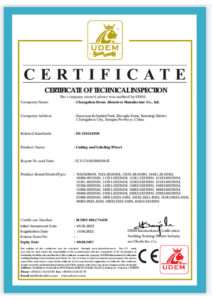
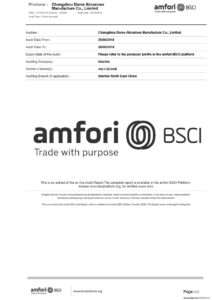
Our abrasive disc series has attained major international certifications, including CE, MPA, EN 12413, and BSCI. This achievement underscores our unwavering commitment to the highest benchmarks in product safety, grinding performance, and social responsibility. It is our solemn pledge to provide you with a solid and reliable quality guarantee for every application.

Certification TypeCore Value
MPA + EN12413Product safety guaranteed – compliant access to European markets
CEEU market access – legal sales, smooth customs clearance
ISO9001Batch consistency, stable quality, full traceability
BSCISupply chain compliance – meets global brand procurement requirements
PICCProduct liability insurance – end‑user protection, reduces buyer risk

Customer Feedback

Distributor – Brazil
Product: 115mm Metal Cutting Disc
Cooperation: Since 2021

“DOME’s cutting discs perform very consistently in our local construction and hardware markets. Cutting speed is fast, and service life is over 20% longer than our previous supplier. They adjust formulations and packaging to match our market needs – giving us a clear differentiation advantage on the shelf.”

Industry: Hardware Distribution · Construction

Industrial Brand – Germany
Product: 125mm INOX Cutting Disc (EN12413 + MPA certified)
Cooperation: Since 2020

“We chose DOME as our OEM supplier for stainless steel cutting discs primarily because of their formulation control – not every factory can deliver Fe+S+Cl ≤0.1% purity. MPA certification ensures our products enter the German market without barriers. After three years of partnership, batch‑to‑batch quality remains highly consistent.”

Industry: Industrial Consumables Brand · Stainless Steel Fabrication

Wholesaler – UAE
Product: 230mm Heavy Duty Cutting Disc
Cooperation: Since 2022

“Construction sites in the Middle East have simple requirements: the disc must handle the load and cut effectively. DOME’s 230mm heavy‑duty discs perform stably on large‑diameter pipes and rebar – good impact resistance and 30% fewer disc changes than our previous brand. Their 30‑day fast delivery is also a key advantage for us.”

Industry: Industrial Consumables Wholesale · Construction

Online Distributor – USA
Product: 125×1.0×22.23mm Ultra Thin Cutting Disc
Cooperation: Since 2018

“Selling cutting discs on e‑commerce platforms, the biggest fear is customers saying ‘this batch feels different from the last one.’ DOME’s fully automated lines and 100% RPM testing ensure product consistency across every batch. Our negative review rate for this category dropped from 5% to below 1%.”

Industry: E‑commerce Distribution · Industrial Consumables

Focus on Export Market

DOME exports 80% of its production to over 60 countries and regions worldwide. Below is a market‑by‑market analysis of product preferences, certification requirements, and regional characteristics – helping overseas buyers understand regional differences at a glance.

Latin America

Recommended Products: Metal Cutting Disc · INOX Cutting Disc · Grinding Wheel

Popular Sizes: 115×1.0×22.2mm · 115×3×22.2mm · 115×6×22.2mm · 180×1.6×22.2mm · 230×2×22.2mm · 355×3×25.4mm

Common Certifications: CE · ISO9001

Market Characteristics: The Latin American market is steadily expanding, driven by the automotive and construction industries. Price sensitivity is high, and end‑users prefer products with strong cost‑performance. OEM brands hold significant market share, with private‑label cutting discs in high demand across hardware retail channels. The 115mm series is the dominant size, covering everything from thin cutting to heavy‑duty applications. Wholesalers typically require mixed thicknesses in one order to cover various job site needs.

Europe

Recommended Products: INOX Cutting Disc · Ultra Thin Cutting Disc

Popular Sizes: 125×1.0×22.2mm · 125×1.2×22.2mm · 115×1.0×22.2mm · 150×1.6×22.2mm · 180×1.2×22.2mm · 125×6×22.2mm · 230×2×22.2mm

Common Certifications: EN12413 · MPA · CE

Market Characteristics: Europe has the strictest safety certification requirements – EN12413 is mandatory, and MPA certification is the key to entering the German market. Buyers prioritise products with complete certification documentation. The 125mm size is the most popular specification, with 1.0mm and 1.2mm thin discs being the most common. Stainless steel fabrication accounts for a large share of industrial activity, driving steady demand for INOX‑specific discs. Product traceability and batch‑to‑batch consistency are critical – COA test reports are standard.

Middle East

Recommended Products: Heavy Duty Cutting Disc · Large Diameter Cutting Disc

Popular Sizes: 230×2.0×22.2mm · 230×2.5×22.2mm · 355×2.5×25.4mm · 355×3.0×25.4mm

Common Certifications: CE · ISO9001

Market Characteristics: The Middle East market is driven by construction and infrastructure mega‑projects. Large‑scale projects generate high demand for heavy‑duty cutting discs – 230mm and 355mm are the main sizes for cutting large‑diameter pipes, rebar, and structural steel. Durability and impact resistance are top priorities, with thick discs (2.5–3.0mm) as the mainstream choice. Fast delivery is a critical factor, as project‑based procurement cycles are short and delivery windows are tight. Wholesalers typically require mixed sizes in a single order.

Southeast Asia

Recommended Products: Metal Cutting Disc · Ultra Thin Cutting Disc

Popular Sizes: 107×1.0×16mm · 100×6×16mm · 355×2.5×25.4mm · 355×3.0×25.4mm

Common Certifications: CE · ISO9001

Market Characteristics: The Southeast Asian market shows a “two‑ends‑large, middle‑small” pattern – 107mm and 100mm discs for precision cutting and household DIY, and 355mm large‑diameter discs for construction and structural steel work. Thailand’s cutting disc imports have shown steady growth. Price sensitivity is high, though quality requirements are gradually rising. There is strong demand for power tool brand matching – cutting discs are often bundled as accessories with angle grinders. Small‑to‑medium distributors dominate, making flexible MOQ a key purchasing factor.

North America

Recommended Products: Metal Cutting Disc · Ultra Thin Cutting Disc · Large Diameter Disc

Popular Sizes: 115×1.0×22.2mm · 125×1.2×22.2mm · 230×2.5×22.2mm · 355×3.0×25.4mm

Common Certifications: ISO9001 · UL/ANSI (on request)

Market Characteristics: North America is one of the world’s largest consumer markets for cutting discs. 4–4.5 inches (115mm) is the most common size for small angle grinders, while 5–7 inches (125–180mm) are used for medium‑sized hand‑held tools. E‑commerce distribution is growing rapidly, with online channels demanding high product consistency and packaging integrity – negative reviews often stem from batch‑to‑batch performance variation. North American buyers place high value on ISO9001 certification and product traceability, with UL/ANSI compliance also important for mainstream channel access.

Africa

Recommended Products: Metal Cutting Disc · Grinding Wheel

Popular Sizes: 115×1.0×22.2mm · 230×2.0×22.2mm · 180×6×22.2mm

Common Certifications: CE · ISO9001

Market Characteristics: The African market covers major economies including South Africa, Egypt, and Nigeria. Infrastructure development continues to drive cutting disc demand. Price sensitivity is the highest among all regions – cost‑performance is the primary purchasing factor. 115mm and 230mm are the mainstream sizes, while 180×6mm grinding wheels are in high demand for welding and maintenance work. South Africa serves as a regional trade hub, with cutting discs sourced from China, Germany, India, and other countries. Buyers typically require flexible delivery options and competitive pricing.

Video

The following video showcases DOME’s complete manufacturing capabilities from raw materials to finished products, its rigorous quality control system, and its OEM customization services.

Abrasive Wheel FAQ

1. What is an abrasive wheel?

An abrasive wheel is a cutting or grinding tool consisting of abrasive grains bonded together with a resin or vitrified matrix, often reinforced with fibreglass. It is mounted on angle grinders, stationary cut-off machines, bench grinders, or pedestal grinders for cutting, grinding, deburring, and surface preparation on metal, stone, concrete, and other materials.

2. What are abrasive wheels used for?

Abrasive wheels are used for:
· Cutting – severing metal bars, pipes, sheets, and sections
· Grinding – stock removal, weld smoothing, surface preparation
· Deburring – removing sharp edges and machining marks
· Finishing – surface refinement and polishing
· Rail cutting – track maintenance, rail replacement, railway construction

3. What are abrasive wheels made of?

Abrasive wheels are made of three main components:
· Abrasive grain – aluminum oxide, zirconia, ceramic, or silicon carbide (the cutting medium)
· Bond – resin (phenolic) or vitrified, which holds the grains together
· Reinforcement – fibreglass mesh (multiple layers) for high-speed safety

4. What is a resin bonded abrasive wheel?

A resin bonded abrasive wheel uses a synthetic phenolic resin as the bonding agent to hold abrasive grains together. Resin bonds offer controlled flexibility—they hold grains firmly during cutting but release them at a calibrated rate as they dull, exposing fresh sharp grains underneath. This self‑sharpening action makes resin bonded abrasive wheels ideal for high‑speed angle grinder and cut‑off saw applications. They are the most common type for metal cutting and grinding.

5. What is the difference between a cutting wheel and grinding wheel?

A cutting wheel and a grinding wheel serve different purposes. Thickness is the most obvious difference—cutting wheels are thin (1.0–3.0mm) for narrow kerfs; grinding wheels are thick (3.0–8.0mm) for durability under side pressure. Purpose also differs—cutting wheels are for parting cuts (separating material); grinding wheels are for stock removal, weld blending, and surface finishing. Working angle—cutting wheels operate at 90° (perpendicular), using the edge; grinding wheels operate at 0–15° (shallow), using the face. Side load—cutting wheels are not rated for side pressure (dangerous); grinding wheels are designed for it. In short: cutting wheels separate material; grinding wheels reshape it.

6. What abrasive wheel is best for stainless steel?

For stainless steel, use an INOX abrasive wheel with:
· Ceramic or zirconia grain – cool cutting, prevents work‑hardening
· Low‑iron bond – Fe + S + Cl ≤ 0.1%, prevents contamination
· 1.0–1.6mm thickness – for cutting; 4.0–6.0mm for grinding
Zirconia is cost‑effective for general stainless work; ceramic delivers the highest performance on 304 and 316 grades.

7. What abrasive wheel is best for carbon steel?

For carbon steel, an aluminum oxide abrasive wheel is the most common and cost‑effective choice. Aluminum oxide fractures at a controlled rate, continuously exposing fresh cutting edges for consistent stock removal. For heavy‑duty carbon steel grinding, zirconia offers extended life. Available in all standard diameters and thicknesses for angle grinders and stationary machines.

8. What abrasive wheel is best for aluminium?

For aluminium, use a silicon carbide abrasive wheel or a zirconia wheel with an open structure that prevents loading (clogging). Aluminium is a soft, gummy material that quickly loads standard aluminum oxide wheels. A silicon carbide cutting or grinding wheel stays sharp and free‑cutting on non‑ferrous metals. Always use a disc specifically formulated for aluminium to prevent clogging and heat buildup.

9. How do I choose the right abrasive wheel?

To choose the right abrasive wheel, consider:
1. Application – Cutting or grinding?
2. Material – Carbon steel, stainless, aluminium, or cast iron?
3. Machine – Angle grinder, chop saw, bench grinder, or rail saw?
4. Diameter – 100mm to 405mm, matching your machine
5. Thickness – 1.0mm (cutting) / 4.0–8.0mm (grinding)
6. Grit – Coarse (24) for removal / Fine (80) for finishing
7. Abrasive – Aluminum oxide, zirconia, ceramic, or silicon carbide
8. Bond – Resin bonded for high‑speed applications
9. Certification – EN12413 for safety

10. What size abrasive wheel do I need?

Abrasive wheel size depends on your machine and application:
· 100mm / 4″ – Compact angle grinders, tight spaces
· 115mm / 4.5″ – Standard angle grinders, general fabrication
· 125mm / 5″ – Larger grinders, extended reach
· 180mm / 7″ – Heavy fabrication, industrial use
· 230mm / 9″ – Maximum stock removal, heavy construction
· 355mm / 14″ – Chop saws, rail cutting
· 405mm / 16″ – Heavy rail cutting, mainline replacement

11. What is the difference between T41 and T27 abrasive wheels?

A T41 abrasive wheel (Type 1) is a flat wheel with no raised centre—used for straight cutting on stationary machines. Requires full flange support on both sides. A T27 abrasive wheel (Type 27) features a depressed centre (dish‑shaped)—used on angle grinders for grinding at a 15–30° angle on flat surfaces with guard clearance. Choose T27 for angle grinder work; choose T41 for stationary machines.

12. Can abrasive wheels be customized?

Yes, abrasive wheels can be customized. We offer:
· Custom formulations – abrasive grain type, bond hardness, grit size
· Custom sizes – diameter, thickness, bore size
· Custom branding – private label, custom packaging, logo printing
· Custom applications – discs engineered for specific materials or cutting conditions
· Contact our technical team for custom abrasive wheel development.

13. Do you manufacture OEM abrasive wheels?

Yes, we are a leading OEM abrasive wheel manufacturer. We produce high‑quality abrasive wheels with branded packaging, custom formulations, and private label options for distributors, tool brands, and industrial buyers worldwide. Our factory is ISO‑certified, EN12413 compliant, and 100% RPM tested. We offer competitive wholesale pricing, flexible MOQ, and reliable global shipping.

14. What certifications do your abrasive wheels have?

All our abrasive wheels are EN12413 certified—the European safety standard for bonded abrasive products. Additional certifications include:
· ISO 9001 – quality management system
· 100% RPM testing – every disc is tested to its marked maximum speed
· Burst test – discs withstand 1.5× rated speed without fragmentation
· Balance test – zero‑vibration certification
All wheels are clearly marked with maximum operating speed and bore size.

15. What is the MOQ for OEM abrasive wheels?

Our MOQ for OEM abrasive wheels is flexible to accommodate different customer needs:
· Trial orders – from 5000 pieces per size/specification
· Standard production – container‑based orders for cost efficiency
· Private label – custom packaging and branding available from trial quantities
Contact our OEM team to discuss your specific volume and specification requirements.

Related Cutting & Grinding Products

Metal Cutting Disc

Metal Cutting Disc

General-purpose metal cutting disc for everyday cutting of carbon steel, structural steel, and ordinary steel.

Suitable Materials: Carbon steel / Structural steel / Iron

Cutting Disc for Stainless Steel

Stainless Steel Cutting Disc

Engineered for stainless steel cutting with Fe+S+Cl≤0.1% pure formula, delivering silver-bright, burn-free cuts.

Suitable Materials: 304 / 316 / 430 stainless steel

Ultra Thin Cutting Disc

Ultra Thin Cutting Disc

Ultra-thin 1.0–1.6mm design for fast, low-heat, low-burr precision cutting of sheets and thin-wall tubes.

Suitable Materials: Stainless steel sheet / Carbon steel sheet / Thin-wall tube

355mm Large Diameter Cutting Disc

Large Diameter Cutting Disc

355mm large-diameter disc for stationary saws, cutting through large structural steel sections and heavy-wall pipes in one pass.

Suitable Materials: H-beams / I-beams / Large-diameter pipes / Rails

Rail Cutting Disc

Rail-specific disc with zirconia alumina and multi-layer fiberglass reinforcement, designed for heavy-duty high-hardness rail cutting.

Suitable Materials: U71Mn / U75V rails / Crane rails / High-manganese frogs

Grinding Wheel

Grinding Wheel

Resin-bonded grinding wheel for surface grinding, weld dressing, and burr removal on all types of angle grinders.

Suitable Materials: Carbon steel / Stainless steel / Cast iron

Related Articles

Online Message

We offer 10 PCS of FREE SAMPLES for qualified projects. Test our performance, feel our quality, and validate your specifications firsthand—completely risk-free. Ready to turn your vision into a tangible product? Contact us today to discuss your project and request your free samples.

Website message form

Get Quick

Response

Share your needs with us, We’ll contact you in very short time.

Zhenglu Garden Industrial Park, Tianning District, Changzhou City, Jiangsu Province

Please get in touch with any questions. Even if you don’t see what you want on our website we may be able to help.