
-
Sep, Wed, 2026

What Is an INOX Grinding Disc
You have likely seen the word “INOX” printed on the packaging of grinding discs—whether on a supplier’s quote, on the shelves of a local hardware store, or on an online shopping platform. But you might wonder: Is INOX a brand, a type of abrasive, or a certification? How does it differ from standard grinding discs? No one explains it clearly to you.
This article begins with the term itself, clearly explaining the concepts, standards, use cases, and key purchasing considerations all at once.
INOX: A designation for stainless steel formulations
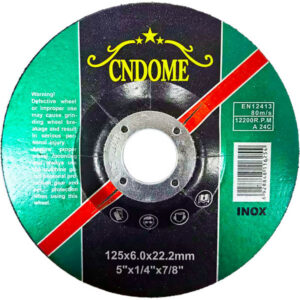
“INOX” is neither a brand nor a type of abrasive; it is the internationally recognized abbreviation for stainless steel, derived from the French word “inoxydable,” meaning “rust-proof.” In the abrasives industry, “INOX” specifically refers to a formulation designed for stainless steel. It is not merely a printed label, but a set of contamination control standards. When you see the “INOX” or “Stainless” marking on a grinding disc‘s packaging, it indicates that the disc’s iron, sulfur, and chlorine content has been strictly controlled. This is intended to prevent the introduction of contaminants onto the surface during the grinding of stainless steel.
So, the next time someone asks you what INOX is, you can simply say: it is a clean formula designed for stainless steel—not an abrasive, nor a manufacturer’s trademark.
What problems arise when grinding stainless steel with standard grinding discs?
Standard grinding discs are designed for carbon steel. The iron, sulfur, and chlorine content in the abrasives and bonding agents is not strictly controlled. If you use it to grind stainless steel, iron particles will become embedded in the stainless steel surface during the process, causing the ground area to rust over time.
Another factor is the thermal conductivity of stainless steel, which is only about one-third that of carbon steel. When grinding stainless steel with standard grinding discs, heat accumulates in the contact zone. When the temperature exceeds 300°C, the passivation layer on the stainless steel surface is destroyed, resulting in reduced corrosion resistance in the ground area. The appearance of a blue or purple discoloration on the stainless steel surface is a sign of thermal damage.
Therefore, the key to grinding stainless steel is not speed, but rather avoiding damage to the surface passivation layer while removing material.
Standards for INOX Grinding Discs
If you have reviewed the technical specifications for INOX grinding discs, you will notice a specific parameter: the content of iron, sulfur, and chlorine is less than 0.1%. This number was not arbitrarily assigned by the grinding wheel manufacturer; it is the industry standard used to distinguish grinding discs specifically designed for stainless steel. When purchasing stainless steel grinding discs, you must ensure the packaging clearly indicates “Fe + S + Cl < 0.1%,” or directly request a composition specification from the supplier. Only below this value is the risk of iron contamination manageable. Industries such as food processing, pharmaceuticals, and nuclear power enforce stricter contamination controls, making it all the more critical that this indicator be precise and unambiguous.
The figure of 0.1% may seem small, but achieving it is not easy. From the arrival of abrasives at the plant to the preparation of the bonding agent, cross-contamination must be prevented throughout the entire production line. As a manufacturer of resin-bonded grinding wheels, we devote even more effort to this aspect than we do to the abrasives themselves.
What abrasive is used for INOX grinding discs?
INOX refers to a formulation standard; the abrasives used within it can be aluminum oxide, zirconia, or ceramic. The type of abrasive you choose depends on your operating conditions. Aluminum oxide is the most economical choice, suitable for light-duty applications and general surface treatment. Zirconia is self-sharpening, making it suitable for rough grinding of welds, heavy stock removal, and applications involving continuous pressure. Ceramic abrasives offer strong cold-cutting capabilities, generate minimal heat, and have a long service life, making them suitable for heat-sensitive workpieces and continuous production. Regardless of the choice, the INOX formula is a prerequisite; without it, even the best abrasive material is useless.
What is the difference between resin grinding discs, flap discs, and their INOX versions?
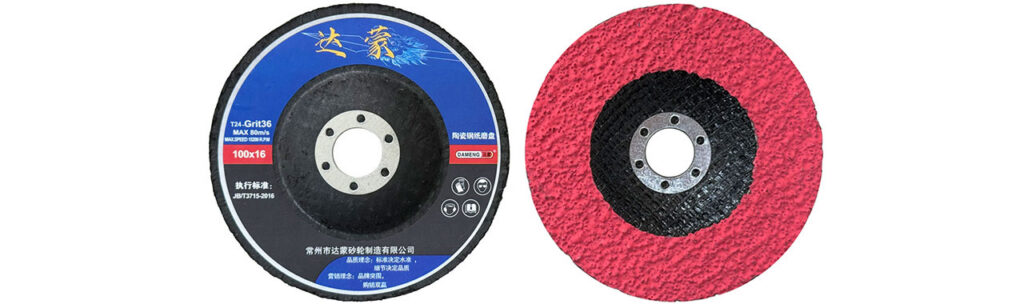
Which form you choose depends on your tools. Resin-bonded grinding discs feature high rigidity, making them suitable for rough grinding and material removal, as well as for removing casting flash and excess weld reinforcement. Resin grinding discs designed specifically for stainless steel (INOX) are typically 6 mm thick; their bonding agents are formulated to balance cutting efficiency with heat dissipation, and they are intended for use at an operating angle of 15° to 30°. INOX flap discs are suitable for weld blending and surface shaping; the T29 conical shape offers a larger contact area for edge work compared to the T27 flat shape. In terms of grit size, 24 to 60 mesh is used for rough grinding, while 80 to 120 mesh is used for finishing.
These two forms are not mutually exclusive alternatives, but rather represent a division of labor within the process. Use a resin grinding disc for rough grinding, and a flap disc for the intermediate blending stage. The logic for selecting these is the same as for standard grinding discs; the differences lie in the purity of the formulation and the certifications.
Which industries require INOX grinding discs?
If you work in a metal fabrication shop, at an installation site, or in a maintenance crew, INOX grinding discs are an essential item to have on hand. Professional welders use it to grind stainless steel welds, preventing subsequent complaints about rusting. Workshop supervisors and purchasing managers are concerned with the frequency of disc changes and total costs; INOX grinding discs help reduce rework. Quality engineers and EHS personnel focus on pollution control and safety compliance.
Food processing, pharmaceuticals, shipbuilding and offshore engineering, chemical equipment, architectural curtain walls, pipe manufacturing, kitchenware and home appliances, water treatment, nuclear power, medical devices, 3D printing post-processing, rail transportation, oil and gas, semiconductor cleanrooms. For any of these industries involving the grinding of 304 or 316 stainless steel, INOX grinding discs are essentially the standard choice.
For DIY enthusiasts occasionally grinding stainless steel railings, using INOX grinding discs is recommended to avoid the headache of future rusting.
What should you ask the supplier when purchasing INOX grinding discs?
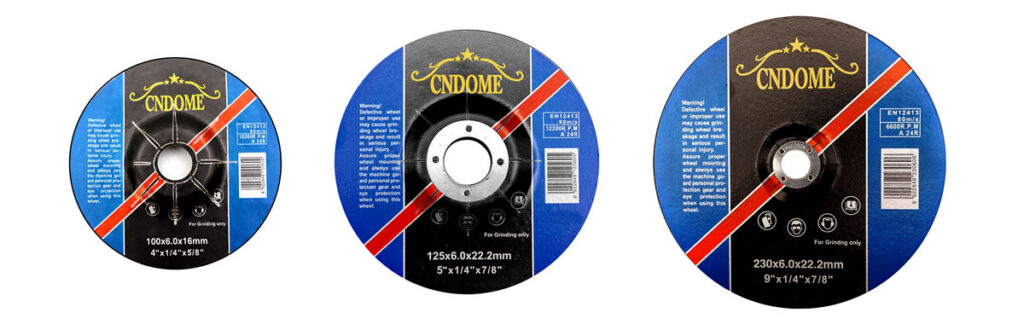
Don’t just ask about the price. First, inquire about the abrasive type, grit size, T27 or T29 profile, maximum RPM, INOX marking, proof of Fe+S+Cl content, and EN 12413 and OSA certifications. Also, ask about the MOQ and lead time. If a supplier hems and haws and fails to produce a test report confirming the absence of iron and sulfur, you should switch to another supplier.
As a manufacturer of resin grinding wheels, we produce resin grinding wheels and flap discs specifically designed for stainless steel. These documents are readily available because overseas clients—especially those in Europe—place great importance on INOX compliance. OEM/ODM services can also be tailored to your market requirements; details such as the logos and certifications printed on the packaging are open for discussion.
But honestly, we would prefer that you first understand exactly what INOX stands for before determining whether our products are a good match for your operating conditions. Understand the standards first, then select the products—you can’t go wrong with this order.
INOX is not a marketing gimmick; it is the baseline for contamination control.
When you search for “What Is an INOX Grinding Disc?”, the main thing you’re trying to figure out is whether it’s something you actually need to buy. The answer is simple: whenever you are grinding stainless steel, the INOX formulation is a baseline requirement, not an option. It addresses the two most insidious yet lethal problems: iron contamination and thermal damage.
When selecting a disc, first verify that the packaging bears the “INOX” or “Stainless” mark and check for the “Fe + S + Cl < 0.1%” specification; then, choose the abrasive type and grit size based on the specific application; finally, confirm compliance with EN 12413 and OSA standards, as well as the maximum RPM rating. Do not reverse this order. INOX is not a gimmick designed to make you spend more money; it is an insurance policy that helps you avoid rework and financial loss.
INOX Grinding Disc FAQ
Q1: What exactly is an INOX grinding disc?
“INOX” is a common abbreviation for stainless steel found on grinding discs; it indicates that the disc is formulated to meet requirements for controlling contamination on stainless steel. It is neither a brand nor a model number, but rather a specific designation for stainless steel grinding discs.
Q2: Do the “INOX” and “Stainless” markings mean the same thing?
They are essentially the same; both indicate that the grinding disc is suitable for use on stainless steel. “INOX” is more common in Europe and industrial procurement, while “Stainless” appears more frequently on retail packaging. When you see either term, the priority is to check whether the product is marked as having Fe+S+Cl < 0.1%.
Q3: Why shouldn’t standard grinding discs be used on stainless steel?
Standard discs contain iron, sulfur, and chlorine; during grinding, iron particles become embedded in the stainless steel surface. After a few weeks, these spots begin to rust, making it appear as though the stainless steel itself is rusting, when in fact it is iron contamination.
Q4: Is the Fe+S+Cl < 0.1% limit a strict requirement?
For stainless steel grinding discs, this is the baseline. Iron directly causes rusting, while sulfur and chlorine compromise the passivation layer. If a disc fails to meet this standard, even the best abrasive material is unsuitable for use on stainless steel.
Q5: How is iron contamination controlled in INOX discs?
From abrasives and bonding agents to fillers, the entire production line must be kept free of iron, sulfur, and chlorine contamination. Reputable manufacturers screen raw materials and implement cross-contamination controls, providing test reports with the finished products. You should request this documentation directly when making a purchase.
Q6: What types of abrasives can be used in INOX-grade discs?
Aluminum oxide, zirconia, and ceramic are all suitable for INOX formulations. Aluminum oxide is ideal for light grinding, zirconia for rough grinding of weld seams, and ceramic for 316 stainless steel and heat-sensitive workpieces. First, confirm the INOX specification, then consider the abrasive type.
Q7: Are there INOX versions available for both resin-bonded wheels and flap discs?
Yes, both are available. Resin-bonded wheels are suitable for aggressive material removal and grinding down weld beads, while flap discs are ideal for weld blending and surface finishing. The T29 conical shape offers better handling for edges and corners, whereas the T27 flat shape is suited for grinding flat surfaces.
Q8: How do I choose the grit size for INOX discs?
Use 24–60 grit for rough grinding, 80–120 grit for finishing, and 150–240 grit for pre-polishing. Skipping too many grit levels can lead to poor surface control. When performing fine finishing on 316 stainless steel, it is recommended to use a new disc to minimize heat damage.
Q9: Can INOX be used on both 304 and 316 stainless steel?
Yes, it can be used on both. INOX serves as the baseline standard for both materials. The differences lie in the choice of abrasive and pressure control: for 304, zirconia offers the best cost-performance ratio, whereas for 316, ceramic is preferred to minimize work hardening and heat generation.
Q10: Why does grinding 316 stainless steel rely more heavily on INOX-grade products?
Grade 316 contains molybdenum, making it tough and gummy; grinding swarf tends to adhere to the abrasive grains, leading to more concentrated heat generation. INOX formulations minimize contamination, and when paired with ceramic abrasives, they reduce heat input, thereby protecting the material’s passivation layer.
Q11: Does the workpiece turning blue or rusting after grinding indicate a problem with the INOX disc?
Blue discoloration is usually a sign of thermal damage, indicating that the temperature has exceeded 300°C and the passivation layer has been compromised. Rusting is most likely caused by iron contamination. First, verify that the grinding disc is indeed suitable for INOX; then, check the grinding pressure and rotational speed.
Q12: Is passivation required after grinding stainless steel (INOX) parts?
For 316-grade stainless steel components used in food, pharmaceutical, chemical, and marine environments, cleaning and passivation are recommended after grinding. While stainless steel discs reduce contamination, they cannot replace the passivation process. Surface roughness must also meet the required specifications.
Q13: What do EN 12413 and OSA certifications cover?
These two certifications focus on safety rather than abrasive performance. They specify the maximum permissible operating speed and burst strength. Do not mount grinding wheels that lack EN 12413 and OSA markings onto an angle grinder.
Q14: How do I match the maximum RPM with the angle grinder?
The maximum RPM specified on the grinding wheel label must be greater than or equal to the angle grinder’s no-load speed. Overspeed operation is the leading cause of accidents involving wheel breakage. Check the specifications before mounting the wheel, and run the tool at no-load for several seconds before making contact with the workpiece.
Q15: What questions should I ask the supplier when purchasing INOX grinding discs?
Inquire about the abrasive material, grit, disc type (T27/T29), maximum RPM, INOX designation, test reports for Fe/S/Cl content, EN 12413 and OSA certifications, as well as MOQ and lead times. Also, discuss OEM/ODM requirements upfront; define the operating conditions before comparing prices.
